

The Filming Of HGTV's 2000s Hit Designed To Sell Wasn't Immune To Reality TV Tricks

While reality television centered around real estate might seem as "real" as it can get, that's not always the case. What makes reality television in general so compelling is often the soft massaging and molding producers do to turn a rather boring scenario into something filled with drama from start to finish. HGTV television shows, of course, aren't known for their high-stakes arguments or storylines, like reality shows starring celebrities are, but instead provide something refreshing to viewers interested in all things home and garden. It might not look like it needs it, but even shows centered around remodeling a house can't avoid reality television finagling that goes too far.
On HGTV's "Designed to Sell," which originally starred host Clive Pearse and designer Lisa LaPorta, homeowners looking to sell had a $2000 budget to remodel their home in time for an open house. The series aired from 2004 to 2011, providing an inside look at how to get your house looking irresistible to potential buyers. The setup appeared straightforward enough, but according to participants, one major element of "Designed to Sell" was often faked for the cameras, something common on many reality TV shows.
One anonymous participant told Hooked on Houses that a majority of the show "is just for the cameras," including the open house that occurs at the end of each episode. In her case, she wasn't planning on selling immediately, but in the upcoming year. Her open house on the show was made up of family and friends, including her mother. "It's funny to see my mom talking about how she loves the makeover and wants to buy our house," she said.
Designed to Sell didn't provide the same experience to every participant
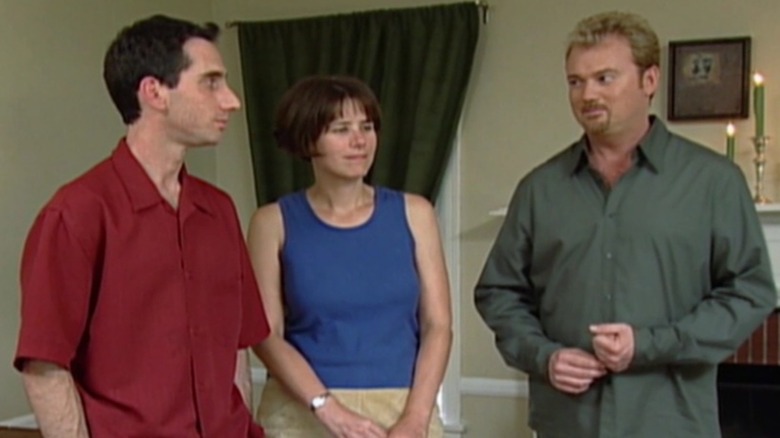
The open house wasn't the only thing that was fake about "Designed to Sell." Hooked on Houses' anonymous source explained that "only things that will be seen on camera are taken into consideration," including a pair of custom pillowcases, which were actually just duct-taped fabric around their original pillows. "Ceilings and areas of paint that wouldn't show on camera were not finished," seemingly leaving participants with areas to patch up after wrapping production.
Those featured on the show were often portrayed as major players in the remodeling process, helping out alongside experienced designers. Turns out, they only contributed their skills for a few quick scenes. "We had moments where we filmed scenes with the show designer and carpenters but once our little bit of filming was done, the rest of the work was done by production crew," the anonymous source revealed.
It seems that every participant's experience isn't the same, according to Karen, who was also featured on "Designed to Sell." She told Hooked on Houses that her home wasn't left unfinished, and her open house was real, even though she didn't sell immediately after because "DTS did such a nice job that we wanted to enjoy it for awhile." Another perk of the show is that while the cap for remodeling is $2000, the labor was entirely free, making it feel like a priceless experience despite some fake elements.