

Reasons Why HGTV Shows Are Totally Fake
Though HGTV is perfect for lazy weekend binge watching, it's no secret the channel's popular home search and renovation shows are pretty fake. And we're not just talking about the inexplicably high home-shopping budgets many show participants seem to have, or the fact that the renovation budgets on many programs are dependent on unseen crews working around the clock — and at drastically reduced labor rates in exchange for TV exposure — to complete extensive transformations.
Among HGTV's lineup are shows that have allegedly ruined people's houses, staged phony house-hunting scenarios, faked property sales, featured shady contractors, and manufactured drama. Of course, there are degrees of fakery at play across the cable channel that's been inspiring Home Depot runs for paint swatches for years, with some offenders way worse than others.
The important thing to remember while watching HGTV — or any reality TV, really — is to take everything you're seeing with a healthy dose of cynicism. A couple in their 20s landing an oceanfront villa in Belize for less than half a million? Sure. The handsome host of the show with the perfect hair and the sledgehammer with the price tag still on it about to single handedly demo a kitchen? Uh huh. Here the reasons these HGTV shows are totally fake.
Love it or List it ... or litigate

"Love It or List It" is the show that, like many others on HGTV, combines the house hunt and renovation genres, except it adds a twist: At the end of each episode, homeowners decide to either live in their renovated home or sell it and move into an upgrade. This concept provides the framework for the first little fib the show allegedly tells.
According to a Redditor who claims their aunt and uncle appeared on "Love It or List It," the show actually had them record both endings, and the network chose which one it thought was best. The Redditor also claims the show decided to portray said aunt and uncle as having listed their home, but in reality, they stayed. Granted, that's an anonymous claim from a third party source, but there have also been real-world legal ramifications from the show's shenanigans.
In 2016, Deena Murphy and Timothy Sullivan of Raleigh, N.C., sued the show citing a variety of complaints, according to The Miami Herald. Murphy and Sullivan alleged the show misappropriated their renovation funds and used a subpar contractor who did questionable work. Though the lawsuit was specific to the renovation and did not cite the show or production company, it included language that exposed the show's alleged dubiousness.
"The show is scripted, with 'roles' and reactions assigned to the various performers and participants, including the homeowners," the suit stated. It also included this charge: "These characters are actors or television personalities playing a role for the camera, and in this case none of them played more than a casual role in the actual renovation process."
So, we're guessing they didn't "love it?"
House Hunters isn't much of a hunt
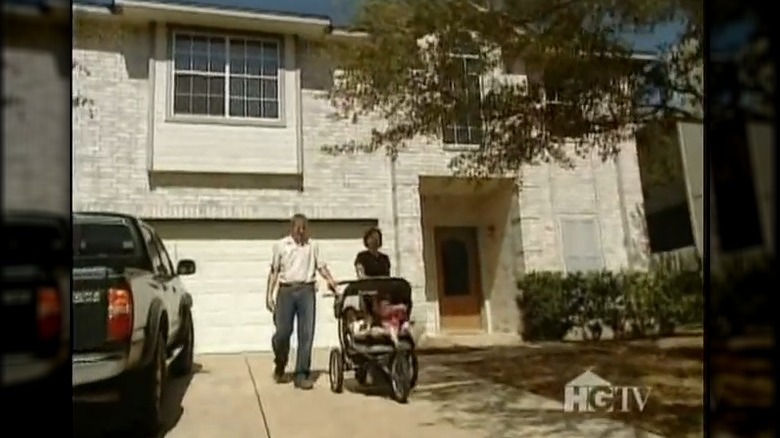
In 2012, the real estate blog "Hooked on Houses" landed a major scoop when it alleged that the fan favorite HGTV show, "House Hunters," was almost totally fake. According to show participant Bobi Jensen, her experience with the program was phony from top to bottom, starting with the entire reason the family supposedly appeared on the series.
Jensen claims that the producers made them seem like they "desperately" needed a bigger house, but that was a lie — they were simply upgrading and had decided to rent our their existing home.
Next, Jensen revealed her family already purchased the home they would supposedly be "hunting" for. This is allegedly a common practice for any HGTV show that portrays prospective homeowners "shopping" for homes, but this was probably the first time the little white lie received wide exposure. So, if they already bought their home, did they just go around looking at listings and pretend they were interested? Nah, that would be too easy!
"The ones we looked at weren't even for sale ... they were just our two friends' houses who were nice enough to madly clean for days in preparation for the cameras," Jensen told Hooked on Houses. Geez. And as if all of that wasn't fake enough, the spin-off show, "House Hunters International," seemingly looked at its predecessor and said, "Hold my beer..."
House Hunters isn't any more authentic abroad

According to HuffPost, a woman whose Mexican villa was portrayed as one of the "reject properties" for prospective buyers on "House Hunters International" — remember, the "hunt" is allegedly predetermined — also claimed that the show "swapped in a younger couple to play the buyers," because it wanted to "appeal to a wider audience, and steer away from the typical retirees that are often depicted."
Another show participant, Dr. Nate Lambert, wrote a Medium post about his family's experience with the show. In the post, Lambert goes out of his way to say what a great and authentic experience it was to have his family's move to Fiji documented, but he also confirms the phony home search; recounts how producers "overdramatized" a disagreement over kitchen views; and admits the realtor was an HGTV plant, which he says had to be done due to the way the real estate industry works in Fiji.
So, just to recap the tactics used by "House Hunters" and "House Hunters International": They fake the buyers' motivations and options, use phony realtors when necessary, and in some cases, hire actors to play the buyers. What are we going to find out next? That a husband and wife who are a part-time dog walker and an unemployed rodeo clown can't actually afford an oceanfront condo in St. Croix?
Two experts are better than one, unless they're both phonies

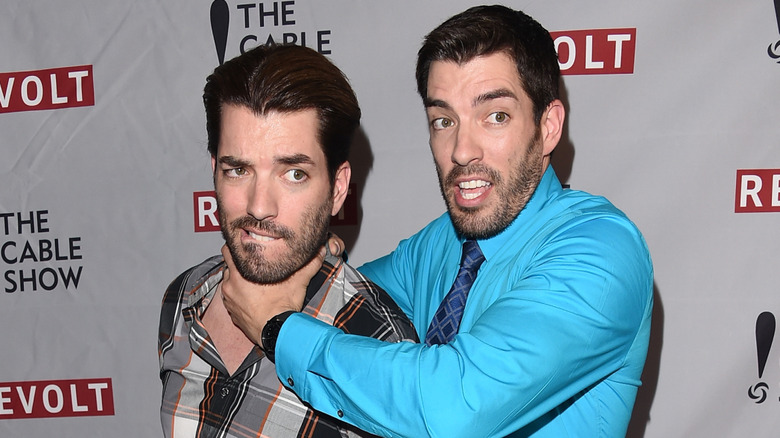
Due to it's staggering popularity, "Property Brothers" is probably viewed as one of the more honest shows on this list, until you stop and think for one second about the show's premise: Twin brothers Drew and Jonathan Scott help buyers find and renovate a fixer-upper. It's purely conceptual. Yes, Drew is a realtor, and yes, Jonathan is a contractor, but much of their professional duty is farmed out to local professionals while they do what they really do, which is be television stars.
Speaking with Popsugar, Jonathan revealed that just like many other HGTV shows, "Property Brothers" prefer to work with "homeowners who have identified a house that they already like." So, what does that leave for realtor Drew to do? Oh right, be a TV star. And what about those scenes where the homeowners pop in on the reno to see how it's going to find Jonathan alone in the house, toiling away on some demo or framing work?
"If we find that our budget is taking hits left, right, and center, I'll jump in and do even more because I'm not charging for my time," Jonathan said, adding, "I'm never laying 5,000 square feet of flooring ... I have flooring companies, kitchen companies, and all of that jazz, but I can do and have done all of the work."
So, this is a show about a realtor who doesn't have to do real estate, and a guy who only acts in his capacity as a contractor when he absolutely has to, because his real job — being a TV star — pays so much he can afford to do so. Got it.
Fixer Upper fibs a little

"Fixer Upper" is the Waco, Texas-based home renovation show starring husband and wife Chip and Joanna Gaines that goes like this: He's the contractor, she's the designer, and they work with a homeowner to flip (what are usually) pretty dilapidated properties into dream homes. In all honesty, "Fixer Upper" also has a pretty good reputation for being on the up and up when it comes to the Gaines duo actually doing what they portray on the show, but there are a few discrepancies.
First, the house hunt at the beginning of the show is all for, well...show. Yep, it's the same deal as "House Hunters" — HGTV wants folks who are already "under contract" on a house, according to show participant David Ridley, who appeared on S3 of "Fixer Upper." "They show you other homes but you already have one," Ridley told Fox News. "After they select you, they send your house to Chip and Joanna and their design team."
Okay fine, at this point we just have to move past the fact that seemingly nobody is "discovering" their dream home for the first time on camera during an HGTV show. Is everything else on "Fixer Upper" genuine? According to Country Living, yes, except if a homeowner wants to keep the furniture used for staging, they have to buy it. Honestly, that seems entirely fair. As long as there's no whistleblower out there waiting to tell us that Joanna doesn't actually love shiplap, we feel good downgrading this one from "totally fake" to just "totally fake house hunt, but otherwise pretty solid."
Nobody can afford to win the HGTV Dream Home

The HGTV Dream Home Giveaway isn't a show, but it is a long-running sweepstakes the channel has staged since 1997. Each year, HGTV gives away a fabulous designer home along with other prizes such as cars and boats to one lucky winner, but if you're picturing that lucky winner moving into their stunning new abode and living out their life in the lap of luxury, think again.
According to a 2004 story in The Wall Street Journal, nearly none of the winners can afford to keep the prize home because of the huge tax liability that comes along with it, which the paper estimates could be around "40 percent of the total prize value." In fact, out of eight previous winners at the time of that report, only one actually retained ownership of the property.
This exact situation occurred for 2005 winner Don Cruz, who desperately wanted to live in the home but wasn't able to satisfy the tax liability he estimated at $800,000. Cruz tried to make it work anyway, choosing to reject the option of taking cash and other prizes and living in the house for almost two years before letting it lapse into foreclosure. He told KLTV that by the time he had to give up the house, he'd sunk into debt to the tune of $1.43 million, due in part to a variety of other factors, including paying for costly medical procedures for two family members.
To state it simply: In order to win and keep the HGTV Dream Home, you already have to be rich (in which case, you're probably already living in your dream home,) otherwise you've basically won a giant cash prize and the opportunity to be photographed in a particularly lovely house for a few minutes.
Your Home Depot star moment probably isn't happening

HGTV's landscape renovation show "Yard Crashers" has one of the best concepts of all time: The host walks into a a big box home improvement store and randomly selects an unsuspecting customer for a stunning backyard makeover. Anyone who's made three trips to Lowe's for more bags of mulch in a single day can attest to what an absolute dream come true this must be.
Unfortunately, dreams aren't real, and apparently neither is the initial conceit of "Yard Crashers" if another Redditor who claims third party knowledge is to be believed. According to said Redditor, their "good friend" was selected for the show because his sister "knew the producer," so they staged the supposed "random" encounter at Lowe's. On top of that, the Redditor also claims that some concrete work done by the show wasn't exactly top notch, and that his friend ended up having to "spend thousands to repair it since it was affecting their water lines and other things."
Again, this could all be hearsay from some jealous Redditor typing as they gazed out the window at their own weed-infested yard. However, host Chris Lambton did tell Popsugar that they screen participants for attitude, and that they "go through at least 15-20 people" before finally casting a homeowner. Call us crazy, but we're not sure how "surprised" the lucky homeowners are to talk to the guy who has a camera crew in tow and who just rejected a dozen other shoppers.
Designed to deceive
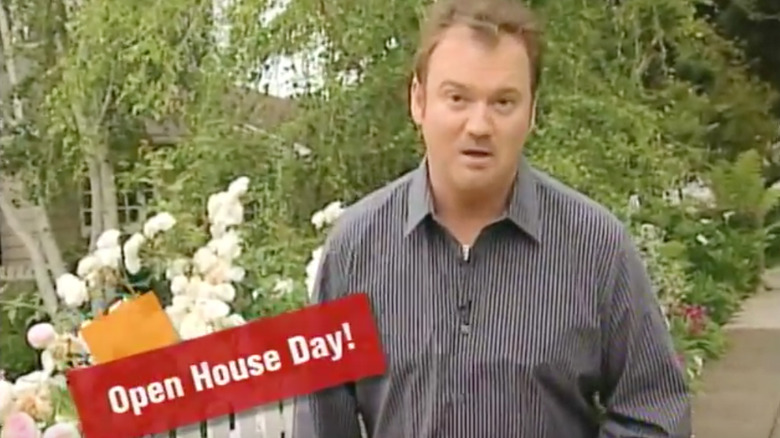
Thanks to "Hooked on Houses" becoming the go-to destination for HGTV show participants to air their grievances, we also know that "Designed to Sell," the show that gave homeowners a budget of $2,000 and a pro design team in order to stage their house for the market, is also supposedly as fake as a plastic ficus. An anonymous reader told the blog her story back in 2011, ironically the year the show was cancelled.
According to the homeowner, her house was not even on the market and would not be for "the next year or so," but the show cast her anyway. As a result, producers staged a fake open house at the end of the makeover process that was entirely attended by the homeowner's friends and family. On top of that, she said that when the crew came through for what would essentially be the "after shots," there was incomplete work they had to avoid, like unfinished paint jobs, and "custom pillowcases in our bedroom were actually duct taped fabric around our pillows."
Designed to Sell also took a page out of the "Love It or List It" playbook, allegedly having homeowners shoot multiple endings: one saying their house sold "thanks to the makeovers" and one saying they haven't sold yet, but they've "seen a lot of interest." Wow. "Designed to Sell?" More like "Designed to Yell,'Fake!'"
Some exterior shots are not in the house's neighbrohood
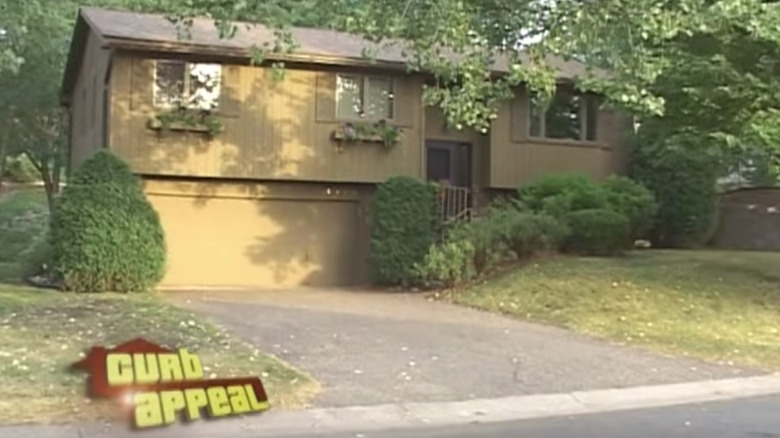
In 2013, The A.V. Club spoke with Atlanta resident Cenate Pruitt about his experience on the show "Curb Appeal: The Block." While Pruitt was mostly effusive about his experience on the program — "Nothing but love for the production crew and the contractors for busting their humps," as he put it — he did expose a few interesting ways in which the show fudged his reality.
For starters, the establishing shots they used, which are supposed to be general exterior shots of the surrounding neighborhood, were nowhere near Pruitt's house. Pruitt also mentioned how the crew carefully avoided shooting a dilapidated "sub-crackhouse monstrosity" that was right near his home. There was also Pruitt's experience with the host of the show, who he said "would park his convertible, walk around and do a stand-up or something, then drive off."
But aside from all of the "TV magic" that went into making Pruitt's episode, he suffered possibly the biggest manipulation after a retaining wall the contractors put in around an entry to the basement in order to prevent flooding actually had the complete opposite effect. "So that's been, to put it charitably, a nightmare," Pruitt said.
Though the show sent contractors out multiple times to try to fix the problem, the basement still floods routinely after heavy rain, leaving Pruitt to feel like the "fun" he had with the crew maybe wasn't worth it. "I just wish things had been a little better planned," he said.
Beachfront Bargain hoax

"Beachfront Bargain Hunt" is basically "House Hunters International" if it only went to American cities with gorgeous coastlines, and just like that fake HGTV house-hunting show, this one also requires its participants to already own the house they're supposedly shopping for. Gasp! Okay, so the shock of that HGTV lie has already worn off by now, but thanks to Outer Banks realtor Johanna's blog about her experience with the show, we can report on a few other small facets of fakery regarding BBH.
Probably the oddest thing Johanna had to say was that producers told her not to use the word "nice," and that they were so serious about it, they even had to "start several scenes over" when she accidentally let the perfectly commonplace adjective fly. And speaking of reshoots, Johanna also said that although there was no script, they were made to re-enter each room two to four times, repeating the exact same phrasing they used the first time, to ensure the crew got the coverage it needed.
That last one is a little thing, and a pretty unavoidable one when trying to make a TV show, but it does call into question the overall integrity of a show that purports to capture the thrill and excitement of a beach home purchase. After all, if the always stressful real estate transaction is fake, the home search is fake, and the genuine emotion of discovering a dream home gets diminished by multiple reshoots, what's left?
Oh right, sitting at home and playing "What Do These People Do And How Can They Afford This?" from your crappy, not oceanfront couch. Nevermind, this show is amazing.
My Dream Lottery Home is slightly overselling itself

Hosted by HGTV favorite David Bromstad, "My Lottery Dream Home" has been claiming to help those who've recently come into money find their ideal abode since 2015. But while the show's trailers will often display luxurious properties fit for a king, the reality is often a little more frugal.
Indeed, due to the shortage of interested parties — the first season invited no fewer than 1,000 winners of the lottery to participate, but only heard back from a fraction — the show can rarely serve up the kind of glitzy, glamorous dwellings you might expect from buyers with at least seven-figure sums in their bank accounts. "... It's average people getting excited about completely average, cookie-cutter houses," complained one Redditor about the false advertising of a series which has also been accused of featuring 'home seekers' who've already bought their dream home.
However, in the show's defense, host David Bromstad told the New York Post that not every lottery winner will spend their gains the same way. "It all depends on how much money they've just won. Some people are living paycheck to paycheck, and they're pretty smart, like, 'Wow, I'm 35 years old, and I've just won a million dollars — it's going to change my life for the moment, but I've got to be smart about it.'"
Married to Real Estate's furniture is just for show

As with "Fixer Upper" and pretty much every other remodeling show on HGTV, the furniture you see at the end of each "Married to Real Estate" episode could well have disappeared once the cameras stopped rolling. Indeed, the long-running series, hosted by real-life husband and wife Mike Jackson and Egypt Sherrod, often removes its picture-perfect finishing touches unless the participants decide to hand over their own hard-earned cash to keep them.
If that all sounds a little mean-spirited, then the show — which came off air as part of the network's bloodbath of 2025 — did have a more generous side. Indeed, while most other HGTV series leave the cost of renovation to the homeowners, "Married to Real Estate" tried to help out by limiting the amount of new decor and furniture.
And while discussing the show's abrupt cancellation, Sherrod insisted that "Married to Real Estate" tried to stick to the truth as closely as possible. "Everything you saw on TV is real," she told People. "This is just the beginning of our entire saga, so this had to happen. We want everybody to be okay with it and just continue to tune in for what's next." Only time will tell whether their next project, a return of their podcast "Marriage and Money," will be so authentic.
100 Day Dream Home takes shortcuts

Hosted by husband-and-wife team Mika and Brian Kleinschmidt since the turn of the decade, "100 Day Dream Home" — as its name suggests — promises to build participants their perfect abode in just a little over three months. And while they always achieve their goal by this arbitrary deadline, they're not averse to taking a few shortcuts to do so.
"We schedule the inspections early in the morning and just assume they're going to pass," Brian told the Los Angeles Times about how they're able to save so much time during the usually painstaking red tape process: on average, the wait for the go-ahead can add as much as 33 days to the whole operation. "As soon as they're inspected, our next [trade crew] is ready to come in."
The Kleinschmidts also run other aspects with military precision, ensuring that homeowners agree on the interiors long before the task gets underway. "We are really side by side with them during those selections," Mika told Realtor. "So they feel confident, and we don't drag it out two months to make countertop decisions."
Home Again with the Fords gives clients a little too much bang for their buck

Ever watched an HGTV show and thought you could easily do the same work for the same price? Well, as with most things on the network, not everything is as it seems when it comes to budget constraints. Just ask Steve Ford, who, alongside sister, Leanne Ford, has hosted "Home Again with the Fords" since 2021.
Indeed, while chatting to The New Yorker, the home renovator admitted that while participants' personal bank balances are used to fund the work carried out, HGTV shows are able to rely on deals with companies that might not be available to mere civilians. In fact, he acknowledged that anyone lucky enough to get the benefit of his expertise "are getting more for their buck than they should."
Steve, who first found fame alongside his sibling on "Restored by the Fords," also recognizes that the show may be inadvertently giving its more DIY-friendly viewers false hope, telling the esteemed publication he understands why some may exclaim, "Oh, I can do this! I can make this crazy thing happen at my house that should be in a magazine. And I can do it for X dollars!"
Celebrity IOU isn't as surprising as it claims

Not for the first time, brothers Jonathan and Drew Scott were accused of fakery in 2025 thanks to a "Celebrity IOU" episode featuring a former member of the Brat Pack. Yes, in a S9 episode, Rob Lowe decided to treat his long-running assistant Carol to a surprise home renovation with the help of the HGTV siblings. However, the suspiciously clutter-free nature of the house in question left many viewers believing that the owner had already been given an advanced warning.
"I came here to see if anyone else noticed the empty drawers and cabinets too," noted one particular skeptic on Reddit. "#1 reason I now know it's all fake. I don't know anyone who has even one empty drawer." Another remarked, "I had the exact same reaction to the empty kitchen — production really missed the boat on that!"
However, in an interview with Entertainment Weekly, Jonathan insisted that the premise of the show, which has also welcomed everyone from Brad Pitt and Melissa McCarthy to Viola Davis and Rebel Wilson, is entirely genuine. "We had the same reaction from all the celebrities participating in the show, so here we are," he said. "These are celebrities with really big hearts, and you'll be able to see how much they care about these people and why they wanted to give back to them."
Josh Hall claims The Flip Off manufactured arguments

Okay, so we're used to HGTV viewers being skeptical about the authenticity of the network's shows. But the stars themselves is a different matter. Yet in 2025, Josh Hall put the cat among the pigeons when he claimed that "The Flip Off," the series he starred in with then-wife Christina Haack, was guilty of fabricating drama.
Josh pointed out one particularly on camera argument he had with his former partner, captioning an Instagram Story (via TODAY), "TFW when you can't get enough ratings with celebrity designers, so you rely on manufactured drama with me, a nobody." Of course, Christina, no stranger to creating tabloid headlines herself, soon took to the same platform to share her side of the story.
"Manufactured?! Pretty sure no one at HGTV told you to be rude to me," she wrote on an Instagram Story relating to her ex-husband's initial post. ".... That was all natural." The real estate investor, who, following divorce proceedings, had changed her surname from Hall back to her maiden name, also uploaded a snap of her looking teary-eyed in the aftermath of the argument to prove her point. "This is 'real' and a reminder to myself that I deserve better," came the accompanying message.