

1970s Stars Who Met The Most Tragic Fates
In the opening lines of Charles Dickens' iconic "A Tale of Two Cities," he writes: "It was the best of times, it was the worst of times." That description could also apply to the 1970s, an oft-maligned decade driven by societal upheaval and weird trends (Pet rocks! Leisure suits! Roller disco!) as the Vietnam War sputtered toward failure and the Watergate scandal revealed the dark underbelly of the American Dream.
Yet this was the same decade that brought us some of the best films ever made ("The Godfather" and its sequel, "Taxi Driver," "Network," and others), the start of the boundary-pushing comedy of "Saturday Night Live," and an array of rock music that continues to resonate with listeners five decades later. There was also a new breed of celebrities to emerge during the '70s: movie stars who were more unconventional than those of previous decades, comedians who brought a new edge to their material, and musicians who pushed the envelope in exciting new directions.
Sadly, not all of them went on to experience a happily ever after. To remember their legacies, read on for a look at 1970s stars who met the most tragic fates.
Playboy model Dorothy Stratten was murdered by her jealous ex
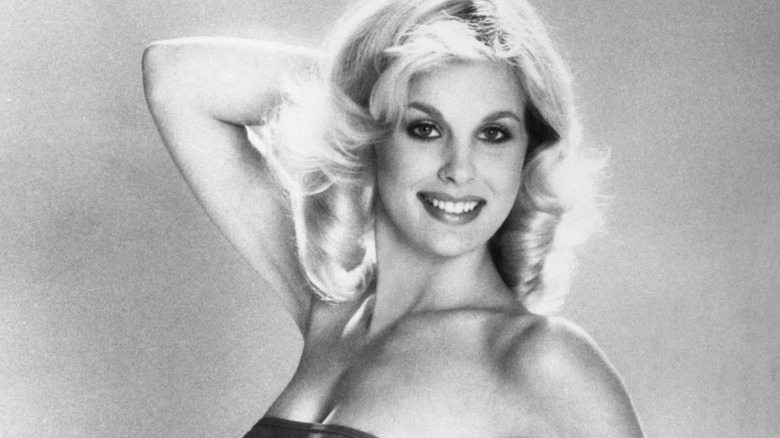
By the end of the 1970s, countless women posed for Hugh Hefner's Playboy magazine. Few of them, however, were able to parlay their racy photos into a Hollywood career. Among those to successfully achieve that transition was Dorothy Stratten, who was an 18-year-old working at a Vancouver Dairy Queen when she fell in with small-time pimp Paul Snider. He convinced the reluctant teen to pose nude, then sent the photos to Playboy. Before long, she became one of Hef's favorites, attending star-studded parties at the scandal-rocked Playboy mansion. She also began booking acting roles. First came small parts in TV shows, leading to a starring role in the cheesy 1980 sci-fi film, "Galaxina," and a serious acting role in "They All Laughed" by acclaimed director Peter Bogdanovich. Hollywood stardom seemingly hers for the taking.
Stratten married Snider in 1979, but complications arose when she fell in love with Bogdanovich. The couple separated, but in August 1980, Stratten went to see Snider at his home in order to negotiate their divorce. Snider, distraught and desperate, sexually assaulted her and then shot her dead before turning the shotgun on himself. She was just 20 years old.
Both Bogdanovich and Hefner were left devastated. "Hef was never the same. Part of him died. Part of all of us died because Dorothy was special to us," Cis Rundle, a one-time social secretary for Playboy, told ABC News. The story of Stratten's murder formed the basis for director Bob Fosse's 1983 feature, "Star 80."
Comedian Freddie Prinze was at the top of his game when he ended it all
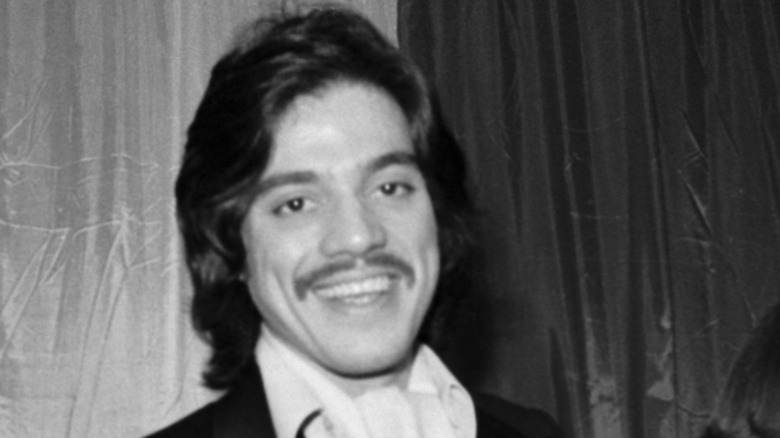
Freddie Prinze burst onto the comedy scene in 1973 after making his debut on "The Tonight Show," and his rise was extraordinary. At just 19 years old, his less-than-6-minute performance catapulted him into the showbiz stratosphere. Nine months later, he was starring his own sitcom, "Chico and the Man," an out-of-the-box hit that ended its debut season as TV's No. 3 show.
Yet viewers who watched him fire off punchlines would have had no inkling that Prinze was experiencing depression. He was in a particularly down place — struggling with his newfound fame and the recent end of his marriage — when his agent, Martin Snyder, paid a visit to cheer him up in January 1977. When he arrived, Prinze was holding a gun. Surprisingly, that didn't concern Snyder, given that Prinze had threatened suicide several times before over the past 18 months to the point that nobody in his circle took it seriously.
"It's happened before in the past year and a half," Paul Wasserman, Prinze's publicist, told The New York Times. "The people who saw it didn't take it quite as seriously as perhaps they might. They thought it was an attention‐getter, or maybe an overdramatic act. They couldn't believe it when Freddie, who seemed to have everything to live for, told them life wasn't worth living." Unfortunately, Prinze died by suicide that day at just 22 years old. His newborn son, Freddie Prinze, Jr., went on to become an actor, but eventually stopped to focus on his passions and his family.
Reggae superstar Bob Marley's cancer-related death continues to spark conspiracy theories
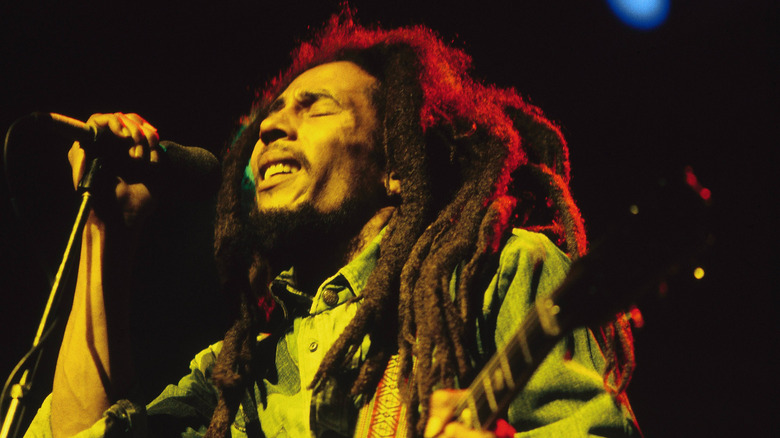
In the mid-1970s, Bob Marley's music broke through to the international crowd with songs like "No Woman, No Cry," and "Positive Vibration," going on to become a worldwide superstar. Not only did Marley singlehandedly popularize Jamaican reggae music, he also became a cultural and political force throughout the world.
In 1977, Marley was playing soccer with friends when he injured his foot, particularly the toenail on his big toe. A dark spot formed under the toenail, which didn't heal and grew worse. He finally saw a doctor, and a biopsy confirmed the presence of a rare and fast-moving type of skin cancer, acral lentiginous melanoma. Doctors recommended he amputate the toe to halt the cancer from infecting him further. However, he refused, a decision that would become one of the most tragic details about Marley. Before long, it was too late, and the cancer had spread to his lungs, brain, and other parts of his body. He was on a flight to Jamaica, where he planned to receive an award. Sadly, he never made it. His condition worsened so much that the plane was diverted to Miami, where he was rushed to Cedars of Lebanon Hospital. That was where he died, in May of 1981 at the age of 36.
His body was flown to Jamaica, where he was honored with state funeral, where his gold coffin was displayed at Kingston's National Arena. More than 6,000 mourners attended.
Richard Pryor died after a long and debilitating struggle with MS
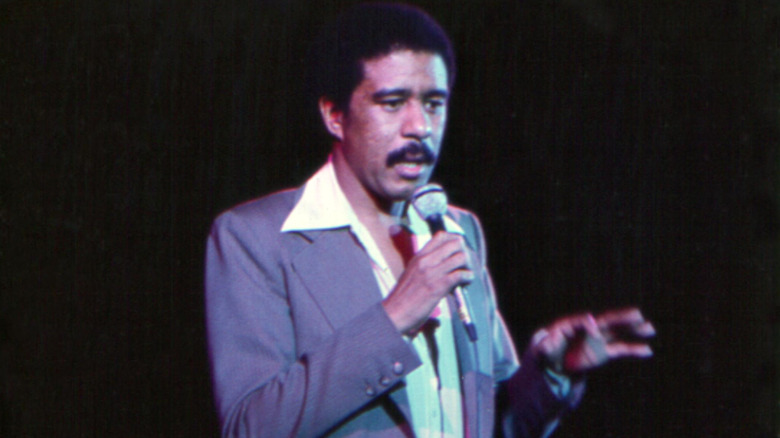
During the 1970s, there was no bigger comedy star than Richard Pryor. A frequent guest on TV talk shows, he recorded hit albums and ventured into the movies. Supporting roles in films such as "Lady Sings the Blues," and "Car Wash" led to "Silver Streak," the 1976 comedy that teamed him up with Gene Wilder, a successful screen collaboration that would lead several more films in which the co-starred.
During the latter part of the 1970s, however, Pryor had become heavily addicted to cocaine, which he'd taken to heating in a glass pipe with a flame and inhaling, aka freebasing. That led to a brush with death in 1980, when Pryor was severely burned while freebasing in his home, suffering second- and third-degree burns on more than half of his body. Miraculously, he recovered and resumed his showbiz career — even detailing the accident in a subsequent standup comedy special.
In 1986, Pryor was diagnosed with multiple sclerosis. By the mid-1990s, the condition had led to a slow but steady physical deterioration that weakened him, making it difficult to work. Yet he continued, returning to standup comedy, which helped refill his dwindling coffers but left him exhausted. His guest-starring role as an MS patient in a 1995 episode of medical drama "Chicago Hope" won him an Emmy nomination, and he continued to appear sporadically on TV until the late 1990s, at which point he was simply too frail. He died in 2005, aged 65.
Lynyrd Skynyrd singer Ronnie Van Zant died in a tragic plane crash
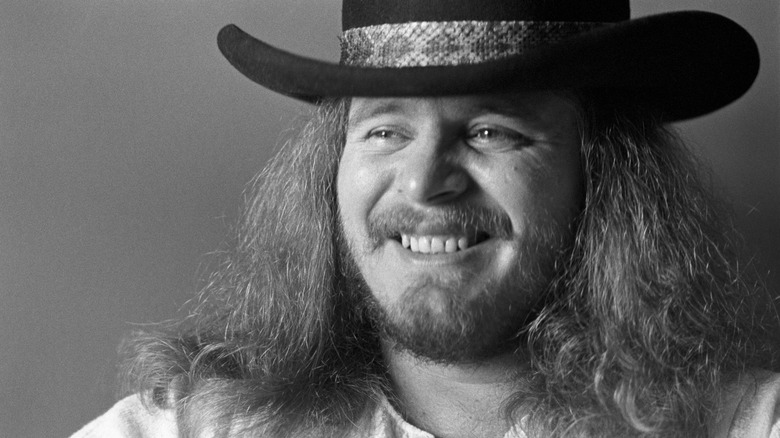
Lynyrd Skynyrd may not have invented Southern rock, but the Jackonsville, Florida band quickly came to embody the genre. The band's debut album — 1973's "Pronounced 'Lĕh-'nérd 'Skin-'nérd" — proved to be a stunning introduction, crammed with hits such as "Free Bird," "Tuesday's Gone," "Gimme Three Steps," and more.
Over the next few years, the band's popularity continued to soar, with Skynyrd scoring an even bigger hit with "Sweet Home Alabama" — the band's response to Neil Young's "Southern Man" — until a 1977 plane crash changed everything. Six people were killed in the crash, including Lynyrd Skynyrd's lead singer and lyricist Ronnie Van Zant. "When I heard that there had been a plane crash, I just knew Ronnie was one of the ones that didn't make it," the singer's widow, Judy Van Zant Jenness, told Classic Rock, recalling the singer's frequent assertions that he would never live to see 30. "He told me so many times that I realized that he really knew what he was talking about."
Van Zant was just 29 years old. The band's drummer, Artimus Pyle — who survived the crash and joined other celebrities who survived brushes with death – has explained that Van Zant's legacy can be found in the songs he left behind. "He was a genius," Pyle told AL.com. "He knew how to write words that touch the common man and that's why those songs are still as popular now as they were then, to young and old. It's amazing."
Bruce Lee died from an adverse reaction to pain medication
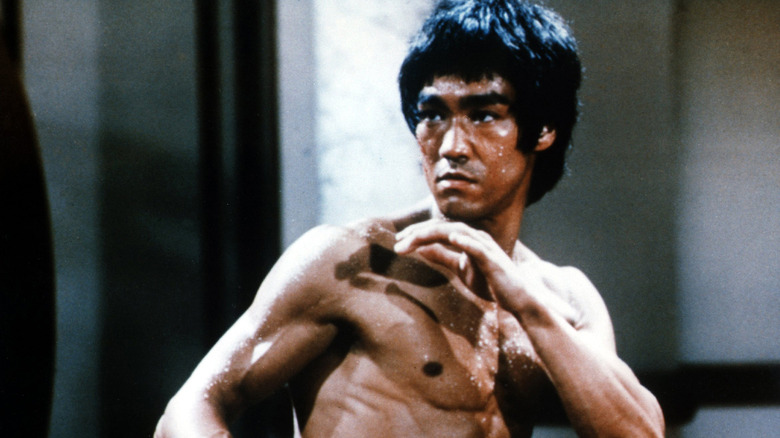
Bruce Lee singlehandedly sparked the kung-fu craze of the early 1970s, resulting in a flood of low-budget martial arts movies that quickly became a cinematic sub-genre unto itself. After landing his big break in Hollywood as chauffeur/sidekick Kato in TV's "The Green Hornet," he went on to star in a series of cheaply made films that showcased his phenomenal mastery of Jeet Kune Do, the fighting discipline he created by melding elements of various martial arts. These films included "The Big Boss," "First of Fury," and the film that would becoming his magnum opus, 1973's "Enter the Dragon."
Sadly, Lee didn't live long enough to experience the success of that film, which was released weeks after his death at age 32. The tragic death of Bruce Lee, in July 1973, shocked those who knew him. Suffering a headache, he took a nap in hopes it would go away with a bit of sleep, but he never awoke. He was discovered unconscious and rushed to a hospital, where he was pronounced dead on arrival at age 32.
The cause of Lee's mysterious death was subsequently discovered to be a cerebral edema, which had caused his brain to swell. At the time, medical professionals believed that cerebral edema was brought about by an adverse reaction to some medication he'd been prescribed. However, more recent theories indicate the condition may have been caused by heat stroke, or possibly from drinking too much water.
T Rex frontman Marc Bolan was 29 when he died in a car crash
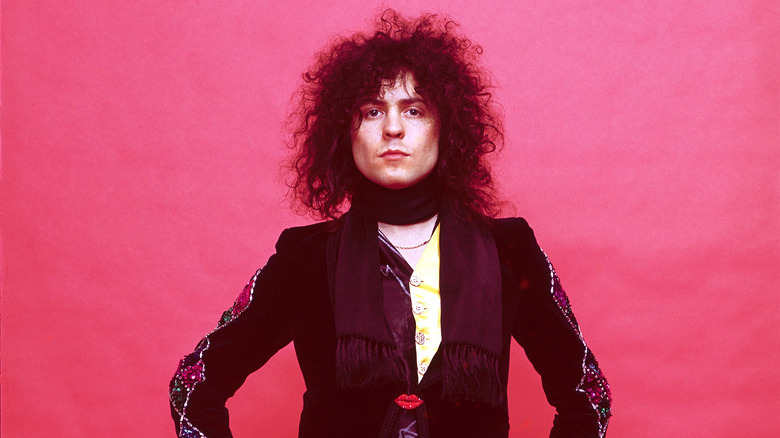
For most, the term "glam rock" conjures up images of David Bowie decked out in his Ziggy Stardust regalia. However, the true originator of glam was Marc Bolan and his band, T. Rex, combining guitar power-chords with androgyny, makeup and sci-fi to rack up a string of hits such as "Bang a Gong (Get It On)," "Metal Guru," amd "Jeepster," to highlight just a few.
Bolan had proven himself to be a bold musical trendsetter, yet by the mid-1970s, glam had played out. While Bowie began grooving to the Philly soul sound with his "Young Americans" album, Bolan was still searching for his next musical direction. He found it with "Dandy in the Underworld," his 1977 comeback album that pulled him out of a career slump, placing him back at the top of his game. "Marc was firing on all cylinders," Captain Sensible, bassist for The Damned, told Classic Rock. "He'd got rid of his drug habit ... he was excited, he had a great band, and the songs were getting better."
Sadly, Bolan's elation over the positive reception to his album was short-lived. Bolan was sitting in the passenger seat of his Mini when girlfriend Gloria Jones accidentally swerved into a tree. She was severely injured, and eventually made a full recovery. Bolan, 29 at the time, died at the scene. In the years after Bolan's death, that tree has become a shrine, visited so often by fans that a memorial to Bolan was eventually erected there.
John Belushi's life ended at 33 in a tragic drug overdose
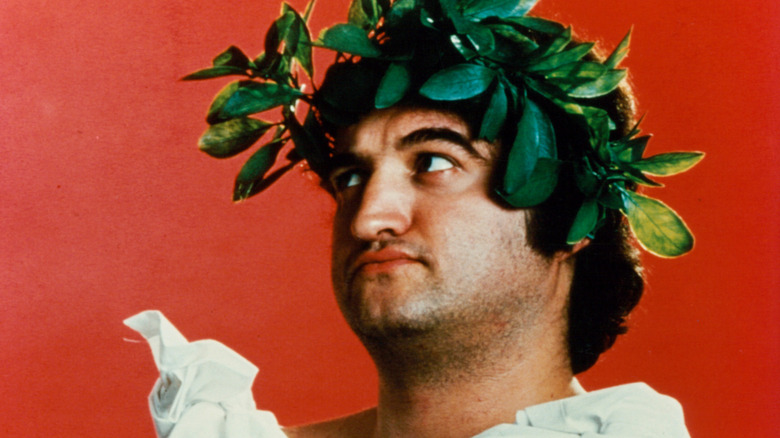
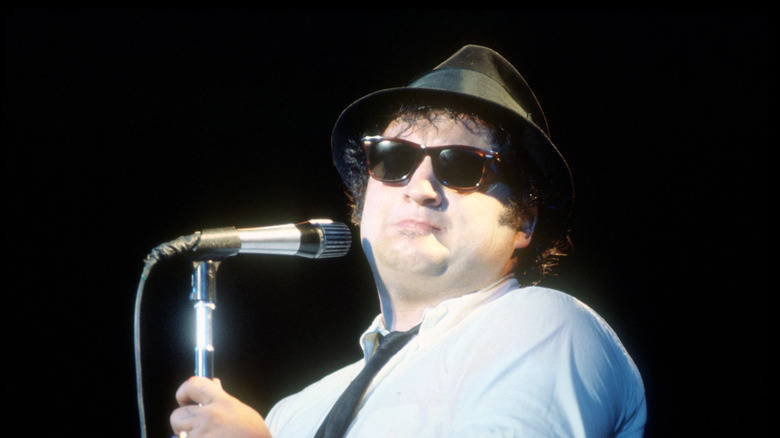
When "Saturday Night Live" made its debut in the fall of 1975, it was Chevy Chase who exploded as the show's breakout star. After Chase's exit to pursue a career in the movies, John Belushi emerged as the show's next hotshot. Belushi remained on the show while venturing to Hollywood, which paid off in spades when 1978's "Animal House" – a low-budget college comedy that cost just $3 million to make — became one of the most successful big-screen comedies ever, hauling in more than $140 million at the box office. As atavistic frat boy Bluto Blutarski, Belushi singlehandedly popularized the toga party while skyrocketing to stardom as Hollywood's hottest comic talent. Next came a small role in Steven Spielberg's high-profile flop, "1941," and further box-office success with "The Blues Brothers" in 1980.
Belushi burned bright and hot, but not long. His insatiable appetite for drugs was not unknown to his friends, yet resulted in tragedy when he was found dead in a bungalow L.A.'s Chateau Marmont. When the coroner's report was released, it confirmed what everyone had suspected: his death was the result of a fatal overdose, the result of mixing heroin and cocaine.
For those who knew him, there was a certain inevitability to Belushi's tragic fate. "John was always the guy who went a little too far and wanted to stay too long at the party," the late star's wife, Judy, told People in 2020.
A plan crash took the life of singer Jim Croce
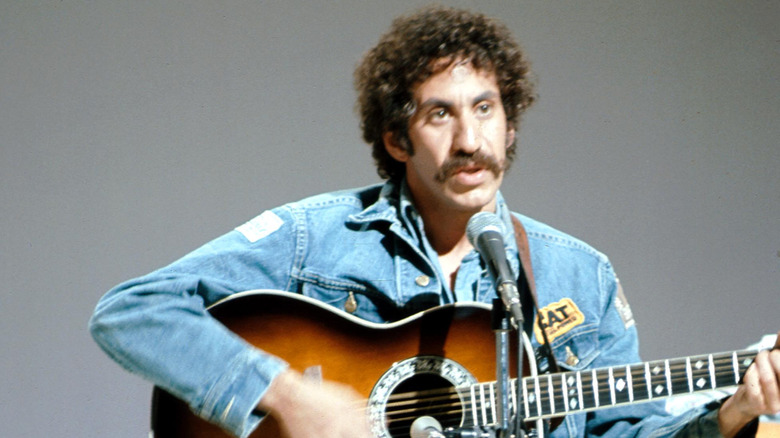
Among the singer-songwriters who captured the public's attention during the early 1970s, Jim Croce carved out his own unique niche. His style was unlike anyone else's, evident in such hits as "You Don't Mess Around with Jim," "Time in a Bottle," and his signature song, "Bad, Bad Leroy Brown."
In September 1973, Croce was accompanied by his guitarist, manager, and booking agent were in a small aircraft, chartered to take them from Louisiana to Texas. The single-engine plane barely made it off the ground when the aircraft hit a tree near the end of the runway during takeoff. After spinning around in the air, the plane crashed to the ground, killing the pilot and all four passengers.
Thirty-year old Croce had just begun to experience success, after years of struggling. "I've had to get in and out of music a couple of times, because music didn't always mean a living," Croce told Rolling Stone. "You don't make that much in bars; I still have memories of those nights, playing for $25 a night, with nobody listening." "Leroy Brown," however, had changed everything for him when the song rocketed to the top of the charts just five months before his tragic death. "It's a nice feeling having a No. 1 record," he mused. "It's a strange feeling. After having played for such a long time I don't even know how to describe it."
Godfather star John Cazale died young of terminal lung cancer
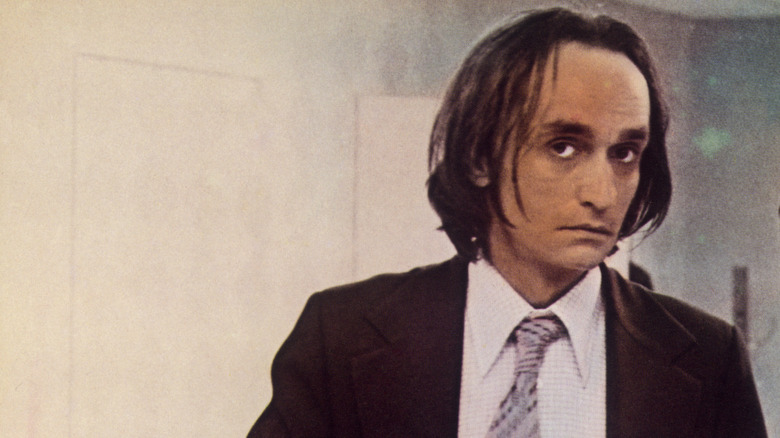
Best known as Michael Corleone's weak-willed and treacherous brother Fredo, John Cazale only appeared in five movies, yet his cinematic legacy lives on because each of those movies is considered a classic: "The Conversation," "The Godfather" and its sequel, "Dog Day Afternoon," and "The Deer Hunter."
After filming 1975's "Dog Day Afternoon," Cazale returned to the stage in New York. While appearing in a play, he met a talented young actor named Meryl Streep. They fell in love, yet their romance quickly faced a crisis when Cazale, a heavy smoker, was diagnosed with terminal lung cancer. He was growing progressively more ill when he was cast in "The Deerhunter," along with Streep, who by that time had become his full-time caregiver, and took the role in order to be close to him. Major concessions were made in order to accomodate Cazale's illness, with Robert De Niro personally paying Cazale's insurance premiums so he could appear in the film, while director Michael Cimino rearranged the shooting schedule so that Cazale's scenes could be filmed first. Cazale managed to complete work on the film, but didn't live long enough to see the completed movie.
Cazale died in March 1978, at age 42. Streep was with him until the end. "Meryl stayed by his side every single moment," Cimino told People. "By her devotion to John, I knew she had great courage."
Allman Brothers guitarist Duane Allman perished in a motorcycle accident
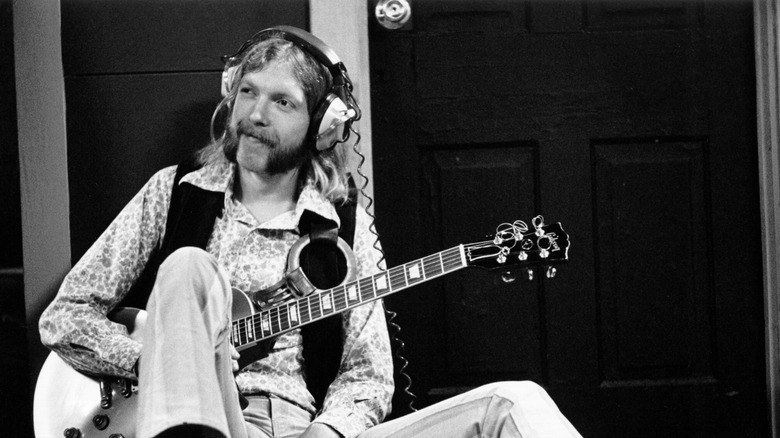
A founding member of The Allman Brothers Band, guitarist Duane Allman's mastery at slide guitar propelled the band through its signature improvisations, melding jazz, blues, and country to create a signature sound that was all their own. Allman had previously been a sought-after session musician, whose guitar work can be heard on songs recorded by the likes of Aretha Franklin, Wilson Pickett and Eric Clapton, who enlisted Allman as second guitarist for his Derek and the Dominos project and the now-iconic album "Layla and Other Assorted Love Songs."
Allman was just 24 years old when he died in a motorcycle accident in Macon, Georgia. He was still breathing while an ambulance rushed him to a hospital, and was revived twice when he stopped breathing enroute to the hospital. His injuries were extensive, with internal damage so severe that doctors felt it was unlikely he would survive. After three hours of emergency surgery, he was pronounced dead.
"I guess him dyin' so young, though, was almost inevitable," an unnamed friend told Rolling Stone after Allman's memorial service. "He had a wild and reckless streak in him ... he purely loved to smoke up the highways on bikes that was too fast for him. You don't live long if you live ... impulsive like that."