

The Darkest Celebrity Scandals That Defined The 1970s
This article contains references to child abuse, sexual assault and suicide.
Considering the decade was ushered in by the hope and optimism generated by hippies and the counterculture movement during the late '60s, the '70s were a drag on a worldwide scale. It was a time of sweeping change, and not all of it was good; Cold War tensions between the Eastern Bloc and the West continued, the Vietnam War lingered, and "stagflation" made it hard for people to live and work. At the same time, though, the media and entertainment industries were rapidly evolving, and the modern celebrity was born. The stars of film, television, music, and politics were better marketed and more accessible than ever before. However, some of the stories that emerged from the increased coverage were as grim and disappointing as fans' real-life struggles.
Celebrity controversy as a concept came into its own during the '70s, as stars were beset by legal trouble, personal demons, and even death, and the fallout was broadcast to the world via TV, the radio, and print media. From Sid and Nancy to the Lynyrd Skynyrd plane crash, Studio 54, and the death of Elvis Presley, here are the darkest celebrity scandals that defined the decade.
Roman Polanski went from being a revered auteur filmmaker to an alleged sex offender
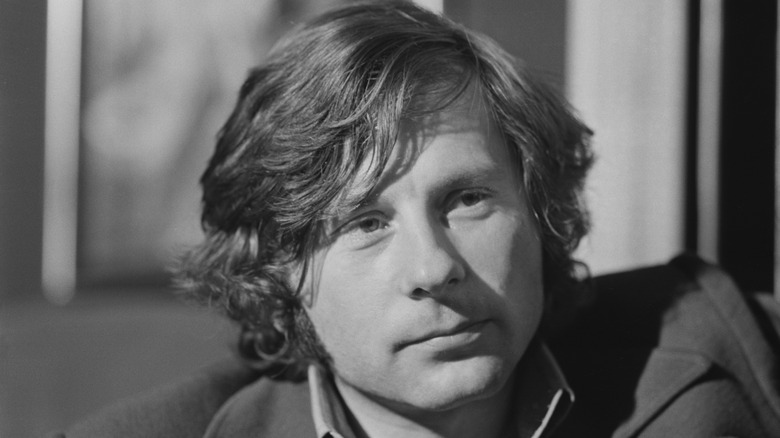
Roman Polanski was one of the premier filmmakers of the '60s and '70s, helming seminal classics like the 1968 horror "Rosemary's Baby" and the 1974 neo-noir mystery "Chinatown." And he has continued to make critically acclaimed films over the ensuing decades, including 1981's "Tess," 1988's "Frantic," 2002's "The Pianist," and 2010's "The Ghost Writer," among others. Along the way, he picked up an Academy Award for Best Director. Despite the accolades, Polanski has been a fugitive from justice in the U.S., living abroad for decades to avoid sentencing for sexual abuse.
In 1977, Polanski was arrested on suspicion of the sexual assault of then-13-year-old Samantha Gailey (now Geimer), who was brought to Polanski for a photoshoot where he drugged and assaulted her. After his arrest, Polanski accepted a plea bargain and pleaded guilty to one felony count of unlawful sexual intercourse, expecting to be sentenced to time served and probation. However, the judge reportedly planned to renege on the state's offer and issue a harsher sentence. Before that could occur, Polanski fled to France, and he has successfully avoided extradition ever since. In the years since the incident, other women have come forward with similar stories about Polanski.
Heiress Patty Hearst was kidnapped, then committed crimes with the group that abducted her
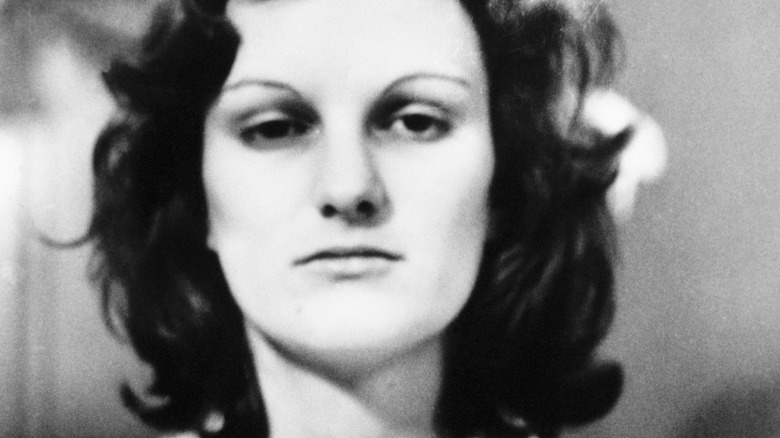
Patty Hearst is the granddaughter of William Randolph Hearst, one of the most prominent American figures of the 20th century, thanks to founding and publishing of the largest newspaper in the country. Even today, his company, Hearst Communications, remains one of the largest media organizations in the world, and his family continues to have a hand in running it. His life story served as inspiration for Orson Welles' 1941 cinematic masterpiece "Citizen Kane." So, when the heiress was kidnapped from her apartment in Berkeley by the Symbionese Liberation Army, or SLA, in February 1974, it was major news. However, the story doesn't end there.
Hearst remained in the custody of the SLA for 19 months, with the group demanding millions in food donations as ransom. Eventually, she was indoctrinated and became a participant in the group's activities when faced with the choice to either join her captors or be killed. She participated in a bank robbery and other crimes until her arrest in September 1975. Despite Hearst's claims of abuse, including sexual assault at the hands of SLA members, and brainwashing claims by the defense, Hearst was ultimately found guilty and sentenced to seven years in prison. President Jimmy Carter commuted her sentence two years later and received a full pardon from Pres. Bill Clinton on his last day in office. She went on to work as an actress in films and on television.
The Sex Pistols' Sid Vicious was accused of murdering his girlfriend, Nancy Spungen
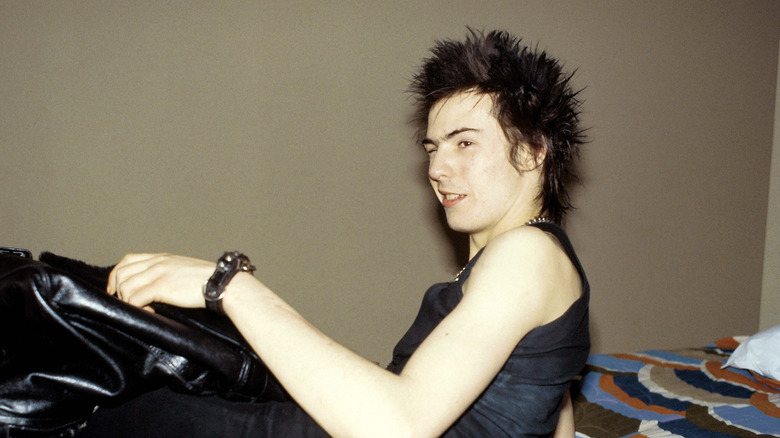
The '70s birthed the early punk movement, and Sid Vicious was at the forefront of the musical and cultural revolution. The Southeast London native was the second bass player for the Sex Pistols, one of the bands leading the punk charge with songs like "Anarchy in the U.K." and "God Save the Queen" — both of which were off the group's 1977 album, "Never Mind the Bollocks, Here's the Sex Pistols." The band also made waves when, in 1976, its members dropped F-bombs on British television. However, Vicious would find himself embroiled in a much more serious controversy in October 1978 when his girlfriend, Nancy Spungen, was found dead inside the couple's room at Manhattan's Chelsea Hotel.
Spungen, who was 20 years old at the time, had bled to death after being stabbed in the stomach with a knife. Vicious was later discovered in an agitated state, and he initially confessed to having killed her following his arrest before recanting and claiming he was sleeping when Spungen died. In the days/weeks/years since the crime was committed, speculation about what really happened that night abounded. This much is certain — Vicious was never punished for his alleged involvement; he died of a drug overdose in February 1979. He reportedly left a heartbreaking note behind, claiming he had made a death pact with Spungen.
Comedian Freddie Prinze died by suicide just as his star was rising
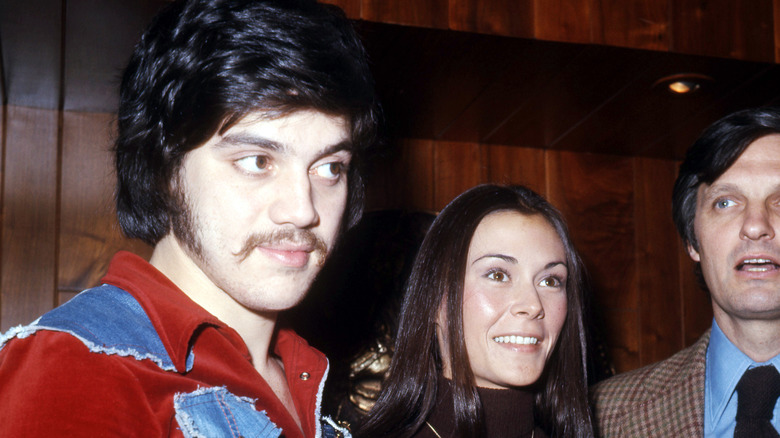
During the mid-1970s, Freddie Prinze emerged as a top stand-up comedian, working famed venues like The Improv and endearing himself to a nationwide audience after appearing on "The Tonight Show Starring Johnny Carson" in 1973. He later landed the role of Francisco "Chico" Rodriguez on the NBC sitcom "Chico and the Man." In the meantime, he was married briefly, during which his wife gave birth to future Hollywood star Freddie Prinze, Jr. He was also romantically linked to Pam Grier, Raquel Welch, and Joanna Kerns, and rubbed elbows with singer-host Tony Orlando. Amazingly, much of this happened before Prinze's 21st birthday, making him a rising star in show business. However, his promising life and career were ultimately cut short when he was just 22.
Prinze suffered from depression and reportedly struggled to cope with the rigors of superstardom. In January 1977, following a telephone conversation with his former wife, Prinze shot himself in front of his business manager, Marvin Snyder. The death was ruled a suicide; however, in 1983, Prinze's mother, wife, and son brought a civil suit against the performer's insurance company, and a jury found that his death was accidental, allowing the family to collect a sizable life insurance policy. Decades later, Prinze, Jr., lamented during an appearance on the "Oldish" podcast (via People) that during his early career, "I didn't love acting because of what the business had done to my dad."
The Nixon administration investigated and attempted to deport John Lennon
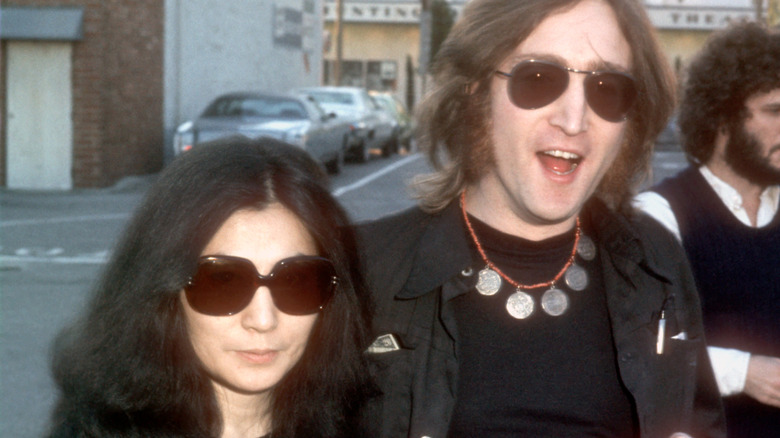
By the time the '70s rolled around, rock icon John Lennon had experienced real tragedy. In addition to the Beatles' big breakup, Lennon endured the fallout from World War II, abandonment by his parents, the death of his mother, the uncle who helped raise him, his friend/original Beatle Stuart Sutcliffe, and the band's manager, Brian Epstein, as well as a failed first marriage and estrangement from his oldest son. Then, during the '70s, he suddenly found himself at odds with a U.S. government that was actively investigating him and seeking to deport him and his wife, Yoko Ono.
Dating back to his Beatles days, Lennon had been a force for peace and love — his poor treatment of his significant others aside. So, in 1972, when U.S. President Richard Nixon was seeking re-election and fearing the possibility that Lennon would lead the movement against him or the anti-war youth would vote him out of office, his administration employed the FBI to follow and investigate Lennon for months in hopes of busting him on drug charges. "When it first started, I was followed in a car and my phone was tapped," Lennon said during an appearance on "The Old Grey Whistle Test." "I think they wanted me to notice, to scare me, and I was scared. Paranoid." Ultimately, Lennon and Ono remained, and Nixon resigned in 1974 during his second term.
Lynyrd Skynyrd's Ronnie Van Zant, Steve Gaines, and other band members died in a tragic plane crash
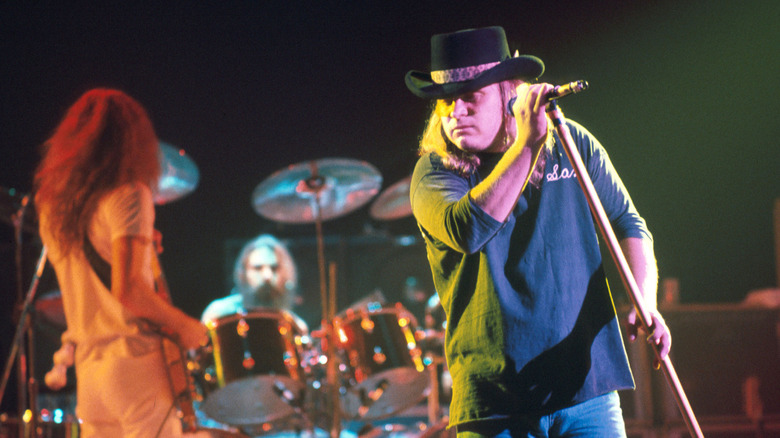
If you're familiar with the term "southern rock," you can probably thank Lynyrd Skynyrd. Formed in 1964 by Ronnie Van Zant, Gary Rossington, Allen Collins, Larry Junstrom, and Bob Burns, the Jacksonville, Florida-based band went on to carry the banner for a genre-bending brand of music that combined elements of hard rock, blues, and country during the mid-1970s with songs like "Sweet Home Alabama," "Free Bird," and "That Smell." However, in 1977, when the band was at the peak of its powers in music and show business at large, a deadly tragedy stole the lives of multiple band members, including Van Zant.
After a performance at South Carolina's Greenville Memorial Auditorium, the band chartered a flight for Baton Rouge, Louisiana, where it was slated to perform the following night. Incredibly, the plane ran out of fuel, and the pilots were forced to attempt an emergency landing in a wooded area in Mississippi. Van Zant died in the crash that resulted, as did guitarist-singer Steve Gaines and his sister, backup singer Cassie Gaines, along with three others. Meanwhile, dozens of other passengers were seriously injured. "It's been 45 years since the plane crash, but it seems like yesterday. And I think about it every day," drummer and crash survivor Artimus Pyle told Forbes in 2020.
Rock icon Elvis Presley tragically died at his Graceland home
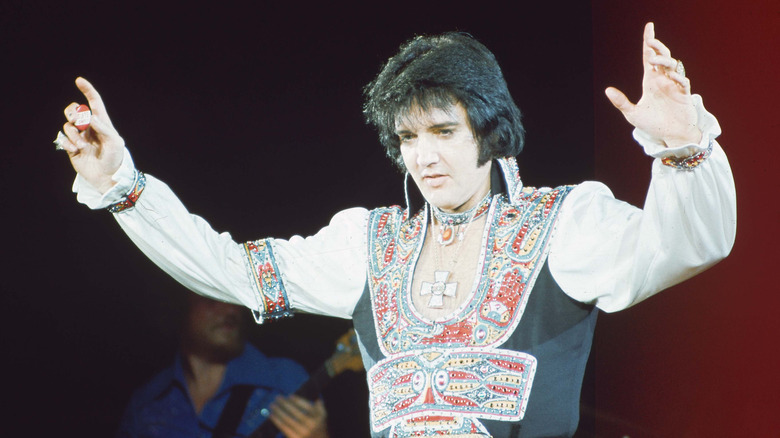
While he didn't originate the genre, few performers are as synonymous with the early days of rock and roll as "The King," Elvis Presley. The Tupelo, Mississippi, product emerged from the ether to score multiple No. 1 songs in 1956, including iconic tracks like "Heartbreak Hotel," "Don't Be Cruel," "Hound Dog," "Love Me Tender," and others. Thanks to his unique vocals and provocative performance style, he continued to log major hits into the '60s and became a veritable movie star, too, with memorable performances in films including the 1957 classic "Jailhouse Rock" and 1964's "Kissin' Cousins" and "Viva Las Vegas." As his popularity waned, his health suffered, and substance misuse became a part of his life during the '70s, though, "The King" found himself hurtling toward a tragic end.
As Presley was set to begin a tour in Aug. 1977, he was found unresponsive on the bathroom floor of his famed Graceland home in Memphis, Tennessee. He was later pronounced dead at a local hospital at the age of 42. It was later determined that Presley died as a result of a cardiac arrhythmia. However, a toxicology report later revealed the singer had several hard drugs in his system when he died. For years after his death, some fans and observers speculated that Presley was actually still alive somewhere. Others, meanwhile, have bandied about the idea of a Presley Family Curse.
Studio 54 became the epicenter of drugs, crime, and celebrity excess
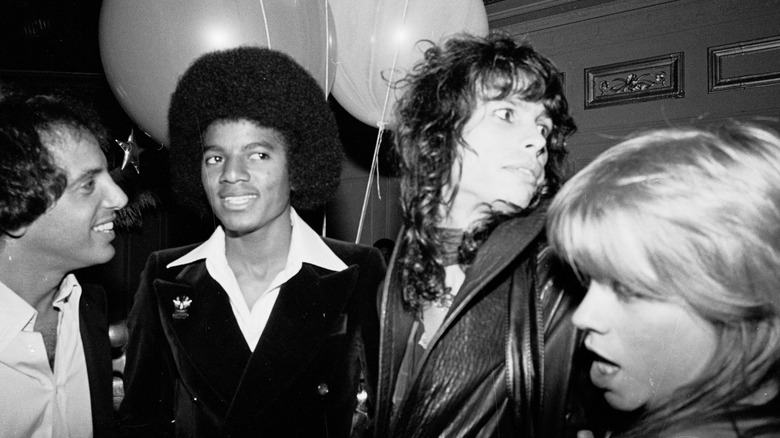
New York City in the '70s was a mystical place where anything was possible. People from around the world converged there in pursuit of the American dream alongside celebrities and the city's elite. Simultaneously, a palpable veneer of danger and grime was omnipresent. Perhaps no single location exemplified the confluence of these things better than Studio 54, a nightclub at 254 West 54th Street. On any given night, one could see anyone from John Belushi and Andy Warhol to Cher or Donald and Ivana Trump letting loose between its walls. However, much like the greater city it inhabited, Studio 54 had a seedy underbelly.
Club promoter Baird Jones claims that urban legends about a person dying in the vents after trying to sneak into the venue are true. "This guy got stuck in a vent trying to get in. It smelled like a cat had died. He was in black tie," Jones was quoted as saying in the book "The Last Party: Studio 54, Disco, and the Culture of the Night" (via Newsweek). Other wild tales include guests being supplied with premium cocaine and Mick Jagger's wife, Bianca, riding a white horse around the club while being led by a naked man. The Studio 54 party came to a sudden end in December 1978 when federal agents raided the club, and its famed proprietors were later imprisoned for tax evasion.
Everything about The Exorcist and its cast was a scandal
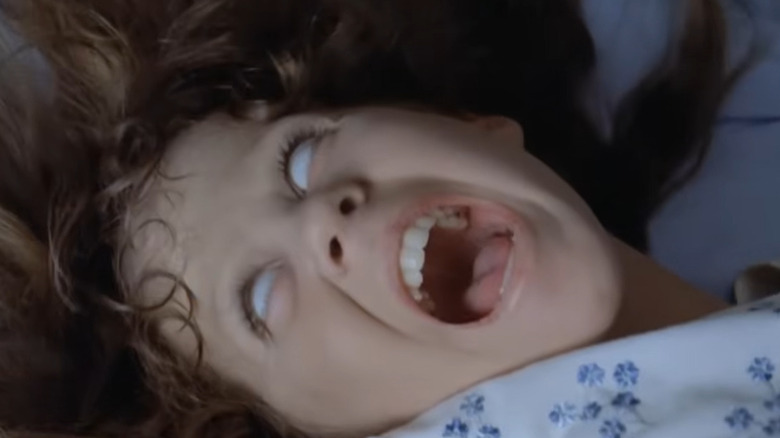
Released in theaters in December 1973, William Friedkin's horror film "The Exorcist" was a massive hit for Warner Bros., and it is now regarded as one of the all-time greatest horror movies. As incredible as the final product was for fans and the filmmakers, "The Exorcist" set and the cast experienced real-life tragedy on par with the fictional, supernatural horrors in the film.
For starters, the production endured multiple setbacks and delays, including star Linda Blair — who looks totally unrecognizable now — losing her grandfather and the home where the film was set to be shot catching fire. Additionally, as many as nine people are believed to have died during production or shortly thereafter (including actor Jack MacGowran, whose character dies in the movie), as star Ellen Burstyn remembers it. Meanwhile, many others suffered serious injuries on the shoot. The stories of death and misfortune have only grown in number over the ensuing years. In 2019, Rev. William J. O'Malley — a Jesuit teacher who won a supporting role in the film — was named in a legal complaint which saw several people accuse nine Catholic clerics of abusing them as children.
Bruce Lee died tragically before completing work on Game of Death
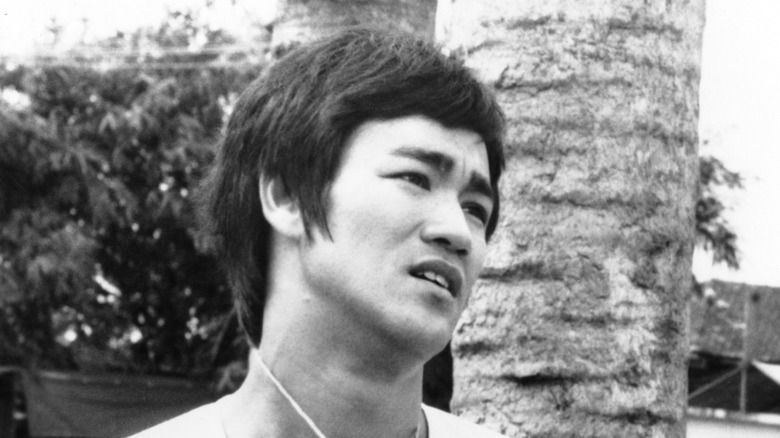
Over the decades since his heyday in the 1960s and '70s, Bruce Lee has evolved into a cultural figure of mythic proportions. However, the San Francisco-born, Hong Kong-raised actor and martial artist's impact was felt way back then, too. Lee first emerged into America's consciousness with his role as Kato in the 1966-67 William Dozier-produced ABC superhero series "The Green Hornet." He went on to appear in martial arts films like "The Big Boss," "Fist of Fury," and "The Way of the Dragon" during the early '70s. Lee also invented his own hybrid martial art discipline, Jeet Kune Do, and taught the likes of NBA star Kareem Abdul-Jabbar, actors Chuck Norris and Sharon Tate, and others. However, his impressive life and career met a tragic end in July 1973.
Lee was gearing up to resume work on the film "Game of Death" and was set to have dinner with former "James Bond" actor George Lazenby in Hong Kong to formalize his involvement in the project, but he no-showed the meeting. Earlier, Lee had complained of a headache and decided to take medicine and have a nap while at the home of Taiwanese actress Betty Ting Pei, who later claimed to have been Lee's mistress. When she was unable to rouse him, Lee was ultimately taken to the hospital, where he was pronounced dead at the age of 32 due to cerebral edema, although his cause of death has been disputed.
Jim Morrison's death sparked rumors and conspiracy theories
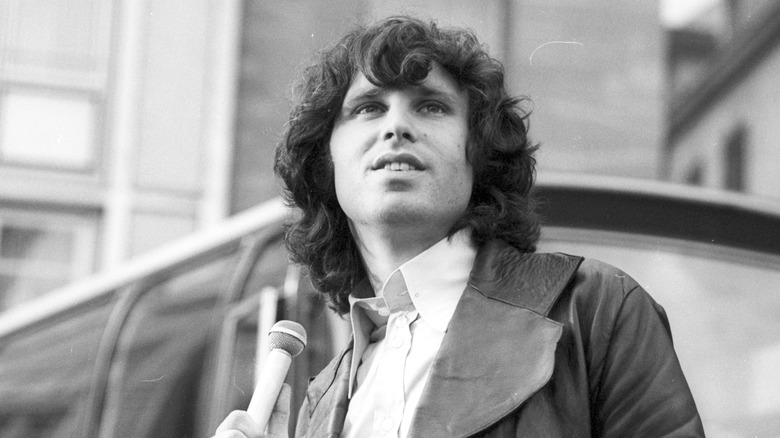
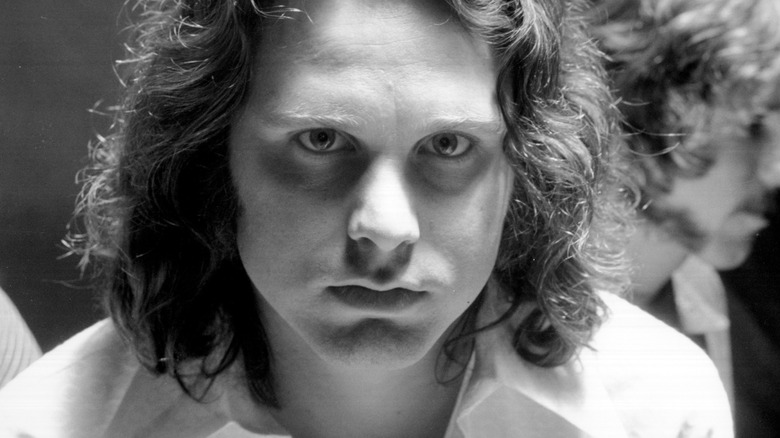
The enigmatic Jim Morrison was the frontman for the legendary Los Angeles-based rock band The Doors. Along with keyboardist Ray Manzarek, guitarist Robby Krieger, and drummer John Densmore, Morrison rocked the counterculture and owned the airwaves during the late '60s and early '70s with songs like "Break On Through (To the Other Side)," "Light My Fire," "Hello, I Love You," "Touch Me," and more. After a wild performance in Miami in March 1969, he was famously arrested, charged, and later convicted of indecent exposure and profanity. Just two years later, in July 1971, a significantly larger splash was made when Morrison was found dead in France.
The singer was discovered in the bathtub of the Paris apartment he shared with his longtime girlfriend/common-law wife, Pamela Courson. Although the official cause of death was listed as heart failure, no autopsy was performed. He's now an unfortunate member of "The 27 Club." Theories about what killed Morrison and rumblings about the singer having faked his death proliferated for years after the tragedy occurred. Even now, there's a movement of people who believe Morrison is still alive and well today.
If you or anyone you know has been a victim of sexual assault, help is available. Visit the Rape, Abuse & Incest National Network website or contact RAINN's National Helpline at 1-800-656-HOPE (4673).
If you or someone you know is struggling or in crisis, help is available. Call or text 988 or chat 988lifeline.org.
If you or someone you know may be the victim of child abuse, please contact the Childhelp National Child Abuse Hotline at 1-800-4-A-Child (1-800-422-4453) or contact their live chat services.