

10 Of The Most Hated TV Characters Of The 1970s
After television first soared as a medium in the years after World War II, becoming a part of daily life in America during the 1950s and '60s, it continued to explode during the 1970s. From sitcoms that tackled darker societal themes such as "All in the Family" and "M*A*S*H" to dramas like "Columbo," miniseries like "Roots," iconic variety shows like "Saturday Night Live," and more, the decade saw TV producers become increasingly willing to push the boundaries of what was considered acceptable viewing and, in some cases, deliver socially conscious programming.
Along the way, characters like Arthur "Fonzie" Fonzarelli, Hawkeye Pierce, Mary Richards, and others became beloved by viewers, with the decade also minting a new generation of stars. However, not every character introduced by the shows of the '70s managed to capture the imagination of audiences in the same way. Whether they were written to be villains of their respective series or their motivations or portrayals rubbed viewers the wrong way for one reason or another, some characters were loathed by audiences.
With that in mind, here are 10 characters from 1970s television that became hated by viewers — either back when their shows were still airing or even now, when viewed through a modern lens.
Cousin Oliver from The Brady Bunch
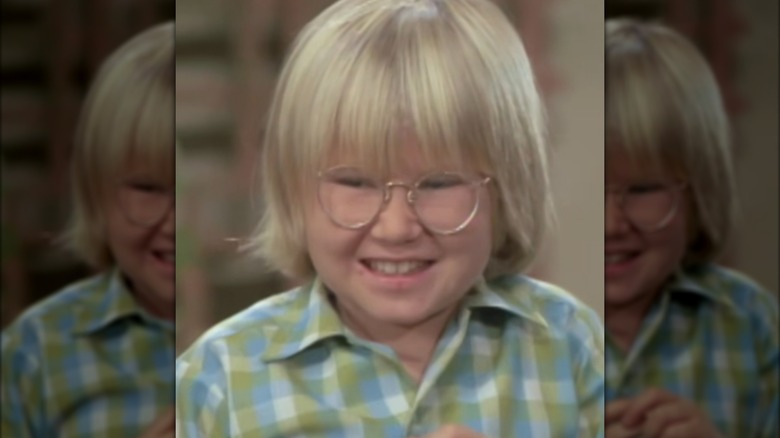
Having aired for five seasons on ABC from 1969 to 1974, "The Brady Bunch" has managed to permeate the pop culture zeitgeist like few other sitcoms of its time — or ever, really. The story of the union between a lovely lady bringing up three very lovely girls and a man named Brady who was bringing three boys of his own (as the theme song goes) was full of zany adventures and memorable characters. However, one character failed to elicit the same emotional response as the original crew.
Midway through Season 5, Cousin Oliver — portrayed by Robbie Rist — joined the "Brady Bunch" cast as the nephew of Florence Henderson's Carol Brady, who was sent to live with the titular family while his own parents were in South America. His arrival arguably marked the show's "jump the shark" moment, as cast and character dynamics were thrown for a loop, and audiences quickly grew weary of the new formula. "People would come up to me and say, 'You're the guy who killed 'The Brady Bunch,'" Rist told Cracked in 2023.
Even the actors who played the Brady kids — some of whom were already thinking about their next phase — couldn't get down with the new addition. "Every time a show is starting to get a little bit lower in the ratings, they start to add in the cute kid," Susan Olsen, who played Cindy Brady, said during a 2025 panel (via Remind Magazine). Added Barry Williams (Greg Brady): "I was looking for the exit when we saw Oliver walking through the front door."
Little House on the Prairie's Nellie Oleson
Based on Laura Ingalls Wilder's semi-autobiographical novel series of the same name, "Little House on the Prairie" aired on NBC from 1974 to 1983, bringing star Michael Landon continued success after his lengthy run on "Bonanza." The show told the story of the Ingalls family, life on their farm near Walnut Grove, Minnesota, and the lives of others in the community. Landon played the Ingalls family patriarch, Charles, while Karen Grassle brought his wife, Caroline, to life. Daughters Laura and Mary were played by Melissa Gilbert and Melissa Sue Anderson, respectively.
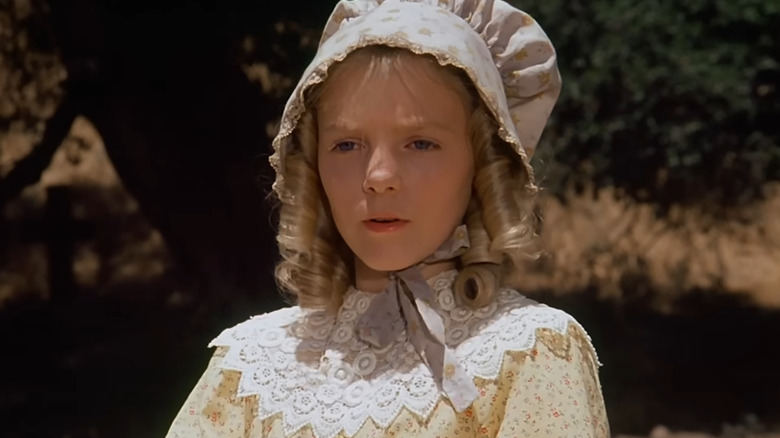
Alison Arngrim played Nellie Oleson — a girl who serves as the tormentor and antagonist of Gilbert's Laura Ingalls. And Nellie's sharp tongue and devious streak irked viewers to the point that their hate was visited upon Arngrim in real life. As reported by People in 2025, Arngrim recalled during a "Little House" 50th anniversary reunion that one person "threw an orange soda at [her] face" when she was walking in a Christmas parade. "I didn't have people going, 'Oh, I have such a crush on you. I love you.' It was, 'I hate you. I hate you so much,'" she explained.
While Nellie became a slightly more sympathetic character during "Little House's" later years, she remains one of the era's best-known TV bullies — not unlike the literary version of the character, which Wilder based on three separate girls from her childhood.
All in the Family's Archie Bunker
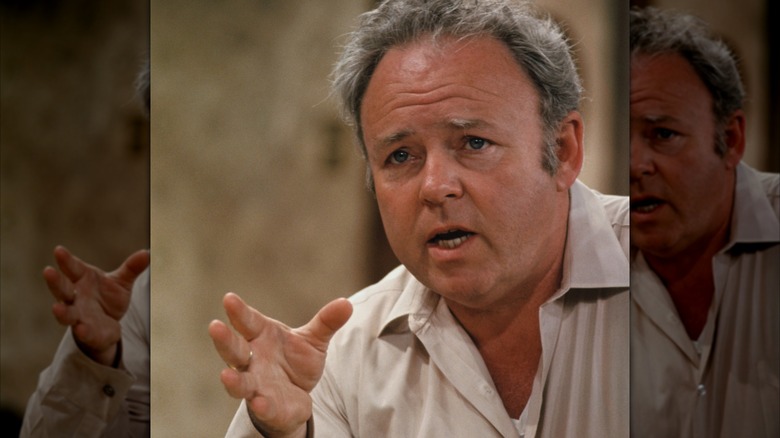
While the archetype existed before and after, the 1970s saw a preponderance of white, male husbands, dads, bosses, etc., on TV, whose lack of social grace, redeeming qualities, and dated and insensitive views on issues of race and gender were the core tenets of their characters. Examples include diner owner Mel Sharples from the CBS sitcom "Alice" and Walter Findlay from "Maude," which also aired on the network during the '70s. However, none have matched the impact of "All in the Family's" Archie Bunker.
Played by Carroll O'Connor, Archie's battles with his wife, Edith (Jean Stapleton), daughter Gloria (Sally Struthers), son-in-law "Meathead" (Rob Reiner), and polite society at large made the CBS sitcom an all-time classic. When viewed through a modern lens, though, Archie comes across as deeply offensive to modern viewers: a bitter racist who treats his wife, other family, and neighbors horrendously and is wholly unapologetic for his behavior.
Whether he was truly hated en masse at the time is a matter of debate. If anything, he was probably the cantankerous TV dad people loved to hate. Moreover, "All in the Family" sought to satirize Archie's racist and misogynistic behaviors, not celebrate them. Nevertheless, modern viewers may struggle with the character and content, despite their original intent. "People today don't understand that what they think is cringe, taught us how ridiculous those views are/were and helped teach us we could all be better humans," opined one Redditor.
Louie De Palma from Taxi
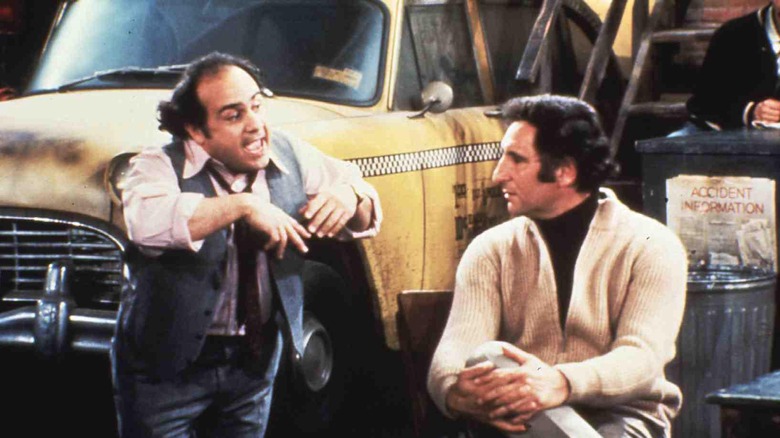
"Taxi," which aired on ABC for four seasons from 1978 to 1982, and then on NBC for a fifth and final season in 1982-83, chronicled the exploits of a group of New York City taxi drivers working for the Sunshine Cab Company. The series starred Judd Hirsch, Jeff Conaway, Marilu Henner (who lives with a rare medical condition), Andy Kaufman, and others, and the characters they played were largely flawed but likable. However, Danny DeVito's character, Louie De Palma, was an entirely different type.
De Palma worked as Sunshine's dispatcher — effectively the cabbies' boss — and he was essentially the show's villain. De Palma was self-serving in every sense, working to manipulate every situation to his own advantage, while verbally abusing others and even dabbling in petty crimes. In a 2024 Reddit thread discussing some of the worst characters in TV history, one commenter wrote, "Louie De Palma from 'Taxi.' One of the outright meanest SOBs in television history (ironically played by Danny DeVito who I don't think I've ever heard a bad word about in real life)."
DeVito even got the role by being a jerk in his audition. "I walked in, they're all sitting around, and I said with my script in my hand, 'One thing I want to know before we start: Who wrote this s***?' and I threw it on the table," DeVito told the AARP in 2025 (via the New York Post). "It was almost like a nanosecond of 'Did I screw everything up?' They fell on the floor. Louie walked into their lives. The rest is history."
The Waltons' Mary-Ellen Walton
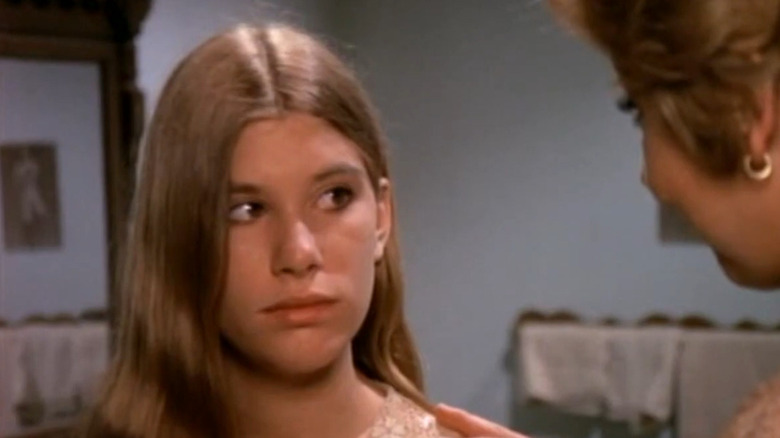
CBS' "The Waltons" was one of the most wholesome television dramas of the 1970s, if not television history. Airing for nine seasons, from 1972 to 1981, and spawning multiple reunion movies, the slice-of-life series followed the titular, close-knit, rural Appalachian family as its members lived and worked on a sawmill during the Great Depression. And while the show didn't have an overarching antagonist in the traditional sense, at least one of its main characters managed to ruffle viewers' feathers (perhaps unintentionally).
Judy Norton played Mary-Ellen Walton, the oldest daughter of John and Olivia Walton (Ralph Waite and Michael Learned, respectively). And while her character wasn't inherently bad, some viewers hated her sharp tongue and propensity for involving herself in others' affairs. "She's a self-righteous know-it-all that is always up in everyone else's business when she should be worrying about herself," wrote one Redditor in 2025, adding, "In a real-life big family someone would have smacked her right in the mouth for the way she talked to everyone."
Some viewers also took issue with Mary-Ellen's decision to leave her fiancé at the altar and instead marry Tom Bower's Dr. Curtis Willard shortly thereafter. "The one that I hated the most is when she dropped David to be with Curt who is all around d*****bag," one commenter wrote. "I mean she really made some stupid decisions." Said a commenter in a separate thread: "Mary Ellen, 20 years old ... marries 87-year-old Dr. Curtis Willard. Makes total sense."
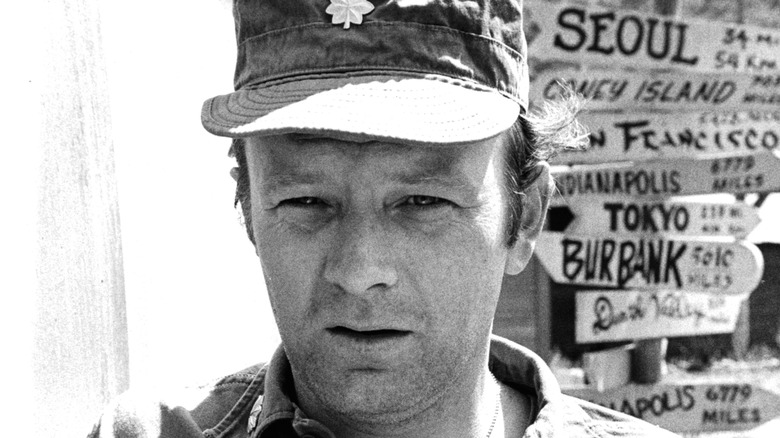
Frank Burns from M*A*S*H
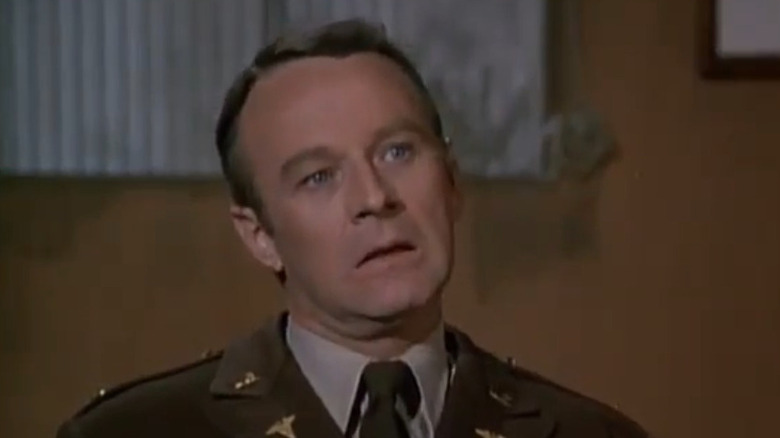
Few shows ascended to the heights of cultural relevance reached by CBS' "M*A*S*H," which aired for 11 seasons, beginning in 1972. When the series' final episode aired in 1983, it was watched by more than 100 million people, per contemporary reporting by The New York Times and others — a number that still has it among the most-watched TV episodes of all time. Featuring an ensemble cast, led by Alan Alda, Loretta Swit, Wayne Rogers, and others, "M*A*S*H" juxtaposed the horrors of the Korean War with occasionally quirky characters and situations.
While one viewer's favorite character may differ from those of others, Larry Linville's Frank Burns was the antithesis of a likable character. At best, he was arrogant, not especially great as a surgeon, and a constant antagonist to Alda's Hawkeye Pierce, Rogers' "Trapper John" McIntyre, and the rest of the crew during the series' earlier seasons. ScreenRant described Burns as "a living, breathing embodiment" of the Army's worst aspects, and the social commentary provided by his character isn't difficult to pick up. As a result, there was little viewer sympathy for the character.
Even Linville himself wasn't a fan of Burns. "Frank is the type of character I personally despise," he told The Shreveport Journal in 1975 (via MeTV). "It's a matter of ego but I think I'm doing a service by delineating this type of person. You know, so you'll be able to recognize him." Linville went on to describe Burns as "almost human but not quite," noting that, "somewhere it all went wrong."
Happy Days' Chachi Arcola
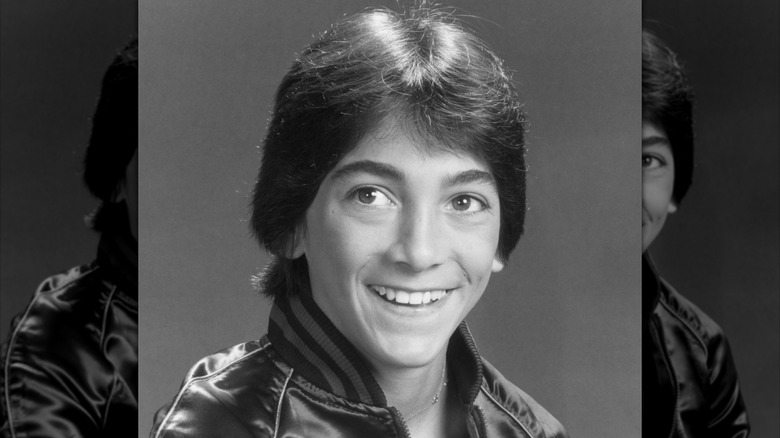
While the 1950s and early '60s-inspired "Happy Days" leaned heavily into the sitcom tropes of the day, the ABC sitcom — which aired for 11 seasons from 1974 to 1984 — was nonetheless memorable thanks in large part to its characters and the actors who brought them to life. Henry Winkler's Arthur "Fonzie" Fonzarelli was the ultimate rebel without a cause, Ron Howard's Richie Cunningham was the soft-spoken overachiever everyone loved, and so on. As the show went on, though, not every character was as well-received.
Scott Baio may have been a teen idol when he showed up as Fonzie's tough-talking cousin, Chachi Arcola, during "Happy Days'" Season 5, but his antics didn't quite make all viewers swoon in the same way. A write-up of a Chachi-centric episode of the "These Days Are Ours" podcast (via Dead 2 Rights) described him as "kind of an annoying little twerp with a dumb catchphrase. ('Wa wa wa!')." A Redditor in a 2020 discussion about the character wrote, "I remember these re-runs as a kid. He's the kind of character you found superficially charming and clownishly fun as a kid, but who you hate when you grow up. A lot of like Scrappy Doo."
Perhaps that is the realization ABC execs should have come to before greenlighting the short-lived spin-off series "Joanie Loves Chachi," which has been name-checked as one of the worst sitcom spinoffs of all time.
Scooby-Doo's Scrappy-Doo
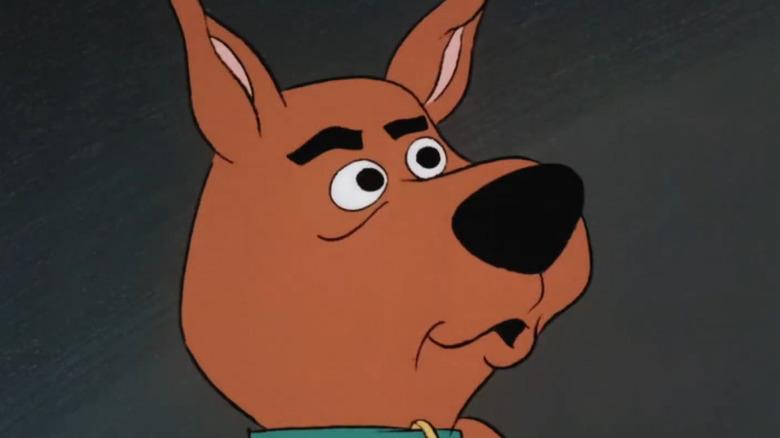
Speaking of Scrappy-Doo, that character — a cartoon dog and Scooby-Doo's nephew — was introduced to the iconic "Scooby-Doo" franchise of animated series and films at the tail end of the decade, via "Scooby-Doo and Scrappy-Doo," which debuted on ABC in 1979. That show followed the same format as earlier "Scooby-Doo" series, i.e., Fred, Daphne, Velma, Shaggy, and Scooby rolling around in their Mystery Machine van, solving crimes and other mysteries. However, Scrappy was added to freshen up the formula.
Although Scrappy has since become an important part of the "Scooby-Doo" canon (if one can truly characterize it that way), he nonetheless owns the distinction of being one of the franchise's most hated characters. Scrappy was even dropped from the "Scooby" universe for a time after the '80s. On the TV Tropes forums, the character was likened to Jar-Jar Binks and Wesley Crusher in terms of viewer blowback. The concept of Scrappy as a hated character became such an ingrained concept among fans that he was ultimately tapped as the main antagonist in the 2002 live-action "Scooby-Doo" movie.
For his part, the film's director, James Gunn, told Fan Boy Planet (via HuffPost) during the run-up to its release, "I can tell you I hate the little motherf****r with all my heart and soul." Coming from someone who would eventually base Krypto off of his own pooch and make the character an integral part of his new D.C. Universe, that's strong.
JJ Evans from Good Times
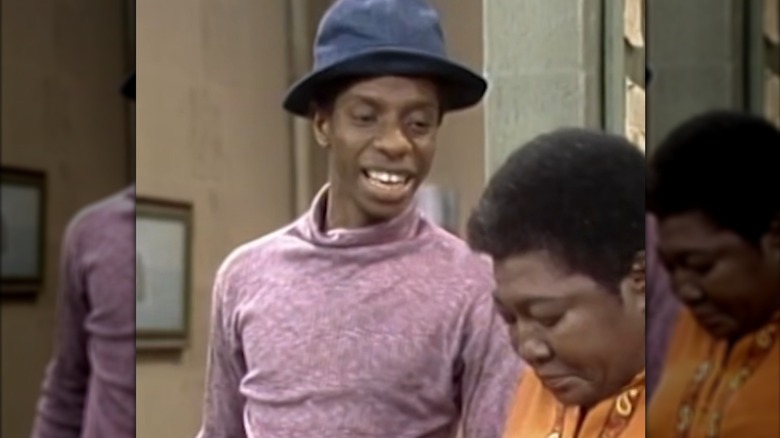
Some TV characters aren't necessarily intended or written to be hated or disliked — instead, it happens incidentally. There are also characters who become ultra-popular and, as a result, are pushed to the forefront of their show, only to draw the ire of its viewers and cast members. "Good Times'" J.J. Evans arguably covers both categories.
Played by Jimmie Walker, J.J. was the comic relief on the CBS sitcom, which aired from 1974 to '79. While he was scheming and spouting off his "Dyn-o-mite!" catchphrase, the show was chronicling the day-to-day struggles of a working-class Black family — actors Esther Rolle and John Amos played the couple at its head — and tackling serious issues like systemic racism and poverty. However, as J.J. became a cultural sensation, his humorous antics often distracted from the serious topics "Good Times" aimed to tackle, much to the chagrin of viewers and even cast members who understood its broader social aims.
For her part, Rolle denounced the character during an interview with Ebony, as recounted by the New York Post. "He's 18 and he doesn't work. He can't read or write. He doesn't think ... I resent the imagery that says to Black kids that you can make it by standing on the corner and saying, 'Dyn-o-Mite.'" Years later, Walker opined (via The Post) that, "Although I sloughed it off in public, the fact is that Esther's criticism — some of it very pointed and personal — seriously damaged my appeal in the Black community."
As the World Turns' Lisa
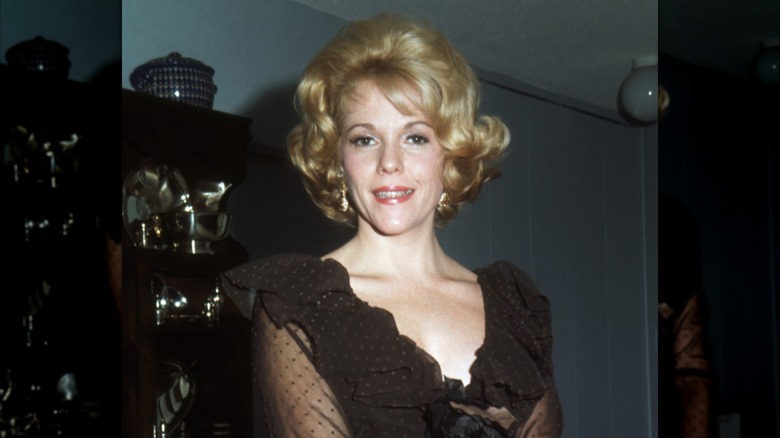
Some television series — and the actors and characters bringing them to life — transcend the decades in which they debuted or were otherwise popularized. Nowhere is that clearer than with daytime soap operas, some of which have been in production for multiple decades and evolved with changing social mores. Some soap characters manage to maintain their grip on the audience (be it positive or negative) despite the ever-changing landscape. Lisa in "As the World Turns" — as portrayed by Eileen Fulton — is one such character.
Lisa was arguably the first superstar villainess in daytime soaps. A conniver who had several affairs and was married to eight different men over the course of the series, the character's legal name was Lisa Miller Hughes Eldridge Shea Colman McColl Mitchell Grimaldi Chedwyn by the end, with Fulton having to employ a bodyguard to protect her from angry fans.
Near the height of the character's infamy, a 1974 Time feature on the genre described Lisa as a "superb****" and noted that she was "once the most hated woman on TV." The outlet recounted that Fulton was physically assaulted by a shopper who couldn't separate her from her character in front of Manhattan's Lord & Taylor. "At first I thought she wanted my autograph," she admitted. Fulton would play the character from 1960 until the series' end after a half-century of daytime dominance in 2010.