

Olympic Athletes Who Led Double Lives
In athletics, an alter ego isn't necessarily a bad thing. Many Olympic competitors swear by them. Sprinter Justin Gatlin has a name for his shadow self: "J Gat" is a ruthless villain who shouldn't be messed with. Speed skater Maame Baney has an email account for her ferocious alter ego, Anna Digger. Todd Herman, a performance coach for Olympic athletes, made a name for himself by "being the person to go to [to] build a secret identity or alter ego to boost performance."
But a lot of Olympians unwittingly wind up living double lives at some point in their careers. On the positive side of the spectrum, there's diver Chris Mears, who has multiple identities because he happens to be multi-talented. Muslim-American Olympian Ibtihaj Muhammad started fencing in her youth so she could overcome self-consciousness. Some athletes try to hide aspects of their personality because they haven't come to terms with their sexuality or gender. Others see their meticulously cultivated public personas upended by scandal. And when the games are over, some athletes seem to lose their sense of self altogether.
Let's look at the many Olympic competitors who, for one reason or another, found themselves living a double life.
Gold medalist Chris Mears is also a beat-matching DJ
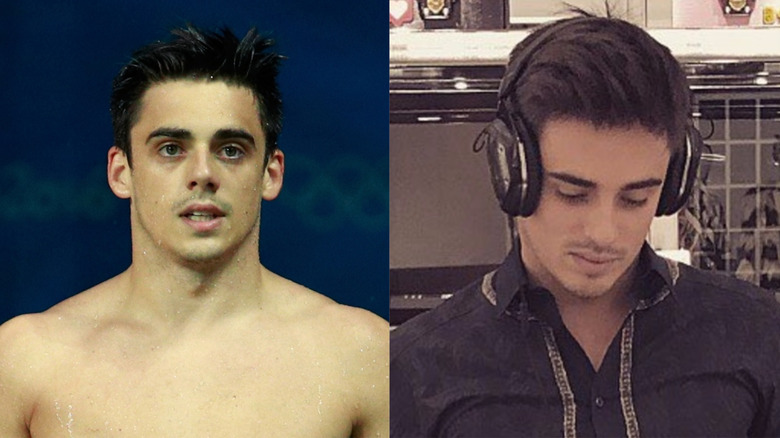
Prior to winning a gold medal in the 2016 Rio Olympics, Chris Mears was told he'd probably never dive again. In 2009, the athlete suffered a glandular fever that culminated in a spleen rupture. He spent a week in the ICU, and physicians told him he only had a five percent chance of pulling through. Miraculously, he made a full recovery, but not before suffering a seizure that lasted seven hours. He was also in a coma for three days.
Remarkably, Mears took the opportunity to pick up a new skill while getting back on his feet: he learned how to beat-match. Then he started landing professional DJ gigs and producing his own EDM tracks. "I've always been inspired by electronic and dance music," he told Billboard in 2016, "so I knew that's what I always wanted to create at one stage."
Mears was, in fact, able to dive again. While preparing for the 2016 Games, he occasionally booked one-off DJ gigs. That proved rather tricky since he had to be in the pool from seven in the morning to five in the afternoon. "Doing a gig... and then going to training is not very professional," he told Billboard. "Finding that balance is key."
Clearly he succeeded: His win marked the first time Britain won a gold medal for diving, and Mears is now signed to Universal Records.
Olympic fencer hid her hijab behind her mask

"I wanted to find a sport where I could be fully covered and I didn't have to look different."
That's Muslim-American fencer Ibtihaj Muhammad, talking to The Washington Post in 2016. As a youth, Muhammad tried her hand at various sports — track, volleyball, softball — but always felt self-conscious: Her peers were decked out in tank tops and shorts, while Muhammad's mom always adjusted her uniform to "adhere to the tenets of my faith," she explained in The Secret Life of Muslims web series.
The moment she saw fencers in action, she knew she'd found her sport — particularly because of the mask and uniform. On difficult days, when she was harassed for her faith, she could simply go to the courts, put on the fencing attire, and lose herself. "She had to fight her way and prove to the world that she's just as good, that she should be treated just like anybody else," Muhammad's fencing coach, Akhi Spencer-El, told the newspaper.
In 2016, Muhammad became the first American to ever compete in the Olympics wearing a hijab. "I think that anyone who has paid attention to the news would know the importance of having a Muslim woman on Team USA," she told Time in 2016. "It's challenging those misconceptions [about Muslim women.]"
Suzy Favor Hamilton: Olympic runner and high-priced escort
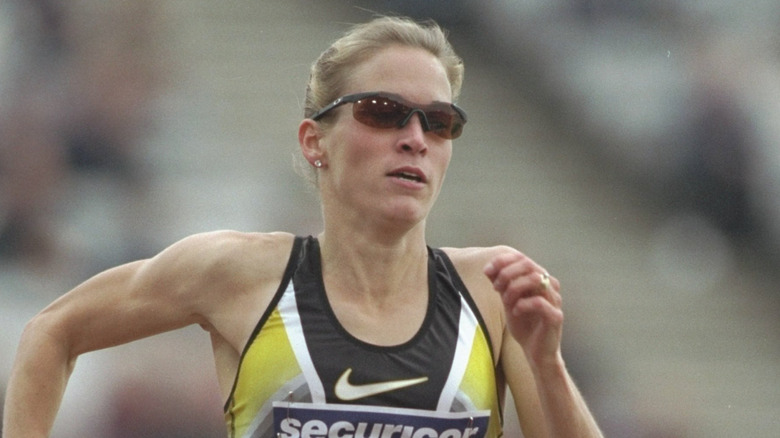
Olympic runner Suzy Favor Hamilton believes her downward spiral began the day she deliberately fell and pretended to be injured during a 1,500-meter race at the 2000 Sydney Olympic Games. As she told ABC News' 20/20 in 2015, "That was Step One of terrible things to happen." And some pretty terrible things did happen to Hamilton. In 2012, The Smoking Gun revealed the three-time Olympic runner was also "Kelly Lundy," a Las Vegas escort who charged $600 an hour.
After giving birth to her daughter Kylie, Hamilton's husband Mark noticed she was acting irrational. Hamilton's doctor misdiagnosed her as clinically depressed and put her on an antidepressant. Hamilton was, in fact, bipolar, and reacted to the drug in strange ways, becoming reckless and hyper-sexual. She went skydiving on a whim and convinced Mark to participate in a threesome. Eventually, she began to escort, and her husband put up with it, thinking, "She's going to get this out of her system and it's going to be done."
One night, Hamilton was at a Vegas hotel, expecting to meet a client when she was approached by investigative reporter William Bastone, who co-founded The Smoking Gun. "I knew my life was probably over," Hamilton told 20/20. The story sparked national headlines. Ultimately, Hamilton's doctor realized the medication was the root cause of her erratic behavior. As for her escorting? "It wasn't Suzy," Hamilton says. "I keep trying to emphasize that wasn't me. It was the disease."
Ryan Lochte: From lovable goof to lying drunkard
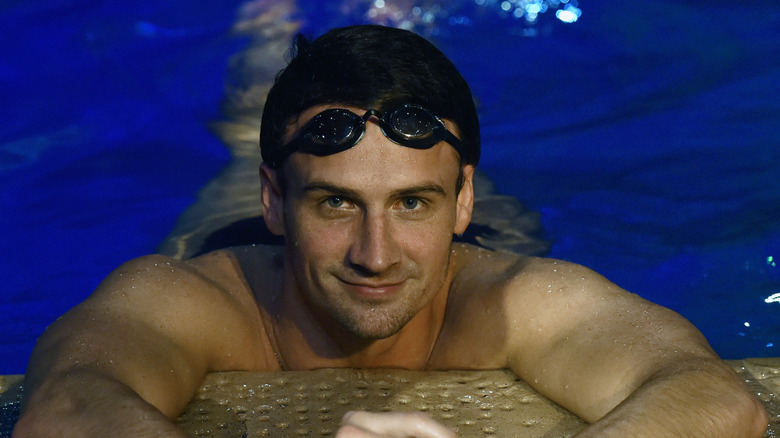
It's what everyone fears when they travel to a foreign country. In August 2016, frantic reports started pouring in from Rio: Beloved Olympic swimmer Ryan Lochte and three of his teammates had fallen victim to a brutal robbery. An armed man had allegedly flashed a police badge and forced the athletes out of their taxi at gunpoint. Talking to Billy Bush on the Today Show, Lochte recounted the harrowing story in vivid detail, reliving the terrible moment he felt the cool steel of the gun's barrel pressed against his forehead.
It was all a lie, and Lochte forever tarnished his brand and reputation with the scandal (inevitably dubbed "LochteGate"). The fact is, the four Olympians got obnoxiously drunk and started acting out at a gas station that night. They ripped a sign off the wall, and broke a soap dispenser and a mirror. The athletes were reportedly detained by gas station security guards for vandalism, and Lochte conjured up the gun-toting carjacker in a desperate attempt to suppress the embarrassing truth.
After being caught playing the victim card, Lochte issued a series of bumbling apologies, losing out on four sponsorships in the aftermath. In 2017, he told TMZ he'd do whatever it takes "to once again earn the trust of my friends, family, and the public."
Melo Imai went from snowboarding to sex work

An audience favorite, Melo Imai was considered a snowboarding prodigy when she entered the 2006 Olympics at the age of 18. Unfortunately, she finished last in the qualifying round after crashing on the halfpipe, and the accident left her fading in and out of consciousness. According to the Tokyo Reporter (via The New Zealand Herald), Imai was branded "Japan's embarrassment" and a "waste of taxpayers' money." The whole experience was "a nightmare" for Imai, who says she "had this constant fear of failure, like a choking feeling." Her devastation was only compounded by the fact that she'd disappointed her disciplinarian father.
After the Olympics, the mother of two became a prostitute, posed nude for various publications, and starred in pornographic films. The New Zealand Herald reports Imai attempted suicide because of the work, but recently, it sounds like she's found some contentment in her new life.
"Speak to me and you will see that not everything is negative in my life," she told the Herald. "I'm enjoying my work ... and am back snowboarding again."
This All-American hero had a big secret
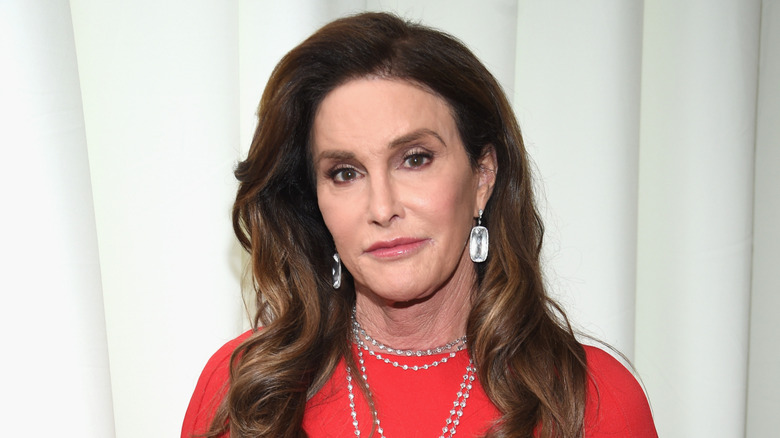
"There was always this woman that lived inside of me," Caitlyn Jenner told WBUR in 2017. "But I lived my life as Bruce." In 1976, the athlete then known as Bruce Jenner won the gold medal at the Olympics in Montreal, setting a new world record for the decathlon. Jenner became a bona fide celebrity as a result, his visage emblazoned on boxes of Wheaties and the covers of Sports Illustrated, Playgirl, and GQ. But behind the scenes, Jenner harbored a secret: Prior to his historic sports victory, he'd been dressing as a woman in private for several years. As a child, Jenner was dyslexic and suffered identity issues, and he suspects he grasped onto athletics to bolster his sense of masculinity. "There wasn't even a word for being transgender [back then]," he says.
In April 2015, Jenner opened up to Diane Sawyer in a 20/20 interview and came out as a transgender woman. "I just finally got to the point in life where: it's time for [Caitlin] to live," she told WBUR. "I'm very proud of my life. ... I won the Olympic decathlon, and also got Glamour Women of the Year award."
Since her transition, Jenner has starred in her own reality show, I Am Cait, and published a 2017 memoir entitled The Secrets of My Life.
Nicole Bobek: From skater to meth dealer, and back
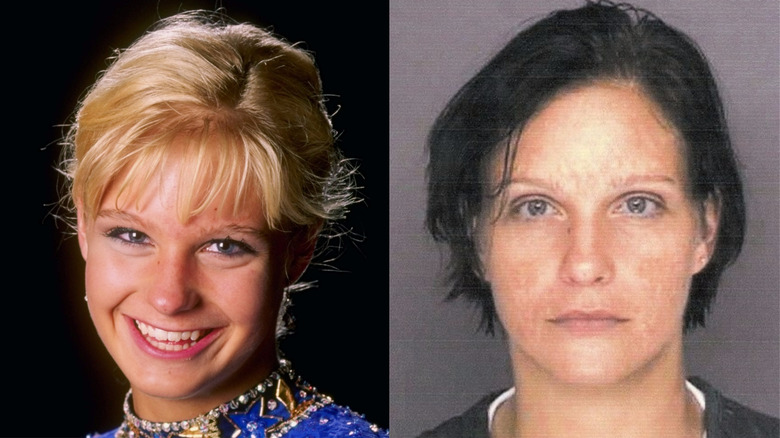
In the mid-90s, ice skater Nicole Bobek had the world of competitive figure-skating at her feet, earning over $500,000 a year, wowing audiences at the U.S. Olympic Festival in 1990, and winning the 1995 U.S. National Figure Skating Championships. She was even featured in the 2006 film All The King's Men, seductively skating for Jude Law and Sean Penn. For a time, Bobek was considered a squeaky-clean alternative to another popular, albeit more notorious, figure skater. "We've just gone from Tonya Harding to Nicole Bokek," laughed former coach Frank Carroll after she won the championships.
But behind the scenes, Bobek was a tormented soul. In 1995, she covertly entered a program for troubled youths after being charged with felony home invasion, but word soon got out. (She allegedly broke into another skater's house.) A sense of failure began chipping away at her psychologically after Bobek finished 17th place in the 1998 Winter Olympics. As The Associated Press reported in 2010, she entered into "a sleazy world" of crystal meth users and dealers. That year, she was sentenced to five years probation for participating in a drug network that moved approximately $10,000 worth of meth every month.
These days, she's back to skating and understandably happy to have that phase behind her. "I'm blessed that I've been given a second chance in life," she told The Atlantic City Weekly in 2011. "Life is so much better now."
Olympic skier Gus Kenworthy spent years in the closet
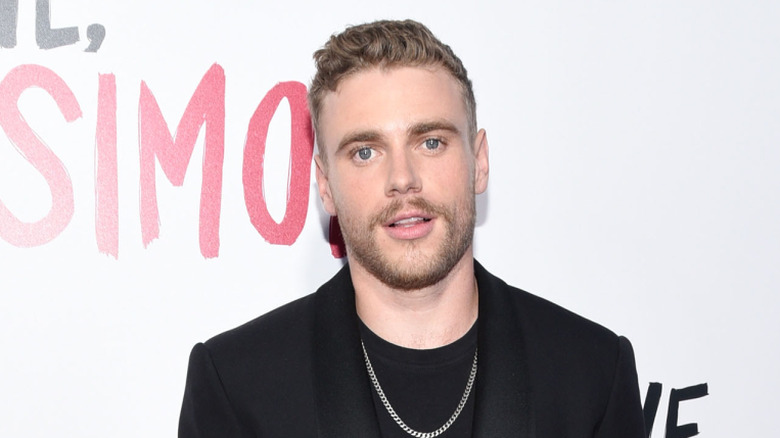
After Gus Kenworthy won a silver medal in the 2014 Sochi Games, a reporter asked him to confess his celebrity crush. He answered "Miley Cyrus," and immediately regretted it. "Before that, I was kind of like lying by omission," he told The Associated Press in 2018 (via CBS News). Now he was telling flat-out lies and presenting himself as something he wasn't. "It made me resent myself," he admits, "and made me realize that I didn't want to be ashamed of who I was."
In 2015, Kenworthy came out to the world in a heavily publicized ESPN cover story. While he says it's the most terrifying thing he's ever done, it's also the most fulfilling and was ultimately more than worth all the anxiety. The best part about it, he says, is "people tell me that it's made it easier for them to accept themselves."
Following the ESPN story, the freestyle skier scored loads of new sponsors. Far from being shunned by his fellow skiers, he's been embraced by the community for his bravery. Now he's looking to fulfill his ultimate goal, saying, "I wanna be able to be a beacon of light for young kids in sports."
Marion Jones was an inspiration... until coming out as a liar
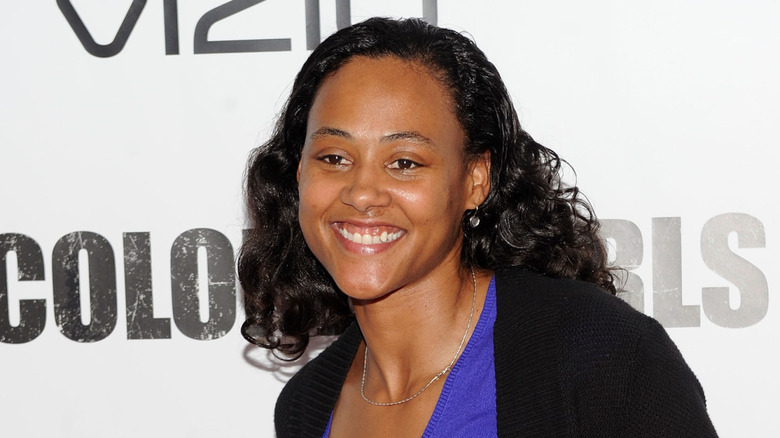
After Marion Jones won three gold medals and two bronze at the 2000 Olympic Games, she became a bona fide sports star overnight. Her beaming face was emblazoned on the cover of Vogue alongside the headline, "Greater Than Gold, Marion Jones, The New American Hero." The story tracked a day in Jones' life following her victory: Strangers stopped her on the street to say "Wassup." She lovingly tended to sponsorship duties for AT&T and Tag Heuer. And with every move, she proved to the world that track stars were the new rock stars. Dennis Craddock, a former coach, lovingly sang her praises in the piece: "You don't put limits on what Marion Jones can do."
This turned out to be true, but certainly not the way Craddock had intended. Jones was later busted for having ingested "The Clear," a form of steroid, prior to racing. She was dramatically stripped of her medals, sentenced to prison, and generally considered a national disgrace.
Ten years after the scandal, Jones expressed regret in a Daily Telegraph profile in 2010, "You can stay on the shore and realize it isn't all that fun, or you ride [a wave] and think, 'This is cool, this is fun' and then you are out in the middle of nowhere and it's too far to swim back."
Olympic diver Greg Louganis didn't dare disclose his HIV-status
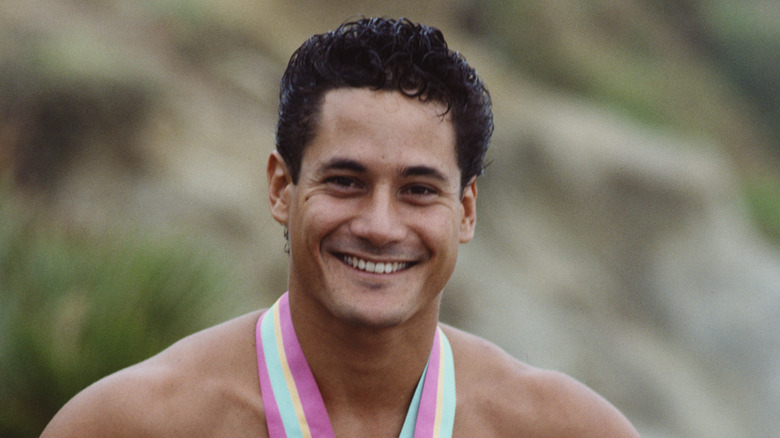
While competing in the 1988 Summer Games in Seoul, South Korea, Olympic diver Greg Louganis cracked open his head on a diving board and bled into the pool. Privately, he was more concerned about other people's health than his own. At the time, no one knew he was HIV-positive, and he was afraid he'd put people in danger. His coach Ron O'Brien had advised him not to tell the United States Olympic Committee about his status. Since diving wasn't a contact sport, what harm could be done? "There was so much fear and not a whole lot of education at that time," Louganis told Newsy in 2015. "In 1988, there wasn't a whole lot of compassion surrounding HIV/AIDS."
Louganis says that if he'd been open about his HIV status at the time, he surely wouldn't have been allowed to enter Seoul. He finally decided to tell the world he'd contracted the disease in 1995. "Everybody is on their own journey, and they have to follow their heart," he told Newsy. "You're not alone. It's important to share those stories."
Oscar Pistorius's triumph-of-spirit story hid a murderous aggression
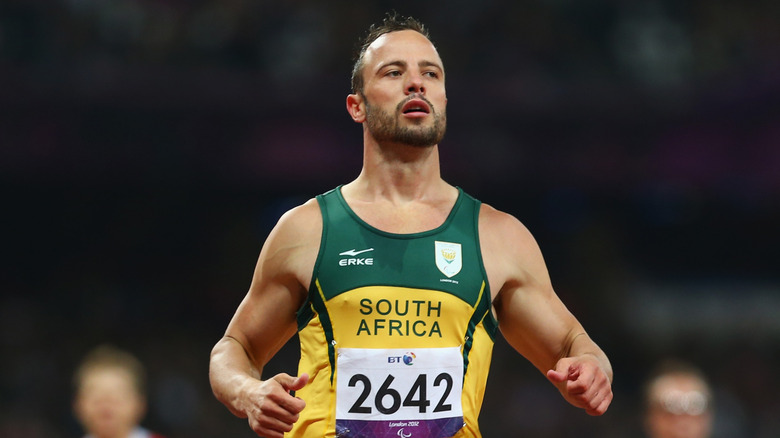
Oscar Pistorius was a media sensation in 2012 when he became the first-ever double amputee to participate in the Olympics, competing in the 400-meter sprint and the 4×400 meter relay race at the Summer Games in London. He was later chosen to carry the flag for South Africa at the Games' closing ceremonies. Pistorius had been born without fibula bones, leading to the amputation of his lower legs when he was just 11 months old. He was ultimately fitted with two carbon-fiber blades that served as prosthetics, earning him the nickname "Blade Runner." Some, including Olympic sprinting icon Michael Johnson, wondered whether his prosthetics actually gave Pistorius an unfair competitive advantage; However, that was hardly the biggest controversy the South African star would face.
On Valentine's Day 2013, the then-26-year-old Pistorius shocked the world by firing four bullets through his bedroom door and fatally shooting his model girlfriend Reeva Steenkamp. In 2014, he was found guilty of culpable homicide, a crime that was later upgraded to murder, resulting in a prison sentence that was extended to fifteen years. He went on to serve nine years of that sentence before being paroled, as reported by ESPN in January 2024. While Pistorius claimed that he shot Steenkamp by mistake, believing her to be an intruder, prosecutors in the case argued that he had done so intentionally after a late-night argument. For her part, Reeva's mother, June Steenkamp, believes that her daughter was murdered, but has managed to forgive the former Olympian.
Ryan Wedding went from snowboarding to the FBI's Ten Most Wanted list
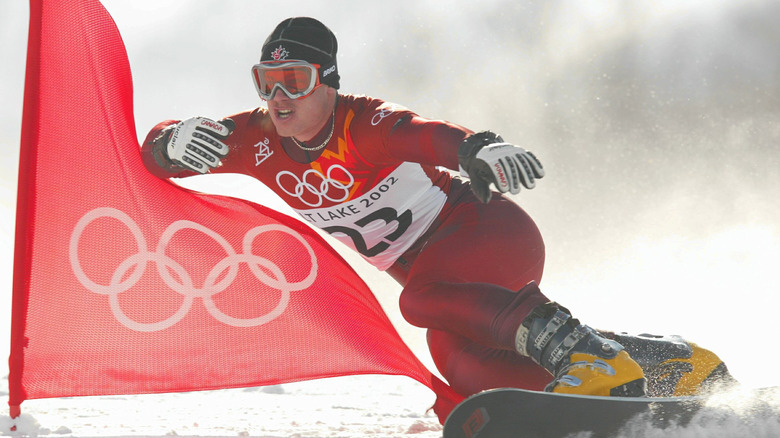
Once upon a time, Ryan Wedding was a snowboarding wunderkind, winning a bronze medal in the parallel giant slalom at the 1999 FIS Snowboarding Junior World Championship as a 12-year-old before going on to even greater success. He would become a Canadian national champion as a teenager before representing his country at the 2002 Winter Olympics, placing 24th in his signature event. His life took a major turn after the games in Salt Lake City, though, when he dropped out of college and allegedly became involved in a large cannabis-growing operation in Maple Ridge, near Vancouver. Police raided the facility in 2006, but Wedding was never charged. However, a few years later, he was convicted of conspiracy to distribute cocaine after attempting to buy from a U.S. agent.
Things would only get worse from there. After a year in prison, Wedding allegedly resumed his activities by spearheading a massive international cocaine trafficking operation and even ordering hits on his enemies. "They were killers," then-U.S. Attorney Martin Estrada said of the alleged operation (via ABC News) as Wedding was charged with several new felonies in 2024. "Anyone who got in their way they would target with violence. Including murder." The following year, Wedding, who's allegedly known as "El Jefe," received additional charges. Wedding was even placed on the FBI's Ten Most Wanted list before being apprehended in January 2026.
Fencing champ Jerzy Pawlowski was a Cold War-era spy
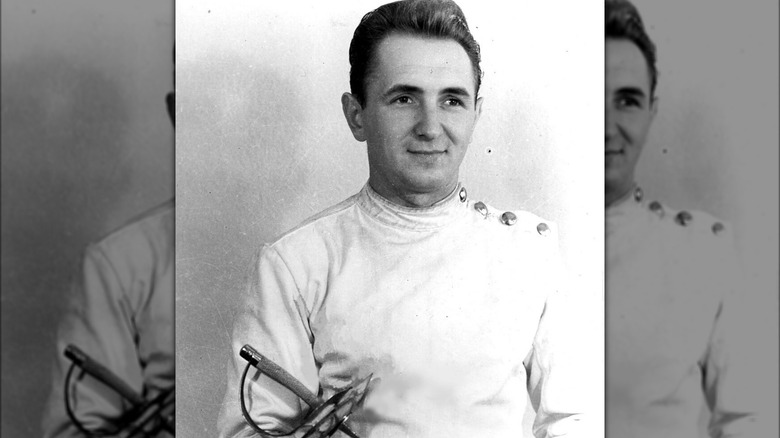
From 1952 to 1972, Polish fencer Jerzy Pawlowski participated in a whopping six Olympic Games, winning one gold medal (in the individual saber event at the 1968 games in Mexico City) as well as three silvers and one bronze. He also won a veritable bonanza of medals at the World Fencing Championships over that same span. To say that he's a legend in the sport, which has its roots in the late Middle Ages, would be an understatement. As incredible as his competitive journey was, though, Pawlowski's activities away from the fencing piste during the height of the Cold War were on another level entirely. In 1976, Pawlowski was convicted and sentenced to 25 years' imprisonment for serving as a NATO spy. According to The Times, the charges claimed that he had been on the CIA's payroll for more than a decade.
Pawlowski, who was also known for his charisma and love of gambling, had previously attained an officer's rank with the Polish army. As noted by The Times, he reportedly spied on his own fencing teammates for the state before taking his espionage talents to the West, making him a double agent during one of the most contentious times in modern history. The fencing icon ultimately served 10 years following his conviction before being involved in a prisoner exchange with other Western spies and several Eastern Bloc agents, on the Glienicke Bridge between East and West Berlin. Pawlowski reportedly refused to cross and was instead returned to his native Poland; He died in 2005.
Gold medalist Yannick Agnel is set to stand trial for sexual assault
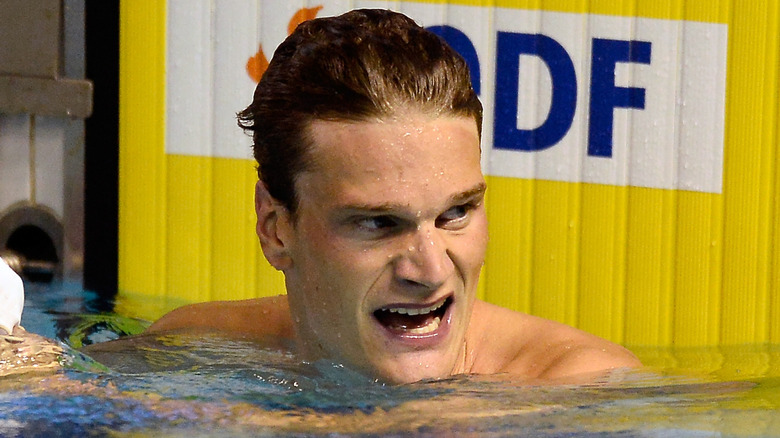
French swimming champ Yannick Agnel was a force in the pool at the 2012 Olympic Games in London, winning a gold medal in the 200-meter freestyle and the 4×100-meter freestyle relay, and earning a silver in the 4×200-meter freestyle relay event. However, in December 2021, he was placed under formal investigation on suspicion of sexual assault involving a minor, with the alleged crime having taken place several years earlier, in 2016, against the then-13-year-old daughter of a swimming coach. According to Reuters, Agnel admitted to his relationship with the young girl later, however, he reportedly denied that any coercion took place.
More than four years later, in January 2026, it was finally determined that Agnel would stand trial on charges of rape and sexual assault, as reported by ESPN. Agnel was 24 years old at the time of the alleged acts, which were said to have occurred in several locations, including France, Spain, Thailand, and Rio de Janeiro during the Olympic Games, per French officials (via ESPN). The outlet further noted that sex with a child under the age of 15 is classified as rape in France and is punishable by up to 20 years imprisonment
If you or anyone you know has been a victim of sexual assault, help is available. Visit the Rape, Abuse & Incest National Network website or contact RAINN's National Helpline at 1-800-656-HOPE (4673).
Beach volleyballer Steven van de Velde was convicted of rape before the Olympics
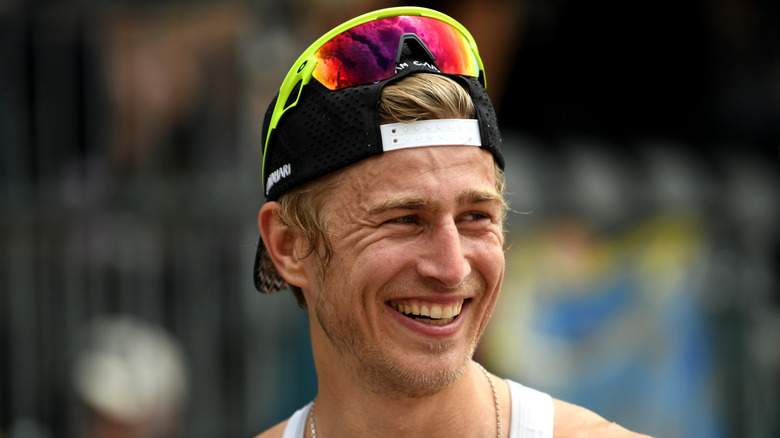
Unlike the athletes on this list whose double lives emerged after their Olympic heydays, Dutch beach volleyball star Steven van de Velde was convicted of a major crime before his selection to his national team. Van de Velde was sentenced to four years' imprisonment by a British court after being convicted in 2016 of raping a 12-year-old girl who had become his Facebook friend two years earlier when he was 19. The details of the case are particularly heinous, as Van de Velde reportedly traveled to Milton Keynes in England after building a relationship with the victim online, raped her multiple times, and then asked her to get the morning-after pill, as reported by the Milton Keynes Citizen.
As noted by the outlet, the judge in the case declared that van de Velde had "shattered" his Olympic dreams by committing the heinous crime; However, that ended up not being the case. After serving just 13 months in his native country, van de Velde went on to qualify for the 2024 Olympic Games in Paris alongside his teammate, Matthew Immers. The pair went on to reach the Round of 16 before losing their bout with the Brazilian team of Evandro Oliveira and Arthur Lanci. Along the way, van de Velde was booed by fans, and his very participation was met with a public outcry. More recently, he was denied a visa to compete professionally in Australia.