

Monica Lewinsky's Transformation Can't Go Unnoticed
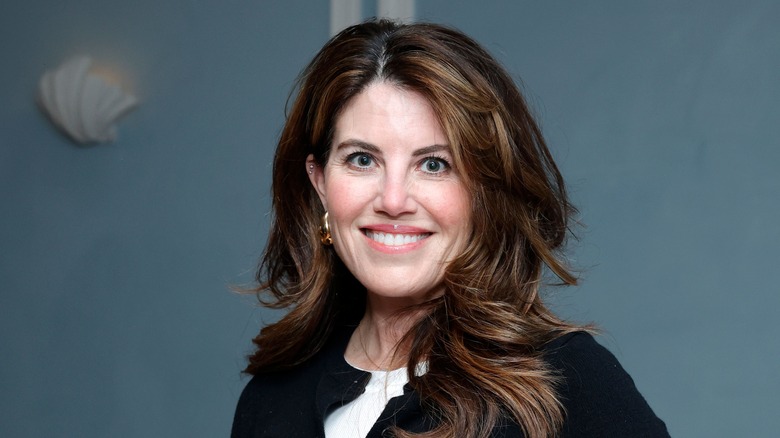
Once upon a time, fame and notoriety were two very distinct things. The former was reserved for those demonstrating exceptional talent that brought about acclaim, the latter for those who were known for far more ignominious reasons.
Yet it's fair to say that few celebrities have blurred that line more than Monica Lewinsky. A 22-year-old intern at the White House when her clandestine affair with President Bill Clinton began, her secret was ultimately exposed by her duplicitous "friend" Linda Tripp. Lewinsky found herself in the eye of the hurricane, at the center of one of the most explosive scandals of the century. She became a public laughingstock, with late-night hosts making countless jokes at her expense by mocking the more tawdry details of her trysts with Clinton — often involving her stained dress and that infamous cigar.
Being publicly mocked and shamed was soul-crushing, and a big part of Lewinsky's tragic truth. Yet she demonstrated resiliency. Rising above the sordid circumstances that made her a reluctant celebrity, she reinvented herself in ways no one could have imagined back in the 1990s, emerging like a phoenix from the ashes to reclaim the dignity and power that was stolen from her. It's been a fascinating journey, full of rollercoaster-like ups and downs, and it's far from over. Read on, and it will be clear why Monica Lewinsky's transformation can't go unnoticed.
Monica Lewinsky had a privileged upbringing
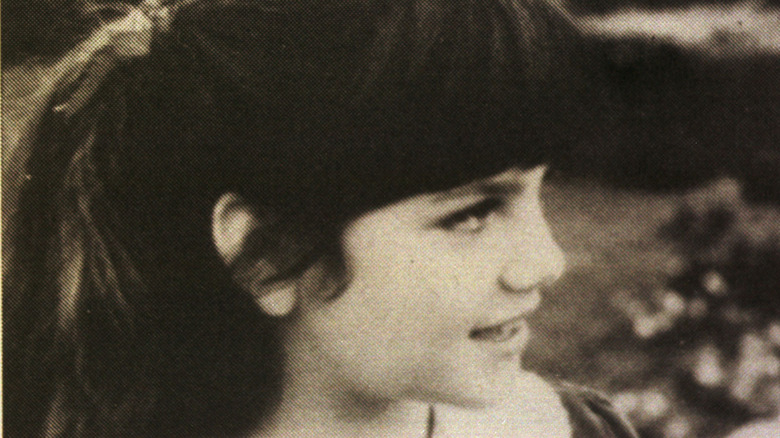
Monica Lewinsky was born in 1973. Her father, Bernard Lewinsky, was a successful oncologist, while her mother, Marcia Lewis, was an author. Growing up in Beverly Hills — literally within the TV-famous 90210 area code — her world was rocked by her parents' bitter divorce in 1987. Around the time of her parents' split, Lewinsky began her first year at Beverly Hills High, the setting for TV hit "Beverly Hills, 90210."
For Lewinsky, growing up in that world of wealth and privilege was a double-edged sword. Prone to becoming overweight, Lewinsky felt like an outsider alongside the gorgeous and glamorous teenagers who were her classmates. Her self-esteem, which had already taken a hit from her parents' divorce, plummeted. "Beverly Hills is a relentless place. It's very unkind to heavy people," Lewinsky's friend, Lenore Reese, told biographer Andrew Morton for his book, "Monica's Story."
Yet by the time she moved on to Bel Air Prep, a posh private school costing $12K per year, she appeared — at least outwardly — to be well-adjusted. "I remember her being a nice kid and pretty normal young lady," the school's then-headmaster, Richard Makoff, told CNN.
A White House internship led to her infamous affair with Bill Clinton
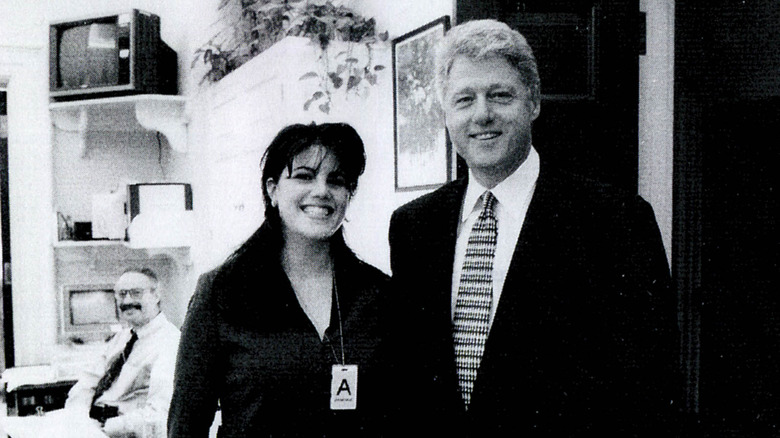
For Monica Lewinsky, her dream job interning at the White House turned into a living nightmare. Landing a White House internship in 1995 led to her infamous affair with President Bill Clinton. To her fellow interns, the notion that the most powerful man in the world would show any interest in Lewinsky seemed absurd. "It doesn't seem possible that [Clinton] would notice her or pick her out of a crowd," a male intern told People.
When details of the affair were leaked to the press, Clinton initially denied everything. "There is no improper relationship ..." Clinton insisted when interviewed by PBS news anchor Jim Lehrer, among the uncomfortable things he's said about the scandal. When pressed to elaborate on what he meant by that statement, Clinton replied, "It means that there is not a sexual relationship, an improper sexual relationship or any other kind of improper relationship."
An investigation was launched, with Ken Starr appointed independent counsel. Clinton was ultimately impeached, but remained POTUS. Lewinsky was granted full immunity, in exchange for testifying about the affair; suddenly, she was at the center of a full-blown scandal. "In 1998, after having been swept up in an improbable romance, I was then swept up into the eye of a political, legal, and media maelstrom like we had never seen before," she said when recalling that time in a 2015 Ted Talk, as reported by BBC News. "I was branded a tart ... a bimbo. I lost my reputation and my dignity and I almost lost my life."
She told her side of the story in cooperation with Princess Diana's biographer
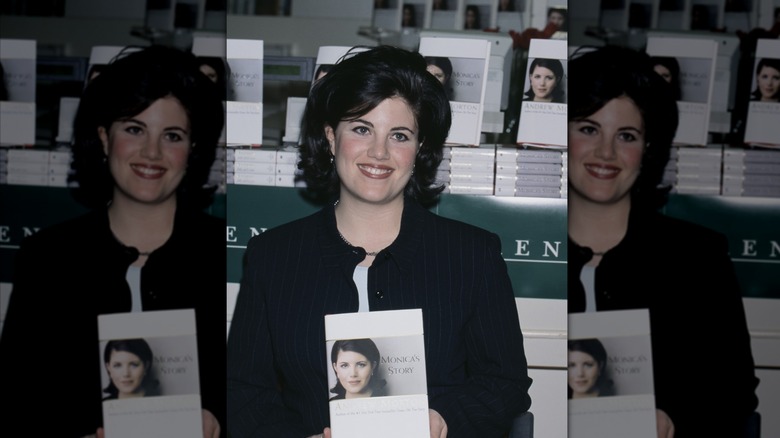
In the wake of the scandal, Monica Lewinsky found herself in uncharted territory. As an internationally famous celebrity whose name and visage were identifiable worldwide, she was also unemployable. To both support herself and tell her side of the story, she turned to writer Andrew Morton. Morton had famously worked with Princess Diana on her bombshell book "Diana: Her True Story," which listed all the ways Diana was betrayed, and Lewinsky hoped she could accomplish the same thing with her book, "Monica's Story."
Published in 1999, the book was the linchpin of a massive media blitz, a two-prong effort intended to repair her badly battered public image, and, of course, sell some books. That included a two-hour sit-down with iconic journalist Barbara Walters, which nabbed monster ratings when nearly 50 million viewers tuned in. Yet once again, Lewinsky was the draw, but didn't receive the financial benefits (advertising revenue for the interview was estimated at between $20 and $25 million).
She also gave an extensive interview for Time, appearing on the magazine's cover. She detailed just how different her experience had been from that of Clinton. "For me, I was the one lying awake at night crying, scared I was going to go to jail," she told the magazine. "I was the one being followed. I was the one being torn apart in the press, and my family. And then, yes, I bore some responsibility for how that came about. But I don't know that the punishment fit the crime."
She moved to Manhattan and launched a line of designer handbags
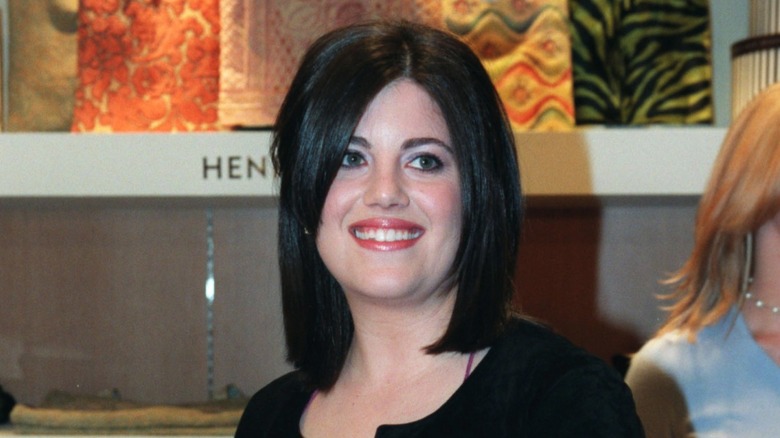
In 1999, Monica Lewinsky moved to New York City, renting an apartment in Greenwich Village. For the first time in a long time, she felt welcomed. "Sometimes, I feel like the whole city is giving me a big hug," she told New York magazine. By then, her life had normalized somewhat. Paparazzi no longer staked out her home, leaving her terrified to leave. "I was like this prisoner," she said, recalling the height of the scandal.
While living in the Big Apple, Lewinsky cooked up a way to exercise her creativity while hopefully bringing in a few bucks, by launching her own line of designer handbags. She began selling her Real Monica bags online, but soon got them into such retailers as Henri Bendel and Fred Siegel. Ranging in price from $70 to $130, each bag boasted a label inside, upon which read, "Made Especially for You by Monica."
By 2004, though, she had quietly shuttered the business. According to Vogue, a message on the website declared that the brand was "hibernating," while Henri Bendel no longer carried the bags.
She slimmed down as a spokesperson for Jenny Craig
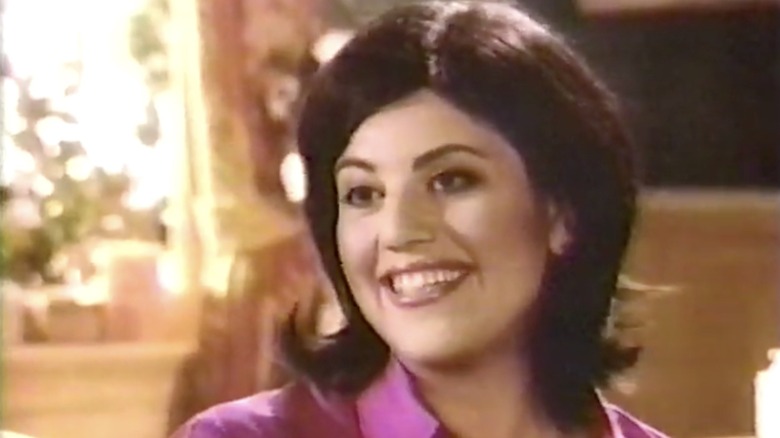
Shortly after moving to New York, Monica Lewinsky was tapped by Jenny Craig to become the new spokesperson for the diet-plan company. She was set to be the focal point of Jenny Craig's $7.2-million advertising campaign, slated to run from December 1999 through to the following March.
On paper, Lewinsky seemed tailor-made to promote Jenny Craig, given that she'd been struggling with her weight for her entire life. "I've tried every diet in the world,” she said in a TV commercial, which claimed that she'd already lost 31 pounds on the plan, with more presumably to follow (unconfirmed reports claimed she would be paid $1 million if she shed 60 pounds). ”I mean, if it was stand on your head, I've tried it. If it was eat only grapefruit, I've tried it. Magic diet pills, I've tried it.”
The gig generated controversy, with some Jenny Craig franchises reportedly refusing to display her posters, complaining Lewinsky was an inappropriate role model. In April 2000, the company launched a new advertising campaign, sans Lewinsky.
She shared her story in an HBO documentary and hosted a TV dating show
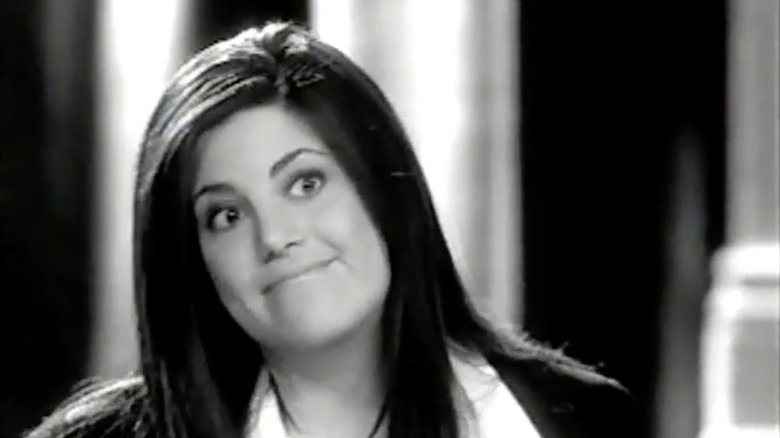
In 2002, Monica Lewinsky once again agreed to step into the spotlight when she appeared to star in "Monica in Black and White," an HBO documentary special in which she answered questions from a live audience. The purpose of "Monica in Black and White," she explained during an appearance on CNN's "Larry King Live," was to set the record straight. "Well, for me, really, I think it was I wanted to try and clear up some of the misperceptions that were out there and fill in some of the historical gaps," she told veteran TV host Larry King, insisting she was well aware that most people had already formed an opinion of her. "But I don't think that should stop me from trying to correct some of the misperceptions that are out there," she added.
The following year, Lewinsky returned to television for a very different project, as host of a reality dating show for the Fox network. Titled "Mr. Personality," the premise involved a single woman being courted by 20 men — each of whom wore a sinister-looking latex mask in order to conceal their faces. The goal was for the woman to find her soulmate based on their personalities, not their looks.
Critics were far from kind. "Monica Lewinsky at last has a television series and a network worthy of her immeasurable talents," TV critic Ed Bark wrote in The Wichita Eagle (via The Outline). While ratings started off strong, they dropped precipitously after the curiosity factor wore off. Fox wound up yanking the show after just five episodes aired.
She moved to Britain to study at the prestigious London School of Economics
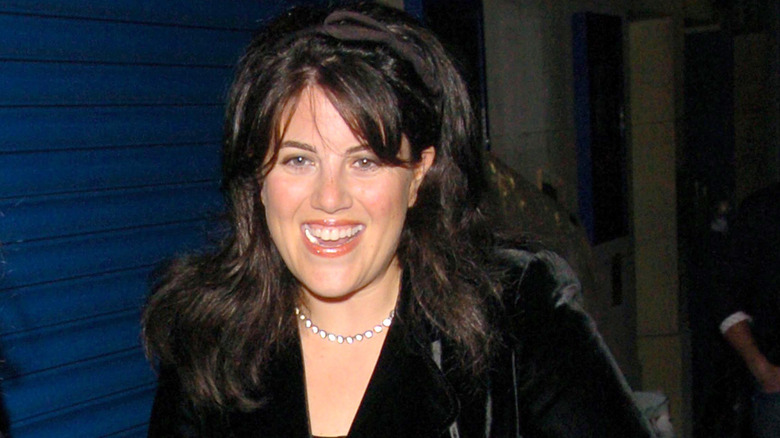
With her short-lived reality TV career in the rearview mirror, Monica Lewinsky took stock of her life. Traditional options were not open to her. "It's not like I can just go and get a job somewhere," she told New York magazine in 2001. "People aren't jumping to hire me." In 2005, she made a bold decision, moving to London to study at the esteemed London School of Economics. Her goal was to obtain a masters degree. The following year, she earned that degree, graduating with a Masters of Science degree in social psychology.
As Lewinsky's publicist, Barbara Hutson, told Reuters, when the 32-year-old's name was called at the graduation ceremony, "the audience of students and parents erupted in spontaneous applause ... It was a very emotional moment for her." During Lewinsky's year in London, she was very serious about her studies, focusing on academics while "staying away from the London social scene," said Hutson, who revealed that Lewinsky was planning to remain in London, and had already started interviewing for jobs there.
Ultimately, though, reinventing herself and blending back into anonymity would prove elusive. "I was really hoping graduate school would build this new scaffolding upon which I could have a new identity and life," she told Rolling Stone. "And it didn't work ... I couldn't get a job. There was still so much stigma around me and my history."
Monica Lewinsky re-emerged in 2014 with a scathing essay for Vanity Fair
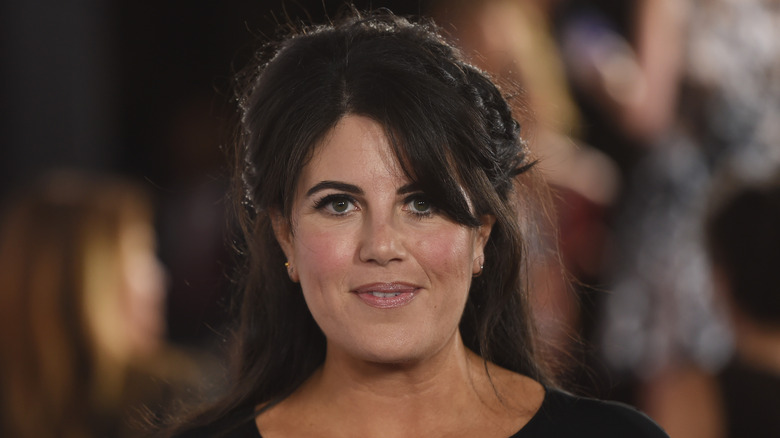
In 2012, Monica Lewinsky was still living in London when reports began to emerge about a big book deal. The New York Post claimed she was being paid $12 million to write a salacious tell-all exposing all of Bill Clinton's sexy secrets. As a source told the National Enquirer (via the Post), Lewinsky was prepared to spill the beans about Clinton's "insatiable desire for three-way sex ... and the use of sex toys of all kinds."
That book never materialized, and it's likely that the whole report was bogus from the get-go. However, Lewinsky did emerge two years later — not with a book, but with an essay for Vanity Fair, in which she admitted to having "deep regret" for her past actions. "It's time to burn the beret and bury the blue dress," she wrote.
At this point, Lewinsky was 40. She'd been through the fire, and made it out alive — albeit with more than her share of scars. She was, she wrote, ready to move on, and was prepared to drag the rest of the world along with her if they weren't on board. "I am determined to have a different ending to my story," she continued. "I've decided, finally, to stick my head above the parapet so that I can take back my narrative and give a purpose to my past. (What this will cost me, I will soon find out.)"
She declared herself 'patient zero' while becoming an anti-cyberbullying activist
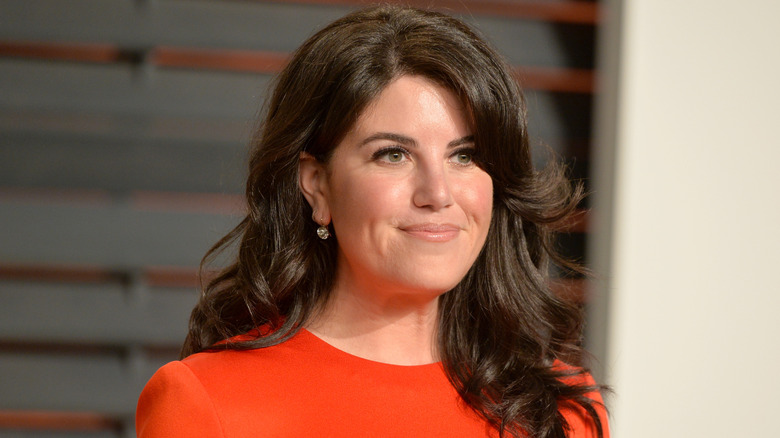
What Monica Lewinsky wrote for Vanity Fair wasn't just an essay, it was a shot against the bow announcing she was no longer the scandalous punchline of the late 1990s. She was a survivor, emerging from one of the 20th century's biggest scandals to share the lessons that she'd learned.
In 2014, she delivered her first ever public address, speaking at Forbes' inaugural 30 Under 30 summit and declaring herself to be the canary in the coal mine for online bullying. "I was patient zero," she said, as reported by Forbes. "The first person to have their reputation completely destroyed worldwide via the Internet." That speech was the first step in rebranding herself as an advocate speaking out against cyberbullying. "Having survived myself, what I want to do now is help other victims of the shame game survive, too," she said. "I want to put my suffering to good use and give purpose to my past."
The following year, she went on to deliver a Ted Talk that covered similar terrain. Titled "The price of shame," that speech has been viewed more than 22 million times.
Monica Lewinsky launched her own production company and co-produced TV drama Impeachment
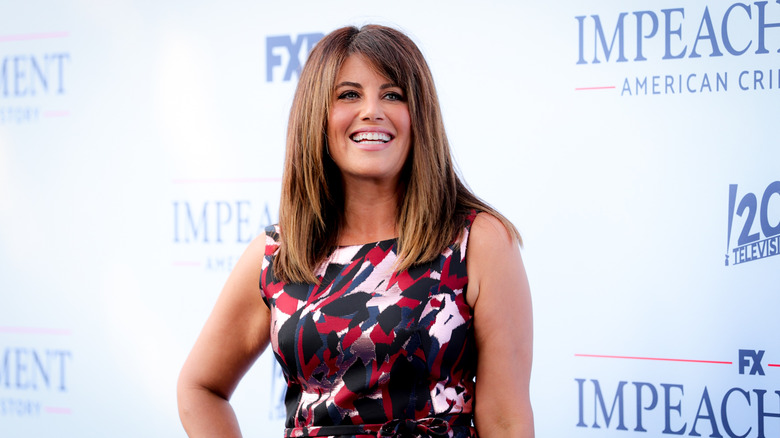
With traditional avenues of employment closed off to her, it's only natural for the public to wonder what Monica Lewinsky does for a living now. That question was answered in 2021 when Monica Lewinsky stepped into a whole new role: TV producer. After founding her own production company — the aptly named Alt Ending — she entered a first-look deal with 20th Television to develop projects for the studio.
The first project to emerge was "Impeachment: American Crime Story," the third season of the FX television series that dramatized the O.J. Simpson murder trial in its first season, and the murder of fashion designer Gianni Versace in the second. "I'm interested in storytelling that is entertaining, thought-provoking, and emotion-stirring — that moves a conversation forward by exploring the human condition from an unexpected lens," said Lewinsky, an executive producer on the project, in a statement to The Hollywood Reporter. "That's what excites me about forming Alt Ending Productions ... Having had my own story hijacked for many years, I'm very interested in the voices or perspectives we historically don't hear from or see."
"Impeachment" allowed her to tell her story, her way, presenting a dramatized version of what she'd gone through. With "Booksmart" star Beanie Feldman portraying Lewinsky, viewers had the opportunity to relive the scandal — but through Lewinsky's eyes. "It remains the most tremendous responsibility I think I will ever have," Feldstein told The New York Times, expressing just how seriously she felt about the role.
She launched her own podcast
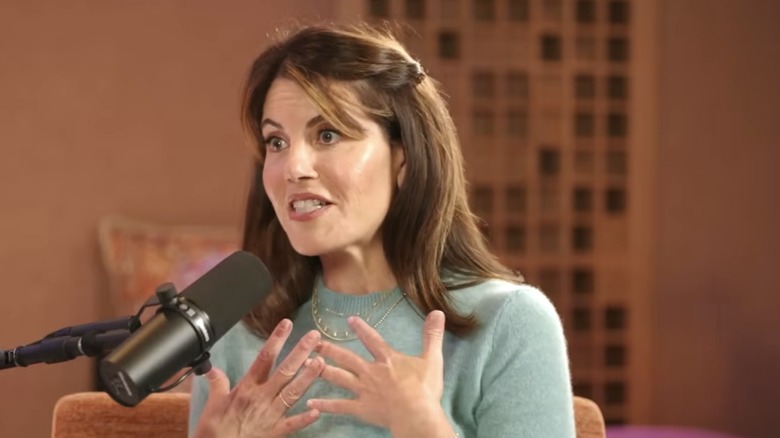
For anyone wondering whatever happened to Monica Lewinsky, in 2025 she embarked on a whole new project that, in retrospect, was not entirely unexpected: podcasting. Launched that year, "Reclaiming with Monica Lewinsky" was a new podcast in which she interviewed celebrities about the experiences that shaped them.
Speaking with Rolling Stone, Lewinsky was fully aware of how much more of herself she would need to reveal in order to be successful at it. "For this podcast to be all it can be, I have to be more open," she explained. "The part of me that makes a joke on Twitter or can write an article, it's hiding still a little bit. The podcast is me reclaiming, as much as the stories of people I'm talking to."
The eclectic list of celebrities Lewinsky has interviewed for "Reclaiming" includes crime novelist Harlan Coben, "Severance" star Adam Scott, and Nobel Prize laureate Malala Yousafzai. "People whose stories interest me," she said of why she's chosen the guests she has. "My intention is that it's a very elastic definition of reclaiming, which is to take back something that was yours, or to get back something that was lost or stolen," Lewinsky added. "There might be grief, resilience, and ultimately, you triumph."
She produced a TV series about Amanda Knox
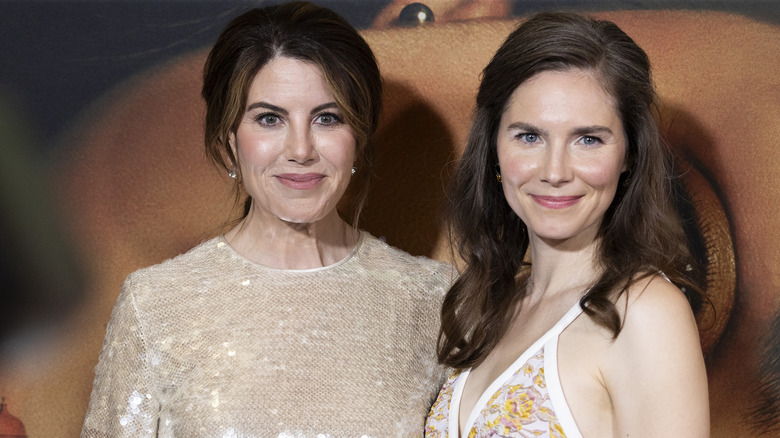
Monical Lewinsky's career as a Hollywood producer did not end with "Impeachment." In 2021, she produced "15 Minutes of Shame," a documentary about people who, like her, had experienced public humiliation. Meanwhile, she began working on a scripted TV drama telling the story of Amanda Knox, who was wrongfully convicted of murder in Italy. She brought Knox on board as an executive producer, part of what Knox's life is like today.
"With Amanda's story, it felt like this continuation of why I was interested to help tell the story in 'Impeachment,' which is around what happens to these young women who get thrown up on the world stage and really torn apart, and eaten up, and labeled, and mocked, and used [by others] to make money," Lewinsky told Rolling Stone, detailing why she wanted to tell Knox's story.
"The Twisted Tale of Amanda Knox" debuted in August 2025, streaming on Hulu. The series received mostly positive reviews, and Lewinsky's goal for the series was perfectly aligned with that of Knox. "Ultimately, the thing that I was seeking after having been ostracized and vilified and literally imprisoned was human connection," Knox told NPR's "All Things Considered." "And I wanted people to relate to my experience. I wanted them to say, 'I understand.'"