

The Biggest Revelations From Kidnapped: Elizabeth Smart
We may receive a commission on purchases made from links.
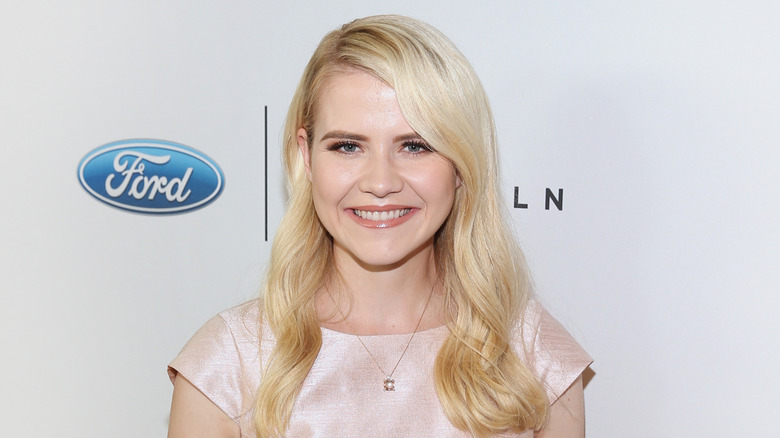
It was a 'truth is stranger than fiction' story that gripped the entire world. And thanks to a compelling new Netflix documentary, it's now returned to the public consciousness nearly a quarter of a century later. We are, of course, talking about the case of Elizabeth Smart, the 14-year-old kidnapped from her Salt Lake City home back in the summer of 2002.
Most people presumed the worst had happened when, after nine months, there was still no trace of the youngster's whereabouts. But in March 2003, an unrecognizable Elizabeth was found walking the Utah streets with her captors, Brian Mitchell and Wanda Barzee. Since then, she, her uncle, and her parents have all written books about the ordeal, she's been the subject of several TV movie adaptations from the network that totally changed the game for women in Hollywood, and she's admirably spoken about her experiences as an activist for both missing persons and the fight against pro-abstinence education. But "Kidnapped: Elizabeth Smart" still managed to bring many new revelations to the table. From psychiatric ward stays and police skepticism to sleep deprivation and survival tactics, here's a look at 14 of the most shocking.
Ed Smart admitted he spent time in a psychiatric ward
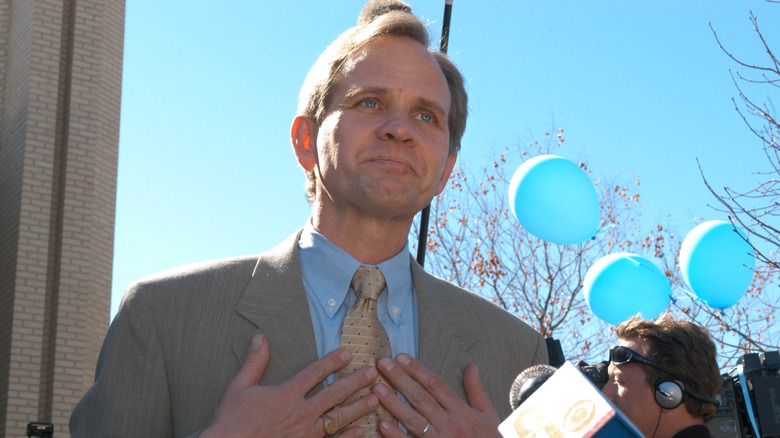
As is the norm for any abduction case, police first looked close to home in an attempt to discover Elizabeth Smart's whereabouts. And their initial focus centered on the man who'd always vowed to protect her: her father.
"I was overwhelmed to the point that I was shaking and I couldn't stop shaking," Ed Smart revealed in the documentary (via E! News) about the moment his wife at the time, Lois Smart, informed him that the cops were questioning his involvement. In fact, he was so emotionally shattered that his own dad decided to take him to the hospital to seek professional help, having previously warned him that he'd have him committed if he failed to calm down.
"I cried that whole night," Ed recalled about his subsequent short stint in a psychiatric ward. "To have your daughter go missing is horrendous. And then to be a possible suspect — I was beyond words."
Tom Smart's bizarre interview came about from exhaustion
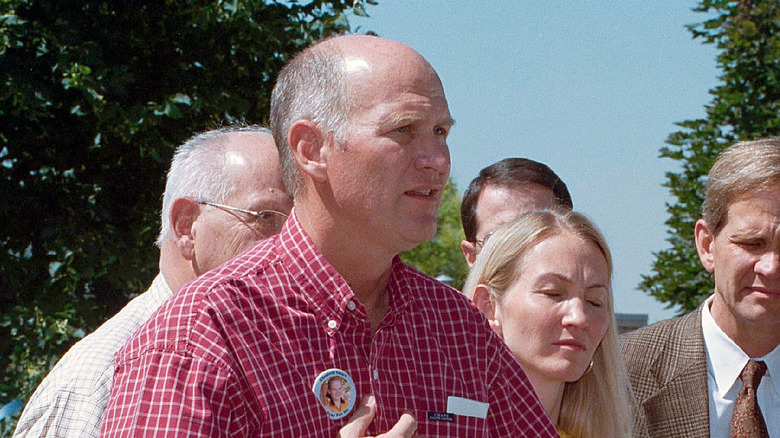
Tom Smart didn't exactly do the case, or his family, any favors when he agreed to be interviewed in the immediate wake of his niece's disappearance. Indeed, the fingers of suspicion pointed even more firmly toward the Smarts thanks to a baffling chat with Nancy Grace of CNN — apparently one of the news anchors you'd never want to meet in real life — in which he described Elizabeth Smart's disappearance (via People) as a "wonderful story." Of course, as the documentary revealed, there was a perfectly valid explanation for his behavior.
Tom, who also claimed that the individual responsible for the abduction was "not a bad person at all" but "somebody who actually likes Elizabeth" during the infamous sit-down, had, unsurprisingly, been deprived of sleep during the previous week. "In a situation like a kidnapping where it doesn't seem like there's much you can do other than keep turning over stones, neighborhoods, people," he stated in the Netflix original about his state of mind at the time. "After three or four days of that, with no sleep, you tend to collapse on yourself."
If the unsettling TV interview wasn't damning enough, Tom was also subjected to a polygraph test, which he failed to pass. But by this point, he'd been awake for nearly six days straight. "I mean, I was hearing things," he added about the traumatic time.
Mary Katherine Smart took several months to recognize Mitchell's voice
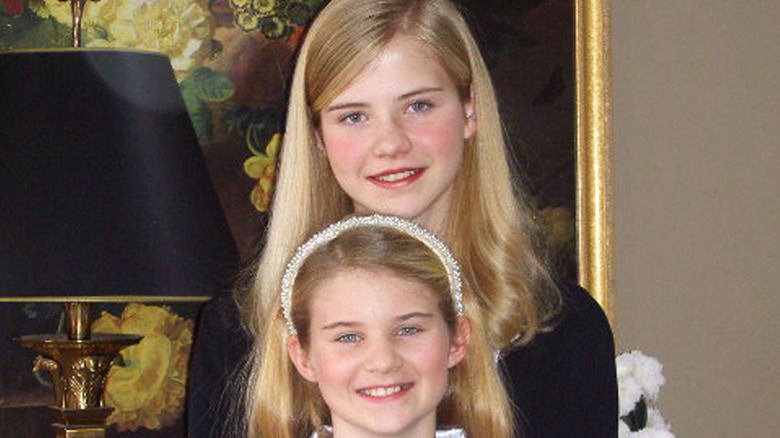
Mary Katherine Smart always knew she recognized the voice of the man who'd crept into the bedroom she shared with her sister Elizabeth that horrific night. But as a traumatized nine-year-old, she struggled for several months to place it. And during that time, she was often isolated from the rest of her family as police tried to help her recall.
"I was on my own lonely island, if you will, wanting to know, trying to sneak and hear tidbits of things that happened, but people shutting me out," Mary Katherine revealed (via E! News) about this difficult period in "Kidnapped." "I wanted to help in any way that I could ... They even tried to hypnotize me at one point. But there was pressure from everyone ... It was a lot for a nine-year-old."
Police had initially narrowed their focus to Richard Ricci, a convicted criminal who'd previously done work on the Smarts' home. But Mary Katherine was adamant that he wasn't the culprit. Luckily, four months after Elizabeth disappeared, and while flicking through the Guinness Book of Records, a random name suddenly entered her head: Emmanuel.
Police were initially skeptical of Mary Katherine's claims

Like Richard Ricci, Emmanuel had been hired by the Smarts to undertake various DIY tasks around their home. His real name was actually Brian Mitchell, a drifter the family had often witnessed preaching the gospel on the streets of Salt Lake City. The only problem is that police initially didn't believe that Mary Katherine Smart, who, after four months, had identified him as the man who kidnapped her sister Elizabeth Smart, could possibly have recognized his voice.
"Quite frankly, her memory of Emmanuel being the kidnapper came under some disbelief on the part of the investigators," Detective Cordon Parks revealed (via People) in "Kidnapped." "There was some speculation that her memory might not be accurate." Lead investigator Cory Lyman was similarly unconvinced, referring to how Mitchell hadn't been on the suspect list and how he'd only spent three hours at the Smarts' house.
Understandably, Elizabeth's father Ed Smart was left hugely frustrated by the cops' reluctance to act on this information: "I mean, for heaven's sake, what more do you need? You have this child, who is sitting in this room watching her sister being taken, that comes forward and says, 'This is who I think it is.'"
Mitchell threatened to kidnap Katherine
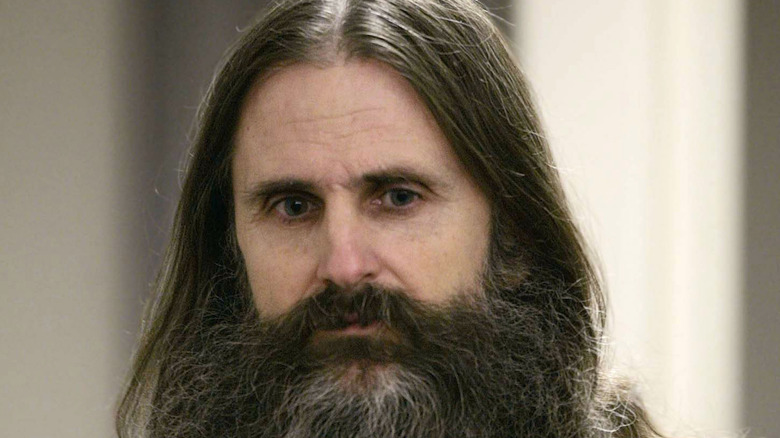
Brian Mitchell may have spared Mary Katherine Smart when he abducted her older sister, Elizabeth Smart, that fateful night in 2002. But in the Netflix documentary, the latter revealed that he had intentions of returning to the scene of the infamous crime.
"He said God commanded them to kidnap seven young girls," Elizabeth recalled (via TV Insider) about the immediate aftermath of her abduction. "I was the first of the seven. He said my sister would probably end up one of his wives, and my cousin Olivia. I was terrified." And the youngster was soon given more reason to feel terrified.
"I asked him if he was going to rape and kill me," the now grown-up victim remembered. "Because if he did, I wanted him to do it as close as he could to my house so that my parents could find me. He just had this terrible smile and he just looked at me he said, 'I'm not gonna rape and kill you, yet.'" Although Mitchell did keep Elizabeth alive, he did repeatedly subject her to sexual assault. "I'd gone from never holding a boy's hand to being raped every day, multiple times a day. After, he would be praying for 45 minutes. He used God to justify what he did."
Elizabeth heard a search party looking for her
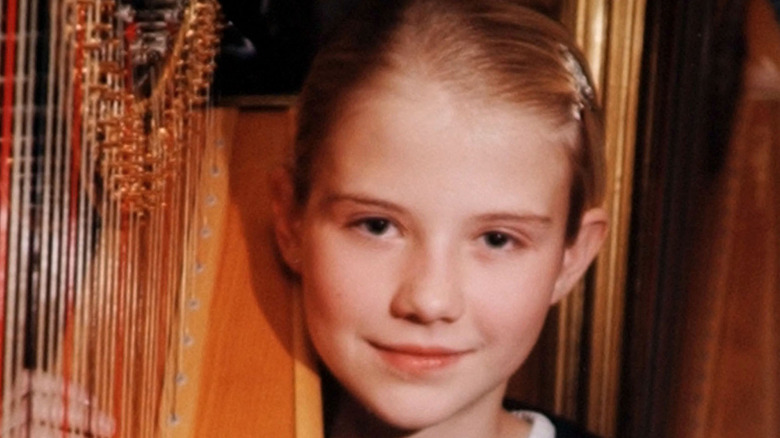
Elizabeth Smart's ordeal was made all the more agonizing by the fact that, in the early days, anyway, she was kept captive so close to her Salt Lake City home. In fact, on one particular occasion, she was able to hear a member of the search party looking for her.
"It was faint, but I could still hear it," Elizabeth recalled (via TV Insider) the moment she picked up the sound of someone shouting out her name before revealing the threat that Brian Mitchell issued in order to deter her from responding. "[He] took me inside the tent, pulled out his knife, [and said], 'If anyone comes in this camp, this is the knife I'm going to use to kill them, and it'll be all your fault.'"
Elizabeth's brief hopes of being found in the remote woodland area all but dissipated when things went quiet. "I only heard my name called a few times, and then it faded away," she added. "And I didn't hear it again."
Elizabeth revealed she was too scared to cry for help
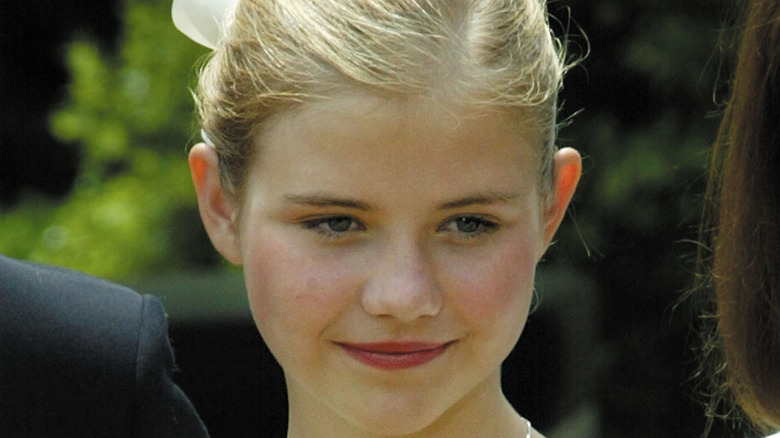
One of the documentary's most jaw-dropping moments occurs when Elizabeth Smart recalls the time her captors took her to a Salt Lake City library. Due to their unusual appearance — all three wore white robes while the youngster and Wanda Barzee covered their faces with white headdresses — the trio were approached by a homicide detective who asked their identities. But instead of screaming for help, Elizabeth stayed silent.
"The thought of crying out did cross my mind, but I was 14," she explained (via Rolling Stone). "I had been extremely abused for months. I didn't feel safe crying out and that lifeline disappeared." Indeed, the detective left the trio to their own devices after accepting Brian Mitchell's explanation that Elizabeth couldn't take off her veil for religious reasons.
Remarkably, Mitchell also gave the police another opportunity to apprehend him, and one which they tragically didn't take. After finally being caught for Elizabeth's abduction, officials discovered that during the search, he'd previously been in their custody for stealing alcohol from a nearby shop.
Mitchell forced Elizabeth to drink alcohol until she vomited
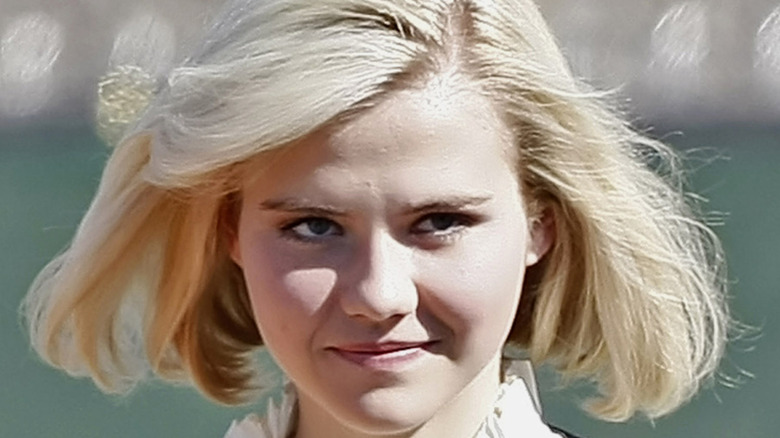
As well as repeatedly subjecting her to horrific sexual assault, Brian Mitchell also mistreated, abused, and shamed Elizabeth Smart in several other ways. Indeed, her movements were often restricted, whether it was being chained up by her ankles or treated like a canine.
"Every day, he would humiliate me," Elizabeth recalled in the documentary (via People). "When he took me down to the spring where we would collect the water from, he would hold on to the cable and basically walk me like a dog." And Mitchell was just as sadistic when it came to his captor's diet.
Indeed, Elizabeth revealed that she'd often be denied food if she refused to meet his commands and that Mitchell would ply her with alcohol at an alarming rate. "I was forced to drink beer after beer until I finally threw up, and he just left me there, face down in my own vomit."
Elizabeth said listening to Emmanuel talk was sometimes worse than being raped

Immediately after abducting her from her Salt Lake City home, Brian Mitchell told a terrified Elizabeth Smart, "I hereby seal you to me as my wife before God and my angels as my witnesses." And this wouldn't be the last time that he used religion to justify his actions.
In fact, while recalling her ordeal for the documentary (via E! News), Elizabeth made the startling claim that listening to his constant preaching was sometimes arguably worse than the sexual assaults: "He talked nonstop about how special he was, about how difficult these things that in any other circumstance would be wrong to do, and he didn't want to do it, but he had to because God commanded him to."
In an interview with Netflix's magazine Tudum, Elizabeth, who was raised as a Mormon like many of the Real Housewives of Salt Lake City , revealed that the time she spent in captivity forced her to reconsider her own religious beliefs: "I have a lot of appreciation for many of the things that it taught me growing up. But also, as an adult now, until I feel like I know for myself, I don't believe anything anyone sells me anymore."
Elizabeth worried whether her family would want her back
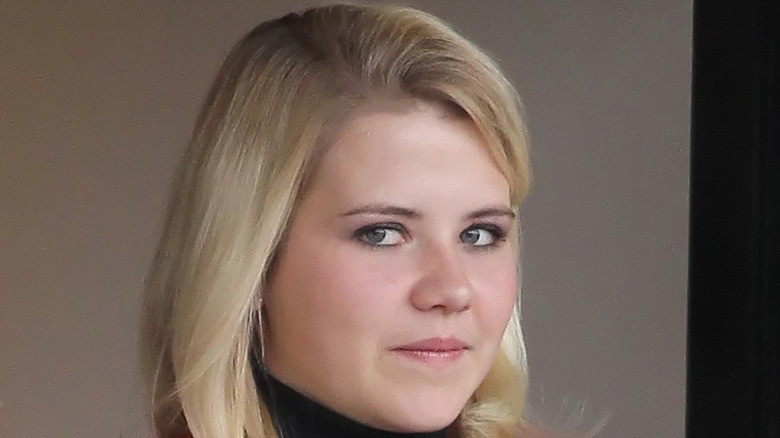
Although her family had spent every day since her disappearance desperately searching for her, Elizabeth Smart started to believe during her ordeal that if they knew what she'd been subjected to, they might not want her back. And the victim's religious upbringing caused her to think such heartbreaking thoughts.
"No one had discussed with me the difference between, like, consensual sex, intimacy, versus rape," Elizabeth stated (via People) in "Kidnapped," alluding to the Mormon faith's strict 'abstinence before marriage' belief and how she was continually sexually assaulted by her captor Brian Mitchell. "I felt like I was filthy. I thought if my family knew what had happened to me, would they still want me back? Maybe it would be better if nobody ever found me."
Elizabeth also spoke about the first time she was raped by Mitchell, and how she naively believed that by rolling on her stomach beforehand, she could prevent it. "I remember begging him to stop," she said (via TV Insider). "When he was finished, he got up, he kind of smiled like it wasn't a big deal to him, and he walked out of the tent. I just remember hurting so much, like, physically."
Elizabeth fed Mitchell's ego to survive

Although she was only 14 years old at the time of her abduction, Elizabeth Smart was still smart enough to recognize how she could win her captor round. Indeed, when Brian Mitchell started discussing the possibility of relocating from San Diego to a bigger city, his victim realized she needed to engineer a move back home to Salt Lake City instead. And to do that, she fed his already gargantuan ego.
In the documentary, Elizabeth recalled (via Rolling Stone) the wise words she used to manipulate Mitchell: "I think we might be supposed to return to Salt Lake. And I know God wouldn't really speak to me, but I know if you were to ask him, he would confirm to you whether or not that was the right path. Because you truly are his servant and you truly are his prophet."
Proving that her tactics worked, Mitchell responded (via E! News), "Oh, well, God is finally starting to work with you. Now that you recognize your own nothingness, we are supposed to return to Salt Lake." And Elizabeth's quick thinking ultimately resulted in her rescue, although, once again, she was initially reluctant to seek help.
Two words helped police rescue Elizabeth
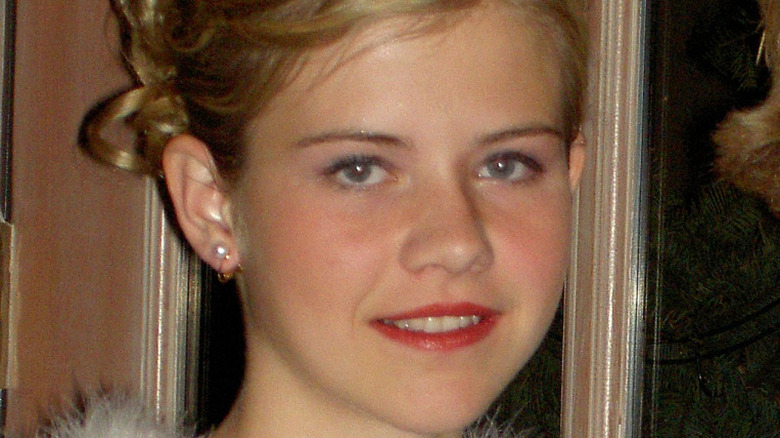
Having cleverly convinced Brian Mitchell and Wanda Barzee to return to Salt Lake City, Elizabeth Smart was told by her captors that they'd also be returning to the same isolated mountain spot they first kept her captive at and that they wouldn't enable her to ever leave. However, they didn't bank on being stopped by the police en route.
Recognizing that he might be about to solve one of the world's biggest missing person cases, Sgt. Victor Quezada wisely took Elizabeth aside so that Mitchell and Barzee couldn't hear and asked whether she was the girl who'd disappeared nine months ago. Even then, though, the youngster was still reluctant to tell the truth. "He was so persistent," she recalled (via E! News) in the documentary about the sergeant's questioning. "But my captors were just right there. I was terrified. I needed the safest answer I could possibly give."
The safest answer she could think of at the time was "Thou sayeth." "I'd never heard those words in my life," Quezada remarked. "I said, 'I'll take that as a yes.'" Mitchell and Barzee were subsequently taken into custody, and Elizabeth was reunited with the family whom she thought she might never see again.
Detective Cordon Parks doesn't believe Mitchell was mentally ill
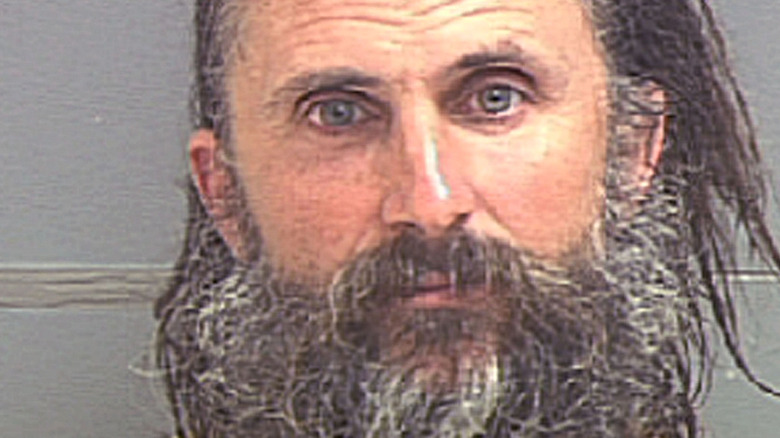
It looked to be an open-and-shut case when Brian Mitchell and Wanda Barzee were found with missing teenager Elizabeth Smart after a nine-month search. However, thanks to the former pleading insanity, their crimes went officially unpunished for a further seven years.
And detective Cordon Parks, who helped with the investigation from the beginning, believes that Mitchell intentionally delayed his trial, in turn inflicting yet more pain on Elizabeth, who in 2021 fell pregnant with her third child, and her family. "I found him very crafty," he remarked (via People) in the documentary. "[He] is a terrible pedophile who justifies himself through God and he's capable of anything."
"I don't think he was mentally ill at all," Parks added. "I think he was playing for a mental health issue and it worked." Thankfully, Mitchell was finally brought to trial after being declared competent enough in 2010. And a year later, he was sentenced to two federal prison life terms. Barzee was ordered to serve 15 years behind bars, but thanks to time already served, she was released in 2018.
Elizabeth was left scared of men
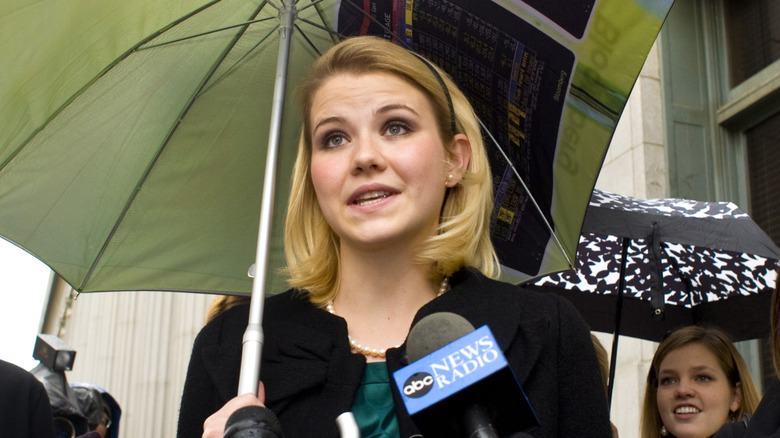
Of course, Elizabeth Smart's ordeal didn't end the moment she was rescued by police on a Salt Lake City road. It took an unbelievable seven years for the court to determine Mitchell's competency and send the case to trial, where he was sentenced to life imprisonment (his co-conspirator, Wanda Barzee, was given a 15-year jail sentence). And understandably, she was left severely traumatized by the whole experience.
"I was scared of men," Elizabeth revealed (via Time) in the documentary about her feelings in the wake of her rescue. "I felt a lot of shame and embarrassment about what happened." However, the youngster managed to rebuild her life, graduating from Brigham Young University with a degree in harp performance, launching an eponymous foundation for sexual violence victims, and marrying the future father of her three children, Matthew Gilmour.
Toward the end of "Kidnapped," Elizabeth reflects (via E! News) on how she now copes with such heavy emotional baggage as a thirty-something mom: "I have good days, I have bad days. But I developed a better relationship with myself. My inner voice has changed from, 'You should've done this' or 'You could've done that,' to 'You'll make it through this, you can finish this, you're strong, keep going.'" Here's a closer look at where Elizabeth is today.