

Tragic Details About Michelle Pfeiffer
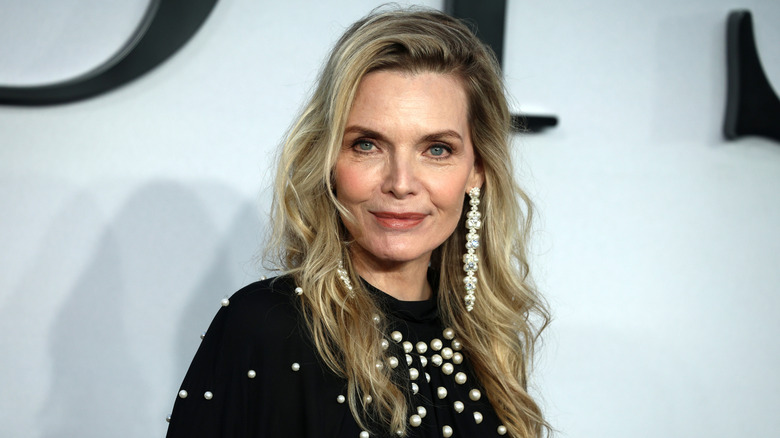
Michelle Pfeiffer is one of the most recognizable actresses in the world today. Blessed with an impressive combination of beauty and skill, the Orange County native has built a successful career in film and television over the past four decades. Known for roles as varied as Stephanie Zinone in "Grease 2" to First Lady Betty Ford in the short-lived Showtime series "The First Lady," Pfeiffer has cemented her position as a living legend.
From the outside, it looks like Pfeiffer leads a charmed life. But even A-list actresses experience rough patches, and Pfeiffer is no exception. Despite her reputation for being private, the "Scarface" star has publicly shared many of the highs and lows of her life throughout the years. From rampant imposter syndrome to struggling with relationships, Pfeiffer deals with many of the same problems that plague people both in and outside Hollywood.
A self-described rotten kid, she worked as a cashier before acting
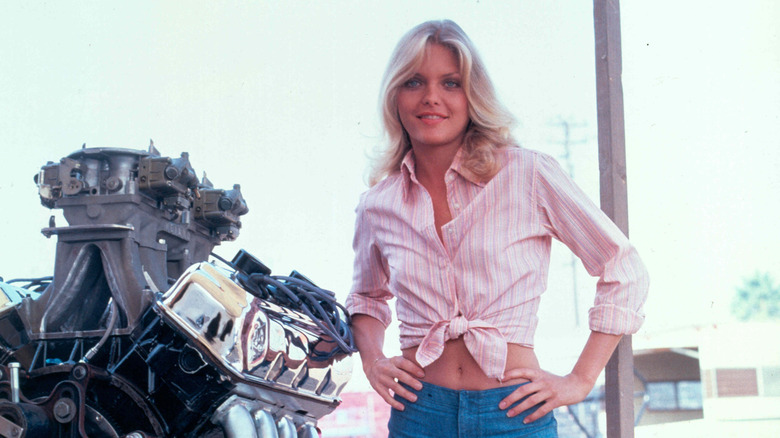
Pfeiffer was born in Orange County and attended school in Fountain Valley, a city in southern California about an hour outside of Los Angeles. Despite her relatively close proximity to Hollywood, Pfeiffer says her upbringing "couldn't have been more removed from the movie business." In an interview with The Hollywood Reporter, she shared that she was a "rotten kid" and likened herself to "the Mafia Don of my elementary school" for retaliating against kids who bullied her for her looks.
Speaking with director Darren Aronofsky for Interview Magazine, Pfeiffer shared she was "a surfer chick" and got into "trouble" as a middle schooler. It wasn't until she took a drama class in high school that she felt like she had finally found where she belonged. Still, Pfeiffer didn't consider acting a career option: "I didn't think about it seriously because it wasn't in my reality at all," she told Aronofsky.
Instead, she worked as a cashier at Vons while attending stenography school. "That was a good job, actually," Pfeiffer told The New Yorker. "I just wasn't happy with what I was doing." Still, Pfeiffer didn't consider quitting until one particularly harrowing incident with a customer complaining about cantaloupes. That moment inspired her to ask herself what she wanted to do with her life, and when she landed on acting, she decided to go for it.
She was in a cult when she first moved to Hollywood
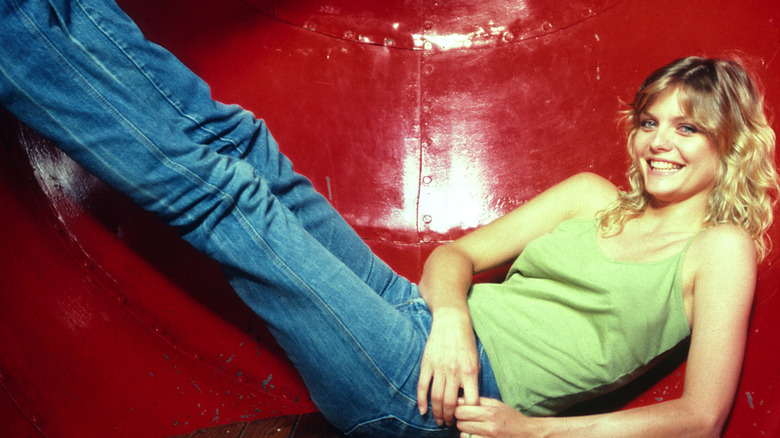
Once Pfeiffer realized she wanted to pursue acting professionally, she entered a beauty contest in Orange County with the goal of securing an agent. After winning, she went on to happily lose the next contest in Los Angeles, where one of the judges became her commercial agent. While she began auditioning in search of her big break, Pfeiffer soon came under the influence of a charismatic couple and found herself involved in a cult.
Describing the couple as "kind of personal trainers," Pfeiffer told The Telegraph that they put her on an untenable diet. "Their thing was vegetarianism," she shared, but "they believed that people in their highest state were breatharian." Breatharianism, also known as inedia, is what its name suggests: a pseudoscientific diet philosophy in which people believe they can survive on air alone — or at least off of very little food and drink.
Not only did the couple expect Pfeiffer to adhere to an impossible diet, but they charged her for it. "It was financially very draining," she said of that time. Luckily, her then-husband, Peter Horton, was filming a movie about cults and introduced Pfeiffer to a former cult member. "I'm like, 'Oh my God, I'm in a cult," she told The Hollywood Reporter. "It was like a light bulb went off, and I never went back."
She was terrified of filming Grease 2
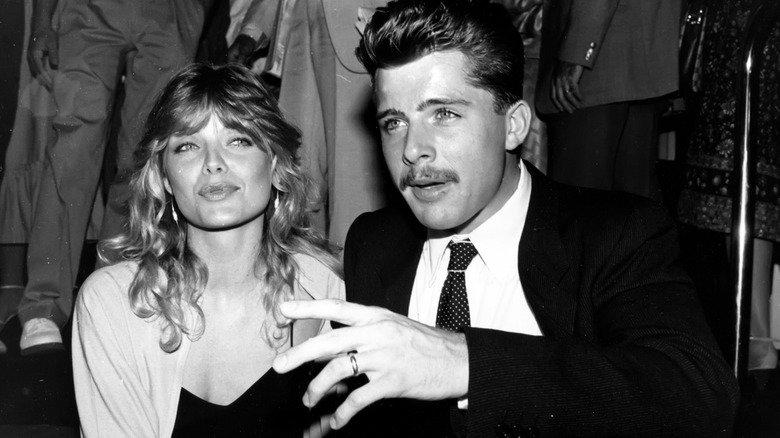
Pfeiffer's big break came when she was cast as Stephanie Zinone in "Grease 2." Although it's hard to imagine the film without her playing the leading role, Pfeiffer was not expecting anything when she auditioned. "I had taken singing lessons and I had taken dance ... but I had never considered myself a professional at all," Pfeiffer told screenwriter Peter Stone for Interview Magazine.
Despite her misgivings, Pfeiffer went to the audition with her agent's encouragement. And even though she considers her audition "a fluke," she got the role. Unfortunately, landing the part was not the end of her anxiety, but only the beginning. Once she was on set, she realized she had to live up to Olivia Newton-John and John Travolta's performance in the first movie.
"Of course, I was terrified," she told Sean Hayes, Jason Bateman, and Will Arnett on an episode of their podcast, "Smartless." "The first one was amazing and [had] such a cult following," Pfeiffer explained as the reason behind her fear. It didn't help her nerves that the movie's marketing team advertised the leads as "too hot." "Don't say that," Pfeiffer remembers thinking at the time. "What if they don't think I'm hot?"
Early in her career, she had an uncomfortable and inappropriate encounter with an industry senior
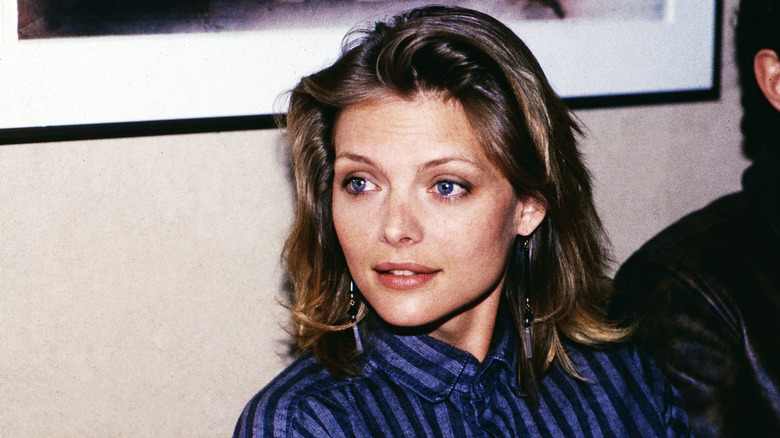
The motivation behind the "MeToo" movement was to bring awareness to the prevalence of sexual harassment throughout Hollywood and the world at large. Like many other women in the industry, Pfeiffer reevaluated her own experiences in light of the movement. "It was challenging for women of my generation to find their voices," Pfeiffer told The Sunday Times, speaking of what the publication calls the "Weinsteinesque 1980s and 1990s."
When the Me Too movement began to take off, Pfeiffer initially didn't feel she had experienced sexual misconduct. But after thinking about it, she realized "there were a number of situations that were not good." She specifically recalls an incident when she was new to Hollywood: "I was really uncomfortable and it was inappropriate," she admitted, though she understandably didn't want to go into detail. "I was 20, and it was with a high-powered person in the industry."
Unfortunately, Pfeiffer's experience is far from unique. "There really hasn't been one woman that I've talked to who hasn't had an experience," she told BBC News, "and it just goes to show you how systemic the problem is." Pfeiffer said that she hoped the MeToo movement would inspire not only reflection but real change in the industry going forward.
Pfeiffer didn't feel worthy of Scarface because of her lack of traditional acting experience
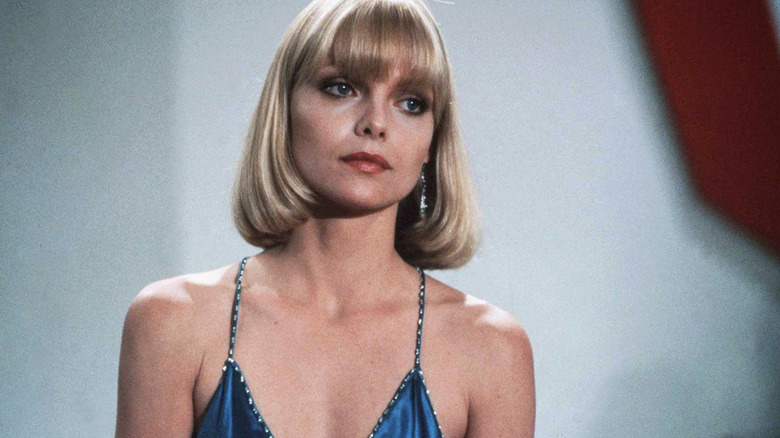
It's hard to imagine, but Pfeiffer almost let fear stop her from landing the role of Elvira Hancock in "Scarface." The film's director, Brian De Palma, was interested in her for the part after she aced her initial screen test. But during additional tests with the film's star, Al Pacino, she floundered due to her insecurity and lack of experience.
"I was terrified," she shared on an episode of the "Smartless" podcast. Pacino didn't think she was right for the part, and her tests with him continued to worsen as she let fear get into her head. When De Palma told her she probably wouldn't get the part, she was relieved. Without the fear, she nailed her next screen test and secured the role.
"I remember most nights crying myself to sleep," Pfeiffer told Deadline, of her anxiety over being the least "seasoned" actor in the cast. She eventually found her footing, saying, "The one thing I have going for me is, in spite of my fear, I'm very courageous."
People discredited her acting because of her looks
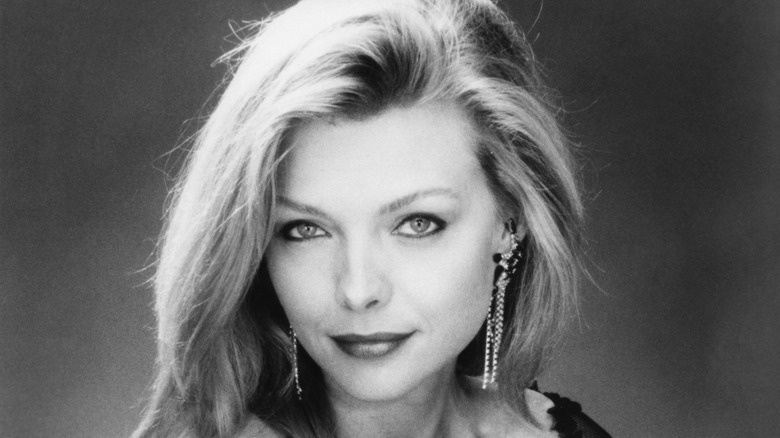
It's no exaggeration to say Pfeiffer might just be one of the most beautiful women in the world. Unfortunately, her looks weren't always helpful when it came to getting people to take her seriously as an actress. "It's a no-win conversation for me," she said of speaking about her appearance with The New Yorker.
Early in her career, Pfeiffer worried her looks would impede her ability to land more challenging roles. "I know that really influenced the choices that I made," she admitted, "when I had a choice of doing something that had nothing to do with how I looked, I would take that opportunity every time." She credits being cast in Jonathan Demme's "Married to the Mob" as the film that dispelled people's belief that she was just a pretty face.
Her first husband, actor Peter Horton, helped her recognize her potential. In an interview with The Hollywood Reporter, she shared a time when Horton told her he saw her as "more like Katherine Hepburn." That moment made her feel "confident enough" to not only realize she felt the same, but to go after meatier parts that didn't rely solely on looks.
Before meeting husband David E. Kelley, she was unlucky in love
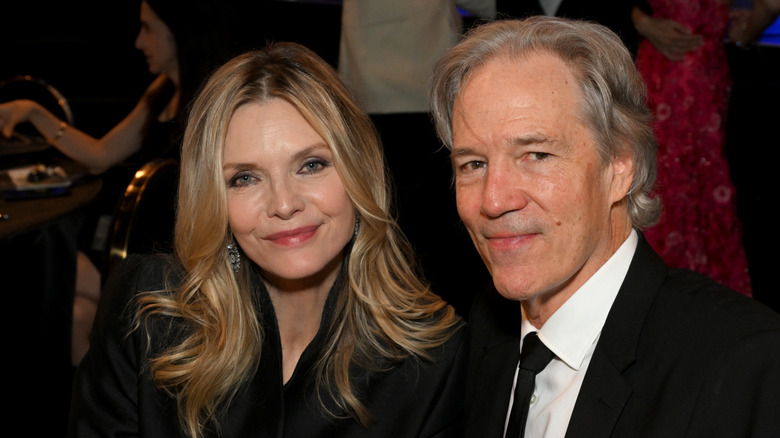
Although now happily married to TV writer David E. Kelley, Pfeiffer suffered her fair share of trouble on the road to wedded bliss. Pfeiffer married her first husband, Peter Horton, best known for playing Gary Shepherd in "Thirtysomething," when she was 22. The pair separated before she was 30. "I think my husband and I were both too young, and as we started growing up our needs changed," she told Interview Magazine in 1988. Despite their divorce, Pfeiffer claimed the split was amicable. "He even helped me pack my car," she said at the time, swearing she and her ex-husband were "like best friends" whenever they met up.
Around the time of their separation, Pfeiffer starred in the 1988 film "Dangerous Liaisons" alongside actor John Malkovich. During filming, the two began a short-lived affair that ended their friendship and Malkovich's marriage. While Pfeiffer has never publicly acknowledged what happened between her and Malkovich, she alluded to the affair in an interview with Parade: "Some were relationships, some were encounters," she said of previous relationships that didn't last.
Before Kelley, Pfeiffer says her "desperation" to start a family was clouding her perception of potential partners, but once she decided to become a mother on her own terms, things fell into place. Pfeiffer met her husband on a blind date while she was in the process of adopting her daughter, Claudia, and the two were wed in the fall of 1993.
She struggles with imposter syndrome and perfectionism
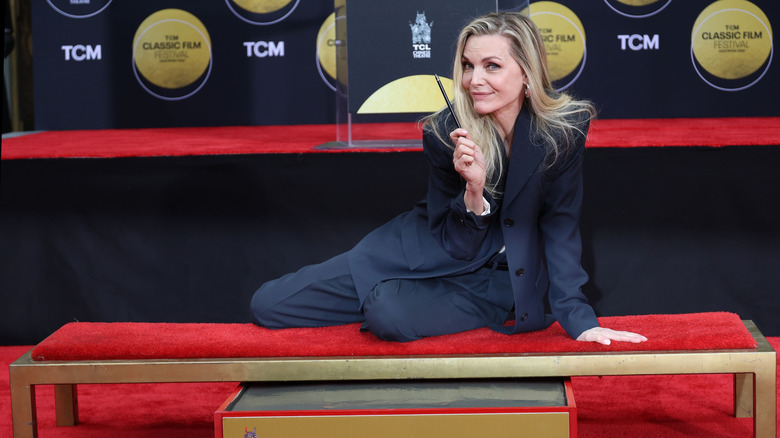
Pfeiffer is an accomplished actress, but that doesn't mean she necessarily sees herself that way. If you read or watch any interview she's done during her decades-spanning career, the chances are high that she'll mention her raging imposter syndrome. Speaking to Interview Magazine, she chalked it up to feeling unprepared when she started her career: "I didn't have any formal training. I didn't go to Juilliard," she explained. "So I've always had this feeling that one day they're going to find out that I'm really a fraud, that I really don't know what I'm doing."
In an interview with The New Yorker, Pfeiffer said, "there was a real snobbery" she experienced at the beginning of her career when working with other actors who had studied acting in cities like New York. "I just felt really unworthy," she said of that time in her life, "and I think that never leaves you." Since she was learning how to act on set and in front of audiences in real time, Pfeiffer developed a complex around what she perceived as a lack of experience.
Fortunately, this fear has lessened over time. "I spent years wasting time being afraid," she told The Sunday Times of her early career. Now that she's older and a mother of two, she joked, "I'm too tired to be a perfectionist."
Her hatred of interviews has made her more guarded
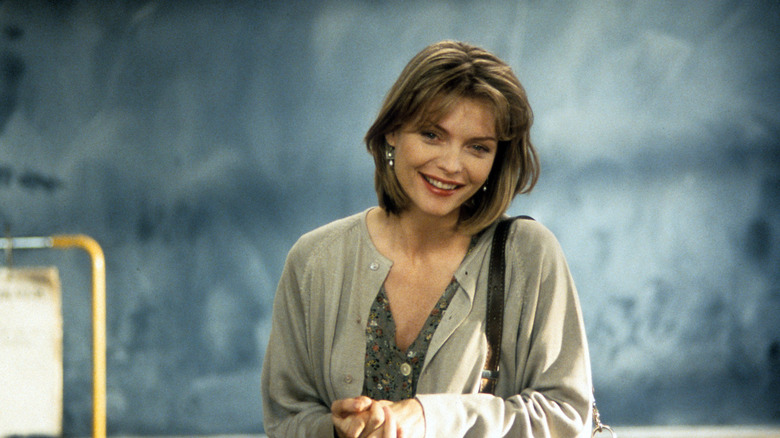
Like most celebrities, Pfeiffer gives interviews as a way to promote her films and personal projects. But unlike most, Pfeiffer is forthright about how strongly she dislikes the whole process. Some of that dislike comes from her imposter syndrome, she told Interview Magazine: "I think it may be that I have this constant fear that I'm a fraud and that I'm going to be found out."
Considering herself a "fraud" is only one contributing factor. She also dislikes how easily the medium lends itself to misunderstandings. In an interview with The New Yorker, she shared that "things coming off in a way that was not your intention" had made her even more private. "I just had a hard time even formulating a sentence because I was so guarded," she admitted.
Despite her hatred for interviews, she comes across as funny and personable in the majority of them. Still, having your words misconstrued can come back to haunt any celeb, even an actress at the top of her game like Pfeiffer. In a conversation with The Sunday Times, Pfeiffer confessed that she often worries the night after an interview about how she comes across in print. "I'll go to bed and think, 'Oh God, why did I say that?'"
Pfeiffer has had trouble controlling her explosive anger
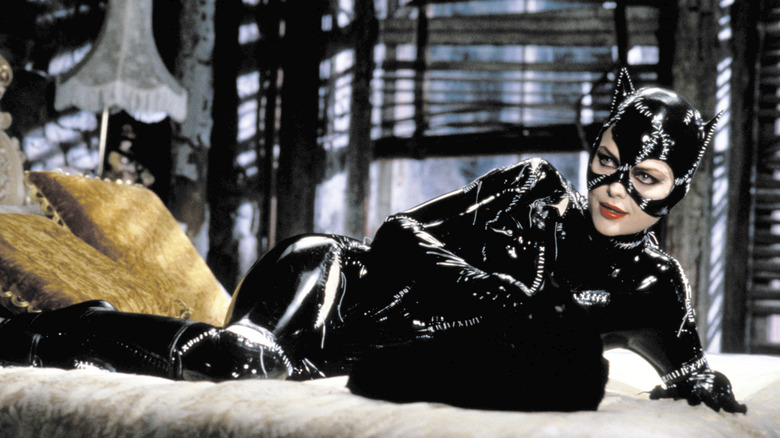
If one were asked to describe Pfeiffer, "angry" is probably not the word that would come to mind. But according to the actress herself, it's as good a descriptor as any. Though she comes across as soft-spoken and put together, Pfeiffer says her anger "eats away at" her until she explodes when she bottles it up for too long.
When asked by The Sunday Times whether her anger was more Catwoman or Elvira Hancock, Pfeiffer says, "It depends." To hear Pfeiffer tell it, when she gets "overwhelmed" with anger, she can even become destructive.
"But I think I'm getting better," she says. She echoes the sentiment in an interview with Entrepreneur when talking about her fragrance company, Henry Rose, saying she's "too tired to be angry" now that she's running her own business. "When I started this, I was really angry," she says of her motivation to start a new venture outside of acting, but that anger was born out of seeing a problem that needed fixing. "I don't like it when I can't find a solution to something," she says.
She has a love-hate relationship with acting and fame
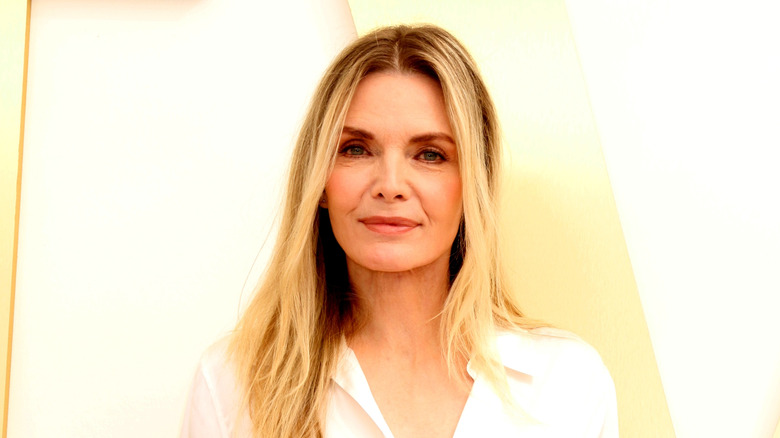
Some actors choose the career because they crave fame, while others hate being famous. Pfeiffer, however, has a complicated relationship with both her line of work and the notoriety she receives from being so good at her job. Her imposter syndrome, as well as a fierce need for privacy, can make both acting and fame difficult to navigate.
"I've always had this love-hate relationship with acting," she told the Hollywood Reporter. She even considered leaving the business entirely and took a break to stay at home with her children after years of worrying whether she was doing her job right. Fame only magnified these issues, she says: "And suddenly everyone knew who I was, and it terrified me." That fear was amplified when paparazzi followed her and her children, who were too young to understand what was happening.
"It's a double-edged sword," she said during a conversation with Parade. "Obviously, there are amazing things about fame," she conceded, though she doesn't mention what they are. Benefits aside, it's not hard to see why Pfeiffer struggles with the less glamorous sides of fame, especially when it comes to her family's privacy.
Taking care of her late parents made her confront her own mortality
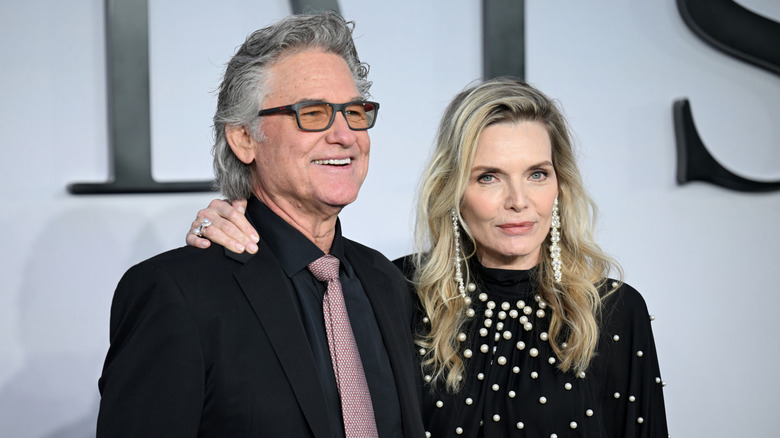
Pfeiffer, like many adult children of aging parents, helped care for her late mother and father before their deaths. The experience made her look at her own mortality. "Yes, it's scary," she told Parade. "It really hits you that you are now definitely in the second half of life."
Her parents, Richard and Donna, raised Pfeiffer and her three siblings in a working-class suburb some 30 miles from Los Angeles. Though she speaks sparingly of her family, she has mentioned that her mother, a homemaker, stressed the importance of having a career to fall back on. In an interview with The Sunday Times, she also shared that she gets her perfectionist tendencies from Richard. "He would give me little projects around the house," she said, and would often have her redo projects until they met his strict standards.
Her father's death was somewhat of a shock. "I really thought he'd outlive us all," she admitted. Her mother's death was similarly hard on Pfeiffer. "How is it possible that I miss you more with each new year that passes," she mused in an Instagram post dedicated to her mother.
She's struggled with becoming an empty nester
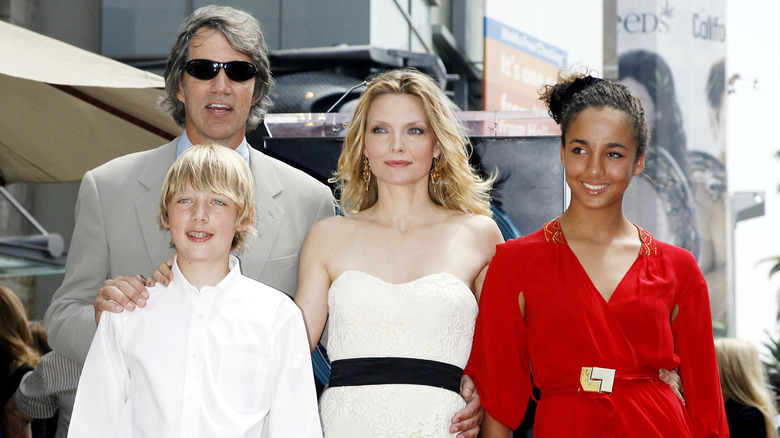
Pfeiffer temporarily stepped away from acting to take care of her two children, Claudia Rose and John Henry, for a few years. She and husband, David E. Kelley, moved the family to the Bay Area to step away from the pressures of fame and to raise their kids in an environment without paparazzi. Now that their two children are adults, Pfeiffer has mentioned how difficult the transition to an empty nester has been for her.
"People make a lot of jokes about the empty nest," she told Parade in 2012, when both her children were around college age. "It's no laughing matter. It's really hard." It isn't all bad, though. Pfeiffer and Kelley were able to move back to Los Angeles and throw themselves into work once their kids left the house.
While speaking with The Hollywood Reporter, Pfeiffer shared that her acting work, as well as her fragrance company — Henry Rose, a combination of her children's middle names — keep her busy. "The kinds of roles you're offered change as you get older and, in many ways, they're a lot more interesting now," she said of her work now that her children are grown up.