

The Legendary Feud Between Sisters Olivia De Havilland & Joan Fontaine
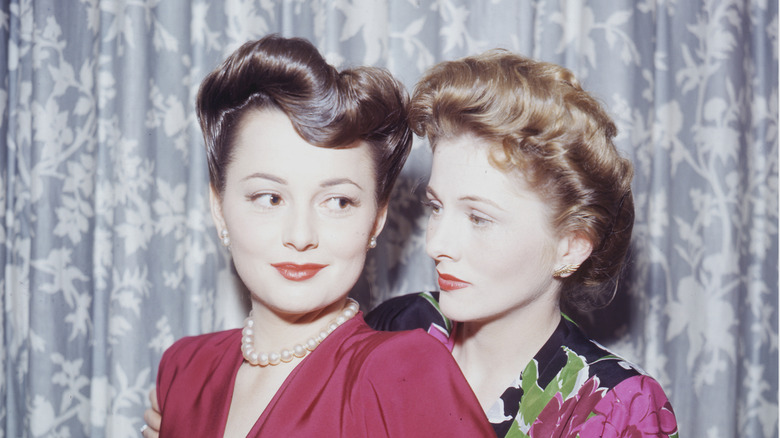
Forget Joan Crawford versus Bette Davis, Kim Cattrall against Sarah Jessica Parker, or Cardi B beefing with Nicki Minaj. When it comes to the nastiest Hollywood feuds of all time, Olivia de Havilland and Joan Fontaine can lay claim to being up there with the worst. Born just 15 months apart and dying at the grand old ages of 104 and 96, the sisters — whose bodies of work include Hitchcock classics "Suspicion" and "Rebecca" and the Academy Award-winning epic "Gone with the Wind" — are certainly responsible for one of the longest disputes in the industry.
Indeed, apart from a brief respite in their middle ages, the silver screen icons spent most of their lives at each other's throats, whether arguing over their taste in men, career choices, and stage names, engaging in psychological warfare, or even getting into fisticuffs. So, how exactly did the infamous sibling rivalry start? How did it end? And which of the pair threatened to kill the other? Here's a look at their legendary feud.
Olivia de Havilland and Joan Fontaine didn't get along as kids
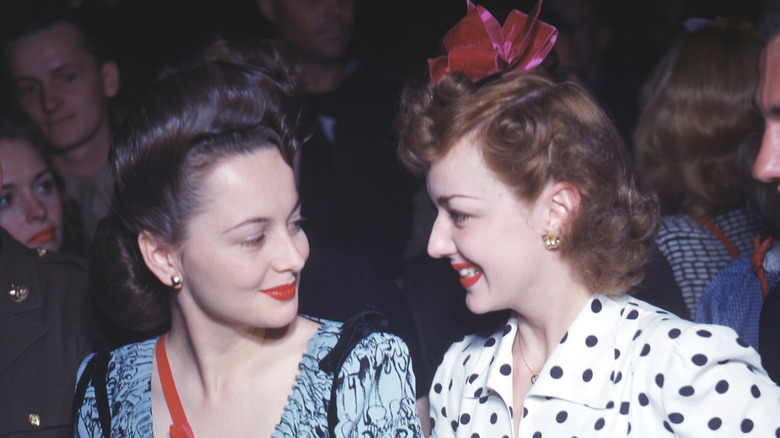
Olivia de Havilland and Joan Fontaine were born just over a year apart, and things were rocky from childhood. "From birth, we were not encouraged by our parents or nurses to be anything but rivals," Joan Fontaine claimed in her memoir "No Bed of Roses" (via Vanity Fair), referring to her relationship with her older sister. That perhaps explains why the sisters spent much of their childhood bickering, making fun of each other, and even physically fighting.
According to de Havilland, the fact that they had to share a bedroom while growing up was the root of their problems. Forced to spend so much time together, the pair found increasingly inventive — even somewhat disturbing — ways to torment each other. De Havilland, for example, would try to frighten her sibling by reading the crucifixion section of the Bible in the most dramatic way possible. In retaliation, Fontaine would parrot every single word that her roommate said.
Pulling hair, face slapping, and even wrestling would also be regular occurrences, while Fontaine was robbed of any hand-me-downs due to de Havilland's habit of destroying her clothes whenever she'd outgrown them. And they weren't afraid to get even more brutal.
A young Joan Fontaine plotted to kill Olivia de Havilland
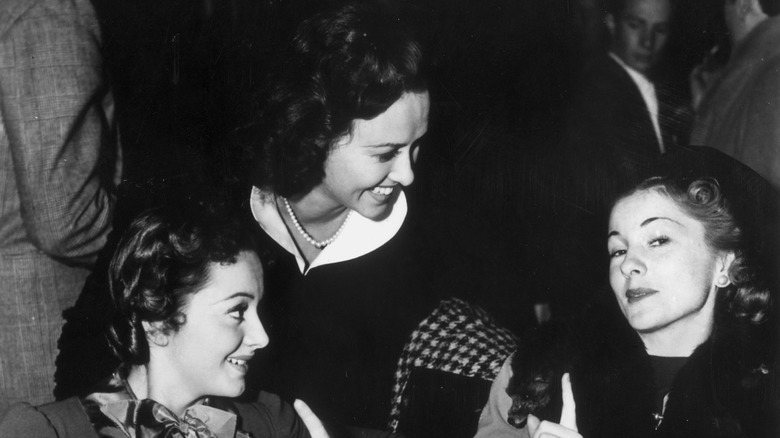
In one particularly physical encounter, Joan Fontaine ended up with a fractured collarbone. The incident occurred when she attempted to drag the oft-tragic Olivia de Havilland into a pool by her ankle. But when the latter understandably resisted, she ended up injuring herself instead.
In the most unsettling example of their early sibling rivalry, Fontaine also made a plan to murder her older sister when she was just nine. "She thought it all out carefully," a Life magazine profile of the pair published in 1942 stated. "She would let Olivia hit her once, and then again, in silence. But after the third blow, she would plug Olivia between the eyes." Thankfully, the gruesome plot never actually came to fruition.
In their teenage years, De Havilland turned to more psychological forms of torture. She used her position as high school newspaper editor to make a mockery of Fontaine, publishing a fictional will which read (via The Hollywood Reporter), "I bequeath to my sister the ability to win boys' hearts, which she does not have at present."
Olivia de Havilland tried to deter Joan Fontaine from Hollywood
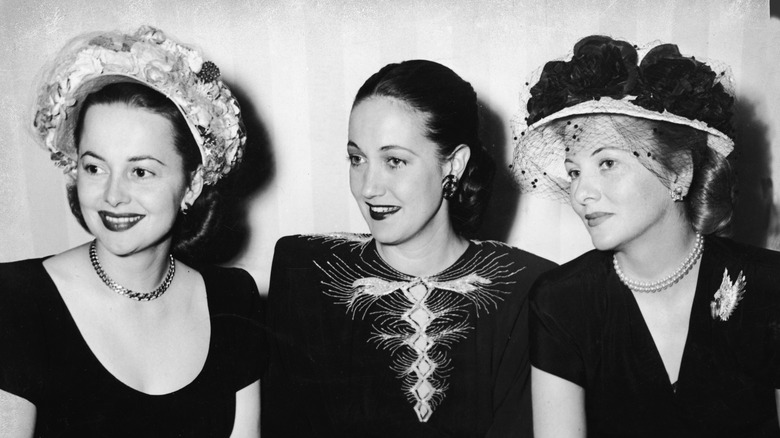
Olivia de Havilland was the first to enter the world of showbiz, achieving her big break in a Hollywood Bowl staging of Shakespeare's "A Midsummer Night's Dream" when the actor she was serving as understudy for suddenly dropped out ahead of its premiere. She subsequently went on to reprise the role on the big screen and landed a multi-year deal with Warner Bros.
By this point, Joan Fontaine had also started to express an interest in the world of acting. But instead of offering encouragement, de Havilland tried her best to deter her, suggesting that attending finishing school would be a better use of her time. "I suppose the way I saw it then was that I wanted Hollywood as my domain, and I wanted San Francisco society to be hers," she later confessed to Vanity Fair.
The gulf in their statuses widened further when Fontaine agreed to chauffeur de Havilland, who hadn't passed her driving test, to and from work. Ironically, this role nearly helped to kickstart her own acting career. While waiting outside the Warner Bros. studio for her sister, she was spotted by an employee who wanted to put her on the screen. However, she decided against pursuing the offer any further after telling her mom, who told her to steer clear of "Olivia's studio."
Olivia de Havilland forced Joan Fontaine to change her name
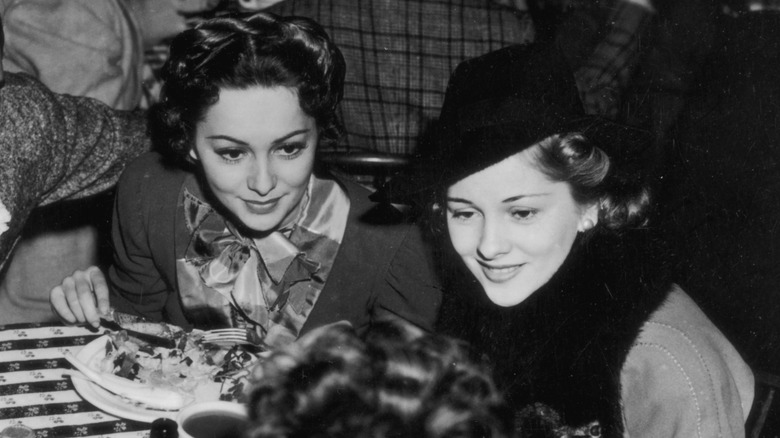
Even when Olivia de Havilland begrudgingly 'allowed' Joan Fontaine to follow in her acting footsteps, she still made every effort to make things difficult. Indeed, although she provided her younger sister with a place to stay in Los Angeles, she insisted that she audition under a different name.
"Two de Havillands on the marquee would be too many, so I had to leave Olivia's distinguished name for her and I took my stepfather's name," Fontaine later recalled (via The Hollywood Reporter). The latter had initially been firmly against the idea until she was told by a fortune teller that fame and fortune would be hers if she adopted a moniker that ended with the letter 'e.'
While the soothsayer proved to be right in her prediction, Fontaine still harbored resentment over the name change. And de Havilland also used it as another stick to beat her sibling with. According to Biography, she once threw the ultimate shade by remarking, "Joan Fontaine. I don't know who she is."
Joan Fontaine married one of Olivia de Havilland's exes
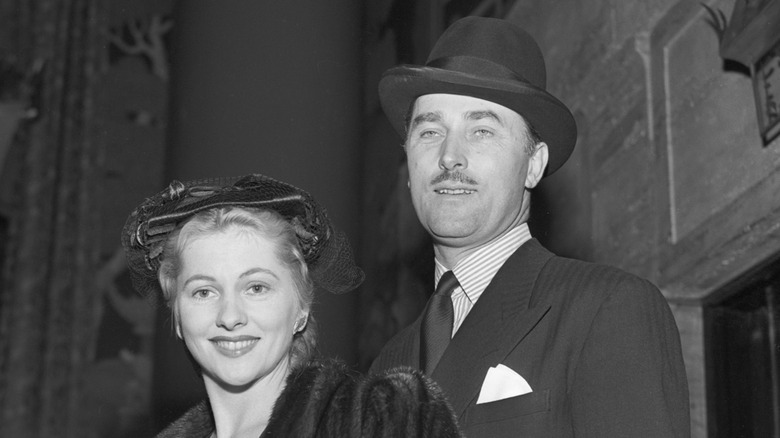
Joan Fontaine no doubt believed she'd got one over Olivia de Havilland in 1939 when she became the first of the pair to walk down the aisle. Even more so for the fact that she married a man who'd previously gone out with her older sister.
Indeed, Brian Aherne, a thespian who'd spent several decades performing in his native Britain before launching a career on the other side of the Atlantic, had previously costarred with de Havilland after they co-starred in the 1937 historical comedy "The Great Garrick." When things didn't work out between the pair, he switched his attention to her younger sibling instead.
Fontaine obviously had quite the effect on her sister's boyfriends. On the eve of Fontaine's nuptials, de Havilland's then-partner, Howard Hughes, allegedly attempted to deter the bride-to-be from getting hitched as he wanted her for himself. Although she ignored the Hollywood mogul's advice, she did pass his remarks on to her archenemy. However, de Havilland refused to believe what Fontaine had told her was true.
Both sisters tried to take credit for each other's work
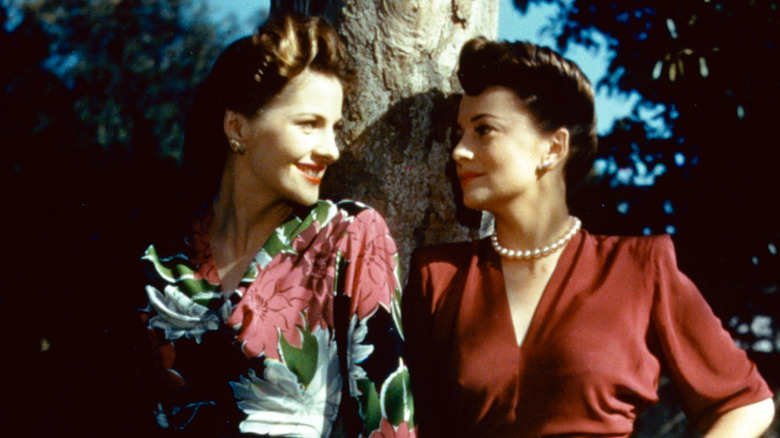
In 1939, Olivia de Havilland played one of her most iconic roles, Melanie Hamilton, in the historical epic "Gone with the Wind," for which she received the first of five Oscar nominations. But if you believe her younger sister's story, then the credit should have been shared.
Joan Fontaine claims that after being told she was too stylish while auditioning for the same part, she recommended de Havilland to the casting director. A backhanded compliment if ever there was one. However, her sibling, who had to persuade Warner Bros. to allow her to work with a rival studio while still under contract, never confirmed that this apparent act of generosity actually happened.
But de Havilland, too, has also insisted that she helped her sister climb up the Hollywood ladder. When Warner Bros. denied her the opportunity to star in another David O. Selznick picture, Alfred Hitchcock's "Rebecca," she apparently told producers that Fontaine would be the perfect replacement. "I was losing a brilliant part, but okay," she later told Vanity Fair. Coincidentally, this apparent act of generosity also led to a nod at the Academy Awards for Fontaine.
Joan Fontaine beat Olivia de Havilland to an Oscar
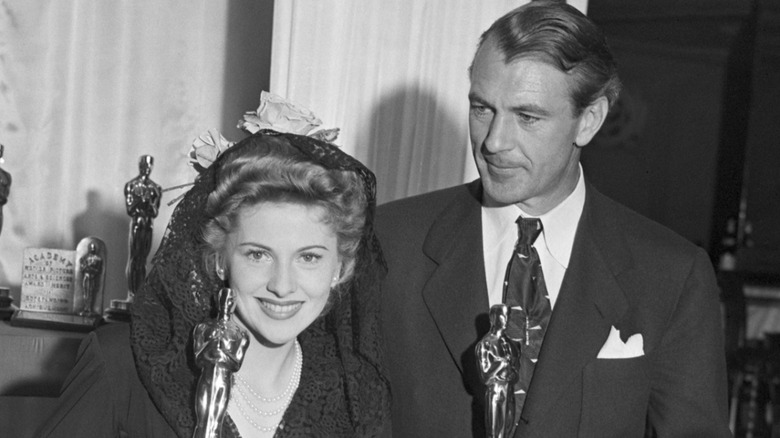
The 1942 Academy Awards provided the kind of real-life drama that most Hollywood screenwriters would kill for. In one corner of the Best Actress category, you had Olivia de Havilland for her performance in "Hold Back the Dawn." And in the other, you had her arch-rival, younger sister Joan Fontaine, nominated for her turn in "Suspicion."
This was the first of only two occasions where a pair of celebrity siblings have ended up in the same category. In 1967, Vanessa and Lynn Redgrave followed in the pair's footsteps. But the historic moment belonged to the sister who very nearly didn't show up. Indeed, believing that she had little chance of victory after losing out for her turn in "Rebecca" two years previously, Fontaine had initially planned to stay at home before de Havilland persuaded her to grace the ceremony.
It's perhaps little surprise, therefore, that on hearing her name called out as the winner, Fontaine froze. "I stared across the table, where Olivia was sitting directly opposite me," she reflected in her memoir (via The Hollywood Reporter). "'Get up there, get up there,' Olivia whispered commandingly. Now what had I done? All the animus we'd felt toward each other as children, the hair-pullings, the savage wrestling [matches], the time Olivia fractured my collarbone, all came rushing back in kaleidoscopic imagery. My paralysis was total."
Joan Fontaine threw shade at Olivia de Havilland's husband
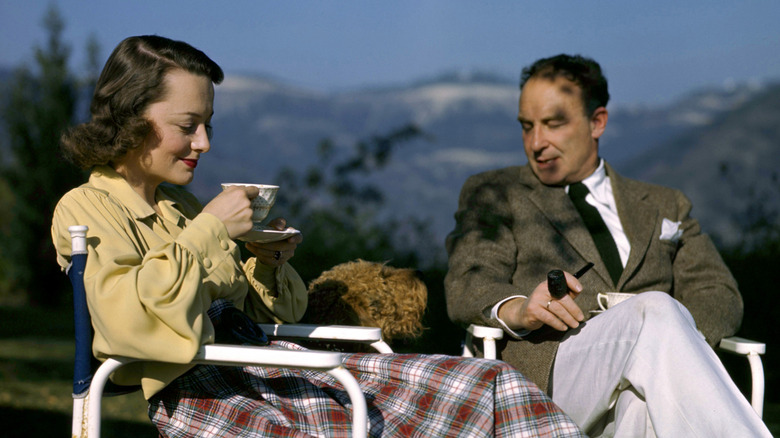
In 1946, seven years after her younger sister had first walked down the aisle, Olivia de Havilland got the chance to say "I do" when she wed Marcus Goodrich, an author with an eventful story himself. And following the nuptials, Joan Fontaine couldn't stop herself from passing comment on her new brother-in-law's past.
Indeed, "The Constant Nymph" star incurred the wrath of her older sibling when she apparently quipped (via Entertainment Weekly), "All I know about him is that he's had four wives and written one book. Too bad it's not the other way around." In fact, de Havilland refused to make any contact with Fontaine whatsoever until she received an apology, later telling the Associated Press (via The Hollywood Reporter), "Joan is very bright and sharp and has a wit that can be cutting. She said some things about Marcus that hurt me deeply."
Sadly, it wasn't fifth time lucky for Goodrich. De Havilland served Goodrich, the father of her firstborn, Benjamin, with divorce papers six years after tying the knot, claiming (via San Antonio Express-News) that he'd "wrongfully inflicted upon her grievous physical and mental suffering, all without provocation or any excuse whatsoever."
Olivia de Havilland snubbed Joan Fontaine after she also won an Oscar
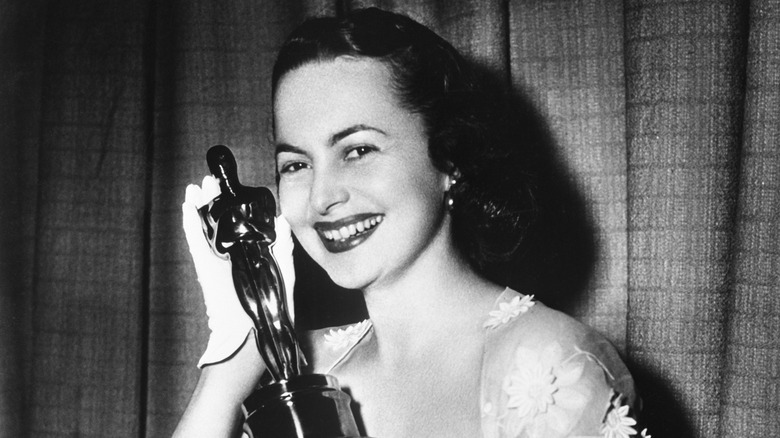
After getting even with her sister on the marriage front, Olivia de Havilland then equaled Joan Fontaine's Oscars success when she picked up Best Actress at the 1947 ceremony for her performance in "To Each His Own." Unsurprisingly, though, she was selective about who she celebrated with.
Indeed, as Hymie Fink's iconic photograph shows, de Havilland turned her back to Fontaine when the latter offered her well-wishes backstage. About the incident, de Havilland reportedly remarked (via The New York Times), "I don't know why she does that when she knows how I feel."
Understandably, Fontaine was left bewildered by her sibling's reaction. Recalling the incident in her autobiography, she wrote (via Vogue), "I went over to congratulate her as I would have done to any winner. She took one look at me, ignored my hand, clutched her Oscar and wheeled away." Attempting some damage control, de Havilland's press agent, Henry Rogers, told the media that his client hadn't communicated with Fontaine for several months and, therefore, had no desire to share her moment with her.
The two sisters were more civil toward each other in the '60s
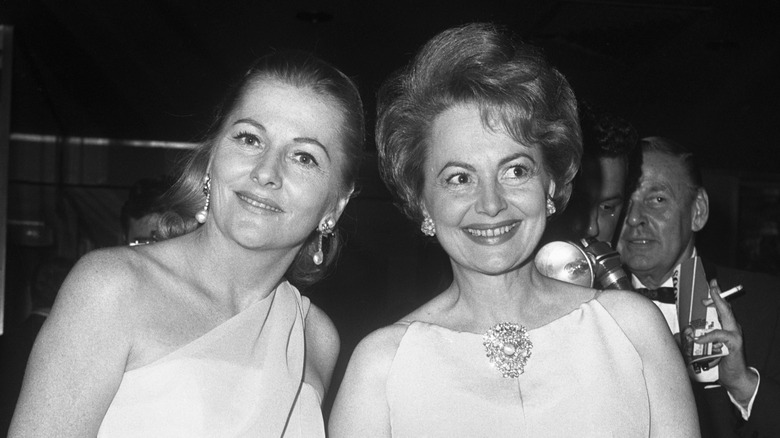
It seemed like hell would have to freeze over before it happened. But after years of sniping at each other in the public eye, Joan Fontaine and Olivia de Havilland appeared to call something of a truce. And the breakdown of the latter's first marriage was the catalyst.
"I swore that I would never reconcile with Joan until she apologized," de Havilland told the Associated Press (via The Hollywood Reporter) in 1957. "But when I returned to Hollywood after my separation from Marcus [Goodrich], it seemed silly to demand an apology again." In fact, the "Gone with the Wind" star regularly paid her younger sister a visit at her New York home, and they even spent the festive season in each other's company in 1961.
Eight years later, de Havilland called upon Fontaine to help her deal with everything from money problems to her relationship woes with her second husband, Paris Match editor Pierre Galante. "She signed with my lecture bureau and eventually had so many bookings that I had to find a new bureau to handle mine," wrote the "Rebecca" actor. But, of course, their feud did eventually reignite.
Joan Fontaine claimed Olivia de Havilland didn't tell her their mother had died
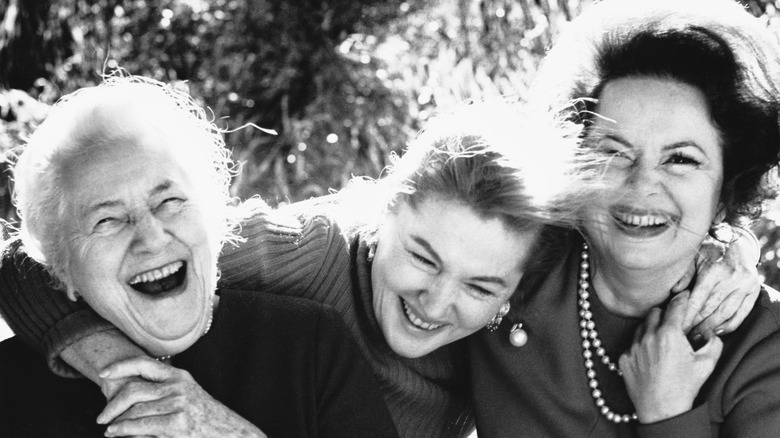
In 1975, the sisters' mother died following her battle with cancer. While Olivia de Havilland was by her side throughout, Joan Fontaine was out of the country, a situation which once again opened up the rift that previously appeared to have closed.
Indeed, while de Havilland sent a telegram bearing the news, she chose not to call Fontaine to inform her that their mother had died. In fact, it was only by chance that her younger sister discovered the news before the memorial took place. In her autobiography, the latter revealed that she only managed to get the service postponed in time for her to travel home after making threats to tell the media about how she'd been wronged.
Although Fontaine did manage to make the memorial, she wasn't consulted about its arrangements. "Olivia and the executor of the estate took full charge, disposing of Mother's effects as well as her body," she wrote (via BuzzFeed). Although the "Suspicion" actor revealed she had no words to say to de Havilland at the time, she made her feelings crystal clear in a subsequent chat with People: "You can divorce your sister as well as your husbands. I don't see her at all and I don't intend to."
Olivia de Havilland expressed sadness over Joan Fontaine's death
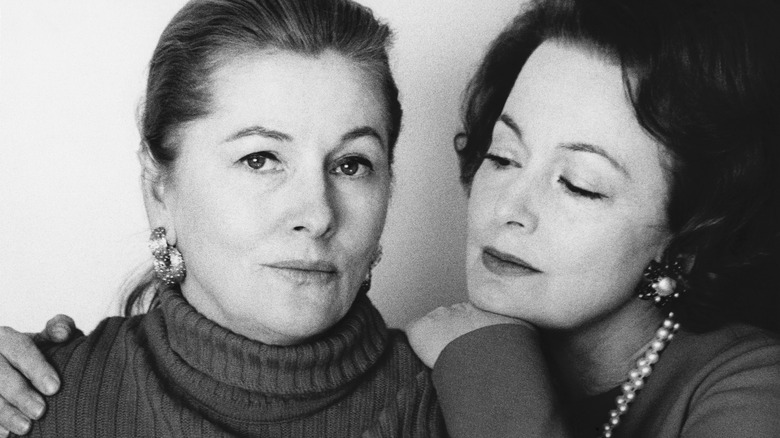
While on the promotional trail for her memoir in the late 1970s, Joan Fontaine delivered the classic quote to People, "Olivia [de Havilland] has always said I was first at everything — I got married first, got an Academy Award first, had a child first. If I die, she'll be furious, because again I'll have got there first!"
As it happened, Fontaine was indeed the first to hit life's final milestone. In 2013, she died of natural causes at her home in Carmel Highlands at the age of 96. So, was her older sibling furious by this development as Fontaine had predicted? Well, perhaps surprisingly, de Havilland's public statement wasn't rage-fueled, but it was hardly bathing in sentimentality, either.
"I was shocked and saddened to learn of the passing of my sister, Joan Fontaine, and my niece, Deborah, and I appreciate the many kind expressions of sympathy that we have received," de Havilland said (via AV Club).
A 100-year-old Olivia de Havilland claimed she was never hostile to Fontaine
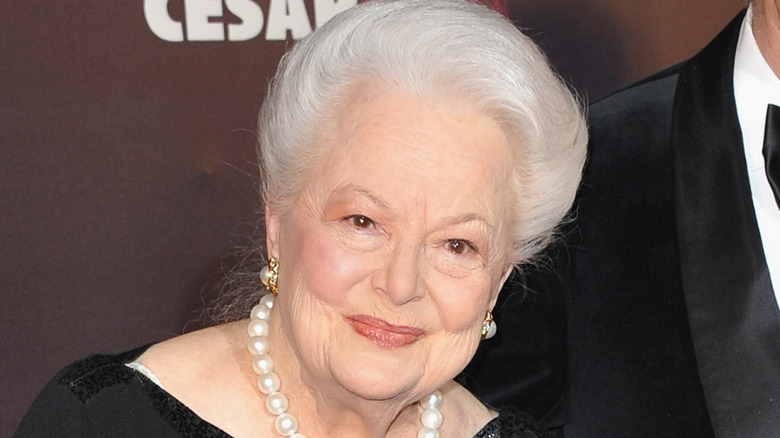
Having barely spoken about her fractious relationship with younger sister Joan Fontaine when the latter was alive, Olivia de Havilland couldn't stop talking about it following her death. Indeed, in a series of interviews celebrating her turning the big 100 in 2016, the "Captain Blood" star got surprisingly candid. And she proved that even as a centenarian, she could still throw shade.
"She was a brilliant person, very gifted and, alas, [had] an astigmatism in her perception of both people and situations, which could cause and did cause great distress in others," de Havilland told People about her late sibling in another of her backhanded compliments. "I was among those and eventually this brought about an estrangement between us which did not change in the last years of her life."
De Havilland also claimed that, despite a vast amount of evidence to the contrary, she didn't engage in any sisterly feud with Fontaine while she was alive. "A feud implies continuing hostile conduct between two parties," she said (via The Wrap). "I cannot think of a single instance wherein I initiated hostile behavior."
Their rivalry was depicted in Ryan Murphy's Feud
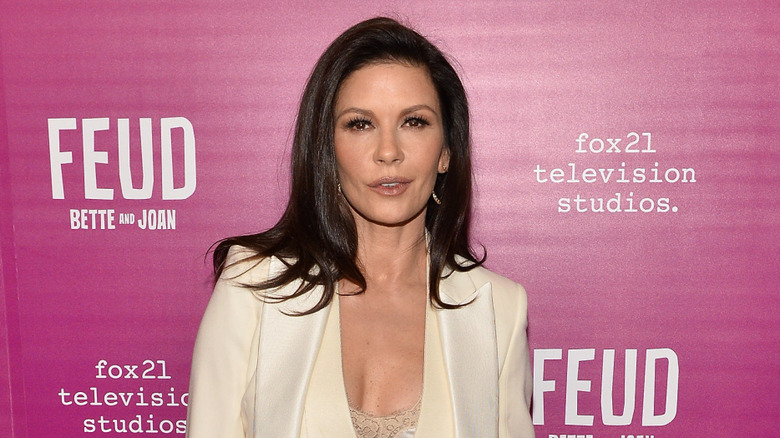
Never one to miss an opportunity to dramatize a real-life scandal, prolific showrunner Ryan Murphy added to his body of work in 2017 with "Feud," a gossipy drama based on the long-running rivalry between Joan Crawford and Bette Davis. But he also touched upon another classic Hollywood beef in the same series.
While Joan Fontaine was notably absent from the FX original, she was still repeatedly referenced throughout — and not in the most flattering of terms — thanks to the inclusion of her older sibling, played by Academy Award winner Catherine Zeta-Jones. However, the real Olivia de Havilland, then aged 101, didn't take kindly to being portrayed in such a catty manner.
In fact, claiming that her depiction was entirely inaccurate, the silver screen icon ended up suing the show's creatives. However, the case went against her, with judge Anne Egerton declaring (via BBC News) in 2018, "Whether a person portrayed in one of these expressive works is a world-renowned film star — 'a living legend' — or a person no one knows, she or he does not own history." De Havilland, who was subsequently forced to pay all legal costs, sadly died two years after the ruling.