

Dark Secrets Movie Stars Of The 1970s Tried To Hide
We may receive a commission on purchases made from links.
This article contains references to addiction, suicide, domestic violence, and sexual assault.
Like the rest of American culture and society at large, the 1970s were a time of significant change in the world of cinema. The last vestiges of Hollywood's Golden Age that had persevered into the '60s faded into memory as the Louis B. Mayer and Clark Gables of the world gave way to the likes of Martin Scorsese and Jack Nicholson. Along the way, innovative, uncompromising films like "Taxi Driver," "The Last Picture Show," and "The Godfather" inspired moviegoers and the next generation of filmmakers alike. "By the end of 1967, new Hollywood had won, only they didn't know it yet. And old Hollywood was over by '67, even though they didn't know it yet. [By 1970], New Hollywood was the Hollywood, and anything that even smacked of old Hollywood was dead on arrival," opined Quentin Tarantino at the 2016 Lumière Festival (via The Film Stage).
However, as dangerous, free-wheeling, and even dark as movies seemed during the '70s, some of the actors who brought those gritty stories to life were actually experiencing their own, hidden turmoil behind the scenes. In the age before the internet, social media, and 24/7 coverage, some of the biggest stars in Hollywood were the subject of whispered rumors as they and those around them worked to conceal uncomfortable truths and indiscretions as troubling as anything that was depicted on screen. Here are the dark secrets of some of the 1970s' biggest stars.
Peter Sellers behaved erratically and battled addiction
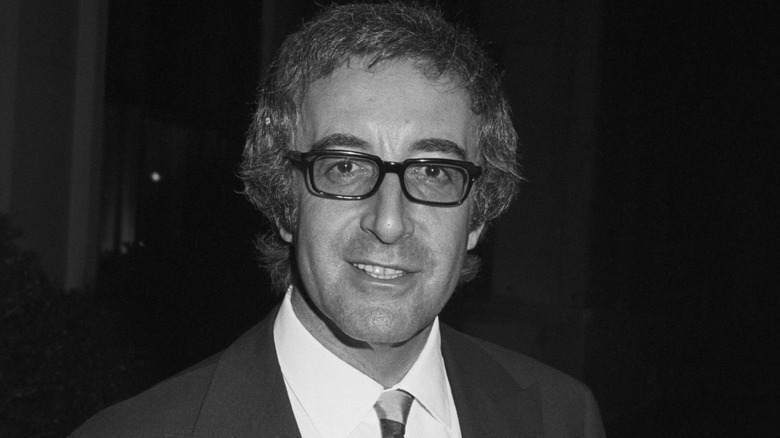
By the time the 1970s rolled around, Peter Sellers was a movie star on a global scale, having brought Inspector Jacques Clouseau to the big screen in multiple "Pink Panther" movies and also starring in films like "Dr. Strangelove," "Lolita," and "What's New Pussycat?" Along the way, he picked up two of his three Oscar nominations, including receiving a best actor nomination for his work in "Dr. Strangelove" (he was later nominated for best actor for his 1979 comeback project, "Being There"). Behind the scenes, though, Sellers contended with illness (he suffered several heart attacks), misuse of substances, and interpersonal turmoil with his friends/family and show business contemporaries alike. The stories of his unpredictability off-camera are as legendary as his exploits on it.
"He obviously suffered from or was bipolar, severely bipolar. He was a very tormented soul who should have had more help. But instead he was unable [to] because he was such a valuable asset," Sellers' former wife, actress Britt Ekland, opined in a 2020 BBC documentary about the actor (via The Guardian). Sellers was notoriously difficult to work with as an actor and reportedly called Ekland a c*** in front of the cast and crew on their movie, "The Bobo." It's also alleged that he threatened Ekland with a shotgun following their separation. Director Blake Edwards once described Sellers to Charlie Rose as "certifiable." Sellers died of a massive heart attack in 1980 at the age of 54.
Faye Dunaway caused chaos on and off the set
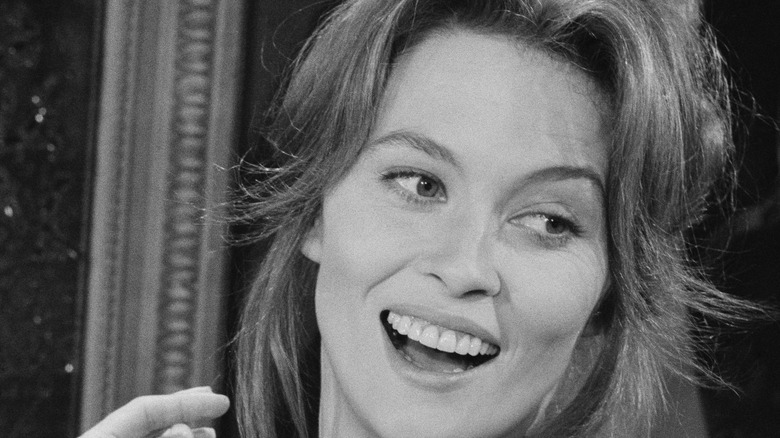
Although Faye Dunaway had an aura akin to old Hollywood screen queens like Elizabeth Taylor and Katharine Hepburn. During the 1970s, she parlayed her earlier success on films like 1967's "Bonnie and Clyde" into sustained stardom with memorable performances in the 1974 noir classic "Chinatown" (with Jack Nicholson), the 1976 satire "Network" — all of which garnered Oscar nominations, including a best actress win for the latter film — and more. As charismatic and enchanting as she was on screen, though, she developed a reputation for being incredibly volatile and downright abusive to the people she worked with. Dunaway was even accused of physically assaulting fellow cast and crew members, like actress Rutanya Alda.
Dunaway was alleged to have splashed a cup of her own urine in director Roman Polanski's face when she was denied a bathroom break on "Chinatown," a story she angrily opted not to comment on during a 2008 interview with The Guardian. More recently, she has opined that her diva-like behavior can be attributed to bipolar disorder. "Throughout my career, people know there were tough times. I don't mean to make an excuse about it; I'm responsible for my actions, but this is what I came to understand, was the reason for them," Dunaway said in 2024 (via Page Six). "It's something you need to be aware of, you need to try and do the right thing to take care of it."
Warren Beatty had affairs with just about everybody
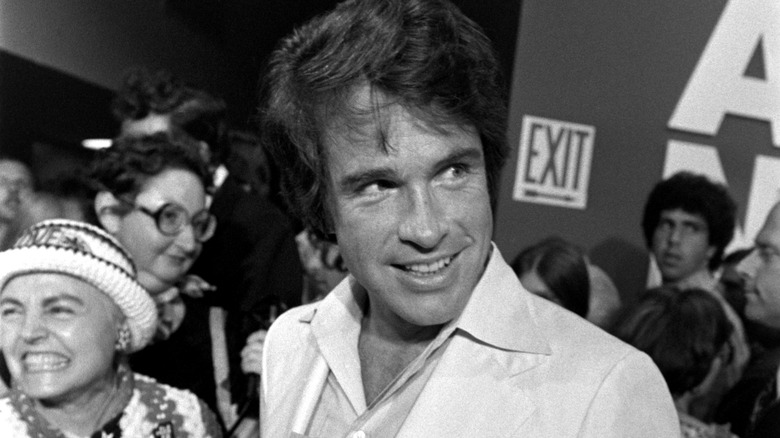
Where movie-star good looks are concerned, perhaps no Hollywood leading man has caused his admirers to swoon over the decades like Warren Beatty. Make no mistake — he proved himself time and time again as an actor, thrilling audiences with his performances in films like the 1975 Hal Ashby-directed comedy "Shampoo" and 1978's "Heaven Can Wait" (directed by Beatty himself, along with Buck Henry), and later becoming a multi-time Academy Award nominee, but the mythos surrounding his status as a showbiz lothario and lover to the world's most beautiful women has grown to epic proportions over the years.
In the book "Star: How Warren Beatty Seduced America," biographer Peter Biskind estimated that Beatty bedded a whopping 12,775 women, including the likes of Isabelle Adjani, Diane Keaton (who couldn't make a relationship with Beatty work), and Madonna, throughout his lifetime. Even Barbra Streisand has confessed that she may have had a liaison with Beatty, although the details are somewhat hazy for her. For his part, though, Beatty has downplayed some of the reporting about the number of notches in his bedpost. "Think about it, sleeping with 12,775 people," he told the AARP in 2016. "That would mean not just that there were multiple people a day, but that there was no repetition."
Steve McQueen was self-destructive and abusive
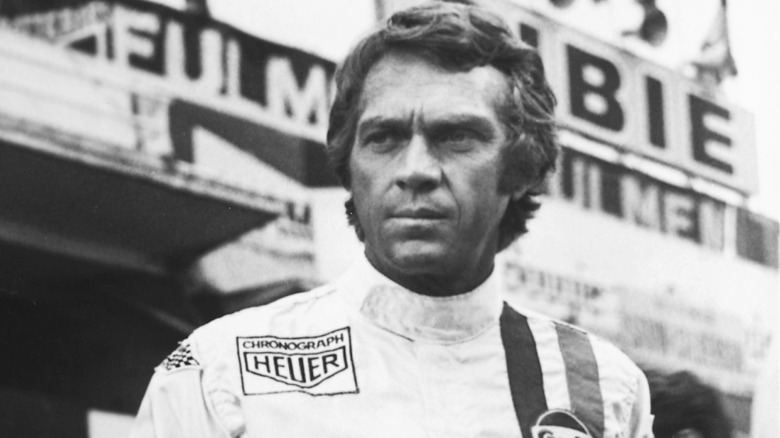
In the 1970s, Steve McQueen, whose grandson, actor Steven R. McQueen, looks just like him, was well-established as Hollywood's resident King of Cool. After rising to prominence during the '60s on the back of performances in films including "The Great Escape" and "Bullitt," he rocked the '70s with "Papillon," "The Getaway," and more. All the while, he oozed masculinity by performing many of his own stunts, racing cars and motorcycles, and even flying military fighter planes. However, while his public life was exciting, adrenaline-fueled, and even dangerous, his personal life was an entirely different brand of explosive.
In 2023, McQueen's "Getaway" co-star and later wife, Ali McGraw, recounted to Vanity Fair that after an epic fight during the early days of their on-set romance, she found herself having to listen to McQueen and two women in the throes of passion in an adjacent apartment (he reportedly asked her to cook him breakfast the next morning). McGraw said the two continued to fight (even violently) during their marriage, while McQueen used various substances and continued to cheat on her. All the while, McGraw lost herself while trying to fit McQueen's vision of what a wife should be. Said McQueen's first wife, actress Neile Adams, who experienced similarly turbulent times with the screen icon, four years later in a 2019 interview with Closer: "When he was good, he was adorable, and when he was bad, he was a pain in the ass."
Tatum O'Neal was neglected, abused, and fell into addiction
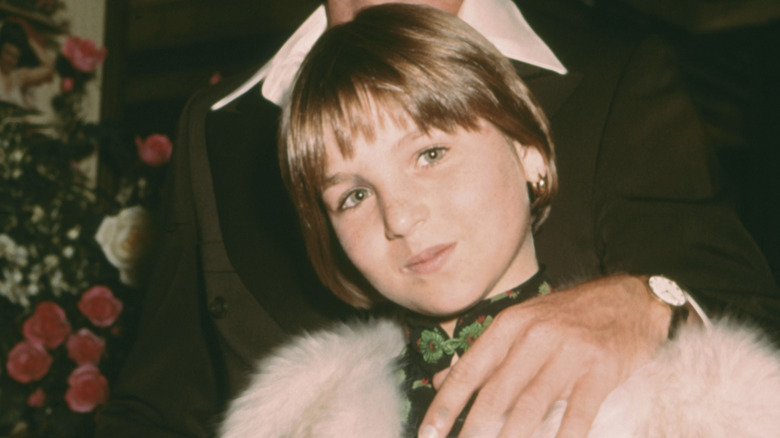
The daughter of Hollywood leading man Ryan O'Neal, Tatum O'Neal burst onto the show business scene at the tender age of 10 when she starred alongside her father in the 1973 Peter Bogdanovich-helmed road dramedy "Paper Moon," a role that won hearts, as well as an Academy Award for best supporting actress. Behind the scenes, though, O'Neal's life was hardly the fairy tale it appeared to be. Prior to the release of her 2011 memoir, "Found: A Daughter's Journey Home," O'Neal told ABC News that she had attempted suicide twice, was battling addiction, and had been sexually assaulted by family friends by the time she reached her teen years. Meanwhile, she had a rocky relationship with both of her parents, who had divorced when she was still quite young.
"I lived a hard time. There was, you know, tremendous beatings and no food," she told the outlet about the early days living with her mother, actress Joanna Moore. "I did a lot of running away. I was just waiting for my dad to save me — please save me, please, you know, because I was getting hurt. I was getting in trouble. I wasn't going to school. My teeth were rotting. Like, that was really happening, you know, and I was suffering." O'Neal also claimed that she was physically and verbally abused by her father, who she accused in an earlier memoir of punching her when he learned that she, not he, had been nominated for the "Paper Moon" performance.
Jack Nicholson has a secret daughter
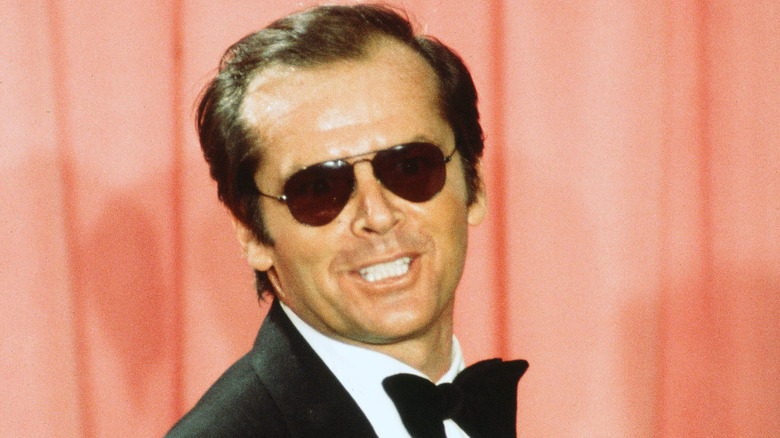
Throughout his legendary career, Jack Nicholson has played some of the most flawed characters ever committed to celluloid; from "Chinatown's" Jake Gittes and "Carnal Knowledge's" Jonathan Fuerst during the '70s to "Batman's" Joker and "The Shining's" Jack Torrance in the '80s. However, the multi-time Academy Award winner had his issues away from the camera, too, living in a world of Hollywood excess. One of the skeletons in his closet is having a daughter out of wedlock with a much younger woman, and then never acknowledging her existence publicly. That daughter, actress Tessa Gourin, has spoken up about the situation in recent years, despite being urged not to during childhood. "From a very young age, my mother told me not to tell anyone that I have this famous dad," Gourin told the Daily Beast (via NME) in 2023. "I knew he was powerful and Daddy Warbucks-level rich, so I kind of equated my life to being like Orphan Annie's."
According to Gourin, Nicholson said he wasn't interested in having a relationship with her, although he did support her financially in some respects. "I was dealt a really s****y random card, but I'm not gonna let that destroy me. In fact, I'm gonna use it to fuel me," she said, adding, "I formed my own opinion [of Nicholson]. He's a complicated person, and I think my mum fights her own demons, and with the combination of the two, I was simply collateral damage."
Burt Reynolds was bad with money and eventually went broke
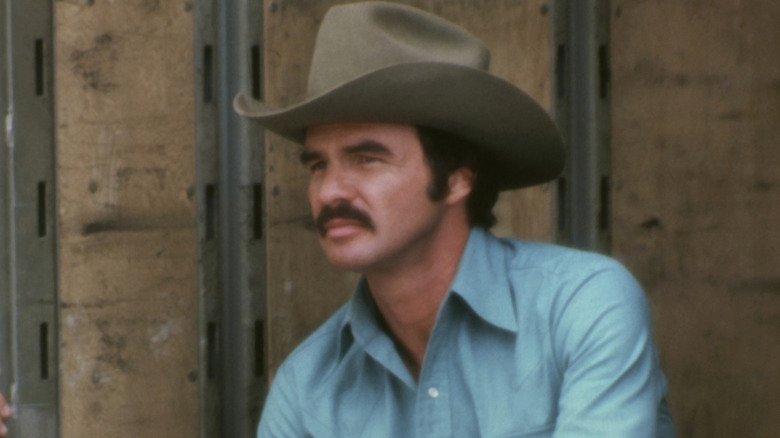
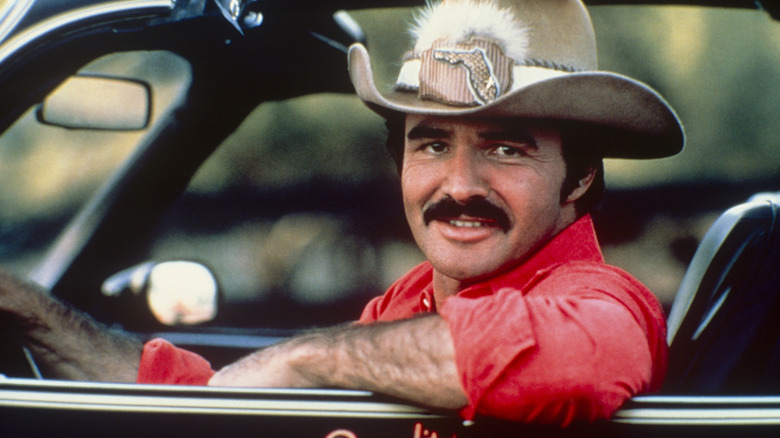
Although Burt Reynolds was already a veteran of the stage and screen by the time he landed his breakout role in John Boorman's iconic 1972 thriller, "Deliverance," he ascended to an entirely different tier in the Hollywood hierarchy during the 1970s with his performance in films including "White Lightning," "The Longest Yard," and "Smokey and the Bandit." While all three of those films were financial successes, though — with the latter film grossing more than $126 million against an estimated budget of less than $5 million — Reynolds' personal financial situation was far less stable over the years, as the actor struggled with bad investments, overspending, a costly divorce from actress Loni Anderson in the '80s, and eventually bankruptcy.
"It's thinking that it's a bottomless pit, so full of money that it's endless and you can never dip it all out," Buddy Killen, a friend of Reynolds and co-investor in a restaurant scheme costing each of them millions, told The Washington Post in 1996 of the screen legend's fiscal issues. "So you allow tax problems to occur. You allow everyone in the world to use your money. They use you. We're all subject to that. When you're successful, people tend to take advantage of you. If you're not watching over it, you look up one day and say, 'Whoa — what happened to all that money?'"
Jeff Conaway battled addiction for years
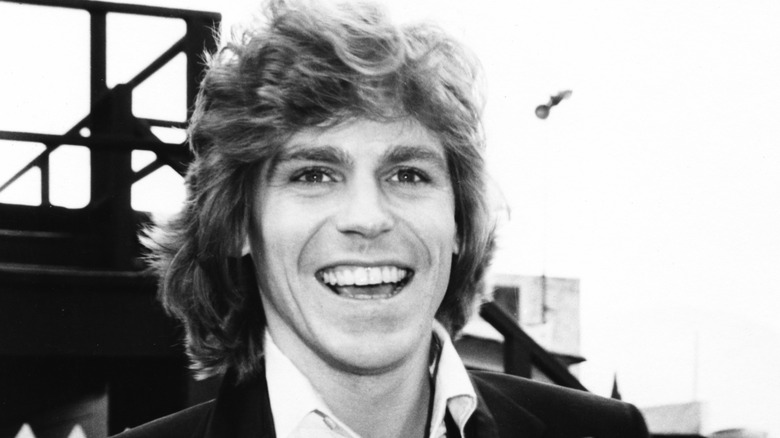
Jeff Conaway landed multiple iconic roles during the 1970s, serving as the understudy and eventual successor to the original Danny Zuko, Barry Bostwick, in the 1971 stage musical, "Grease," later playing Kenickie in the John Travolta and Olivia Newton-John-led film adaptation, and becoming a nationwide television star as struggling actor Bobby Wheeler on the hit sitcom, "Taxi." And he continued to act steadily in film and television projects for decades after his 1970s heyday, all the way up to the 2010s. However, Conaway struggled with addiction in his personal life, and those struggles eventually became public.
Conaway was a cast member of the VH1 reality series "Celebrity Rehab" in 2008, and confessed to having issues with cocaine, alcohol, and painkillers. He went on to pass away in 2011 at the age of 60 after being found unconscious following overdose complications from prescription medication, and his substance misuse unfortunately overshadowed his incredible acting talent in the end. "It's sad that people remember his struggle with drugs," Kathryn Boole, Conaway's manager, told the Associated Press (via ABC News) following his death. "He has touched so many people."
Martin Sheen had a substance-fueled meltdown on Apocalypse Now
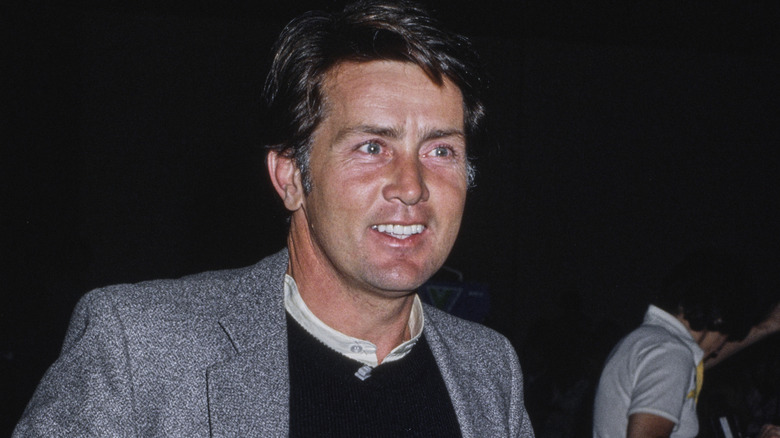
By the time director Francis Ford Coppola began principal photography on "Apocalypse Now" in 1976, Martin Sheen was already a respected actor, having drawn raves for his work in 1969's "The Subject Was Roses" and the Terrence Malick-helmed crime drama, "Badlands," in 1973. Behind the camera, though, Sheen was wrestling with some very serious personal demons. On the jungle set of Coppola's psychological Vietnam War epic, the actor's physical and emotional health deteriorated during a substance-fueled meltdown that bled into the film itself. In the movie's iconic opening scene, Sheen's U.S. Army Captain Benjamin L. Willard destroys a mirror in his room in a drunken rage, cutting his hand in the process.
Sheen's son, actor Emilio Estevez, has joined others in stating that the scene was a case of art imitating life. "He has this meltdown on set because he was celebrating his birthday and he was drinking," Estevez recalled in 2025 on the Happy Sad Confused podcast (via People). "Francis had him isolated in his room, and I was there. I watched it happen. And I was there when they carted him out, and he was ranting and raging and screaming." Sheen was in a bad way all-around during the shoot, suffering a near-fatal heart attack as well as a full-on nervous breakdown. Said Sheen (via Rolling Stone) in 1979: "I completely fell apart. My spirit was exposed. I cried and cried." For all his success, Sheen has been a tragic figure behind the scenes.
Natalie Wood allegedly took the fall in her divorce with Robert Wagner to protect the truth about his sexuality
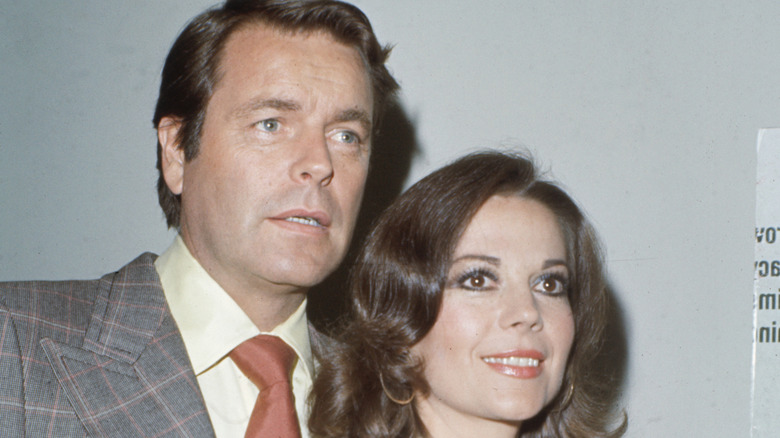
Actress Natalie Wood's mysterious drowning death off the shores of Catalina Island in 1981 has been subject to intense discussion and amateur sleuthing for decades, but it's not the only controversy surrounding the star of films like the 1961 musical classic "West Side Story" and Paul Mazursky's 1969 comedy-drama, "Bob & Carol & Ted & Alice." Her marriages to actor Robert Wagner, who starred in hit television series like "Switch" and "Hart to Hart" during the 1970s, have been put under the microscope in recent years. According to the 2020 Suzanne Finstad book, "Natalie Wood: The Complete Biography," a portion of which was shared online via Los Angeles Magazine, Wood took pains to cover for Wagner's alleged bisexuality during the couple's first marriage.
Per Finstad's research, Wood once caught Wagner having relations with another man and became distraught to the point of overdosing on sleeping pills but never revealed his secret publicly. Even when the couple divorced in 1962, she took the tabloid slings against her own character without revealing his supposed secret, according to Finstad. Wagner has reportedly denied this narrative through his representatives. In any case, Wagner and Wood remarried in 1972.
If you or anyone you know needs help with substance abuse, sexual abuse, domestic violence, or is having suicidal thoughts, contact the relevant resources below:
-
The Substance Abuse and Mental Health Services Administration website or contact SAMHSA's National Helpline at 1-800-662-HELP (4357).
-
The Rape, Abuse & Incest National Network website or contact RAINN's National Helpline at 1-800-656-HOPE (4673).
-
The National Domestic Violence Hotline at 1−800−799−7233. You can also find more information, resources, and support at their website.
-
Call or text 988 or chat 988lifeline.org.