

'60s Icon Ann-Margret's Hidden Scars: What The Cameras Never Saw
We may receive a commission on purchases made from links.
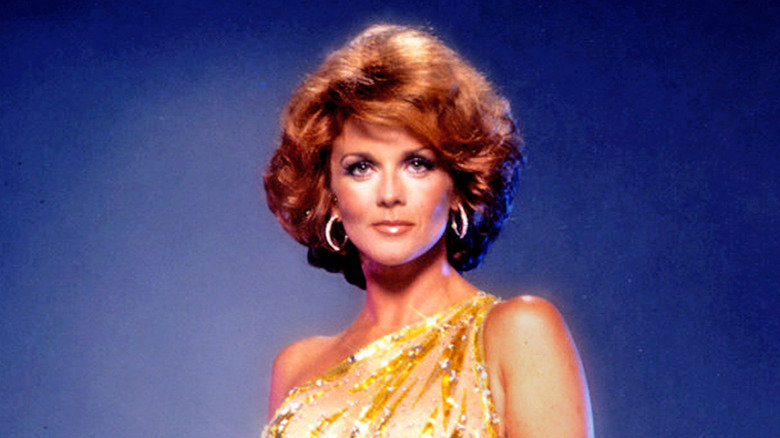
Ever since making her movie debut in the early 1960s, Ann-Margret's star has shone brightly, a triple-threat celebrity as a singer, dancer, and actor. During her heyday in the 1960s, she epitomized the term movie star, heating up the screen in the hit musical "Bye Bye Birdie," spoofing herself as "Ann-Margrock" on "The Flintstones," and sharing the screen with Elvis Presley in "Viva Las Vegas" (the two co-stars wound up embarking on a passionate year-long romance that later left her devastated when she learned the true story of Presley's death). She went on to demonstrate her dramatic range with a powerful performance opposite Jack Nicholson in 1971's "Carnal Knowledge," for which she received an Oscar nomination. She received a second nomination a few years later for her role in "Tommy," the film adaptation of The Who's rock opera.
Meanwhile, she also had some success as a singer, racking up a few hits — including her 1961 single "I Just Don't Understand," which cracked Billboard's top 20. Beyond that, she was a popular cabaret performer and frequent guest on TV talk shows. Meanwhile, her acting career has extended from the early 1960s right through to the present, spanning an impressive seven decades and counting.
Yet that run of success has concealed a long history of sadness and tragedy, including issues with substance abuse, multiple injuries, the deaths of loved ones, and more. Read on for a look at '60s icon Ann-Margret's hidden scars and what the cameras never saw.
An accidental fall off a stage left her near death
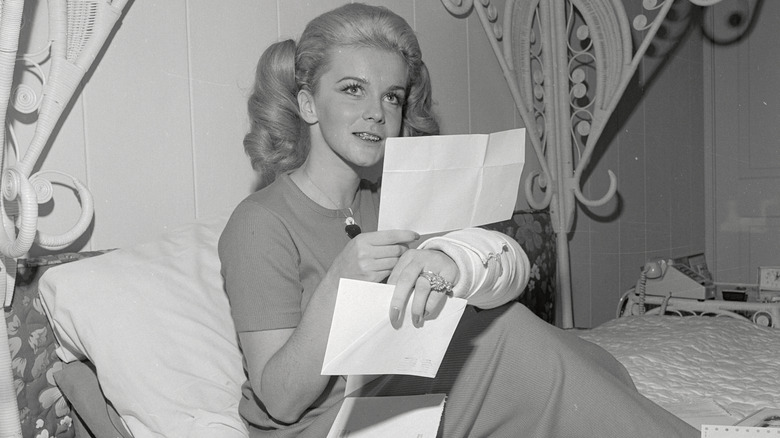
Over the years, numerous musicians have been injured on stage, and Ann-Margret is among them. In 1972, she was performing at the Sahara Hotel in Lake Tahoe when a horrific accident occurred. For her act, a suspended platform had been built, hanging on wires, that could be raised and lowered. Dangling 22 feet off the ground, the platform was designed to slowly lower her to the stage while she sang her opening number. During that performance, the curtain was about to open when the platform malfunctioned, causing it to abruptly tip and then flip upside down, hurling her off the platform to the stage below. "All I can remember is the start of the fall and seeing the floor coming toward me," she wrote in her 1994 memoir, "Ann-Margret: My Story."
She lay unconscious on the stage, while blood pooled beneath her. A doctor who'd been watching the show rushed to her aid, and she was taken to a nearby hospital amid fears she might not survive. The injuries that she suffered during that fall were severe. "My face was collapsed and swollen beyond recognition," she wrote. "Numerous bones in my face were either broken or fractured. My jaw was broken in two places. My left arm was broken and looked terrible. There was a huge gash on my knee, which had split open, like a splattered tomato."
She slipped into a coma and required extensive reconstructive surgery
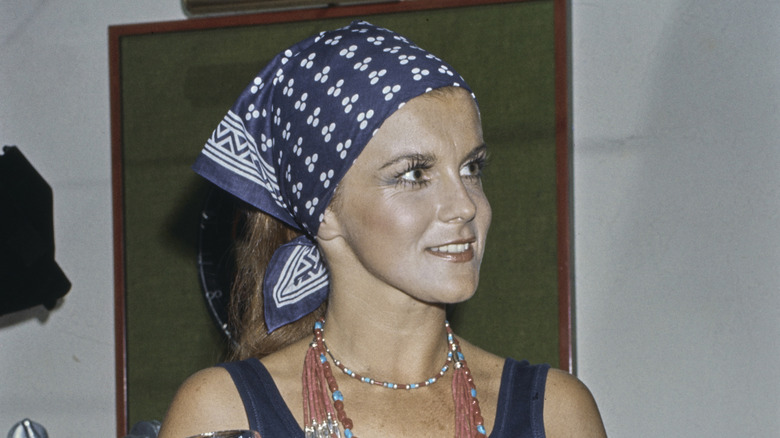
At the time, Ann-Margret herself had no idea just how close she'd come to dying in that onstage accident. The prognosis didn't look good and seemed to portend the end of her career as an entertainer. "The doctors feared I'd never dance again — if I survived," she wrote in "Ann-Margret: My Story."
Delicate surgery was required to repair the damage to her famous face, and her husband, actor Roger Smith, ignored doctors' advice not to move her and found a small airplane that could take his comatose wife to UCLA Medical Center. There, he'd heard that surgeons had perfected the ability to operate through the mouth so as not to leave facial scars.
When she finally regained consciousness on the day following her surgery, she was completely oblivious to the ordeal that she'd just been through. "I had no idea what had happened, where I was, or why I couldn't move or speak," she wrote in her memoir. "I wanted to ask questions. But now I couldn't talk at all. I was angry and confused."
She developed an addiction to alcohol
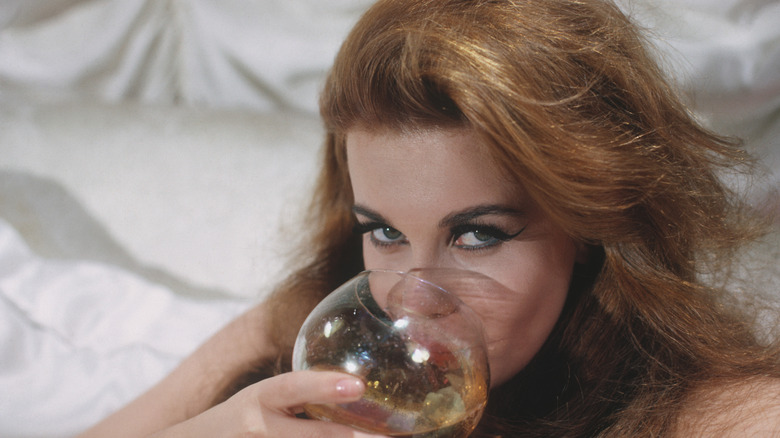
While Ann-Margret may have been among the lucky celebrities who survived brushes with death, her recovery took some time. In the midst of recuperating from her accident and the subsequent surgery, she received devastating news: Her beloved father, who'd been diagnosed with cancer, had taken a downturn and wasn't expected to live much longer. When he died, she was crushed. Even though she'd witnessed his physical deterioration firsthand, his death nevertheless proved to be a tipping point.
That, coupled with the lingering pain during her recovery, led her to increasingly self-medicate with alcohol. "In private, I felt myself losing control," she wrote. "I reached a point where my days and nights blended into one continuous foggy state of inebriation. I'd drink a fifth of scotch, pass out, wake up, drink some more, and pass out again." There were, she added, times during this period that she simply could not remember.
Her husband, Roger Smith, grew increasingly concerned. At one point, he begged her to stop drinking. She eventually did, joining the ranks of celebs who are proud to be sober. Years later, she discussed her sobriety with CBN: "You never really overcome it," she said. "But I dealt with it ... I have constantly been dealing with it ... You always have to be aware of it."
If you or anyone you know needs help with addiction issues, help is available. Visit the Substance Abuse and Mental Health Services Administration website or contact SAMHSA's National Helpline at 1-800-662-HELP (4357).
She struggled with depression
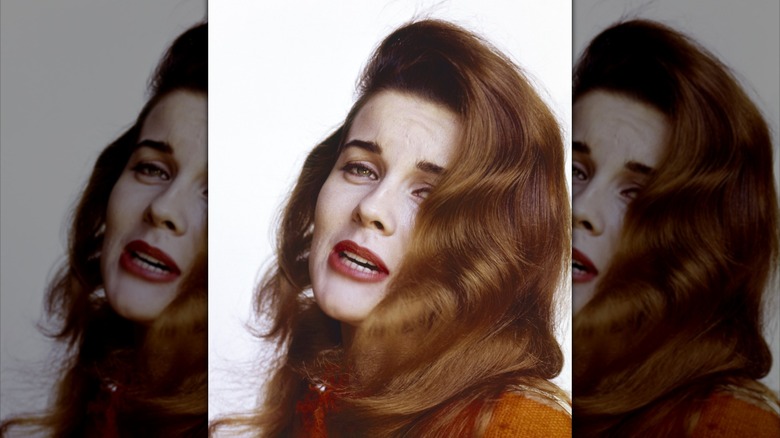
The death of her father sent Ann-Margret into a dark downward spiral. In fact, things became so dire that when her husband wasn't with her, he ensured that someone else would be there to keep an eye on her. "I'd fallen into such a deep depression that they rightfully feared I'd do something desperate," she wrote in her memoir.
One day, feeling as though she could no longer endure the mental anguish she was experiencing, she found a bottle of painkillers she'd been prescribed after her Lake Tahoe accident. She gulped down a handful, washed them down with a glass of water, and immediately regretted what she'd done. At that very moment, she realized that she didn't want to die. "Very simply, I didn't want to be in any more pain," she wrote. She immediately went to see a friend whose husband was a doctor. He gave her a concoction to drink, which caused her to vomit up all the pills she'd taken. The physician then gave her a stern warning. "I'm never going to do this again," he told her, according to her memoir.
If you or someone you know is struggling or in crisis, help is available. Call or text 988 or chat 988lifeline.org.
An on-set accident while filming Tommy required 27 stitches
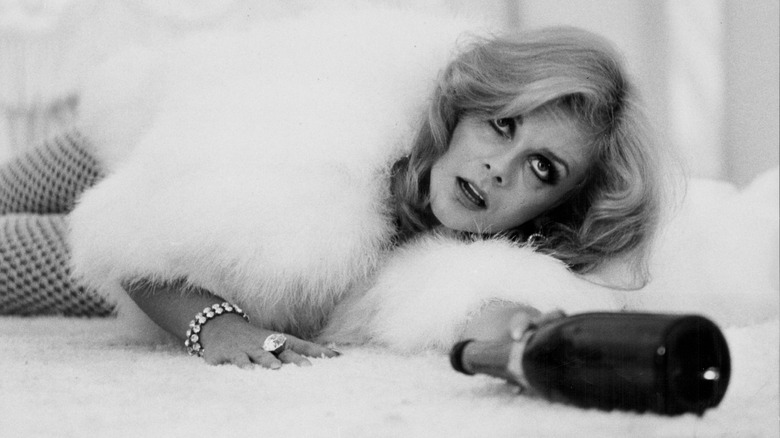
Some of Ann-Margret's film roles proved to be harrowing for her. Her performance in the 1971 drama "Carnal Knowledge," for example, may have been critically acclaimed, but reaching the emotional depths the part required took its toll on her. "'Carnal Knowledge' left me in a depressive stupor fueled by pills and alcohol," she wrote in her memoir.
However, a subsequent film left her with a severe cut on her hand. While filming the rock musical "Tommy," one scene required her inebriated character to drunkenly smash a television with a bottle of champagne, with the broken screen then spewing out a tsunami of bubbles. "Well, when I threw the champagne bottle into the television set, there was all this jagged glass," she told The Hollywood Reporter in 2023.
"In the scene, I'm just going crazy and whacking my way through these bubbles, and then suddenly I hit something," she said when recalling the incident for Interview in 2014, explaining that the crew had neglected to remove the shards of broken glass that were still protruding from the TV screen. "So I hit that with a thud, and then I start to see pink appearing in the soap bubbles, which resulted in 27 stitches," she shared. "I had to be back on set the next day, but they just filmed me with my arm under a desk so they couldn't see the stitches."
Her husband was diagnosed with a debilitating autoimmune disorder
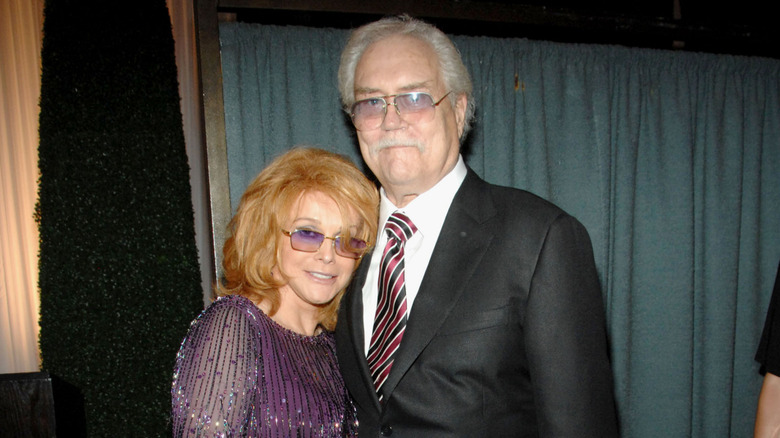
Ann-Margret married Roger Smith in 1967, and their marriage was long and seemed to be happy. In the early 1980s, however, he was diagnosed with myasthenia gravis, an autoimmune disorder that results in muscles becoming progressively weaker. At the time, doctors predicted he wouldn't live longer than 10 years. Interviewed by Roger Ebert in 1983, Ann-Margret confirmed that some days were better than others, and there had been occasions when he was so weak he'd be unable to get out of bed for days on end. "That really bothers me, when there's nothing I can do to help him," she admitted.
As the years wore on, his condition left him progressively weaker. She cared for him, at one point even putting her career on hold for several months so she could focus her attention on him. That period was difficult, yet it also changed her in ways she hadn't anticipated. Prior to his diagnosis, Smith had acted as her manager, handling the business aspects of her career. "Slowly, I became a different woman inside," she wrote in her memoir. "The dependent, shy Ann-Margret slipped away by necessity, and a confident and competent woman came in her place. I could not only sing, act and dance, but buy stocks and bonds, hire a plumber, and make business decisions about my career."
Thankfully, Smith outlived predictions. While they were considering a surgical procedure to remove his thymus gland, he began feeling better, and doctors offered wonderful news. "They said that the disease, true to its unpredictable nature, had reversed itself," she wrote. "Roger had gone into remission."
Fertility issues left her unable to fulfill her dream of becoming a mother
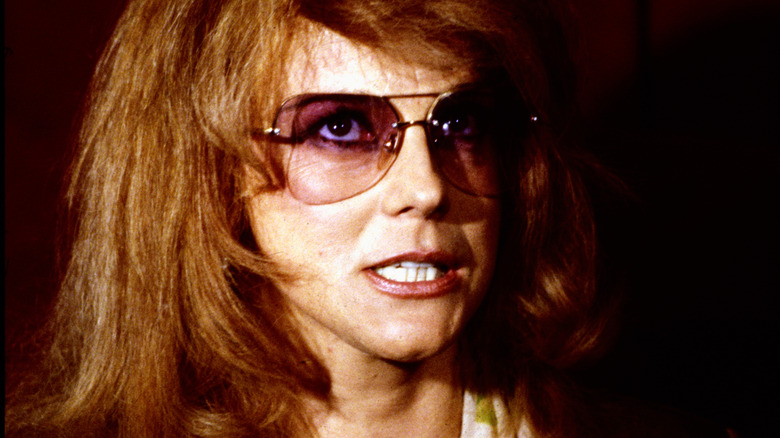
Ann-Margret had spent decades focusing on her career but had also hoped to be able to become a mother at some point. While she was stepmother to husband Roger Smith's three children from his first marriage, she wanted to have a child with him. As the years passed, their attempts to have a baby remained futile. In her early 40s, she wrote in "My Story," she began using an "experimental fertility pump" that infused hormones into her body.
In a 1985 interview with McCall's, she revealed that she and Smith had been trying unsuccessfully for 13 years. However, she had decided to leave it in the hands of God. "The point is, if I am meant to have a child, I will have one," she said, as reported by UPI. "Whatever my higher power feels is right for me, I will accept. I know this may sound simplistic, but I believe in the serenity prayer: 'God, grant the serenity to accept the things I cannot change, the courage to change the things I can and the wisdom to know the difference.'"
That treatment ultimately proved ineffective. While there have certainly been stars who chose not to have children, Ann-Margret is not one of them, and despite her deep longing to have a baby, it never happened.
A motorcycle accident left her with a shoulder fracture and broken ribs
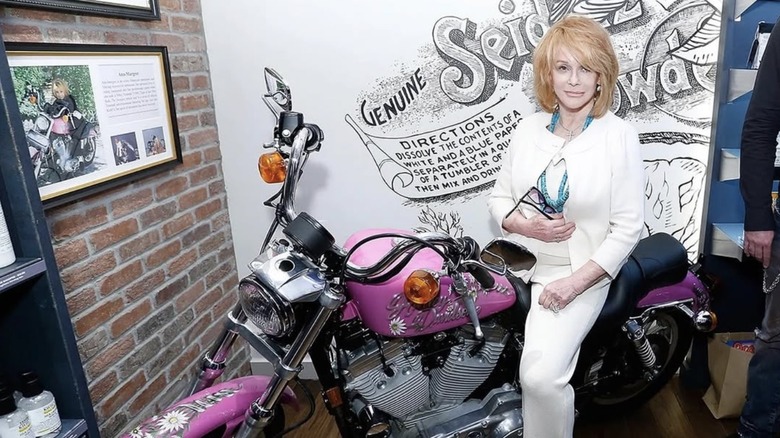
Ever since she saw Marlon Brando in "The Wild One," Ann-Margret has been fascinated by motorcycles. "And I have always loved speed," she declared while appearing on CNN's "Larry King Live." Celebrities and motorcycles, however, can make for a dangerous combination; think back to 2018, when George Clooney experienced a harrowing motorcycle accident.
In 2000, Ann-Margret and her husband were riding Harley-Davidsons when a mishap occurred while making a sharp turn. "And I hit some sugar sand and it just went off ... And then I hit something. And it was a boulder," she recalled.
She did not emerge unscathed, breaking three of her ribs and fracturing her left shoulder. As she told host Larry King, those weren't her only injuries; just a few months later, on Christmas Eve, she tripped over one of her cats, which left her with a broken wrist and a damaged foot. "Those are tendons that were bashed," she explained. However, she took it all in stride, appearing onstage a few weeks later in a production of a Broadway-style musical with her arm in a cast. Despite her injuries, she insisted she had no plans to stop riding her beloved two-wheeled speed machine. "There are two types of motorcycle riders: ones who have had an accident and ones who will," she quipped.
The deaths of her parents left her devastated
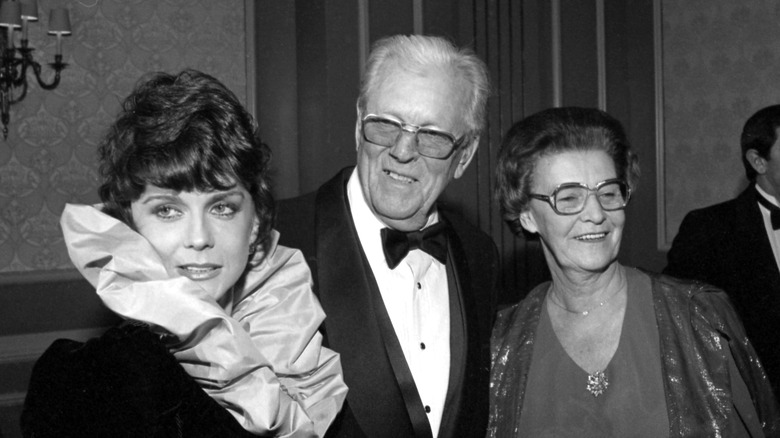
When Ann-Margret's father, Carl Olsson, died in 1973, it hit her like a gut punch. "I wouldn't accept his death. I couldn't," she wrote in her memoir. "I was his only child and he was my protector," she told The Hollywood Reporter.
Nearly two decades later, she mourned the death of her mother, who passed away at age 82. At the time, Ann-Margret had been preparing to record a gospel album, and it saddened her that her mother would never be able to hear it. "[My mother] was so excited about it and so interested in it, so it made me feel good to honor her with it," she told the Los Angeles Times in 2002.
Recording that album after losing her mother proved to be a powerfully emotional experience for her. "She passed away, and it was three weeks later when I did the recordings," Ann-Margret recalled in a 2003 interview with the Frankfort Times. "I did it after my shows, until about 4 a.m. I did it for her. The feelings I had ... I wish I could articulate. It just went all through me, and I knew she was there."
Ann-Margret lost her husband in 2017
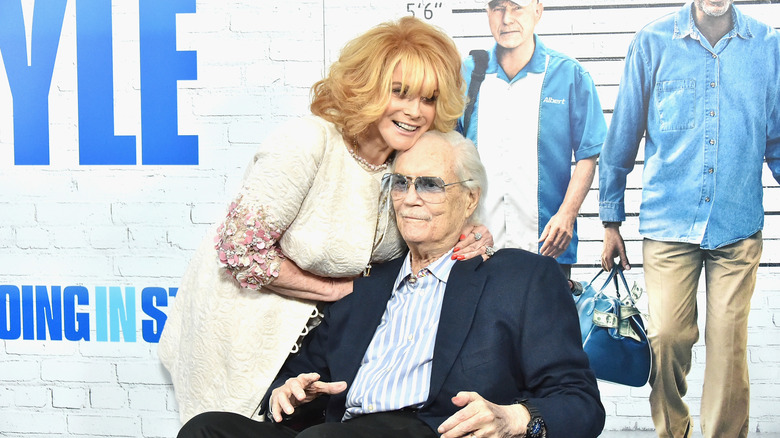
In 2017, Ann-Margret and husband Roger Smith celebrated their 50th wedding anniversary. Looking back, she recalled knowing instinctively that he was her future husband shortly after they met. "I knew he would protect me," she told People in March of that year. "I knew that I could depend on him. I sensed it completely."
Sadly, their long marriage came to a tragic end shortly after that. Just a few months later, he died at age 84. "Roger meant everything to me," she told Parade of her late husband in 2026. "We were together [a total of] 54 years. It just flew by because it was really good. I sure miss him! He took great care of me."
As a source told Closer Weekly in 2020, she has struggled with this loss in a big way. "She lets herself be sad, but also cherishes the years they had together," the source told the outlet. "She believes he is still watching out for her." Her friend Alan Arkin — who, at the time, was starring in the Netflix comedy "The Kominsky Method" — encouraged her to get back to work and engineered a role for her on the show. She ended up guest-starring in a pair of 2018 episodes. Meanwhile, she remained close to her stepchildren. "We can laugh together, which we always do," she told Parade. "I love them!"
Another fall in 2026 caused further injuries and health setbacks
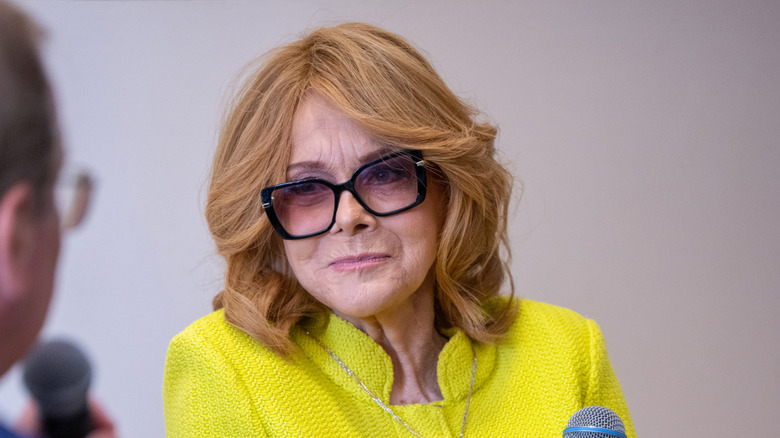
By 2026, all of Ann-Margret's injuries from the past had become distant memories — until that April. In fact, for those wondering what Ann-Margret looks like today, the short answer is: more injured than she looks. That, she revealed in an interview with Parade, was the result of an unfortunate accident that had occurred in her home. "I fell the other day and so now my right elbow is broken," she said. "That's okay," she added. "I have fallen so many times. I don't intend to, but I do! What can I say?"
At the time, the octogenarian was in good spirits and confirmed that she was recovering. She also insisted that she would try to exercise more caution in the hopes of not falling down again. However, she also wasn't making any promises. "But one never knows!" she jokingly added.
Besides, after all the bones she'd broken over the course of her life, what's a few more? "My doctor said, 'If anyone would ever see your skeleton, they would just drop,'" she once joked during a 2001 interview with the Orlando Sentinel.