

Western Actors Who Completely Vanished From The Spotlight
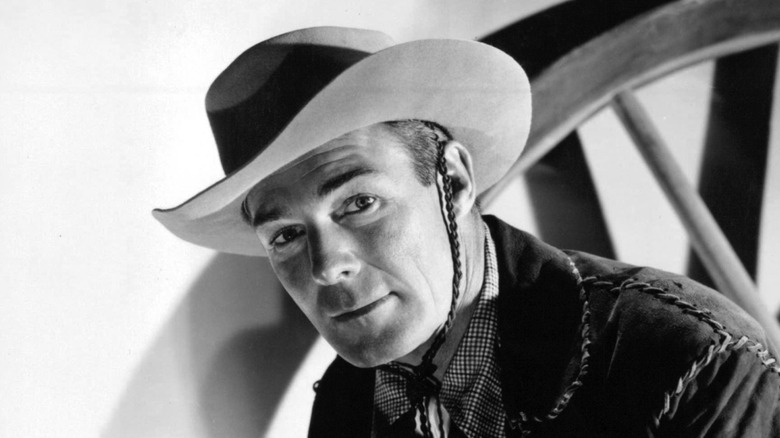
Once upon a time, westerns ruled Hollywood and, for his part, "Yellowstone," "Landman," and "Dutton Ranch" mastermind Taylor Sheridan believes the genre is still alive and well. "Every time someone makes a good western, it's a f*****g hit. Every time," Sheridan said on The Bill Simmons Podcast in 2026 (via SlashFilm). "Because it's a very uniquely American thing to explore, that period's fascinating to us. It's the closest thing we had to a medieval times. Our dark ages, our medieval period, was the post-Civil War 1800s."
While there's definitely something to Sheridan's assessment, one cannot deny the cultural impact made by those who brought the gun-slinging heroes and villains of those films and TV series to life during the genre's golden age – performers like John Wayne, Clint Eastwood, Gary Cooper, and others. However, not every western star's career unfolded the same way. While some, like the aforementioned, became icons, others found greater success outside of those old west-inspired tales, or diverged from the showbiz scene altogether.
From stars who shifted gears to endeavors outside of the studio backlot to those who opted for retirement, here are some of the better-known western actors who completely vanished from the spotlight.
The Iron Horse star George O'Brien left Hollywood to serve his country
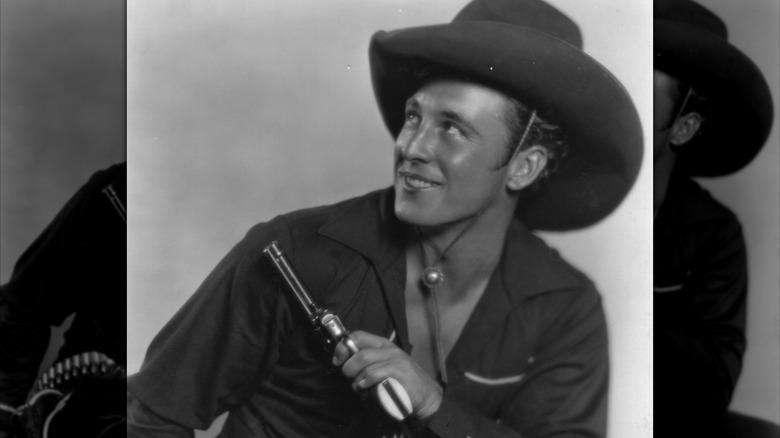
George O'Brien was an actor who achieved a rare level of success in both the silent-film and talkie eras of early Hollywood. He's perhaps best known for his starring role in the 1927 F.W. Murnau Oscar-winning "Sunrise." However, he was also one of the early stars of the western genre. His collaborations with the iconic director John Ford were numerous, and include the 1924 silent western "The Iron Horse," which Collider credited with helping to "set the mold for a hundred years of westerns to come."
For O'Brien, though, there was a calling higher than Hollywood success; namely, serving his country. After having previously served in the US Navy amid World War I, he rejoined the service as a 40-something Hollywood A-lister after the Japanese attack on Pearl Harbor during World War II, as noted by Chronicles magazine. That wouldn't be his final military experience, either. "I was slowly but surely rebuilding my second career in films when the trouble in Korea started," O'Brien said (via Chronicles). "Maybe it was my inner sense of loyalty ... but whatever it was forced me to again abort my career in films and resume the life of an officer in the Navy."
As a result, O'Brien added just three credits to his résumé post-1949, as tracked by IMDb, and didn't appear on-screen after 1964. He died in 1985 at the age of 86.
Randolph Scott left the spotlight & became a Blazing Saddles punchline
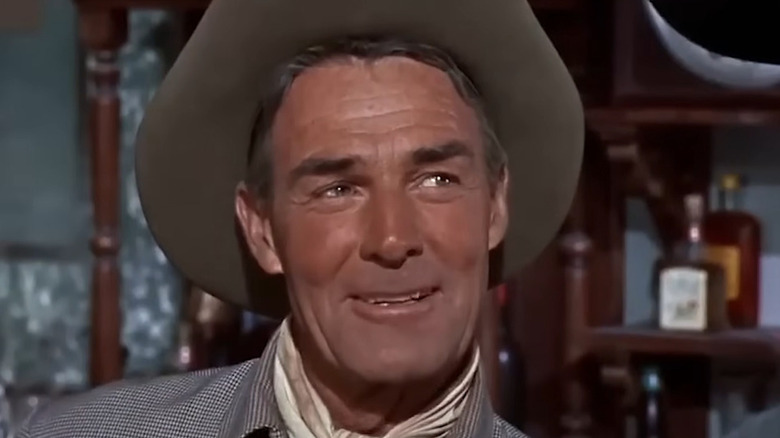
Randolph Scott arguably belongs in the conversation with legends like Clint Eastwood, John Wayne, James Stewart, et al. From the early days of Hollywood to the height of the genre during the 1950s and beyond, Scott racked up an impressive list of film credits and became one of cinema's top stars. And the overwhelming majority of the 108 credits listed on his IMDb page are westerns.
After appearing in films ranging from 1933's "To the Last Man" and 1953's "The Stranger Wore a Gun" to 1957's "The Tall T" and more, Scott made his final film appearance in 1962's "Ride the High Country." However, he lived in retirement for 25 more years, passing away at the age of 89 in 1987. According to a Walker Funeral Home obituary, Scott left Hollywood to manage investments in oil wells, real estate, and securities "said to exceed $100 million."
His status as a western icon was humorously recognized in comedy legend Mel Brooks' 1974 classic satire "Blazing Saddles," in which Cleavon Little's Sheriff Bart, while pleading with the citizens of Rock Ridge to defend their town, laments, "You'd do it for Randolph Scott." Upon hearing the Hollywood legend's name, the townspeople remove their hats in tribute and agree to fight back.
Laramie & Wagon Train star Robert Fuller stopped acting during the Y2K era
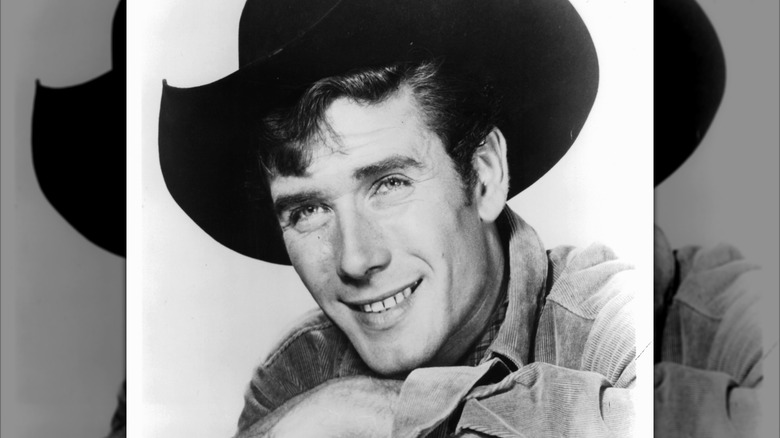
Robert Fuller began acting during the early '50s, appearing as a background player and in bit parts in some of the biggest productions of the time. "I did it all," Fuller told The DeSoto Times-Tribune. "I even carried a spear in 'Ten Commandments.'" As recounted by the outlet, he was a chorus dancer with Marilyn Monroe in 1953's "Gentlemen Prefer Blondes" as well. After years in show business, though, Fuller broke out during the late 1950s and early 1960s, eventually landing his role as Jess Harper on NBC's "Laramie" and, later, Cooper Smith on the final seasons of NBC/ABC's "Wagon Train."
During the '70s, he found additional success on the NBC medical drama "Emergency!" He also guested on dozens of TV series, including many westerns, throughout his career. However, the most recent credit listed on his IMDb page is a two-part 2001 episode of "Walker: Texas Ranger," even as he is alive and well as of this writing. That's because he left L.A. behind to live with his wife on a Texas horse ranch, per the Texas Trail of Fame.
Still, Fuller takes a certain amount of pride that shows like "Laramie," "Wagon Train," and "Emergency" continue to find new fans even now, in the 2020s. "I'm very proud of it," Fuller told The DeSoto Times-Tribune. "That just goes to show you that they are still good shows and they are all playing at the same time on TV."
Gene Hackman did several westerns before his retirement & shocking death
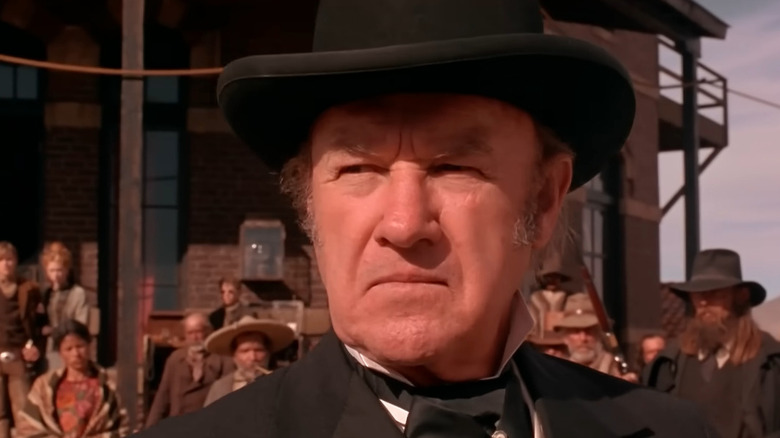
An icon of the '70s, '80s, '90s, and beyond, Gene Hackman starred in multiple westerns throughout his storied Hollywood career, including some of the most iconic films of the modern age. His early cowboy/western efforts included 1971's "The Hunting Party," 1974's "Zandy's Bride," and 1975's "Bite the Bullet." However, he had an incredible run of genre films during the 1990s with Clint Eastwood's 1992 classic "Unforgiven" (which netted Hackman his second Oscar), 1993's "Geronimo: An American Legend," Lawrence Kasdan's "Wyatt Earp" in 1994, and Sam Raimi's "The Quick and the Dead" in 1995.
Hackman, who also played iconic roles like "Popeye" Doyle in 1971's "The French Connection," Lex Luthor in 1974's "Superman," and Royal Tenenbaum in 2001's "The Royal Tenenbaums," among others, left acting long before his death at the age of 95, though. His final screen credit came in 2004's "Welcome to Mooseport," after which he spent his final two decades living a quiet life away from the Hollywood hubbub with his second wife, Betsy Arakawa, in Santa Fe, New Mexico. However, he did enjoy a second career during his later years as a novelist.
When he and Arakawa died in 2025, it made international headlines due to the initially mysterious nature of their passing. However, it was ultimately determined that Arakawa died of hantavirus, while Hackman had been navigating Alzheimer's disease and heart disease, as reported by The Associated Press.
Paradise star Lee Horsley's post-1990s credits are few and far between
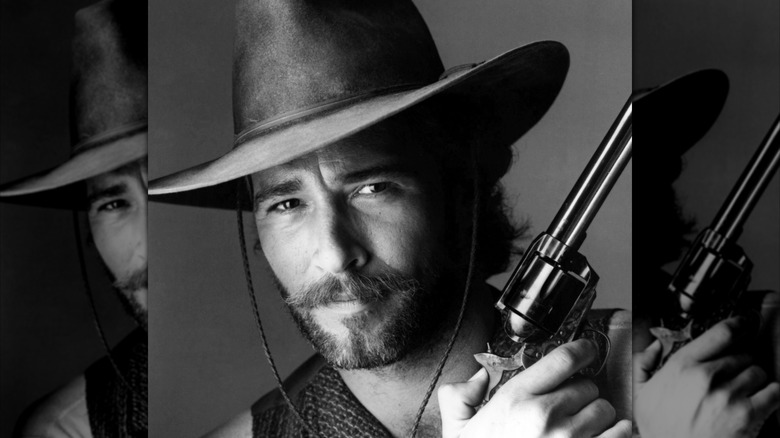
Lee Horsley was a veritable television heartthrob in his day, but he was also a western star. From 1988 to 1991, he starred as gunfighter Ethan Allen Cord on the CBS western series "Paradise." His other western-themed and period projects include the 1982 TV movie "The Wild Women of Chastity Gulch," ABC's iconic miniseries "North & South" (specifically 1986's "Book 2: Love & War"), and Quentin Tarantino's 2012 hit "Django Unchained" (which Will Smith shockingly turned down).
Now a man in his 70s, Horsley also had a cameo in 2015's "The Hateful Eight," but that ultimately proved to be his final screen role as of this writing, and his IMDb page only lists a handful of acting credits on the whole since the 1990s. Rather than continuing the pace of his early days in show business, Horsley seemingly favored a life away from the screen, where his interests have occasionally intersected with his work in westerns.
Per a 1988 UPI feature, Horsley was also a cowboy in his real life, occasionally competing in steer-roping events around California alongside his own stunt double. "I started with it about four years ago, and I'm still relatively new," he told the outlet at the time. "My total winnings are $4.22. I'm not exactly at the top of the ladder." An X account in his name posted in 2020 that he had been spending most afternoons, "throwing hunting knives at the door of an old outhouse on my property."
The Virginian star James Drury hadn't acted regularly since the '90s before his death
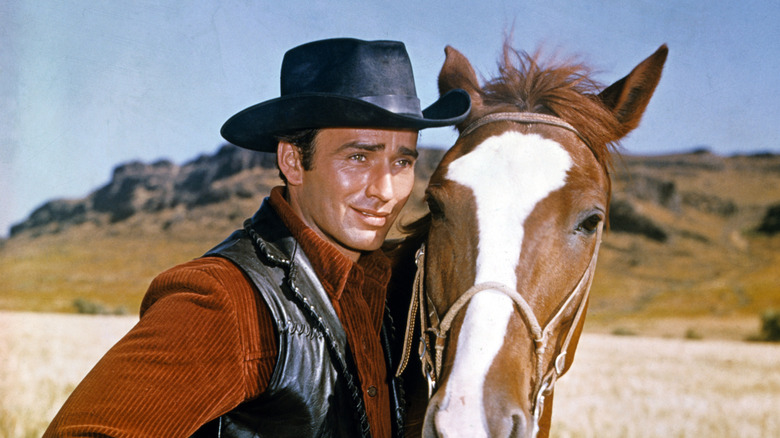
"The Virginian" was a hit for NBC in the '60s and early '70s, producing 249 episodes across nine seasons. And a lot of the credit for its success goes to James Drury, who starred as the eponymous foreman of the Shiloh Ranch in the Wyoming Territory. Like other actors on the list, he also guest-starred in episodes of multitudes of western series, including the syndicated "Death Valley Days," CBS' "Have Gun – Will Travel," ABC's "Cheyenne," CBS' "Rawhide," and many more.
Although he lived to old age, dying at 85 in 2020, he had logged a handful of credits to his IMDb page over the last 20-plus years of his life. One of those credits was a cameo appearance in the Bill Pullman-led TV movie reimagining of "The Virginian" in 2000. Nevertheless, he was recognized with a spot on California's Walk of Western Stars in 2019.
At the time, he opined that his time on "The Virginian" was his career highlight, and credited its 90-minute format for helping it become an all-time great series. "We stayed with it for nine seasons, and that allowed our writers to write big, important, juicy guest star roles for men and women," he said on his official YouTube channel. "Actors will walk over broken glass barefooted to play a role that they want to play. So, we got some of the cream of the crop."
Gene Autry left Hollywood to focus on his ranch, businesses & baseball
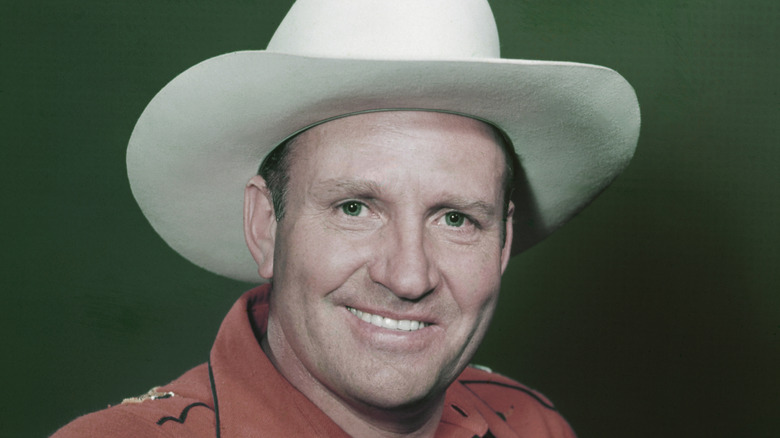
"The Singing Cowboy" himself, Gene Autry, is widely considered one of the greatest western personalities of all time, having dozens of film and television credits over a career that began way back in the 1930s. His notable screen projects include the 1936 film, "The Big Show," 1947's "Trail to San Antone," 1949's "Riders in the Sky," and his 1950s-era CBS television series, "The Gene Autry Show," among others. He also recorded over 600 songs, according to Texas Public Radio, including 1939's "Back in the Saddle Again."
However, Autry had a single screen credit after the '50s, in the 1985 TV movie "The All American Cowboy," which featured other actors on this list. Having already made his fortune and attained a level of fame that few entertainers could even hope to aspire to, Autry opted to focus on other endeavors. As chronicled by The Chicago Tribune following his 1998 death, Autry was involved in real estate, broadcasting — he owned several television and radio stations — and opened the Gene Autry Western Heritage Museum, now the Autry Museum of the American West, in Los Angeles' Griffith Park in 1988.
In 1960, he became the founder and first owner of the Los Angeles Angels baseball team, readying the team for the 1961 season in a matter of months.
Early Western star William S Hart retired before the advent of talkies
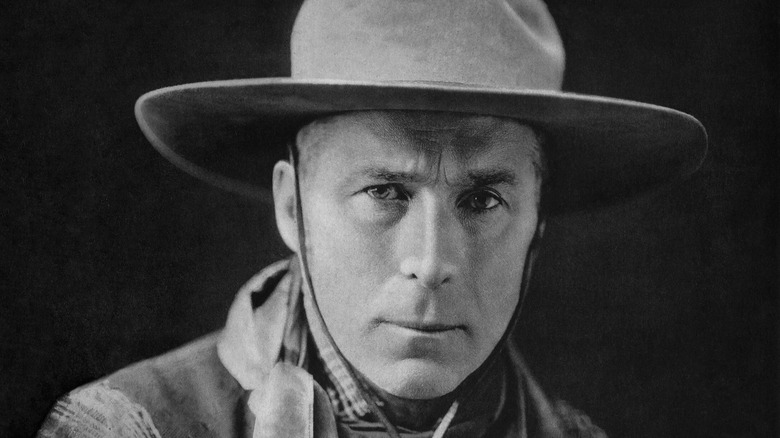
While Randolph Scott's heyday came before many of the other actors discussed here, William S. Hart's work predates the advent of movies with sound (known as talkies in Hollywood's early days). The actor, who was born in 1864, made some 70-plus films over the course of his career, according to the Museum of Western Film History, first entering the fledgling movie business in 1914. However, by the time soundtracks and recorded dialogue had become a thing, Hart was already on his way out.
Although he appeared uncredited in 1928's "Show People," his last major film production came three years earlier with "Tumbleweeds," a movie he financed himself through United Artists. However, Hart later sued the studio for failing to properly promote the film, a case that went on for years before a judgment in the actor's favor was rendered. In the interim, he retired to his ranch in Newhall, California, known as Loma de los Vientos.
Years later, a septuagenarian Hart recorded an intro for "Tumbleweeds'" 1939 re-release. As it stands, that's his only known contribution to film with sound.
The Outcasts' Don Murray had a lengthy hiatus before his Twin Peaks return
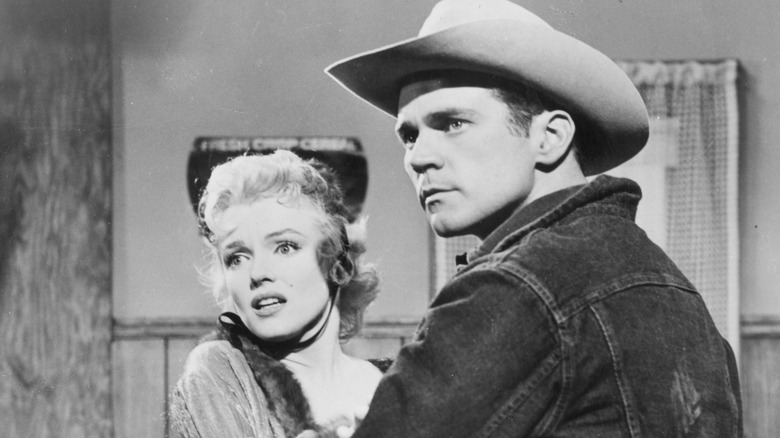
Although the show only lasted one season in 1968-69, ABC's "The Outcasts" was memorable for its attempts to portray the racism of the Old West. The series starred Academy Award-nominated actor Don Murray and Otis Young, who portrayed one of TV westerns' first Black heroes. For Murray, it was just one of several genre projects he appeared in, as he also starred in films like 1958's "From Hell to Texas," 1960's "One Foot in Hell," among others, and appeared on series such as ABC's "How the West Was Won."
He's perhaps best-known for co-starring with Marilyn Monroe in his first-ever film, 1956's "Bus Stop." Murray played a cowboy in the movie, which also netted him the aforementioned Oscar nom. He later played Sid Fairgate on CBS' "Knots Landing." However, despite logging several dozen screen credits from the mid-1950s into the '90s, he took a nearly two-decade break from acting after the Y2K era before briefly returning to TV to play Bushnell Mullins in David Lynch's "Twin Peaks" reboot in 2017.
In 2019, Murray offered high praise for Monroe — whose relationship history is legendary — during an "A Word on Westerns" interview, saying, "I think that she should have gotten an Oscar for her performance, because it had such variety ... and was funny but also very, very touching. I was amazed that she didn't get more credit for that film than she did." Murray died in 2024 at the age of 94.
Joel McCrea reportedly only acted until he could afford his ranch
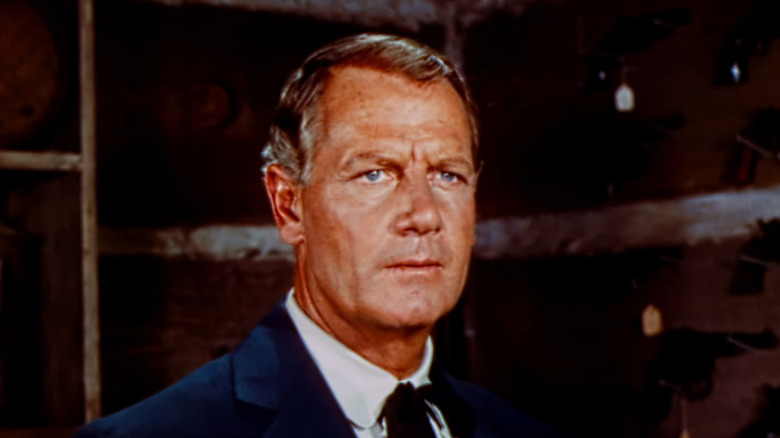
Joel McCrea's IMDb page boasts a half-century of credits from 1927 to 1976. However, from 1946 on, he appeared almost exclusively in westerns. Some of his best-known entries into the genre include 1939's "Union Pacific," 1955's "Wichita," and 1962's "Ride the High Country." He also starred with his son, Jody, in the 1959-60 NBC series, "Wichita Town."
By the time McCrea died in 1990 at the age of 84, it had been many years since he had appeared on the screen. That's because his now-famous ranch near Thousand Oaks (a large portion of which was once McCrea's land) became his primary focus. He had established the ranch in the 1930s on the advice of his friend and former co-star, Will Rogers, per the Joel and Frances McCrea Ranch Foundation.
"I knew my grandfather as a rancher, because growing up he was always with us when we were working cattle or doing anything around the ranch," McCrea's grandson, Wyatt, told the Ventura County Reporter in 2026. "It wasn't really until I was probably around the fourth grade that I realized he had another career as an actor, which had been very lucrative for him for many, many years before I was born." According to Wyatt, his grandfather had dreamed of being a rancher when he was very young. "He always used to joke that he only acted so he could afford the ranch."
Cheyenne star Clint Walker didn't work regularly after the 1970s
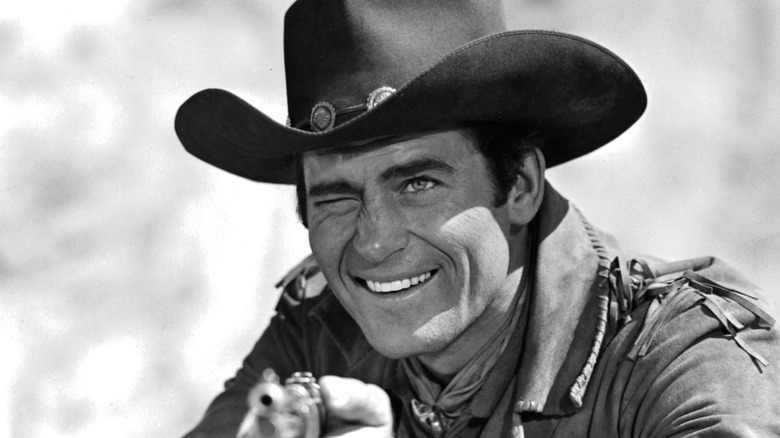
Another western star who lived into his 90s, Clint Walker's credits were few and far between after 1979, per IMDb, and his voice role on the 1998 film "Small Soldiers" was his last. However, during the late '50s, '60s, and into the '70s, Walker was one of western TV and cinema's top leading men, thanks in large part to his portrayal of Cheyenne Bodie on the ABC series "Cheyenne," from 1955 to 1962.
It was during his time on the show that he sang in front of a wide audience. He would continue to lean into music as his acting career unfolded, eventually recording the album "Inspiration" in 1959. His other acting credits, meanwhile, include 1958's "Fort Dobbs," 1959's "Yellowstone Kelly," and 1966's "The Night of the Grizzly" (which is exactly what it sounds like). Outside the genre, he appeared in the 1967 war classic "The Dirty Dozen."
While he rarely performed over the final decades of his life, Walker didn't fully leave westerns behind. In the early 2000s, he published the novel "Yaqui Gold" with Kirby Jonas.