

Kenny Rogers' Transformation: From Family's First High School Grad To Country Music Icon
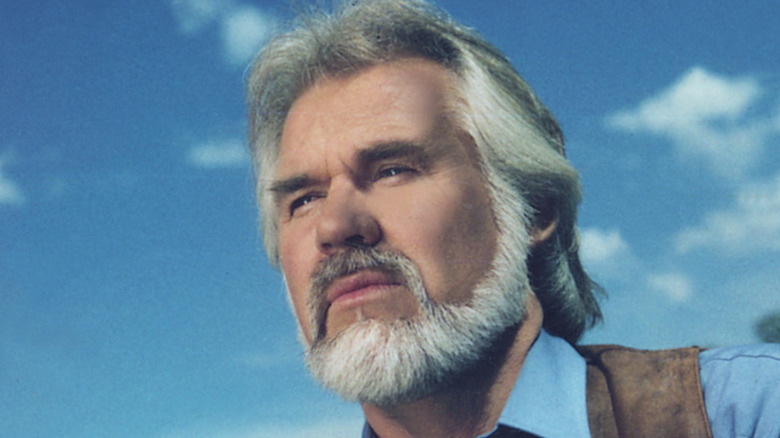
Few artists have done more to help country music cross over to the mainstream than Kenny Rogers. The proud Texan, whose hits include "Love or Something Like It," "Buy Me A Rose," and the Dolly Parton duet "Islands in the Stream," has shifted over 100 million records, achieved more than two dozen No. 1s on Billboard's various charts, and was recognized at everything from the American Music Awards to the Grammys thanks to a commercial style which blended easy listening, adult contemporary, and pop with the sound of Nashville.
But how did the man nicknamed "The Gambler" climb from a public housing project in Houston to the upper echelons of the music industry? Why did he quit his '60s hitmaking outfit to launch a solo career? And most importantly, how exactly did his famous name become associated with the world of rotisserie chicken? Here's a look at his remarkable story.
Rogers was the first from his family to graduate high school
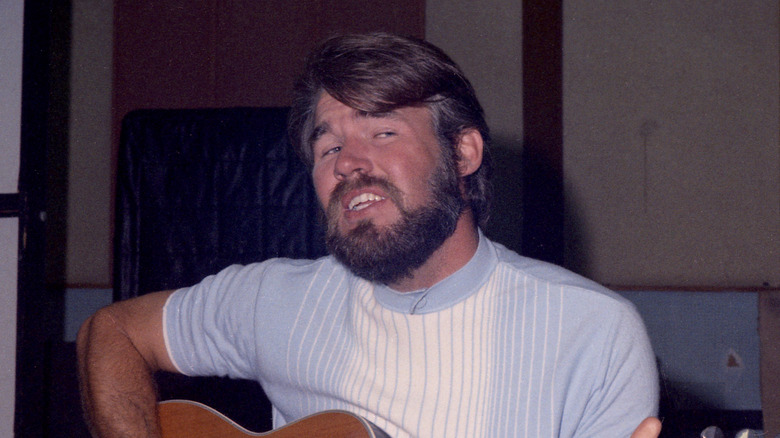
It's fair to say Kenny Rogers didn't appear destined for a life of superstar riches. Born to a nurse's assistant mother and carpenter father in Houston, he grew up during World War II with his seven siblings in near poverty, as he explained during a 1986 appearance on "The Phil Donahue Show."
"I think the most money my father ever made was $75 a week," Rogers recalled. "There were times as a child that, I don't think I was ever really hungry — I always had food to eat — but there's no question that our family was nutritionally deprived at times." The country star revealed that much of his early diet consisted of little more than peanut butter sandwiches, the only thing his family could afford. "Quite honestly, when you're a kid, you don't know any better, you think that's how everyone eats."
Of course, Rogers managed to find his way out of these financially deprived circumstances when he attended the University of Houston, having graduated in 1956 from Jefferson Davis High School. Remarkably, he told Donahue that as far as he knows, he was the first member of his family ever to achieve such a milestone.
He began his career in jazz
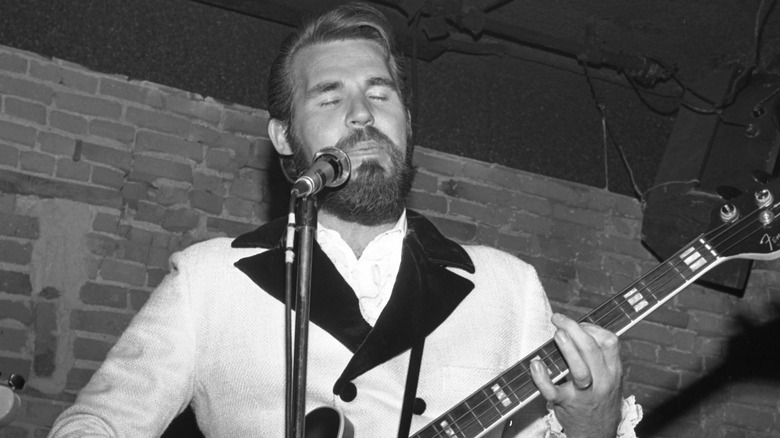
Kenny Rogers enjoyed his first taste of the performing life when he was crowned the victor of the Texan Theatre's talent show aged just 11. While attending Jefferson Davis High School, he joined a doo-wop outfit with classmate Mickey Newbury named The Scholars. And by 1957, he was appearing on American Bandstand thanks to the local success of his track "That Crazy Feeling."
Rogers' early musical journey continued in 1960 when he began singing and playing the bass for the Bobby Doyle Three, a jazz trio who'd go on to back up superstars such as Tony Bennett and Liza Minnelli. And they sure put the time in, often performing across the happy hour, nightclub, and after-hour scenes on the same night in exhausting 12-hour shifts.
Rogers' stint with the band ended in 1965, but he stuck with the jazz genre with his 1966 solo single "Here's That Rainy Day." However, he explored another musical avenue later that same year when he was invited to showcase his talents in The New Christy Minstrels. "I had been in avant-garde jazz for 10 years, and going from that to playing folk music was an adjustment," he later recalled to the Herald-Tribune. "It took me a while, but I learned to appreciate the simplicity of that music."
Rogers formed The First Edition
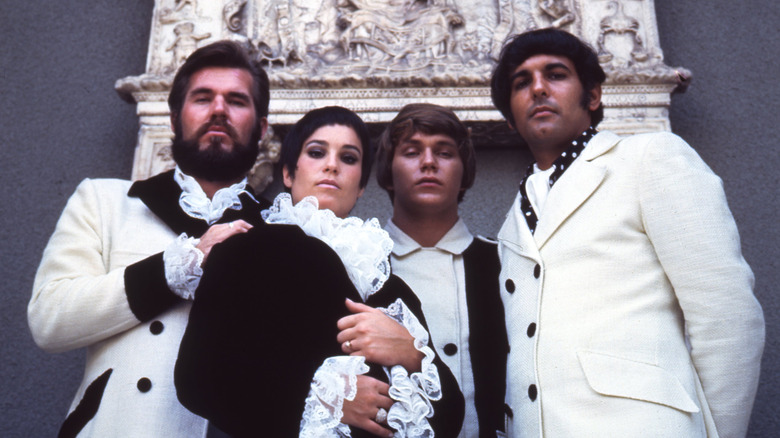
After becoming disillusioned with the path The New Christy Minstrels were taking, Kenny Rogers and equally frustrated bandmates Terry Williams, Thelma Camacho, and Mike Settle decided to form an offshoot. And this instinctive career move proved to be a pivotal one.
Indeed, after inking a deal with Reprise Records, this new group, The First Edition, scored a Top Five hit on the Billboard charts with the 1968 single "Just Dropped In (To See What Condition My Condition Was In)." The band, whose sound incorporated a blend of pop rock, country, and psychedelia, also enjoyed success with tracks like "Tell It All Brother" and "Ruby, Don't Take Your Love To Town." In fact, the group was on such a roll that in the early 1970s they landed their very own weekly variety show, "Rollin' on the River."
However, it was an earlier TV appearance Rogers cited when asked by Country Stars Central about his proudest career moment. "I remember when I was 28 years old, I did 'The Ed Sullivan Show' with the First Edition. I remember we walked out on that stage and starting singing, and I remembered thinking, 'Wow, this is where all the big stars were when I watched television.' I really felt like I had done something with my life when I did that show."
He became a father
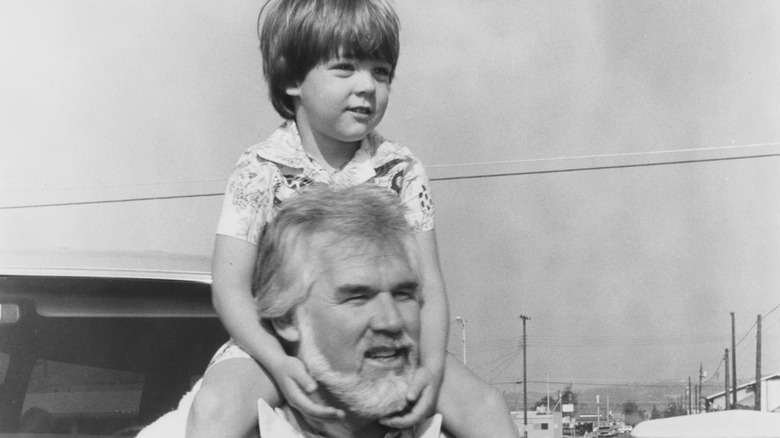
"I hope my fans understand that I'm a father first and a singer second," Kenny Rogers explained to CMT News (via Yahoo! Entertainment) about his decision to take a step back from his music career. Of course, by this point the singer had been a father for nearly 60 years!
Rogers first became a dad in 1958 with the birth of Carole, and then five years later, he welcomed a son, whom he named after himself, into the world. However, the Grammy Award winner later admitted to People that, thanks to his career commitments, he wasn't exactly a constant in their lives. "As you try to get ahead, it's too easy to think that these kids are still going to be kids tomorrow and that once you get your current project done, you'll spend some time with them." In fact, he ended up losing touch completely with Carole, and his relationship with Kenny Rogers Jr. was similarly estranged.
Rogers had another opportunity to embrace fatherhood in 1981 when his third child Christopher was born. "I know the hard way that we cannot recapture this age, and I'm not missing those things, because I don't think I'm going to have another chance," he explained to the same magazine. But he was wrong. In 2004, his family unit was extended again with the arrival of twins Justin and Jordan.
Rogers launched his solo career
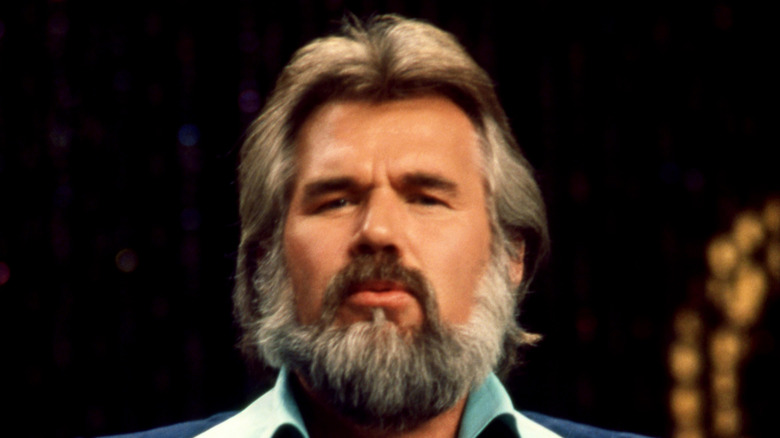
After The First Edition's popularity started to significantly wane, Kenny Rogers decided it was about time he resumed his intermittent solo career and left the group in 1974, shortly before the rest of the band decided to follow suit. His first notable step was appearing in an ad campaign for the Quick-Pickin' 'N Fun-Strummin' Home Guitar Course. But in 1976, the focus switched back to his recording career.
After signing a deal with United Artists, he teamed up with producer Larry Butler to pursue a different kind of sound which sat somewhere between adult contemporary and country pop. His 1976 solo album "Love Lifted Me" spawned two minor hit singles, "While the Feeling's Good" and the title track. And with the creative juices now flowing, the pair headed back into the studio later that same year for an eponymous follow-up.
While this early solo period has been largely forgotten about by the mainstream, it hasn't by Rogers' long-time fanbase. In an interview with Green Bay Press Gazette 40 years on, the singer explained, "Interestingly enough, I sent out some brochures to my fan club and I said, 'Is there a specific song you're afraid I won't do if you come to the show that you'd like to hear?' I can't tell you how many people wrote back and said 'Love Lifted Me.' It's pretty cool."
He scored his first No. 1
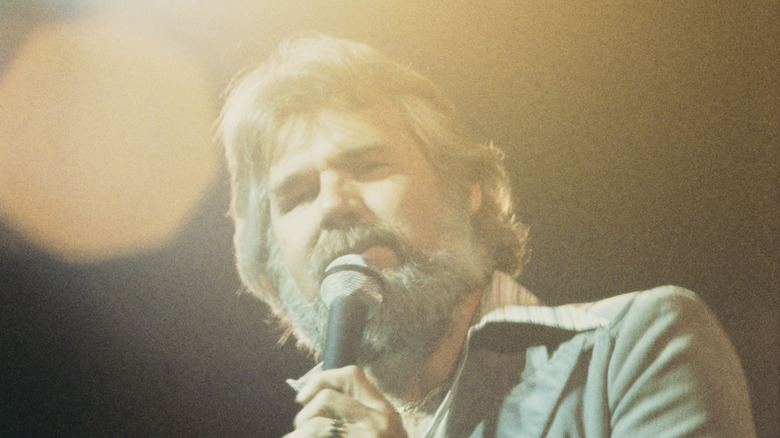
Kenny Rogers' solo career truly got going in 1977 with the release of "Lucille," a barroom yarn in which the titular character leaves her husband "with four hungry children and a crop in the field." Taken from his eponymous second LP, the track became his first No. 1 on the Hot Country Songs chart, sold more than five million copies, and was nominated for two Grammy Awards.
Not everyone was a fan, though, as Rogers explained to Reuters in 2012. "My mom, whose name is Lucille, got very upset because she thought (the song) was about her. So I told her it's not about her, because she had eight kids. But she was so angry because she thought I was putting her business on the street."
Rogers went on to have six more country chart No. 1 hits in the space of two years, including "Coward of the County," "You Decorated My Life," and "The Gambler." And with almost as many chart-topping albums under his belt, too, he ended the decade as the new undisputed King of Modern Country.
Rogers showcased his acting skills in The Gambler films
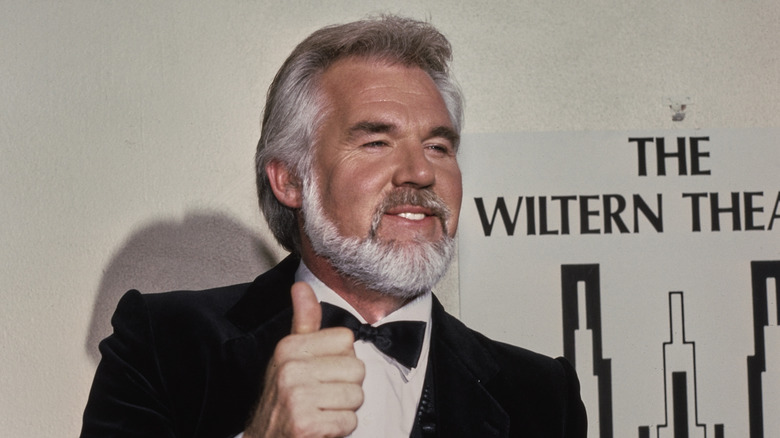
Not content with dominating the country music scene at the turn of the 1980s, Kenny Rogers — or rather his manager — decided it was about time he graced the world of acting with his talents, too. And his first venture proved to be so successful that it spawned no fewer than four sequels!
In his 2011 autobiography "Luck or Something Like It," Rogers explained (via TV Insider) how Ken Kragen had accosted a couple of men in suits from CBS backstage at an awards show and presented a poster bearing his face as The Gambler, the character featured in the same-named chart-topper: "He had a one-line pitch. 'Don't you think this guy needs to be in a movie?' he asked them. The executives apparently agreed to a movie deal on the spot, sticking out their hands and saying, 'Done!' As incredible as it sounds, that's how simple it was."
Rogers subsequently took top billing in the Western "The Gambler" as Brady Hawkes and reprised the role in "The Adventure Continues," "The Legend Continues," "The Luck of The Draw," and "Playing for Keeps" in a collection of films which spanned from 1980 to 1997. He also played leading man in several other TV movies including "Coward of the County," "Wild Horses," and "Christmas in America," graced the big screen in comedy drama "Six Pack," and guested on "Touched By an Angel," "Dr. Quinn, Medicine Woman," and "Cybill."
Rogers became a serial duettist
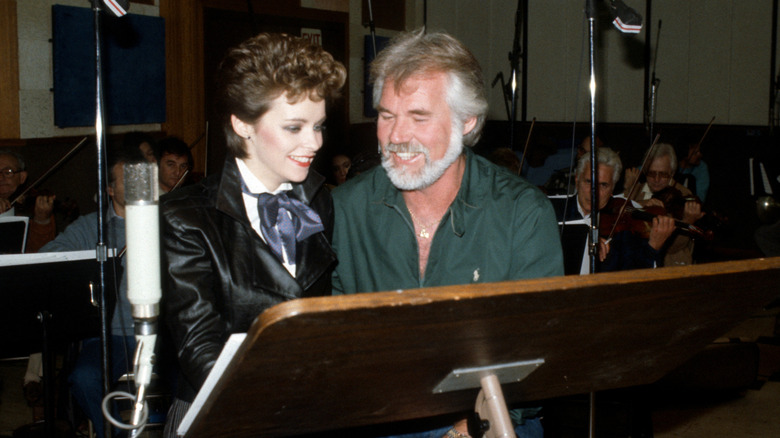
While Kenny Rogers branched out on his own in the mid 1970s, he was never short of company. The country singer recorded a string of collaborations which further helped expand his audience, several of which achieved similar success to his entirely solo works.
Rogers' partnership with Dottie West was the most prolific: they recorded two studio efforts, "Every Time Two Fools Collide," whose title track he cited as his all-time favorite, and "Classics," embarked on a joint arena tour, and co-hosted the TV special "The World's Largest Indoor Country Music Show." "She, more than anybody else I ever worked with, sang with such emotion that you actually believed what she sang," he told TNN (via 1130 The Tiger) in 1995. "A lot of people sing words, Dottie West sang emotions."
Rogers, who would later play himself in the biopic "Big Dreams and Broken Hearts: The Dottie West Story," also collaborated with Kim Carnes ("Don't Fall in Love with a Dreamer") and Sheena Easton ("We've Got Tonight"), duetted with none other than Wonder Woman on the Lynda Carter Special, and forged a fruitful working relationship with Lionel Richie. The latter produced his LP "Share Your Love" in 1981 and later that year also invited him to perform backing vocals on his single "My Love."
He forged a creative partnership with Dolly Parton
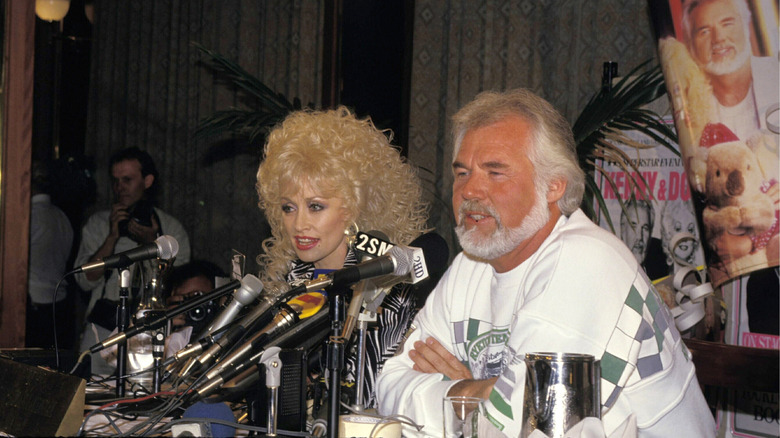
Of course, Kenny Rogers' most successful, and most-loved, creative partnership was the Queen to his King of Country, Dolly Parton. The pair first worked together on "Islands in the Stream," the 1983 classic which the Bee Gees had originally penned for Diana Ross.
Taken from Rogers' album "Eyes That See in the Dark," the track was the last country song to reach the top of the Hot 100 until Lonestar's "Amazed" achieved the feat 17 years later. And its popularity spurred the pair on to work together on several other occasions, including the TV special "Kenny and Dolly: A Christmas to Remember," seasonal LP "Once Upon a Christmas," and country chart-topping duet "Real Love." In 2013, they reunited again for the track, "You Can't Make Old Friends."
In a 2014 chat with Dan Rather (via Axstv), Rogers insisted that he and Parton were only ever platonic. "We flirted with each other for 30 years and it was much more electric ... I think once you consummate a relationship like that, it loses something."
He started his own restaurant chain
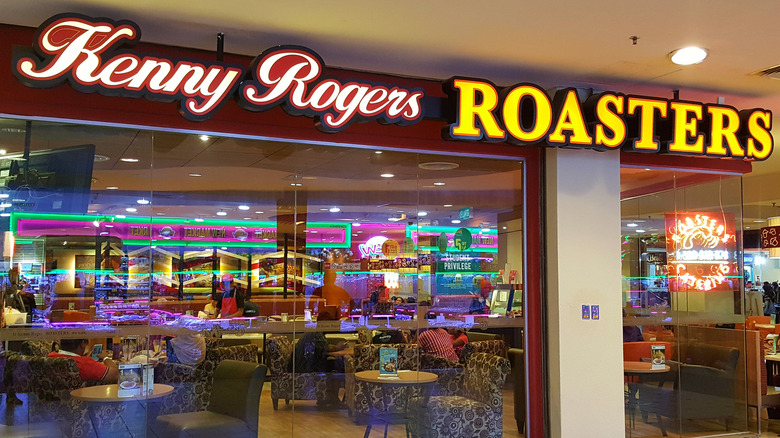
Kenny Rogers proved that his business instincts extended beyond music in 1991 when he joined forces with the CEO of KFC, John Y. Brown Jr., to launch a rival ribs and chicken chain named in his honor. Within five years, there were more than 400 branches of Kenny Rogers Roasters across Asia and North America.
The eatery — which was famed for its chicken cooked on a wood-fired rotisserie — was bought in 1998 by Nathan's Famous Inc. and then by Berjaya Corp a decade later. But it continued to keep its name, with a representative for the latter explaining to CNN Business, "It's a matter of tweaking the [existing Kenny Rogers] concept. It's easier doing that than [doing] everything from scratch."
Unfortunately, by this point, only a handful of branches existed in North America, with the last remaining holdout in California closing its doors in 2011. However, it remains popular in countries such as Indonesia, Singapore, and Malaysia. Speaking to the BBC in 2017, Rogers wished the franchise well, remarking, "It's a good product. They are still using my name. God bless 'em, you know."
Rogers married for the fifth and final time
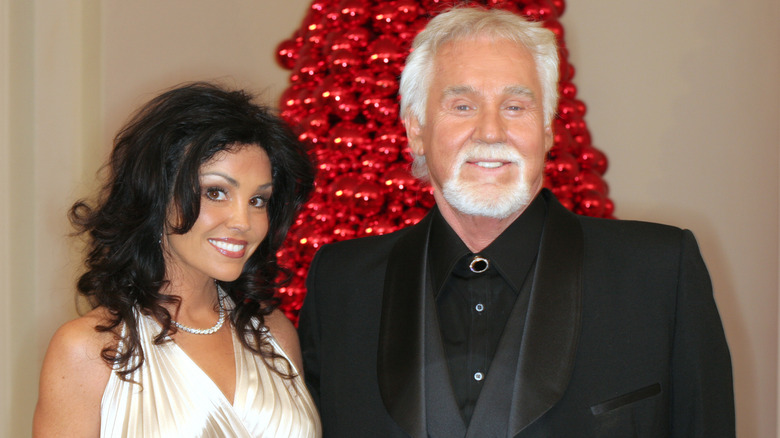
Kenny Rogers walked down the aisle five times, starting with Janice Gordon, the mother of his first-born Carole, in 1958. After two years, the couple headed for the divorce courts. But undeterred, the star then got hitched to Jean within just six months. "I soon realized that I love being in love, and I love the high you do get from caring about someone and having someone care about you," he later told The Irish Independent (via Woman's World).
Once again, Rogers didn't waste any time after splitting with Jean. He exchanged vows with Margo Anderson that same year. This time around, the couple made it into double figures. In fact, they stayed together until 1975. However, there didn't appear to be any love lost between the pair, with Rogers writing in his memoir "Luck or Something Like It," "I don't ever like to blame someone else, but in this case, [the fights] were all her fault."
Wife No. 4 came in 1977 when he said "I do" to actor Marianne Gordon, who was awarded a cool $60 million when she became divorcee No. 4 in 1993. "I found that our lifestyles were clashing," Rogers recalled. "So one day we just said, 'Life is short, we deserve to be happy, let's find something else to do with our lives.'" He tied the knot for the fifth and final time in 1997 with Wanda Miller.
He made history with his comeback No. 1
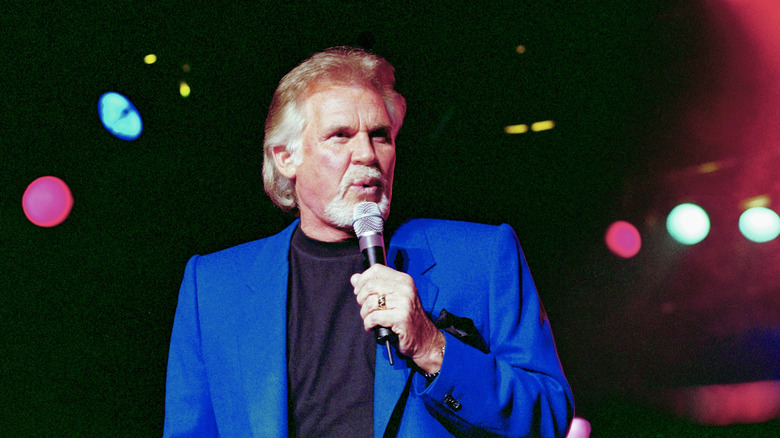
While Kenny Rogers continued to tour and record throughout the 1990s, his hit-making days were deemed to have been far behind him by the time we approached Y2K. But proving that you should never underestimate a country music icon, he bounced back in style in 2000 with his first country No. 1 in 13 years!
In achieving the feat, "Buy Me A Rose," which also featured backing vocals from Alison Krauss and Bobby Dean, saw then-61-year-old Rogers become the oldest artist to reach the summit in Billboard history, breaking the previous record held by the 59-year-old Hank Snow in 1974. Just three years later, the 70-year-old Willie Nelson took the title with Toby Keith duet "Beer For My Horses."
"Radio has said to me four or five times since my big success, 'Do a great song, and we'll play it,'" Rogers told ABC 13 about his recording approach. "So I think I just have to find that song they can't say 'no' to, and I will constantly be trying to do that." Although he didn't reach pole position again, Rogers continued to grace the country Top 40 throughout the rest of the '00s, while 2006's "Water and Bridges" saw him return to the Top 20 of the Billboard 200 for the first time since 1989.
Rogers celebrated 50 years in show business
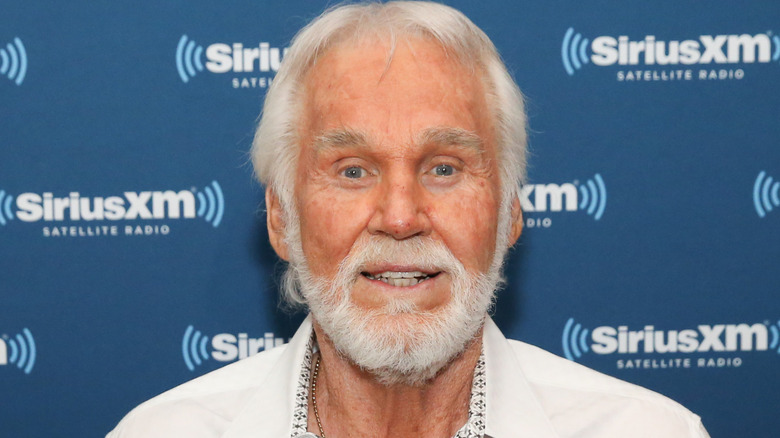
Proof of Kenny Rogers' remarkable career longevity came in 2008 when he released "50 Years," a hits collection which commemorated his half-century in the industry. The country singer obviously enjoyed celebrating the occasion. For in 2009, he did the same with a 50th Anniversary Tour. And then in 2010, he asked the likes of Lionel Richie and Dolly Parton to perform at a television special dubbed "The First 50 Years."
"I think that it's important that the longer it takes to reach the pinnacle of your success, the longer it takes you to glide down," Rogers reasoned to Forbes about how the slow-burning nature of his success ultimately contributed to his enduring appeal. "The faster you go up, the faster you come down. There are exceptions, but as a rule that's how it is. Once you take a while to get up there you develop a fan base that will support you."
Of course, all good things must come to an end eventually, and following a star-studded final show in Nashville in 2017, ill health forced Rogers to retire. Three years later, he died at a Sandy Springs hospice at the age of 81.