

The Stunning Transformation Of Family Ties Star Justine Bateman
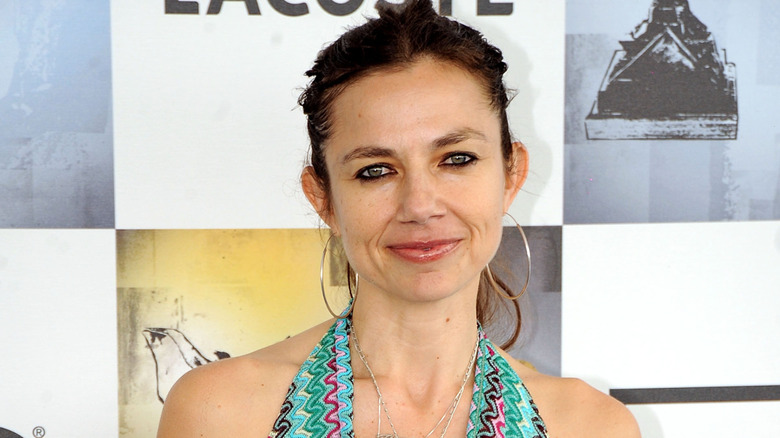
In the 2020s, few veteran actors have maintained the same appeal across generations as Jason Bateman. From "Arrested Development" to "Ozark," "Horrible Bosses," and his "SmartLess" podcast with friends Will Arnett and Sean Hayes, he's as relevant now as he was during the '80s, '90s, 2000s, and beyond. There was a time, though, when his sister, Justine Bateman, was the bigger star.
During the '80s, hers was one of the best-known names on American TV thanks to a seven-season run as Mallory Keaton on NBC's "Family Ties" — the same series that introduced the world to Michael J. Fox (who left the 2026 Emmys audience in tears). When the show ended, though, and she was no longer part of the Teen Beat crowd, Justine was forced to really find out who she was and carve out an entirely new path for herself. To that end, few Hollywood stars have managed to flip their own script and reinvent themselves like Justine.
From hit sitcom success to personal and professional struggles, her later advocacy, and her success outside the Hollywood machine, she has undergone a stunning transformation over the years.
Bateman hadn't planned on acting before Family Ties
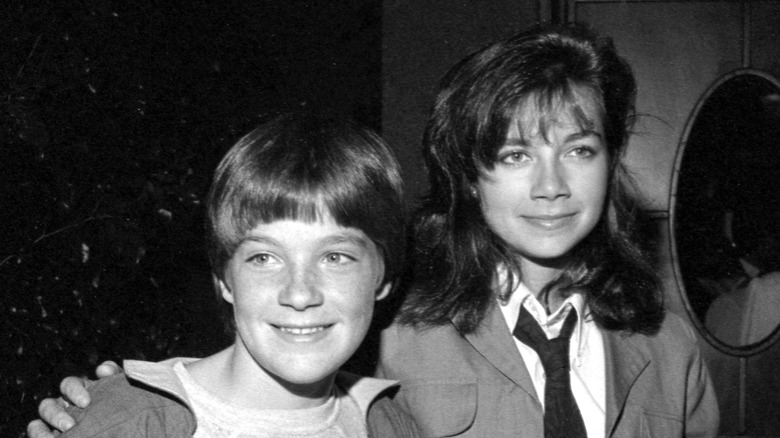
The oldest child and only daughter of Kent and Victoria Bateman, Justine Bateman was adjacent to the Hollywood scene from an early age. Her father was a writer, director, producer, and actor who, according to Justine's younger brother, Jason Bateman, "would either be on location or maybe downstairs in the basement writing a script" in lieu of Sunday dinners with the family (via Esquire). Moreover, Jason landed a role on the long-running NBC drama series "Little House on the Prairie" as a preteen, making his first appearance in 1981.
Before Jason's big break (which occurred when Justine was 15 years old), the older Bateman child wasn't really looking to grace the screen herself. "It wasn't something I sought out. It wasn't something I was hoping for from when I was a little girl. It actually never crossed my mind to ever be an actor, but I did fall into my vocation, for sure," Justine explained to Vanity Fair in 2018. A little over a year after Jason first appeared on "Little House," Justine — who, like her brother, started in commercials — found herself starring as Mallory Keaton on NBC's "Family Ties."
"When you're 15 or 16, everything's happening around you and you are just reacting. You can stop it. But you don't know that then. You're too young. You just keep moving forward," she added.
She helped mold Mallory Keaton and became a teen sensation in the process
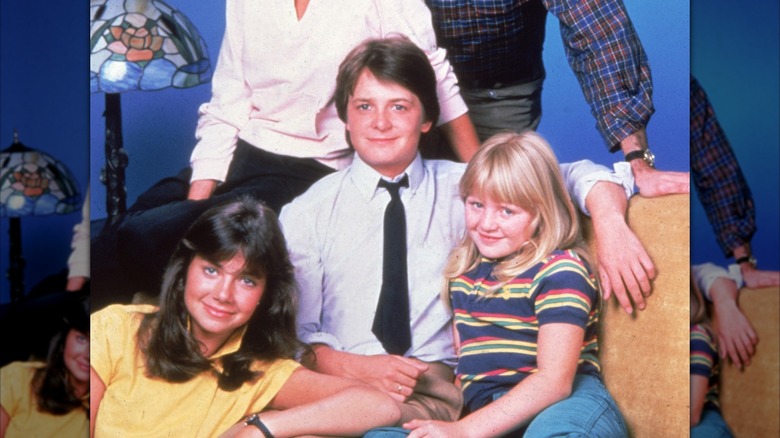
"Family Ties" was arguably the perfect sitcom for Ronald Reagan-era America — a series that chronicled the push and pull between a pair of ex-hippie parents and their conservative-minded teen son (Michael J. Fox's Alex P. Keaton). However, the dynamic between Alex and Justine Bateman's occasionally flighty Mallory Keaton was also an essential ingredient to the show's mix. And Bateman herself played a key role in helping to define it.
"[Dumbing down Mallory] actually came out of working with Mike [Fox], because, initially, she was not written like that. She was just kind of a normal sister," Bateman said (via Variety), adding that her character needed a way to cope with the endless digs from her brother, Alex. "You can be annoyed, you can roll your eyes, and then I'd get to a point where I'd just pretend it was a compliment ... The writers saw that and went, 'Oh, s***, if she thinks that's funny, that's so great.' So, we just started going in that direction."
The chemistry between the two, and the show's other main actors, Michael Gross, Meredith Baxter, and Tina Yothers, helped make "Family Ties" a major success, while Bateman — who was just 16 when the show started — became one of the most recognizable young stars of the '80s. She also earned two Primetime Emmy nominations.
Bateman struggled to find footing after Family Ties
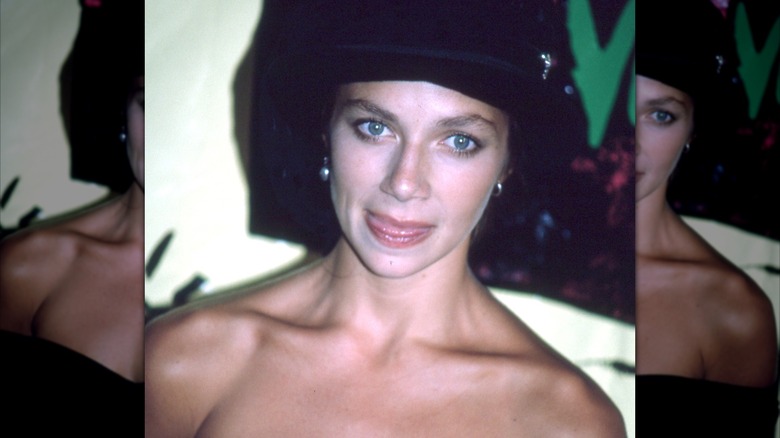
Finding success in Hollywood is incredibly difficult, and perhaps doubly so for child or teen actors. For those young stars who do manage to break out, though, the struggle to keep themselves together as performers and people while dealing with the intense pressures of the entertainment industry and growing up before a nationwide viewing audience can be just as formidable, if not more.
For her part, Justine Bateman lived through challenging times amid her star turn and subsequent career struggles. "When I became Mallory, I never doubted myself," she told the Los Angeles Times in 1992, while confessing that she was far less sure of herself off-screen. "I didn't trust my instincts ... When people would say to me, 'Just be yourself,' I didn't know what that meant." She also navigated eating disorders for many years. "I had a horrible body image," she told New York Daily News in 1996. "I always had the tape measure out. I was always getting on the scale."
Meanwhile, her work toward the end of and after "Family Ties" was a mixed bag. She starred alongside Liam Neeson and Julia Roberts in 1988's "Satisfaction," but the film failed to win over audiences. 1990's "The Closer" was also lost in the shuffle, as were her appearances in a handful of TV movies in the first few years after the Keaton family was officially retired by NBC. Nevertheless, Bateman continued to work regularly in film and television.
She made a TV comeback on the short-lived Men Behaving Badly
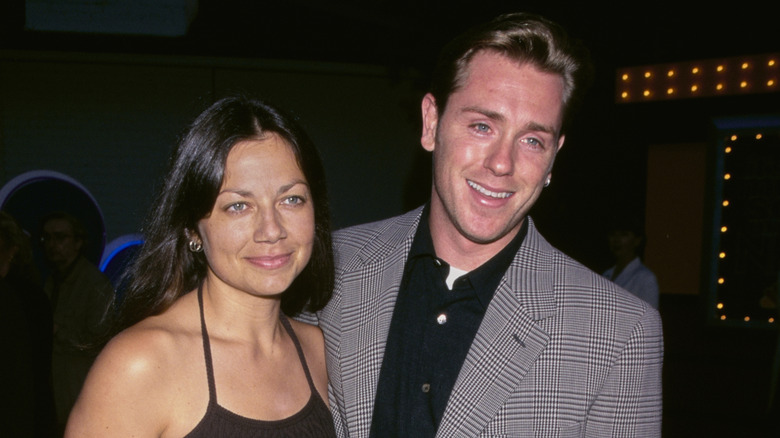
During the early to mid-1990s, Justine Bateman made appearances in films including 1993's "The Night We Never Met" alongside fellow '80s icon Matthew Broderick. She also guested on multiple episodes of the ABC series "Lois & Clark: The New Adventures of Superman." However, her "Family Ties" fame was well behind her. In 1996, though, she returned to prominence once again with a starring role in a brand-new sitcom.
Bateman played Sarah in the NBC series "Men Behaving Badly," which was based on the long-running British series of the same name. The show also starred a post-"Saturday Night Live" Rob Schneider and Ron Eldard and chronicled the exploits of a pair of old college buddies enjoying a second adolescence as full-on adults. Bateman played the less-than-impressed girlfriend of Eldard's character. And while she and Eldard eventually left the show (and it was cancelled during Season 2), her approach to the work had evolved after having navigated show business ups and downs, eating disorders, and more, in addition to discovering her faith.
"I will say that there's a freedom in my performing now, an element of fearlessness that I didn't have before," she said in 1996 (via The Spokesman Review). "And that stems from me knowing who I am and having a total assurance about how things will go. That's the upshot." That knowledge and fearlessness seemingly emboldened her to make radical changes in her career path later on.
Bateman married Mark Fluent in 2001
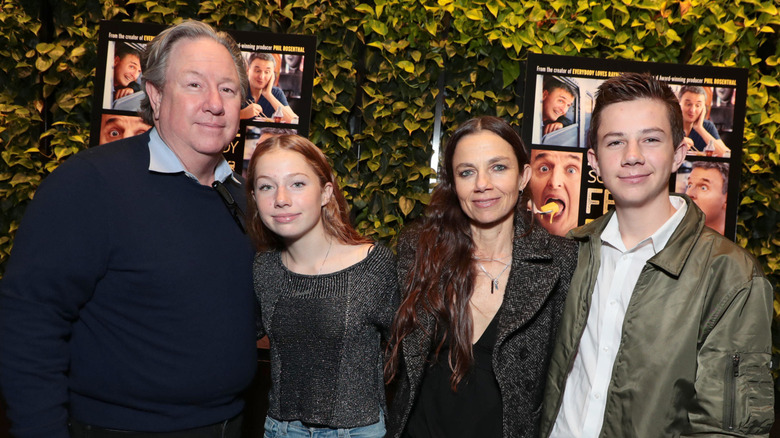
While Justine Bateman's career continued to unfold during the late '90s and Y2K era — during which she appeared with Heather Graham and Rose McGowan in the 1997 film "Kiss & Tell" — the biggest development may have come in her personal life. In 2001, Bateman tied the knot with financier Mark Fluent, after having previously been linked to the likes of Leif Garrett and Billy Idol as a younger woman.
According to Bateman, Fluent was uniquely qualified to understand her and her showbiz life when she was still knee-deep in performing. "He's a really smart businessman, so he gets the whole business end of it," Bateman told The News-Times in 2004. "He also produced a couple of movies so he knows enough about it. And he's really a smart guy. It's not like dealing with a relative from Wisconsin who never had any exposure to it." Bateman added that the two actually met in high school. "I guess we both had to live a life first and then get together," she said.
Fast-forward two decades later, and the couple remain together. They also have two children together, a daughter named Gianetta and a son, Duke.
She resumed her education, pursuing a degree as a 40-something
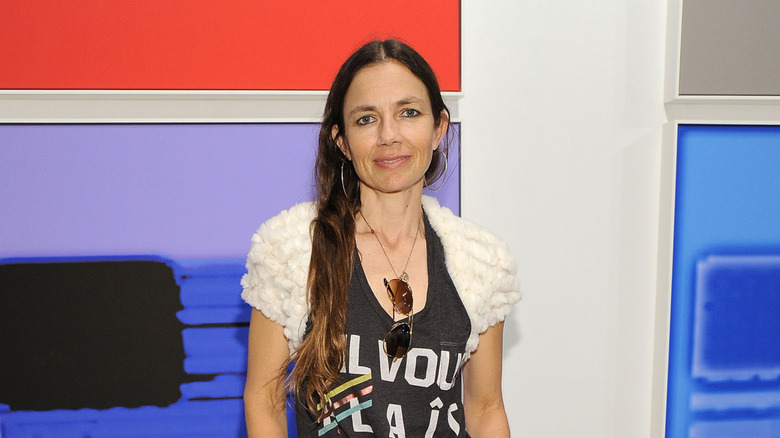
The list of credits on Justine Bateman's IMDb page continued to grow through the 2000s, during which she made an appearance alongside her brother in a 2006 episode of Fox's "Arrested Development" (aptly titled "Family Ties"). It was also during this time that she played a recurring role on the Anne Heche-led ABC series "Men in Trees." She also appeared on Showtime's "Californication," ABC's "Desperate Housewives," and the web series "Easy to Assemble," to name a few of her projects. By the time the 2010s rolled around, though, Bateman opted to break from acting and resume her education.
Bateman became a freshman at UCLA in the fall of 2012 as a 46-year-old, focusing her studies on technology-related fields and their relation to the entertainment industry. "I want to understand everything — how the coding works and the economics behind a project," Bateman said at the time (via UCLA). "I can have all these ideas, but it's really great to understand the technology that's necessary to make them happen."
Bateman went on to graduate in 2016 with a degree in computer science and digital media management. "When I graduate, I will either run a division of a company that is tech and entertainment together, or I'll get funding for my own company with a focus on taking current technology to film far more complicated stories," she told The Hollywood Reporter of her post-graduation plans.
Bateman explored the darker side of fame in a 2018 book
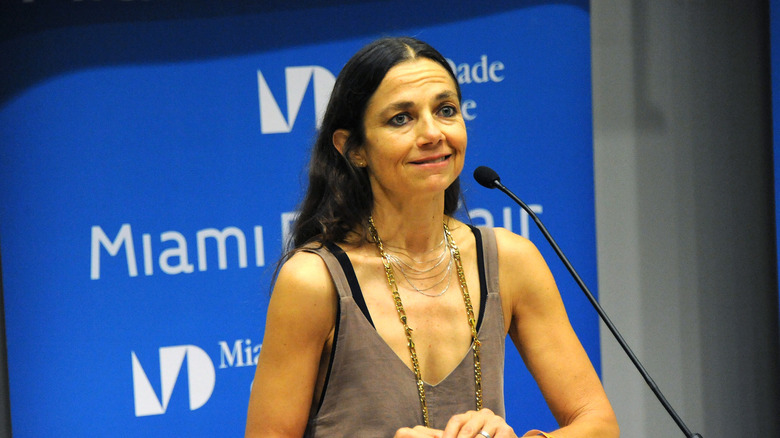
Two years after completing her college coursework, Justine Bateman continued to explore outlets away from the screen by publishing her first book, "Fame: The Hijacking of Reality." Bateman eschewed the standard trappings of a memoir with the 2018 book and, as the title suggests, explored instead the prevailing fame and celebrity-obsessed culture through the lens of her own experiences.
"It isn't enough to just work hard and be a good person or anything like that. The American dream shifted over the years. It's now either to win the lottery, be famous, or make as much money as possible — and make sure everybody notices," she told Vanity Fair of fame in the modern United States amid the release of her book.
Having experienced both the highs and lows of the fame cycle, Bateman's perspective on the phenomenon was uniquely qualified. And her book treated fame less like a prize to be obtained and more as a distortion of the human experience. That concept carried through to her later writing and advocacy, which focused on the perception of aging and physical beauty, both in entertainment and society at large.
Bateman wrote and directed her first feature film, Violet
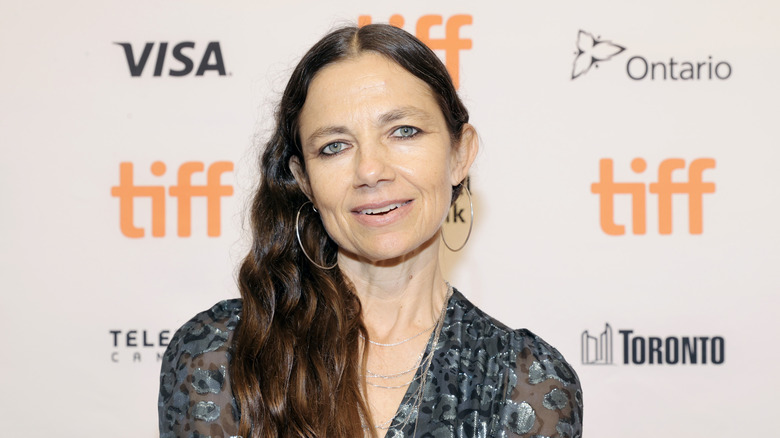
Over the years — and even after she turned her attention to non-acting pursuits — Justine Bateman flexed her creative muscles in Hollywood roles outside of the kinds she had performed on-screen. She wrote an episode of Disney's "Wizards of Waverly Place" that aired in 2008 and, later, wrote and directed the 2017 short films "Five Minutes" and "Push." She pushed herself to new heights in 2021, though, with her feature directorial debut, the psychological drama "Violet."
Starring Olivia Munn and Justin Theroux, "Violet" followed a film exec who makes decisions based on deliberations with her own inner voice, which is externalized by Theroux in the film. "I wanted to make the voice as different as possible from Olivia — change the gender, change the tone, change where it's coming in on the speakers in the theater," Bateman explained of her decision to cast Theroux as the voice in Olivia's head at the 2021 Toronto Film Festival (via The Hollywood Reporter).
Critics responded to "Violet" positively; as of this writing, the feature has accrued an 83% critical aggregate Tomatometer score on Rotten Tomatoes. Bateman went on to write and direct additional features, the avant-garde films "Look" and "Feel."
She has been outspoken about embracing the natural aging process
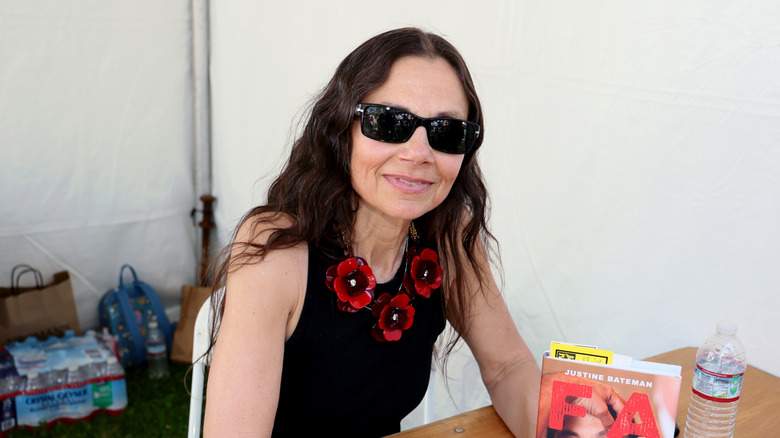
Celebrities and public figures experience a level of scrutiny that few can understand. For performers like Justine Bateman, whose very faces and overall physical appearance can make or break their success, the scrutiny that comes as they age can be particularly cruel. Bateman experienced that cruelty in a visceral way when she Googled herself on a whim in her 40s. "I then absorbed their view of me for a time, and it f***** me right up. Took awhile to get rid of that," she told Vanity Fair in 2018.
Eventually, she opted out of the paradigm altogether. She refuses to get plastic surgery and has become an advocate for aging naturally and rebuffing societal expectations. "Let's look at society. Why in society is the idea that an older woman's face need to be fixed?" Bateman asked during a 2021 appearance on the "Tamron Hall Show." "Why did we get from facelifts being unusual, say in the '60s, '70s, and even the early '80s to 'Yes, you should definitely have a facelift?' ... Why are we even suggesting that all these women need to fix their faces?"
In 2021, Bateman released her book, "Face: One Square Foot of Skin," which collected several short stories examining the societal attitudes toward and internal struggles of aging women whose faces have evolved physically as they have gotten older.
Bateman is now championing human creativity in the age of AI
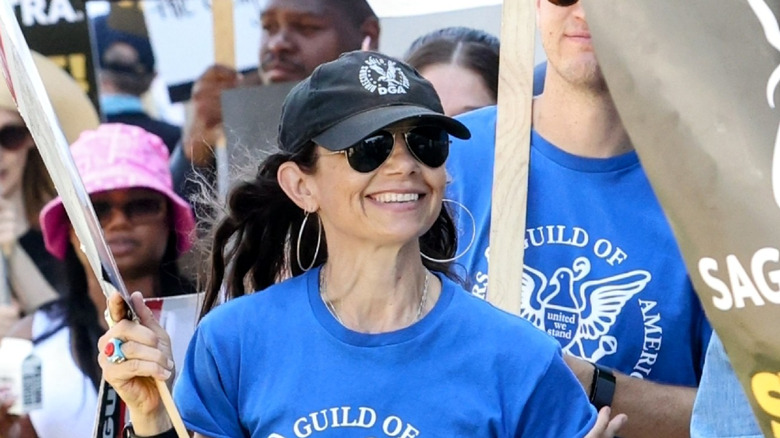
Justine Bateman's interest in technology and its intersection with content creation has manifested itself in an entirely different way in recent years. As she has continued exploring different avenues of expression and championing the causes she finds important, the former "Family Ties" star has been outspoken in her opposition to the use of generative AI in film and television.
"It was clear, to me, over two years ago, that AI was going to be part of the demise of our business," Bateman said in 2025 (via USA Today). "I mean, there are a lot of factors, but that's definitely [the] nail in the coffin." For her, the process by which artificial intelligence scours other pieces of art en masse to spew out its creations is tantamount to theft. "It's not generating anything new," Bateman added. "It's basically vomit."
In response to the AI craze, Bateman launched the Credo23 Film Festival in 2025. Industry veterans, including "Cape Fear" star Juliette Lewis, also joined her in the endeavor. The festival aimed to spotlight films and series produced entirely without the assistance of generative AI, and it was held again in 2026.
She and her brother Jason share a unique relationship
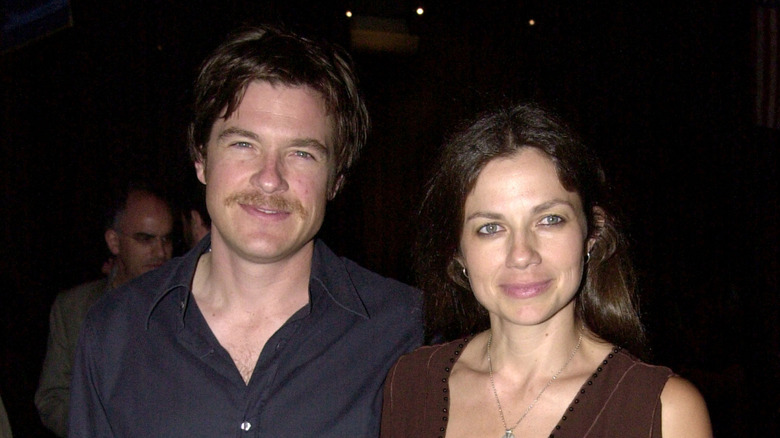
Separated by just three years, Justine Bateman and her younger brother, Jason Bateman, have followed contrasting but parallel paths through life. They grew up together, got their starts in commercials, and later became stars of the screen. However, their lives and careers have also diverged rather significantly over the years.
In his 2025 Esquire feature, Jason (whose life changed after settling down with his wife) revealed that the two don't get together often or even spend family holidays together. "My sister and I don't see each other a ton. There isn't the typical, 'We see each other every Thanksgiving or every Christmas and our kids want to be together.' There isn't that. In a great way." As he sees it, that separation has allowed them to have a deeper relationship than they might otherwise. "Our conversations are the rich conversations you would have with an adult friend, not the kind of petulant back-and-forth you might have with your adult sibling," he said.
Despite Jason's description of their relationship, rumors have circulated that political differences created a rift between the siblings. For her part, though, Justine pushed back hard on that concept in a since-deleted X post, writing in 2025 (via CNN), "Anyone bringing up my brother to me for any other reason than to say you like his new upcoming show, or any of his past work, will be muted at best, and blocked at worst ... I'm not interested in your fantasy about some imagined conflict between the two of us over your political ideologies. Really, it's sick."