

'70s SNL Sketches That Aged Worse Than You Realize
On October 11, 1975, TV viewers who tuned into NBC expecting to see the rerun of Johnny Carson's "Tonight Show" that typically aired on Saturday nights were instead met with the bizarre spectacle of a scruffy foreigner receiving an English lesson from an instructor teaching him such phrases a "I would like to feed your fingertips to the wolverines" and "I am afraid we are out of badgers, would you accept a wolverine in its place?"
The very first sketch to open the very first episode of "Saturday Night Live" was beyond edgy and light-years away from the tame sitcom comedy that characterized TV at the time. This, however, was pure counterculture guerrilla comedy that took no prisoners and was unlike anything to have ever aired on network television before.
For five decades and counting, "SNL" has continued to push the envelope, testing the boundaries of good taste, a rare television show that reflects the culture as much as it winds up changing it. Many sketches during the show's first incarnation, from 1975 to 1980, have stood the test of time, remaining as outrageously hilarious as they were when they first beamed from TV screens across America. Others, however, easily wilt when placed under the microscope of modern mores. For a look at these unique offenders, keep on reading for a look at some '70s "SNL" sketches that aged worse than you realize.
Word Association (1975)
Richard Pryor hosted the seventh episode of the first season of "Saturday Night Live," but he would only agree to it under certain conditions. The biggest was that he insisted on bringing in his own writer, Black comedian Paul Mooney. When they arrived to begin putting together the episode, "SNL" producer Lorne Michaels and some NBC executives (all white) grilled Mooney, essentially forcing him to submit to a job interview to temporarily join the "SNL" writing staff for that week.
That humiliating experience inspired Mooney to write what is arguably one of the show's all-time edgiest sketches, titled "Word Association." In the sketch, Pryor plays a guy applying for a job. His interviewer is played by Chevy Chase, who went on to be accused of some seriously shady on-set behavior. Pryor's character is asked to state the first word that jumps into his mind as Chase's character reads a series of words, escalating to racial slurs that would never appear on network television today.
In Mooney's memoir, "Black Is the New White," he revealed that the sketch emerged as his response to the resistance he faced. "Easiest sketch I ever write," Mooney wrote. "All I do is bring out what is going on beneath the surface of that interview with Lorne and the NBC execs." As Mooney pointed out, that sketch is now considered a classic and one of the most controversial "SNL" sketches ever. "It's like an H-bomb that Richard and I toss into America's consciousness," he added. "The N-word as a weapon, turned back against those who use it, has been born on national TV."
John Belushi's samurai skeches (1975-'79)
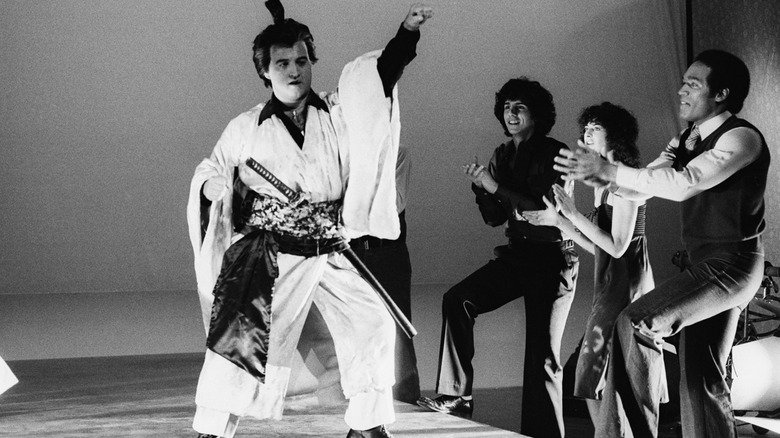
John Belushi's Samurai Futaba character became a fan favorite, the focus of several sketches over the series' first few seasons, as the katana-wielding Japanese warrior was placed in various mundane scenarios, say, working the front desk at a hotel, or behind a deli counter. Belushi based the character on the samurai portrayed by Toshiro Mifune in Akira Kurosawa's film "Yojimbo," which, at the time, was considered to be a gentle mocking homage.
While Belushi sadly became one of the "SNL" stars who crashed and burned, his portrayal — spouting guttural gibberish approximating Japanese — is now viewed as cultural appropriation and more than a little racist. "John Belushi's Samurai Futaba sketches are more cringy than funny to modern sensibilities, because the butt of the joke is Belushi's fictitious Futaba — a stand-in for a stereotypical 1970s American understanding of a Japanese person," writes philosophy professor Ruth Tallman in "Saturday Night Live and Philosophy: Deep Thoughts Through the Decades." "There's no social commentary or deeper meaning — just a white guy in a bathrobe swinging a katana and making fun of the sound of the Japanese language."
Tallman continued by noting that Belushi and the show's writers weren't intending to offend Japanese people, and, at the time, probably didn't inflict much harm. "But this is still an example of punching down, as individuals from a minority group in this country — probably already hassled for their accents and other differences — were the butt of a joke made by and predominantly for members of the dominant group (white Americans)," she added. Meanwhile, one sketch in particular — "Samurai Night Fever," spoofing the hit movie "Saturday Night Fever" — has aged particularly poorly due to the presence of NFL star-turned-accused-murderer O.J. Simpson.
Death Row Follies (1976)
Another of the skits on "Saturday Night Live" that really pushed boundaries was "Death Row Follies," appearing in the first season. The premise: a theatre director auditions death-row inmates for a prison production of the musical "Gigi." Chevy Chase, one of the inmates to audition, sings a song from the musical, "Thank Heaven for Little Girls," but alters the lyrics to reference young girls' undergarments, fantasizing about them wandering into deserted parking lots — edgy then, unthinkable now. The next inmate to audition is played by Garrett Morris, then the show's sole Black cast member. In an opera-like baritone, he performs an original song, which he explained summed up his philosophy. "I'm gonna get me a shotgun and kill all the whiteys I see," he sings.
While it was clearly satirizing racial tension, when viewed through a modern lens, it could be seen as either endorsing or encouraging murder. There's also the matter of tone, what with the sketch's comedic portrayal of mass murderers and pedophiles. As Morris recalled in an interview with the Television Academy, he was desperately trying to figure out something for his character to do in the sketch as the clock ticked down to show time when he came up with the idea of using the song and swapping that crucial word. "I had absolutely nothing," Morris said. "Then I say, 'Wait a minute — hold on ...'"
He remembered a story he'd heard about a Southern white woman who was invited by host Art Linkletter to perform one of the hundreds of songs she'd written on her TV show. The song she sang, Morris said, was word-for-word what his inmate character sang, albeit with Morris substituting "whities" for the N-word, as she'd sing.
Louise Lasser's monologue (1976)
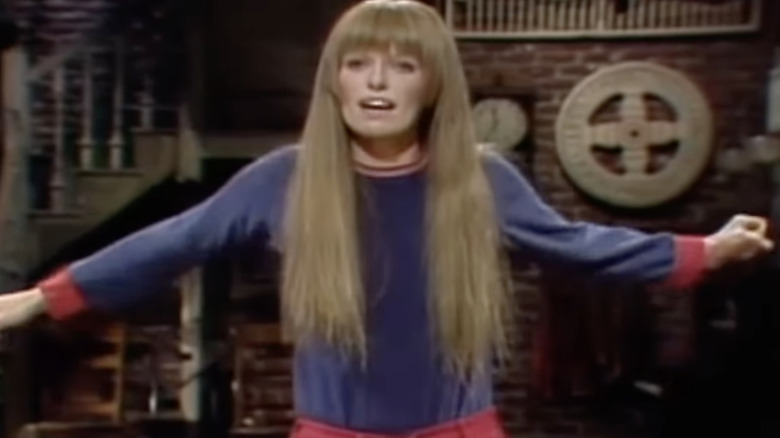
Louise Lasser hosted "Saturday Night Live" in 1976, and when she took to the stage of Studio 8H, a problem with her cue cards appeared to trigger a psychological breakdown. After a few minutes of her weird, rambling monologue, she fled to her dressing room, with various cast members attempting to coax her back to the stage so the show could continue. Then, at the show's end, she sat cross-legged on the stage to discuss her recent arrest for possession of cocaine while the cast milled around awkwardly.
While the whole thing was clearly planned, it was excruciating to watch — although it was supposedly mirroring what had actually been playing out behind the scenes. "I remember Louise Lasser on her hands and knees crawling into my office looking for pot," Neil Levy recalled for the book "Live From New York," remembering Lasser threatened to quit, and the cast was preparing to do the show without her. "And they were ready," Levy added. Lasser confirmed that, admitting in an interview with The Toast that she found some of the sketches to be too "salacious" and refused to appear in them. When Michaels wouldn't cut those sketches, she offered an ultimatum. "So I said, 'Then I'm going to go,'" she recalled, according to Ultimate Classic Rock.
In any case, the episode was a trainwreck, Lasser was reportedly banned from ever hosting again (which she's denied), and the episode was permanently pulled from reruns. Chevy Chase summed up the experience when he was quoted by the Detroit Free Press describing Lasser as "the largest bleeping blank I've ever had the misfortune of working with."
The Claudine Longet Invitational (1976)
In March 1976, French singer and actor Claudine Longet was accused of fatally shooting her boyfriend, skier Vladimir "Spider" Sabich. She claimed the shooting was accidental and was ultimately sentenced to just 30 days in prison after being found guilty of misdemeanor negligent homicide, not murder, as she'd initially been charged.
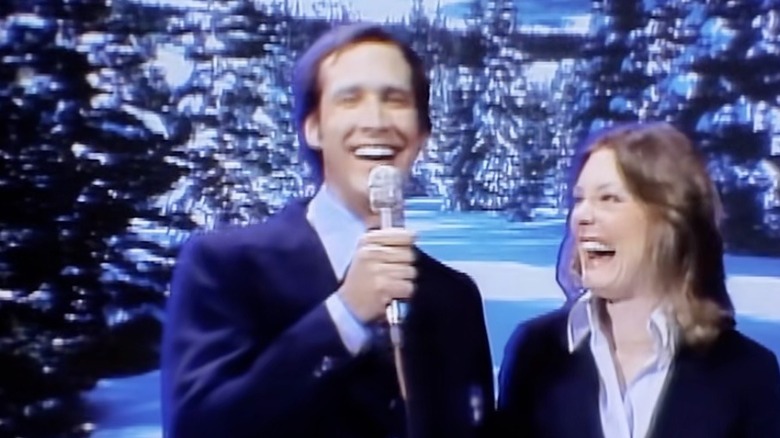
"Saturday Night Live" saw fit to spoof the situation with a sketch in which Chevy Chase and Jane Curtin portray sports announcers Tom Tryman and Jessica Antlerdance, covering the Claudine Longet Invitational men's skiing competition. In the bit, stock footage of skiers wiping out is shown, accompanied by the sound of gunshots. "Uh-oh! He seems to have been accidentally shot by Claudine Longet!" Chase's character deadpans, with the joke repeating a few more times as shots ring out and skiers topple over. "That looked almost like skeet shooting!" Curtin says at one point. "You must mean ski shooting!" Chase replies as the two laugh uproariously.
Joking about a murder accusation, the sketch has not aged well — and was also deemed to be out of bounds at the time. Immediately after the bit aired, while the show was still underway, NBC heard from Longet's lawyer, who threatened to file a cease-and-desist lawsuit. Under threat of legal action, "SNL" announcer Don Pardo was forced to read an on-air apology for the sketch. "It is desirable to correct any misunderstanding that a suggestion was made that, in fact, a crime had been committed," Pardo said at the end of the episode, via The New York Times. "The satire was fictitious and its intent only humorous. This is a statement of apology if the material was misinterpreted."
Uncle Roy (1978-'79)
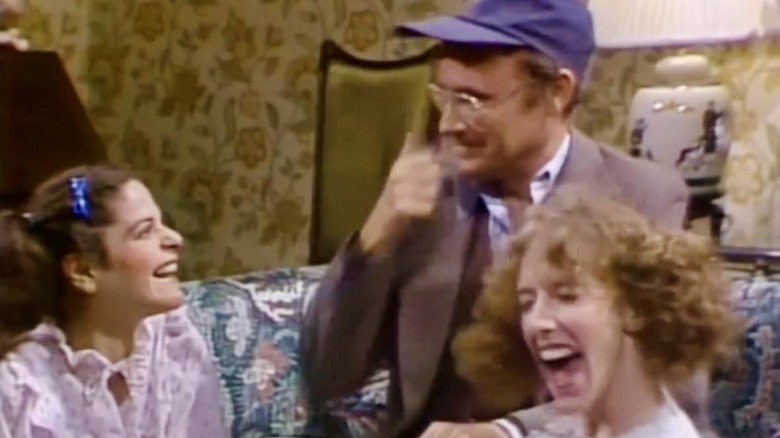
If there's one recurring character from "Saturday Night Live" in the '70s that has aged terribly, it's Uncle Roy. With Gilda Radner and Laraine Newman portraying young girls, frequent host Buck Henry played the titular Uncle Roy, who volunteered to babysit the girls. As he invites them to root around in his pockets for candy and take Polaroid pictures as they slide down the banister, it soon becomes clear that Uncle Roy is a creepy pedophile — something the girls and their oblivious parents are entirely unaware of.
That premise certainly pushed the boundaries of good taste back in the '70s, but to modern viewers five decades later, the Uncle Roy sketches are way over the line (it can't be a coincidence that those sketches are conspicuous by their absence on YouTube). According to Anne Beatts, who wrote the sketches with Rosie Shuster, they were always careful to ensure that Uncle Roy never actually got away with anything. "It was the lighter side of child molestation, I guess," Beatts told Vice. "But the idea of — what was funny to us, first off all, was that the parents [in the sketch] were so clueless. They were just like, 'Oh Roy, you're too good!' Then the other thing was that the girls were innocent, and they just always triumphed over him, they turned the tables on him as a sexual predator, in a way. It pushed the envelope a little."
Point Counterpoint (1979)
Among the dark secrets the cast of "Saturday Night Live" tried to hide was how much bitterness surrounded Chevy Chase's exit from the show. His signature bit, as anchor of "Weekend Update," was passed on to Jane Curtin. In one bit from a 1976 episode, she was joined by "station manager" Dan Aykroyd for a segment called "Point Counterpoint." The two proceeded to debate the pros and cons of Michelle Triola's "palimony" lawsuit against Lee Marvin, in which the movie star's longtime girlfriend argued that she was owed a settlement despite not having been married.
While Curtin contended that Triola should be awarded some money, Aykroyd takes the opposing view. The debate, however, quickly devolved into personal attacks when Aykroyd addressed Curtin by declaring, "Jane, you ignorant s**t."
While that was seen as hilarious at the time (even becoming a repeated catchphrase), a man addressing a woman in that manner on network TV today would be problematic, to say the least. Fifty years later, Aykroyd would have been accused of misogyny and shaming. That was addressed in 2025's "SNL 50" special, marking the show's 50th anniversary, when Tom Hanks introduced an "in memoriam" segment of sketches that had become problematic over time. "I'm talking of course about 'SNL' characters and sketches that have aged horribly," Hanks said, via Variety. "But even though these characters, accents and ... let's just call them 'ethnic' wigs were unquestionably in poor taste, you all laughed at them. So if anyone should be canceled, shouldn't it be you, the audience? Something to think about."
Milton Berle's offensive monologue (1979)
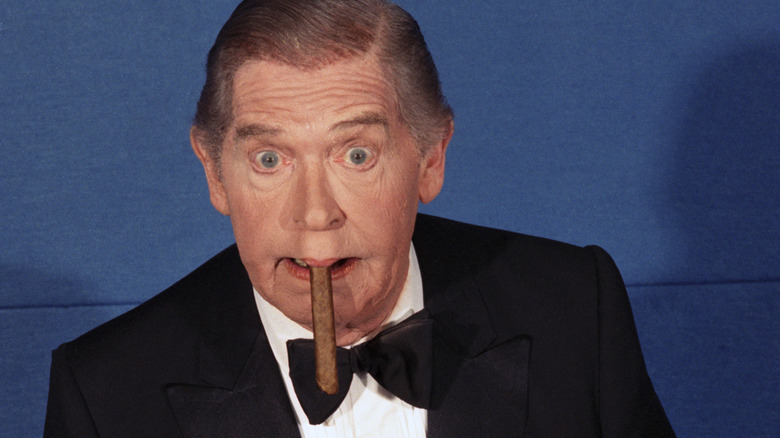
The 1979 episode hosted by Milton Berle holds an infamous place in "Saturday Night Live" lore, so loathed by Lorne Michaels that it has never been rerun — and remained unseen until the DVD box sets of the show's first five seasons were released in the early 2000s. The episode is widely regarded as a shambolic mess; Berle's 1950s comedic sensibility and arrogant know-it-all demeanor placed him at odds with the cast and the writers, as did his tendency to mug for the cameras and upstage the other actors.
Uncle Miltie was banned from ever hosting again, and his monologue demonstrates why — full of racist and sexist jokes that, even then, fell totally flat with the audience. "I'm so unlucky, if they sawed a woman in half, I'd get the part that eats," he said, via a transcript. He then pointed out a Black member of the band, telling him, "You're lucky, pal, you can walk home alone at three in the morning." He pretended to interrupt the monologue to present breaking news. "Forty-four Puerto Ricans in a crash. The bed broke," he joked, and then asked an audience member if he had nude photos of his wife. "Wanna buy some?" he retorted, his hacky jokes met with either polite chuckles or stony silence.
Berle insisted on ending the show by singing "September Song." The schmaltzy, self-aggrandizing performance drew a standing ovation — but only from the 10 pals he'd planted in the audience.
First He Cries (1979)
One of the things you never knew about Mary Tyler Moore is that she starred in a late-'70s TV movie, "First, You Cry." Moore played NBC journalist Betty Rollin, with the movie based on her memoir of the same name, chronicling her breast cancer diagnosis and the impact that undergoing a double mastectomy had on her life and marriage.
"Saturday Night Live" put a sexist spin on Rollin's story with its spoof, "First He Cries." In the 'SNL' version, Gilda Radner plays Irene, informed by her doctor that her biopsy came back positive, and she requires a mastectomy. Bill Murray plays the cancer-stricken woman's husband, who laments the loss of her breasts. "Why me? God! Why me?" he cries. An off-screen announcer then intones, "The following docudrama deals with a sensitive social issue: mastectomy and its psychological effects on the men who must endure the anguish of living with 'half a woman.'" After the surgery, Irene is seen to be in good spirits, being congratulated for her bravery when her husband enters the hospital room. "What about me?" he whines. "I'm stuck with some hideous deformed freak!"
Not only would that sketch never make it on the air today, it probably shouldn't have aired then. That night, NBC's switchboard lit up with a tsunami of angry phone calls. Even host Bea Arthur, who'd played a doctor in the sketch, was hit with backlash. Murray, in fact, had been reluctant to do the sketch, anticipating the negative response. "Do you know what it's like to go out there and play something that's going to make people hate you?" he told one of the show's writers, according to "Saturday Night: A Backstage History of Saturday Night Live."
The entire Mardi Gras special (1977)
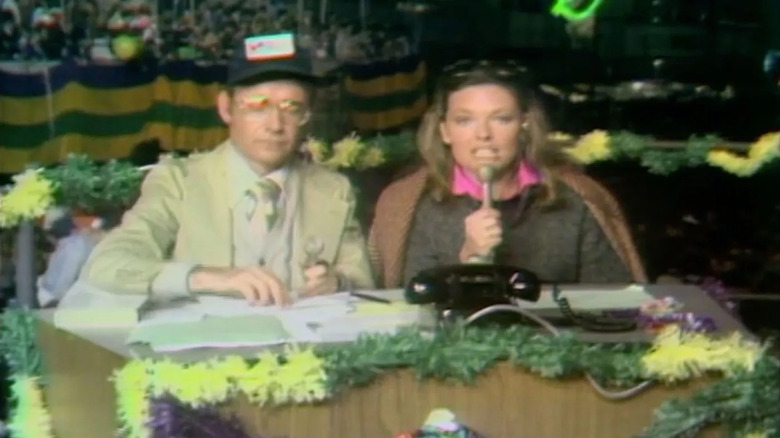
In 1977, "SNL" went on location — for the first and only time — for a special episode taking place in New Orleans during Mardi Gras. What may have seemed like a great idea on paper came crashing down when confronted with the reality of producing a TV show in the midst of thousands of drunken revelers.
Despite the presence of special guests such as "Happy Days" star Henry Winkler and the "Laverne and Shirley" duo Penny Marshall and Cindy Williams, the episode was a shambolic mess that has not aged well. As "SNL" producer Lorne Michaels recalled in an interview with Vulture, plans for Jane Curtin and Buck Henry to host coverage of a parade fell through when one of the floats hit a pedestrian, and the parade was forced to come to a stop. That suddenly rendered all the prepared parade jokes useless. "I was under the 'Weekend Update' desk, writing jokes about what the audience would have seen if the parade was in fact passing us by," writer Alan Zweibel told Vulture.
And that wasn't the only snag. Writer Michael O'Donahue was set to lead the crowd in a dance, but instead found himself pelted with beer cans and whisky bottles. Michaels was so freaked out when the electricity went out that he vomited. Gilda Radner had to be rescued by police when a drunken mob encircled her, their hands groping her everywhere. "People are storming Gilda," Curtin said during an appearance on "Late Night with Seth Meyers," recalling the chaos. "They're throwing Laraine [Newman] around. I mean, it was horrible."