

Celebrity Transformations That Took The 1970s By Storm
When viewed through the lens of pop culture, the 1970s was a decade of enormous change and transformation. In film, the success of low-budget 1969 counterculture classic "Easy Rider" opened the floodgates for a tsunami of small independent films that shattered the studio system that controlled Hollywood with an iron fist. When it came to television, the bland banality that characterized TV was blown to smithereens by Norman Lear's "All in the Family," which pushed beyond boundaries that had existed for decades, paving the way for the even-more-revolutionary "Saturday Night Live."
Music likewise experienced a renaissance, as the docuseries, "1971: The Year That Music Changed Everything," made clear. That single year produced an extraordinary amount of music, spanning various genres, that has remained embedded in the fabric of society more than 50 years later. Beyond 1971, the decade brought iconic albums from The Rolling Stones, Fleetwood Mac, Eagles, and many more unique artists, while sowing the seeds for disco, punk, and the new wave synth pop of the 1980s.
It's fair to say that much of that change was driven by political and social factors, ranging from the Vietnam War grinding to an inevitable failure and President Richard Nixon resigning in disgrace in the wake of the Watergate scandal. In the midst of all this tumult, some of our most famous and beloved celebrities also evolved in unexpected ways during the decade. From TV stars, to rock stars, to movie stars and beyond, keep reading for a look back at the celebrity transformations that took the 1970s by storm.
Goldie Hawn
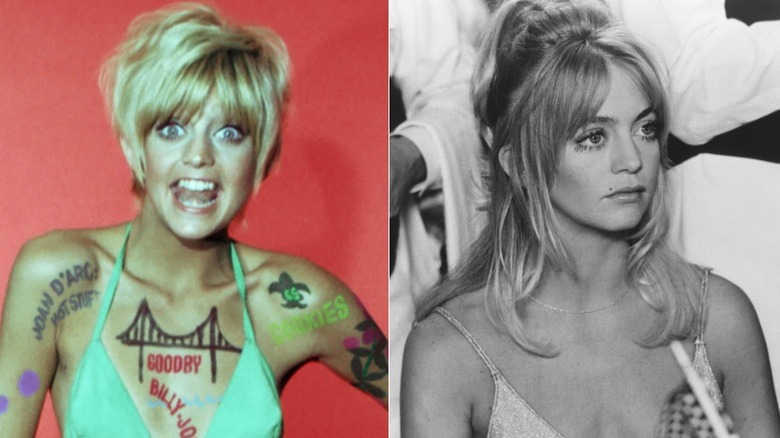
Having studied ballet since the age of 3, Goldie Hawn's original ambition was to become a professional dancer. After moving to California to further that goal, she wound up stumbling into acting, which ultimately led her to be cast on "Rowan & Martin's Laugh-In." Fitting right in with the show's counter-culture sensibility and cartoonish comedy, Hawn became a standout by appearing onscreen wearing a tiny bikini with slogans painted on various body parts. It didn't take long for her ditzy, giggly character to become synonymous with the hit show.
When looking back at Hawn's head-turning transformation, the '70s marked her transition from breakout performer on a show that captured the pop culture zeitgeist to becoming a Hollywood darling. Her role in the 1969 comedy, "Cactus Flower" — one of her first film roles — proved to be a home run, landing her an Oscar for best supporting actress. Hawn demonstrated range beyond comedy in 1972's "Butterflies Are Free," then in the Steven Spielberg-directed thriller "The Sugarland Express," and held her own alongside Warren Beatty in the classic "Shampoo." Meanwhile, she grew her hair longer, differentiating herself from the "Laugh-In" persona that made her famous.
By the middle of the decade, Hawn was one of Hollywood's hottest film stars, and she ended the 1970s by taking control of her career in a way that few women in that era had. When "Private Benjamin" hit theaters in 1980, Hawn wasn't just the film's star; she was also its producer, something that wasn't common for women in Hollywood yet. "That's the way it was," told The Guardian. "It wasn't that all men were terrible or that the situation was unbearable. It was a cultural problem."
John Travolta
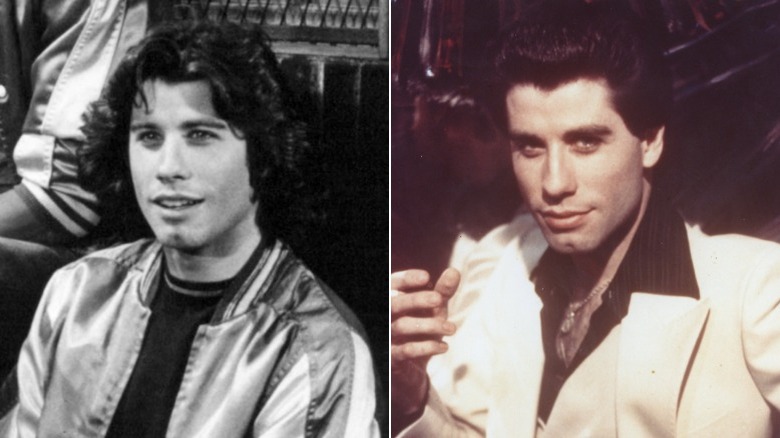
By 1975, John Travolta had just a few TV guest spots under his belt when he was cast as Vinnie Barbarino, a not-so-bright high school Sweathog in the sitcom, "Welcome Back, Kotter." The series became a hit, catapulting the handsome young actor to TV stardom. Unlike many fellow '70s teen idols who disappeared from Hollywood after their moment in the spotlight passed by, Travolta went on to become one of Hollywood's biggest and most enduring stars.
A big part of that had to do with the 1977 movie, "Saturday Night Fever," his first starring role in a major motion picture (he previously had a supporting part in horror flick "Carrie," and played the lead in made-for-TV movie "The Boy in the Plastic Bubble"). Capitalizing on the hot disco trend at the time, the film centered around Travolta's character, working-class New Yorker Tony Manero, who escaped his grim, blue-collar life by shaking it to disco tunes. Buoyed by Travolta's winning performance and a killer soundtrack of disco hits from The Bee Gees, "Saturday Night Fever" propelled Travolta to movie stardom. He cemented that stardom following year by playing Danny Zuko in "Grease," which raked in nearly $400 million at the box office to become the most successful movie musical of the 20th century.
This run effectively completed Travolta's stunning transformation from sitcom dumbbell to big-screen heavyweight, also ultimately becoming an accomplished dancer. Those skills, he divulged during a 1977 interview with "Cinema Showcase," were earned through a lot of hard work. "I had trained specifically for this film for five months," he said. "I worked for about three hours a day, for that whole time, just dancing."
Barbra Streisand
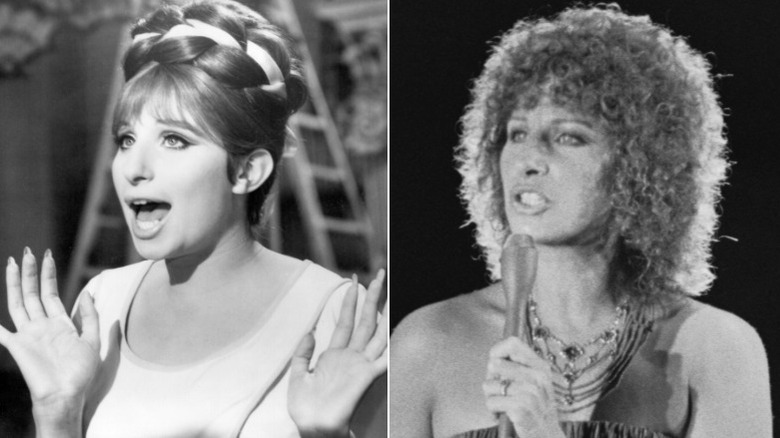
Singer and actor Barbra Streisand catapulted to fame in the early 1960s, and by the end of the decade, she maintained her massive success in music while kicking off a promising career in the movies. During the early part of the 1970s, in fact, Streisand churned them out: "On a Clear Day You Can See Forever," "The Owl and the Pussycat," "What's Up, Doc?" and "Up the Sandbox," culminating with the weepy romantic drama, "The Way We Were," in 1973. As Streisand wrote in her 2023 memoir, she felt that director Sydney Pollack damaged the movie by editing out two scenes she felt were crucial. "I begged Sydney to put those two scenes back in. But he didn't," Streisand wrote, via an excerpt from "My Name Is Barbra" published in Vanity Fair. "Maybe the reason the movie missed out on the big awards was because people sensed something was missing."
For her next major project, a remake of "A Star is Born," she insisted on maintaining creative control, serving as executive producer while then-boyfriend Jon Peters was producer — all due to the bad taste in her mouth left from "The Way We Were." "This was the moment when I thought, That's it. I had always had creative control of my albums, my TV specials, and my concerts. Now I realized, I have to be more in control of my films as well. I have to direct," she elaborated.
She produced her next film, 1979's "The Main Event," and made her directorial debut at the turn of the decade in 1980's "Yentl." Over the course of the 1970s, Streisand transformed from actor for hire to overseeing every aspect of her films, as star, producer, and now director.
Liza Minneli
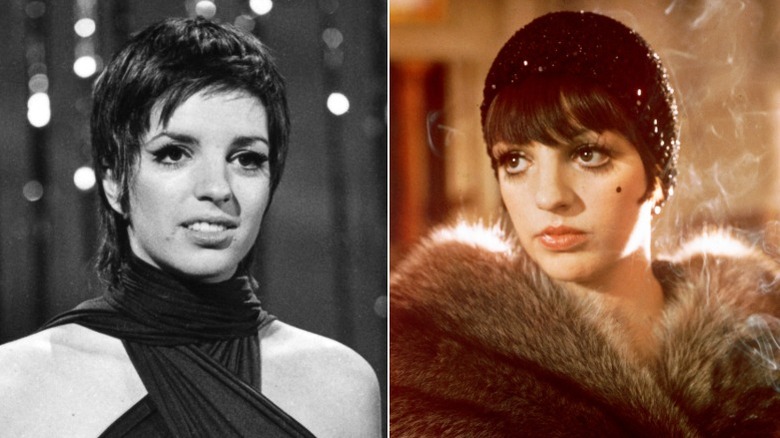
As the daughter of legendary star Judy Garland, it's fair to say that showbiz has always been in Liza Minnelli's blood. In fact, she was still a kid when Garland began trotting her out onstage during her concerts, and she was a mere 19 years old when she won her first Tony Award in 1965, making history in her Broadway debut as the youngest woman to ever win a Tony for leading actress in a musical.
By the end of the 1960s, Minnelli was categorized as one of the hottest rising young stars. When Garland died in 1969, her mother's death left her reeling. Yet according to Bruce David Klein, director of the 2025 documentary, "Liza: A Truly Terrific Absolutely True Story," her mother's tragic death also allowed her to become emboldened as a performer. "In the 1960s, a lot of Liza's performances, however brilliant, were more traditional," Klein told Closer Weekly. "I think after her mother's death, she was able to spread her wings more. She felt freer."
Her shift in perspective bore fruit pretty quickly when she won an Oscar for her performance in director Bob Fosse's 1972 musical, "Cabaret." Throughout the remainder of the 1970s, Minnelli rose to superstardom, ultimately becoming an EGOT winner at just 39 years old when an Emmy and a Grammy were added to her Oscar and Tony. Plus, while hanging out at Studio 54, the scandal-plagued nightclub that rocked the '70s, she became renowned as a style icon (with the help of her friend and famed designer, Halston). "What I was really good at is picking the people to be around," Minnelli recalled in the documentary (via Closer Weekly). "I had a really good eye."
David Bowie
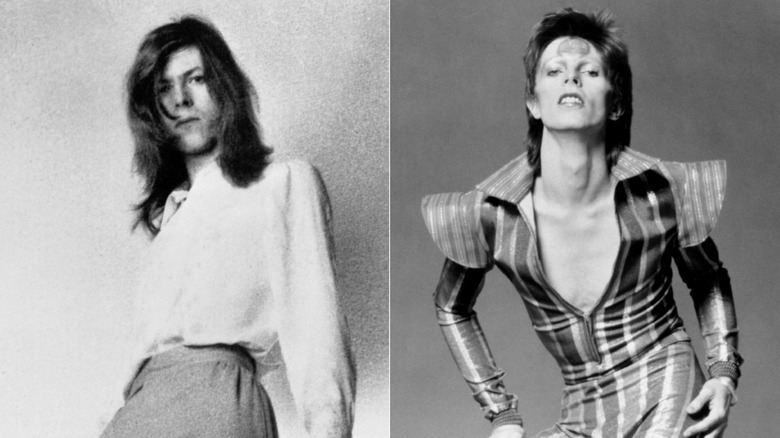
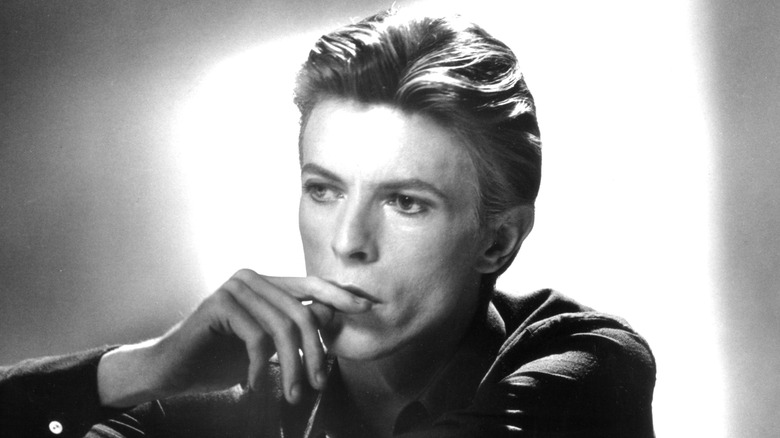
David Jones was kicking around the London music since the early 1960s with little success. After renaming himself David Bowie (to avoid confusion with The Monkees' Davey Jones), his self-titled 1967 debut album bombed. It wasn't until a couple years later that he scored his first major hit, 1969's "Space Oddity." The success of the single, on the heels of NASA's moon landing, led to his second album, also titled "David Bowie," followed by what would be his breakthrough, 1970's "The Man Who Sold the World." In that album and its follow-up, 1971's "Hunky Dory," Bowie adopted the persona of a long-haired hippie folk rocker, wearing dresses and traditionally feminine clothing.
Bowie upended that persona dramatically with his next album, 1972's "The Rise and Fall of Ziggy Stardust and the Spiders from Mars." Not only had his sound changed — evolving from jangling folk-rock to distorted-guitar-driven glam rock — so too had his look. He cut his hair short and spiky, dyed bright orange to take on the persona of an extraterrestrial rock star. He even shaved his eyebrows to enhance his androgynous, alien-like appearance. "It was a pudding of new ideas," Bowie explained when interviewed by NPR's "Fresh Air." "And we were terribly excited, and I think we took it on our shoulders that we were creating the 21st century in 1971. That was the idea."
Ziggy marked Bowie's first major transformation of the '70s, but not his last. During the years that followed, Ziggy morphed into Alladin Sane, then, the Thin White Duke, who was Bowie's fashionable take on a fascist dictator, boasting slicked-back platinum blond hair. By the time of his death in 2016, Bowie had reinvented himself many more times.
Cher
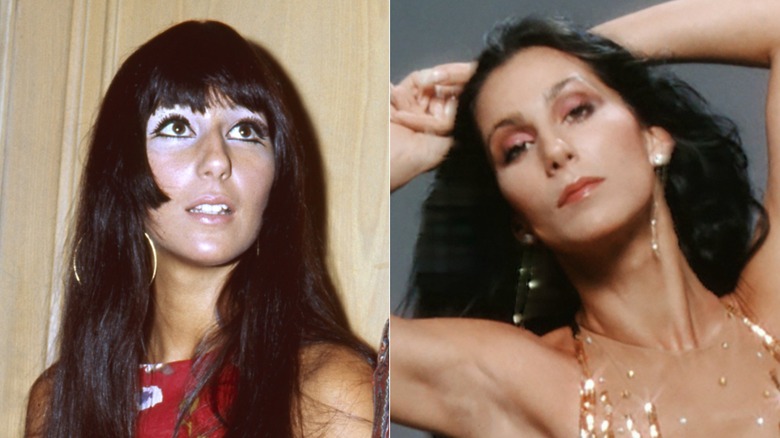
When Sonny and Cher burst on the scene in the mid-1960s, they were as well-known for their gimmicky look as for their radio-friendly pop hits like "I Got You Babe," and "The Beat Goes On." With Cher's Cleopatra-style eyeliner and husband Sony Bono's bowl-cut coiffure and signature fur vest, the pair were viewed as something of a novelty act. The couple began realizing how much audiences responded to their onstage banter and hilarious spousal bickering. They revamped their act, adding comedy to the mix, and revived their career.
Television took notice. In 1971, they launched "The Sonny & Cher Comedy Hour," a TV variety show that made them even bigger stars than before. Gone were the bell bottoms and Beatle boots that characterized Cher's outfits in the 1960s. Now, she appeared onstage in skin-baring, sequin-encrusted gowns designed by Bob Mackie, completing her transformation from hippie pop singer to glamorous style icon and wisecracking television comedian. Yet there was trouble behind the scenes, and the couple divorced at the height of their success in 1975, with Cher marrying Southern rocker Gregg Allman. When their subsequent individual variety shows tanked, the divorced couple reunited for "The Sonny & Cher Show" in 1976. By then, however, the bloom had come off that rose, and low ratings led to quick cancellation.
It wasn't until the 1980s, however, that Cher reinvented herself yet again, this time as a serious actor. After receiving critical acclaim in the 1982 film, "Come Back to the Five and Dime, Jimmy Dean, Jimmy Dean," she went toe-to-toe with Meryl Streep in 1983's "Silkwood," earning her first Oscar nomination while sparking a successful film career that has spanned decades.
Olivia Newton-John
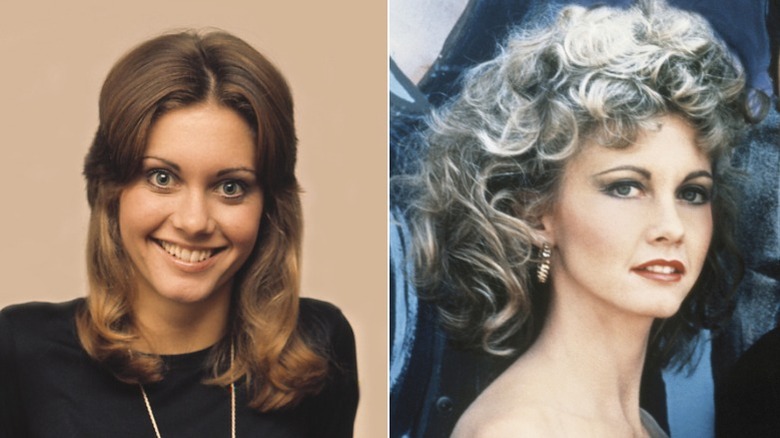
As talented as we know British-Australian singer Olivia Newton-John to be today, her first solo album, released in 1971, did little commercially. The country-tinged title track of her third album, 1973's "Let Me Be There," broke through, hitting No. 6 on Billboard's Hot 100 in 1974. More hit singles followed, including No. 1 hits "I Honestly Love You," and "Have You Never Been Mellow." During that time, her persona was that of a wholesome, corduroy-clad country-pop singer, typically photographed frolicking in a meadow. She was undeniably popular, yet was never accepted by the Nashville establishment and its bias against non-American country singers.
It all changed when the 28-year-old was cast as Sandy in "Grease," playing a goodie-two-shoes high school student who falls in with the Pink Ladies. Not only did she shed her girl-next-door image by transforming into a leather-clad bad girl, the hit songs she recorded for the film's soundtrack pushed her out of the country lane and into mainstream pop. Her future hits dabbled in disco, while her biggest track ever became 1981's "Physical," which spent a staggering 10 weeks at No. 1.
"Grease" also launched her toward a movie career. Even though "Grease" was a hard movie to top commercially, she reunited with co-star John Travolta for the 1983 flop, "Two of a Kind." In the 1990s, she focused on acting and appeared in several films and made-for-TV movies — including playing herself in a couple episodes of "Glee." She passed away in August 2022 at the age of 73.
Ron Howard
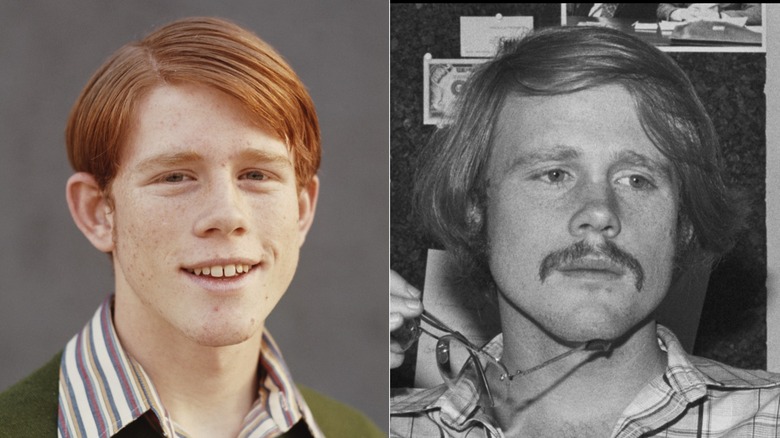
Freckle-faced Ron Howard was known to millions of TV viewers as Opie, rambunctious son of Sheriff Andy Taylor on hit sitcom "The Andy Griffith Show." Cast when he was all of 6 years old, viewers watched Howard grow into a teen over the course of the series' eight-season run. Howard continued acting through his teen years, with his breakout coming in the 1973 feature, "American Graffiti." The following year, he was cast in the role that would define him even more than Opie had: Richie Cunningham, high school protagonist in the 1950s-set sitcom hit, "Happy Days."
As the series progressed, "Happy Days" pivoted to capitalize on the popularity of Henry Winkler's breakout character, Arthur "Fonzie" Fonzarelli. At a certain point, producers approached Howard about potentially changing the show's title to "Fonzie's Happy Days." "I said, 'I really signed on to be at the center of a show called "Happy Days," and I respect what's happened here. But rather than be in "Fonzie's Happy Days," I'd rather go back to film school,'" Howard recalled in an interview with the Television Academy.
Howard ultimately decided to stay on while pursuing directing. With Richie becoming second fiddle to the Fonz, he was able to make his directorial debut with the low-budget 1977 comedy, "Grand Theft Auto." After directing a few made-for-TV movies, he exited the show in 1980. In 1982, he directed his first major film, "Night Shift," which partnered Winkler with up-and-comer Michael Keaton in what would prove to be the latter's breakout role. Since then, Howard has directed some of Hollywood's biggest hits, taking home two Oscars (winning both best picture and best director honors for "A Beautiful Mind").
Elton John
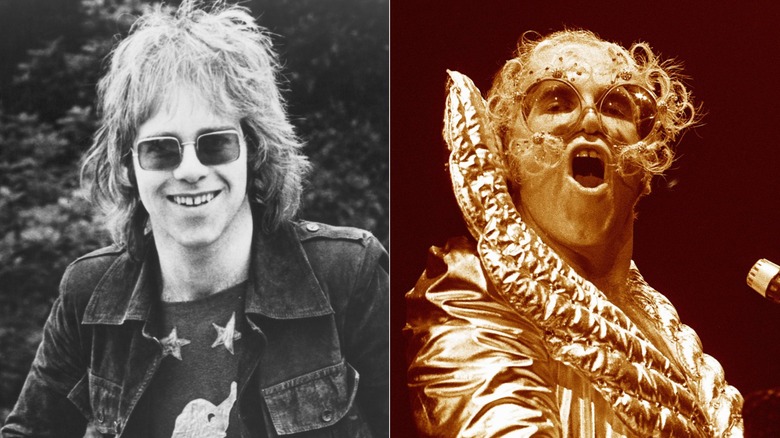
Born Reginald Dwight and rechristened as Elton John, the musician partnered with lyricist Bernie Taupin and began making a name for himself as a piano-playing singer-songwriter. The albums that he released in 1970 — "Elton John" and "Tumbleweed Connection" — reveled in a country-rock sound. However, his 1971 follow-up, "Madman Across the Water," was far more sonically adventurous, as were his subsequent albums, 1973's "Goodbye Yellow Brick Road," and 1975's "Captain Fantastic and the Brown Dirt Cowboy."
At the same time, John's fashion style was evolving as he embraced an increasingly flamboyant look. A big leap came in 1974, when he hired Bob Mackie — famed for designing gowns for the likes of Cher and Carol Burnett on their hit TV shows — to create over-the-top costumes he could wear on stage, with rhinestones and feathers galore.
"We did some pretty wild stuff back then, I mean really crazy, huge hats and big, long capes that were all fur and feathers. At one point Elton was in a jumpsuit with cut-outs, and he had Mr. World carry him out on his shoulders," Mackie told Vogue of how he transformed the rock star's style. "He was like the New Age Liberace, in a way."
Jane Fonda
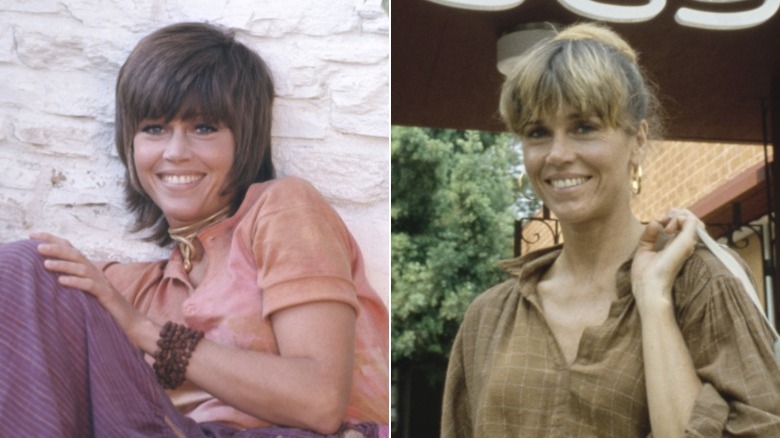
As the daughter of beloved movie icon Henry Fonda, Jane Fonda was Hollywood royalty, decades before the term "nepo baby" would have defined her. Emerging in the early 1960s, Fonda carved out a career as a talented actor in her own right, going full sex symbol for 1968's "Barbarella," and then winning her first Oscar for her portrayal of a sex worker at the center of a murder case in 1971's "Klute."
The 1970s were a time of political awakening for Fonda, who made it her mission to use her platform as a celebrity to protest the Vietnam War. She took that protest to the next level in 1972, when she visited Vietnam on a fact-finding mission and wound up being exploited by the North Vietnamese government. The nickname "Hanoi Jane," in fact, is one she's never really shaken.
Activism remained front and center for Fonda throughout the 1970s, and remains so to this day. Meanwhile, she took an unexpected left turn in 1979 when she opened her own Beverly Hills fitness center, Jane Fonda's Workout, often teaching early-morning classes before heading to a film set. Before closing its doors in 1991, Fonda's aerobics studio placed her on a path to become an internationally renowned fitness guru throughout the 1980s, her workout videos raking in millions of dollars. For her part, Fonda is happy to take credit for the fitness boom that she was at the center of. "Women who couldn't afford to belong to a club, or didn't go to a club because they didn't like the way they looked — it brought all those women to a place of health that they didn't have before," she explained to Air Mail about the success of her videos.