

Celebrities Who Were Tragically Diagnosed With Dementia
We may receive a commission on purchases made from links.
This article contains a mention of suicide.
For the biggest stars of entertainment, sports, and politics, life comes with certain fringe benefits — wealth, power, world-class medical care, private chefs, and the kind of financial security that eliminates many everyday worries, among other things. Yet for all of the privileges afforded by fame, there are certain human realities that no amount of money or celebrity influence can outrun. One such reality is the incidence of progressive mental disorders, including various forms of dementia, which affect a wide swath of the population.
Dementia is an umbrella term encompassing conditions like Pick's disease, Lewy body dementia, and other disorders, the most common being Alzheimer's disease, which sees the death of brain cells due to protein buildup (leading to serious memory loss and an inability to function. That's the same disease that legendary actor Gene Hackman lived with in his final days, perhaps contributing to his death after his wife Betsy Arakawa's passing following a hantavirus exposure. Hackman's condition was later confirmed via autopsy. Here are several other celebrities who were tragically diagnosed with dementia.
Robin Williams
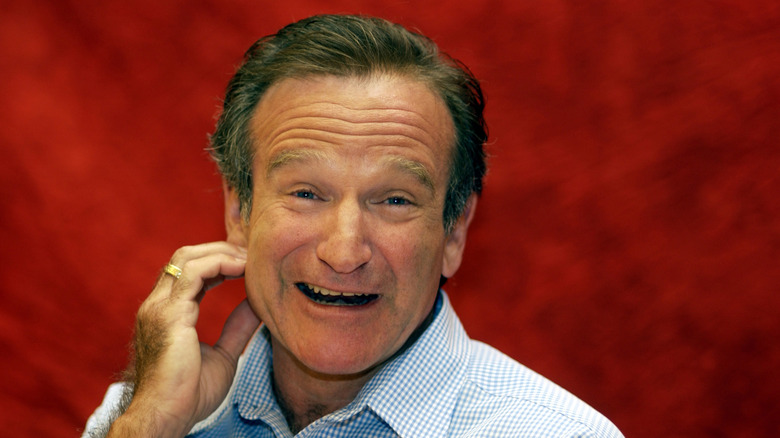
Robin Williams' improvisational comedy and unique performance style bridged generations. He had legendary stand-up performances, a late-'70s/early-'80s television breakout on the ABC sitcom "Mork & Mindy," and films that ran the gamut from "Mrs. Doubtfire" and Disney's "Aladdin" to "Good Will Hunting" and "One Hour Photo." It's safe to say Williams could make audiences of all ages laugh, smile, cry, shudder with fear, and pretty much whatever other emotional response he aimed to elicit. Away from the lights, though, the actor's private persona was vastly different from what the public saw, as the Oscar-winning performer lived with depression.
In August 2014, Williams died by suicide in his California home, leaving behind his wife, Susan Schneider, and three children from previous marriages, including his daughter Zelda Williams. It was later discovered that Williams had been living with Lewy body dementia. The disease occurs when protein deposits known as Lewy bodies develop in the brain's nerve cells, affecting the areas of the brain responsible for thinking, memory, and movement. "Lewy body dementia is what killed Robin," his widow said in 2015 (via ABC News). "It's what took his life and that's what I spent the last year trying to get to the bottom of, what took my husband's life."
Charlton Heston

Over the course of his decades-long career on the silver screen, Charlton Heston gave memorable performances in a multitude of all-time classics. He was Moses in the 1956 Cecil B. DeMille-helmed "The Ten Commandments." He played the titular character in William Wyler's "Ben-Hur" three years later, which landed him an Oscar for best actor. He also played the lead role of astronaut George Taylor in the original "Planet of the Apes" during the late 1960s. And that's only a fragment of the movies and roles that made him a Hollywood legend.
In his later years, Heston was politically divisive as the president of the National Rifle Association from 1998 to 2003. However, his later life was also defined by his Alzheimer's diagnosis — both in terms of the effect it had on him day to day and also his willingness to go public with his health situation. "I'm neither giving up nor giving in," he said in a 2002 video announcement (via CNN). "I believe I'm still the fighter that Dr. King and JFK and Ronald Reagan knew. But it's a fight I must someday call a draw. I must reconcile courage and surrender in equal measure. But please, feel no sympathy for me, I don't. I just may be a little less accessible to you, despite my wishes." Heston lived with Alzheimer's until his death in 2008 at the age of 84, using his remaining days to continue his work and raise awareness about the disease.
Rita Hayworth
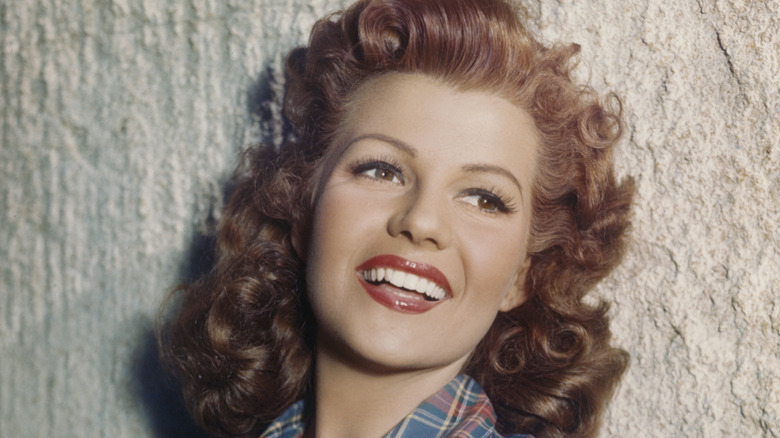
One of the most iconic actresses to come out of Hollywood's Golden Age, Rita Hayworth won over audiences with legendary performances in films like "You'll Never Get Rich" (1941), "Gilda" (1946), "The Lady From Shanghai" (1947), "Pal Joey" (1957), and many more. She was also possibly the most famous pinup model of the World War II era and was married five times — including once to fellow screen legend Orson Welles and once to Prince Aly Khan. Hayworth seemingly lamented her larger-than-life, bombshell image and was famously quoted (via Nylon) as saying, "Men go to bed with Gilda, but wake up with me."
As important as her on-screen contributions were to cinema, though, she may have made a larger impact in the world at large by going public with her Alzheimer's diagnosis almost immediately. Remember: This happened during the '80s, when the disease didn't get the same attention it does today. In a contemporary interview, her daughter, Princess Yasmin Aga Khan, described the moment Hayworth's disease clouded the memory of her. "She looked at me and she said, 'Who are you?'" Khan recalled (via Vanity Fair). "She didn't know who I was. But she knew that she was safe, which is most important." Yasmin founded the Rita Hayworth Gala in 1984, three years before her mother's death at age 68. The annual event has since raised more than $90 million for Alzheimer's research.
Bruce Willis
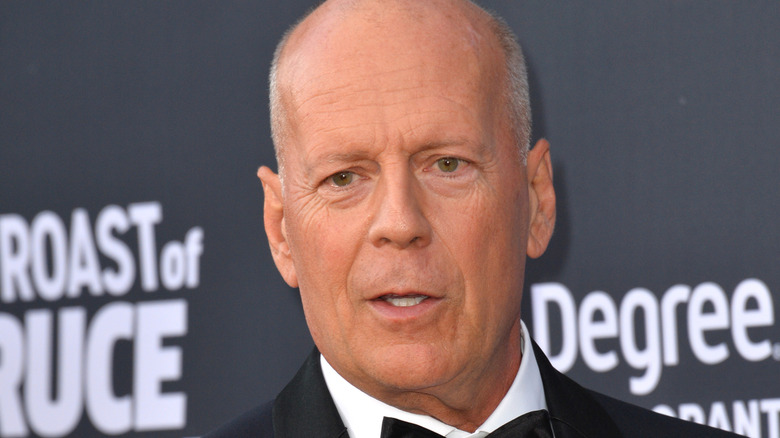
Bruce Willis made headlines in early 2022 when his family announced that he had been diagnosed with aphasia, a cognitive disorder often resulting from a stroke or head injury that can impact speech and/or a person's ability to write or understand both spoken and written language. The following year, a more specific dementia diagnosis was announced — namely, frontotemporal dementia, or FTD, which encompasses the brain disorders affecting those areas of the brain associated with personality, behavior, and language. "As Bruce's condition advances, we hope that any media attention can be focused on shining a light on this disease that needs far more awareness and research," read a statement from his family, including his wife, Emma Heming Willis, and his former spouse, Demi Moore (via The Association for Frontotemporal Degeneration).
Prior to his diagnoses, Willis was one of the best-known actors of his generation and a veritable action icon, having starred in such films as the "Die Hard" franchise, Quentin Tarantino's 1994 magnum opus "Pulp Fiction," and the Y2K-era thrillers "The Sixth Sense" and "Unbreakable." Prior to his breakout as a global star, he starred as David Addison in the classic 1980s dramedy series "Moonlighting." These credits represent just a fraction of the work Willis did before his health slowed him down. According to the Los Angeles Times, dozens of people who had been on set with him "expressed concern about Willis' well-being." He retired from acting after his aphasia diagnosis.
Sean Connery

The first man to utter the iconic line "Bond, James Bond" on the big screen, Sir Sean Connery is another generational screen legend who ended up living with dementia later in life. After serving in the Royal Navy, competing as a bodybuilder, and working myriad odd jobs as a young man, Connery made his film debut as an uncredited extra in the 1954 musical "Lilacs in the Spring." He went on to appear in nearly 100 films over the next half-century, playing Bond in six official Eon Productions releases and once more in the 1983 Jack Schwartzman-produced "Thunderball" adaptation and appearing in hit films like "The Rock" (1996) and "Indiana Jones and the Last Crusade" (1989). In 1988, Connery won an Oscar for best actor in a supporting role for his efforts in "The Untouchables."
In 2020, Connery died in his sleep at his home in the Bahamas at the age of 90. His final days were reportedly difficult to watch. "He had dementia and it took its toll on him," Connery's widow, Micheline Roquebrune, told the Daily Mail of his final days. "He got his final wish to slip away without any fuss." Many didn't learn about Connery's diagnosis until after his death. However, those closest to him witnessed his decline firsthand. In the book "Connery, Sean Connery," the actor's friend, Brendan Lynch, was quoted as saying, "I was crying at times to see this mountain of a man — this monumental human achievement in such a terrible state — frail (mentally and physically) unable to carry on a conversation or finish off a sentence."
Wendy Williams
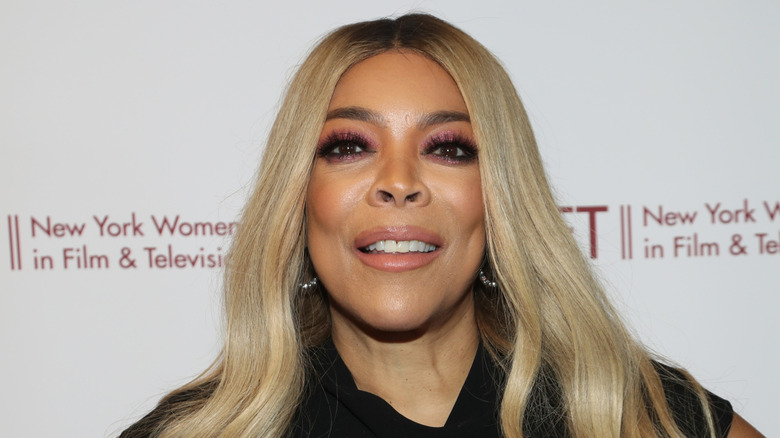
Controversy surrounded media personality Wendy Williams' dementia diagnosis, which happened in 2023 but was revealed publicly in 2024. Williams' bank, Wells Fargo, froze her accounts in 2022 and requested a hearing from the New York Supreme Court to gauge whether she should be considered an incapacitated person in need of a guardianship. At the time, Williams denied reports raising questions about her mental health and overall well-being. However, she was ultimately diagnosed with FTD and aphasia, and a legal guardianship was established.
Nevertheless, Williams continued to push back on the notion that her health situation was as serious as it was being portrayed in the media. "I am not cognitively impaired, you know what I'm saying? No," she said during a 2025 phone interview on "The Breakfast Club." "But I feel like I am in prison. ... I'm in this place where the people are in their 90s and their 80s and their 70s." Later that year, TMZ reported that a neurologist had determined that she was not living with FTD. However, her diagnosis was reportedly confirmed and her guardianship upheld months earlier, leaving many to wonder what was really going on with her. Prior to her health saga, she hosted the syndicated daytime talk series "The Wendy Williams Show" from 2008 to 2022 after a years-long career in radio.
Ronald Reagan

After serving as the governor of California from 1967 to 1975, Ronald Reagan became the 40th president of the United States, spending eight years in the White House during the 1980s. Before turning to politics, though, Reagan was one of the better-known actors in Hollywood. He famously played George Gipp in the 1940 biopic "Knute Rockne, All American," in addition to appearing in films like "King's Row" (1942) and "Cattle Queen of Montana" (1954). As his film career slowed, he hosted CBS' "General Electric Theater" on television and radio.
Reagan announced his dementia diagnosis in a 1994 letter, writing (via the Ronald Reagan Presidential Library & Museum), "My Fellow Americans, I have recently been told that I am one of the millions of Americans who will be afflicted with Alzheimer's disease." He added: "In opening our hearts, we hope this might promote greater awareness of this condition. Perhaps it will encourage a clearer understanding of the individuals and families who are affected by it." The former president reportedly penned the letter the same day he learned he was living with the disease. He died in 2004 at age 93.
Hal Ketchum

Hal Ketchum was a force on the country music scene during the 1990s, placing 17 songs on Billboard's Hot Country Songs chart (the majority of which were released in that decade). His top hits included "Small Town Saturday Night," "Hearts Are Gonna Roll," and a cover of Mick Hanly's "Past the Point of Rescue." He was also a member of the Grand Ole Opry in Nashville. By the time the 2010s rolled around, Ketchum was still recording new music and performing. However, he retired from the industry in 2019 when his wife announced he had been living with Alzheimer's disease.
"He has been battling this for some time now, but because of his love for his fans, he continued performing as long as it was possible ... Dementia is an exhausting and confusing illness and now it's time for Hal to stay home with loved ones," she wrote in a Facebook post (via Rolling Stone). Ketchum died the following year at just 67 years old due to complications stemming from the disease.
Estelle Getty
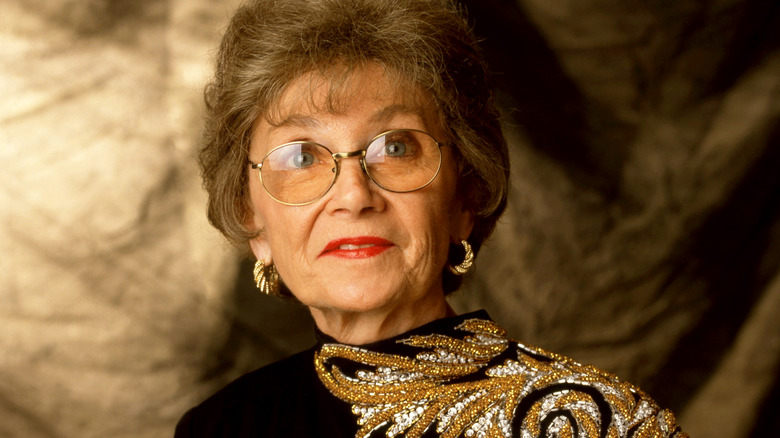
When it first aired on NBC in the fall of 1985, few could have predicted that "The Golden Girls" would last seven seasons and go down in the annals of sitcom lore. In 2021, Rolling Stone ranked it No. 32 on its list of the 100 greatest sitcoms in television history. Estelle Getty's performance as Sophia Petrillo played a major part in that success: She received Primetime Emmy noms for outstanding supporting actress in a comedy series seven straight times for her work on the show, winning the award in 1988. However, she had acted in theatre for years before transitioning to the screen.
Getty died in 2008 at the age of 84 after having lived with Lewy body dementia. For his part, "Golden Girls" writer Stan Zimmerman believed that the actress had been impacted by the disease while the show was still in production, although he wasn't aware of her health situation at the time. "The thought in the writer's room was that she was out going to Hollywood parties because here she was, a sudden celebrity," Zimmerman shared in his book "The Girls: From Golden To Gilmore." "That she wasn't studying hard enough. ... That's why sometimes [in] scenes, you'll see Sophia eating raisins. She actually has the lines on her hands."
Tony Bennett

Singer Tony Bennett was diagnosed with Alzheimer's disease in 2016, but he didn't allow the disorder to interfere with his love of performing. His final public performances (alongside Lady Gaga) didn't come until late 2021 — the same year that he and his family finally went public with his diagnosis. In an interview with the AARP, Bennett's wife, Susan Benedetto — with whom there was a bigger age gap than we thought — explained that it was the singer who first realized that it might have been more than just old age at play when he'd forget the names of his fellow musicians during performances. "It was Tony who said, 'Yeah, I'd like to go see the doctor,'" she recalled. "It wasn't a quick process because we were on the road and traveling. And then, ultimately, he was diagnosed."
Bennett was one of the great crooners of the 20th century, logging his first No. 1 hit all the way back in 1951 with "Because of You." In 1963, his signature anthem, "I Left My Heart in San Francisco," netted him Grammy awards for record of the year and best solo vocal performance, male. To date, he has won a whopping 19 Grammys, including a best traditional pop vocal album trophy in 2022 for "Love for Sale."
Glen Campbell

Over the course of a career spanning more than a half-century, Glen Campbell experienced a level of success that transcended the country music genre, permeating the mainstream. His signature songs "Rhinestone Cowboy" and "Southern Nights" both reached No. 1 on the Billboard Hot 100 during the 1970s, and the Arkansas native saw 35 other songs spend time on the chart, too. However, Campbell entered new territory in 2014 with the song "I'm Not Gonna Miss You," which examined his life with Alzheimer's disease.
With heartbreaking lyrics like "I'm still here, but yet I'm gone," the song — which proved to be his last — delved into Campbell's approach to the illness. As co-writer Julian Raymond told The Wall Street Journal in 2015: "[Campbell] had a hard day of people asking him about Alzheimer's and how he felt about it. He didn't talk too much about it, but came up to me and said, 'I don't know what everybody's worried about. It's not like I'm going to miss anyone, anyway.'" Campbell died in 2017 at the age of 81.
Nobuyo Oyama
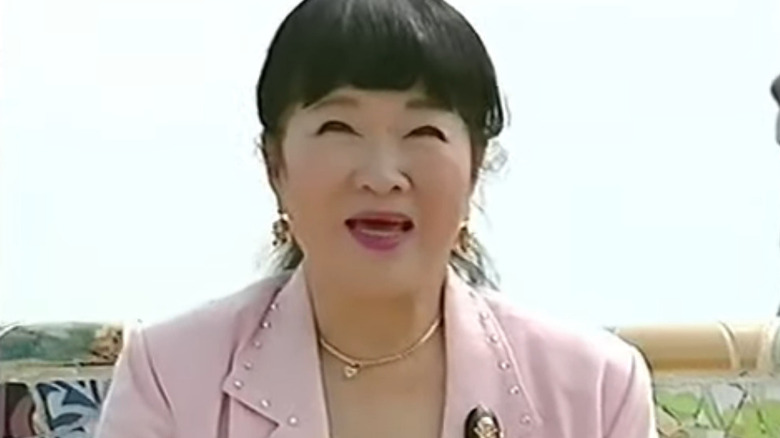
Nobuyo Oyama was an anime legend, voicing the titular character in the iconic Japanese series "Doraemon," which aired from 1979 to 2005. She also voiced the character Monokuma in the 2013 adaptation "Danganronpa: The Animation." Her husband, actor Keisuke Sagawa, revealed in 2015 that she was experiencing a form of dementia. According to Japan Today, Sagawa described his wife's illness as "ninchisho," a Japanese word that can refer to senility. The outlet further noted that her first symptoms were initially thought to have resulted from a 2008 stroke.
Despite her health situation, Oyama continued to work and meet with fans at events while she was still able. She died in 2024 at the age of 90, her position as an icon of anime and voice acting long since cemented. It was an incredible achievement for someone who was once bullied for her voice to the point that she was afraid to speak publicly.
Gordie Howe

Hockey legend Gordie Howe played an incredible 26 years in the NHL plus an additional six seasons in the WHA. He spent the majority of that time as a member of the Detroit Red Wings but retired in 1980 at the age of 52 after playing a career-high 80 games with the Hartford Whalers. Along the way, he was a 23-time All-Star and a four-time Stanley Cup winner. As of this writing, he ranks third all-time in goals scored with 801 and fourth in points with 1,850. In other words, his "Mr. Hockey" moniker was well-earned.
Howe had begun experience the effects of dementia in 2012, a situation he and his family had experience with, as his wife had died of Pick's disease three years earlier. Pick's disease is a type of FTD affecting a person's behavior and, in some cases, their ability to speak and/or understand others. It is unclear what type of dementia Howe was diagnosed with. Sadly, Howe died in 2016 at the age of 88.
If you or someone you know is struggling or in crisis, help is available. Call or text 988 or chat 988lifeline.org.