

What Hollywood's Most Bankable Stars From The '80s Look Like Today
Movie stars have been central to Hollywood since, well, Hollywood was a thing itself. And since its golden age, studios have endeavored to utilize those stars to generate as much profit as possible with each film they roll out into the world. However, the idea of just how much of a financial boon a hit movie could be changed significantly in 1975, when "Jaws" became the blueprint for the modern blockbuster. The Steven Spielberg-directed horror grossed nearly half a billion dollars at the worldwide box office and set the bar for the blockbuster releases of the 1980s.
In an effort to reach that high bar, directors leaned on a new breed of stars, some of whom looked like action figures on screen as action and sci-fi movies came into their own during the decade. Stars like Harrison Ford and Sylvester Stallone became hot commodities as the entertainment industry as a whole reached new heights amid a massive media expansion and technological advances, as well as the advent of home video and rental chains.
While the stars that studios relied on to sell movies during the '80s are largely well-remembered — and many of them continue to work now — they're no longer the same people they were way back when. Here's a look at the faces that once filled the theaters and how they've changed over the years.
Harrison Ford
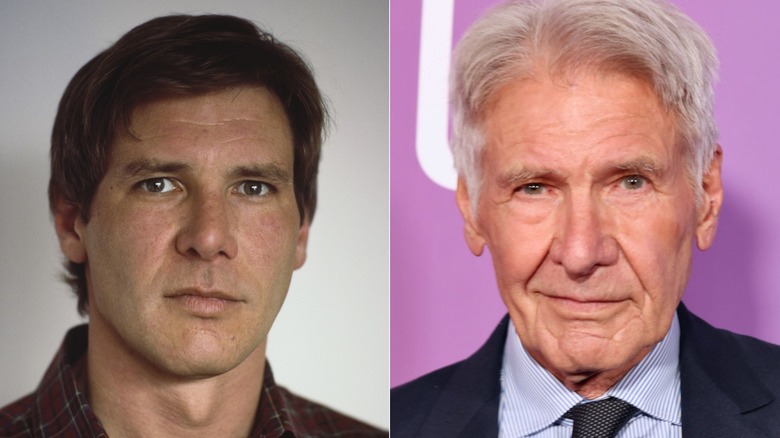
Thanks to a pair of long-running, mega-blockbuster franchises, it's difficult to quibble with Harrison Ford's position as the most bankable star of the 1980s. The actor was the highest-grossing actor of all time as of 2016, boasting a list of credits that amounted to a $4.71 billion box office take at the time. A sizable chunk of that came via his second and third "Star Wars" films — 1980's "The Empire Strikes Back" and 1983's "Return of the Jedi" — and the first three "Indiana Jones" films, released in 1981, 1984, and 1989, respectively.
With memorable appearances in those films and others, including 1982's "Blade Runner," 1985's "Witness," and 1988's "Working Girl," Ford established himself as a veritable heartthrob of 1980s Hollywood and a pop culture icon. However, Ford found this success after a lengthy early-career struggle. "Acting was not yet paying the bills," Ford recalled during his 2026 commencement speech at Arizona State University (via Entertainment Weekly). "I was supporting my growing family with carpentry jobs, another way to put food on the table. I only took acting jobs when the part challenged me. This went on for about 15 years."
Fast-forward to the 2020s, and Ford, who has remained part of the A-list crowd, continues to work as an actor, most recently on the Apple TV+ series "Shrinking." His longtime partnership with former "Ally McBeal" star Calista Flockhart, whom he married in 2010, continues to flourish, too.
Tom Cruise
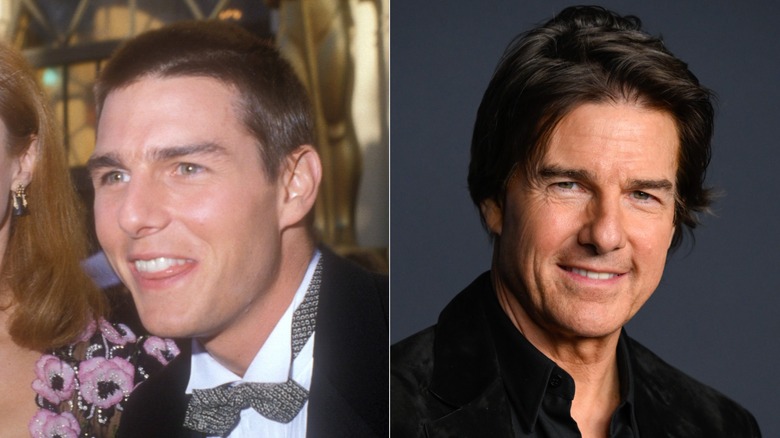
In the 2020s, Tom Cruise feels like the closest thing to an ageless star we've ever seen. Despite being in his 60s, he continues to make his fans swoon and fill seats at the theater, as evidenced by the strong performances of 2022's "Top Gun: Maverick" and the latest entries in the "Mission: Impossible" series in 2023 and 2025, which grossed over $2.6 billion combined worldwide. However, Cruise's incredible run as one of Tinseltown's most bankable stars actually began decades earlier.
During the 1980s, Cruise scored at the box office with hits like 1983's "Risky Business," 1986's "Top Gun" (which grossed over $350 million, not adjusted for inflation), 1988's "Cocktail" and "Rain Man," and other films. His natural talent and boyish charm notwithstanding, Cruise was willing himself to superstardom from an early age, telling Interview Magazine amid the release of the first "Top Gun" film, "I hope the public and everyone realize that I'm still growing. I'm still feeling my oats here. I'm working toward the long-term goal of what I can be as an artist. And I work my a** off trying. Because I know what I want to be."
Several decades in, this star continues to show the same kind of drive that captured the imagination of moviegoers four-plus decades ago — just look to Tom Cruise's wildest interviews for proof. And while he has maintained his movie-star looks, his knack for totally transforming for his roles, as with Alejandro G. Iñárritu's upcoming comedy "Digger," prevails.
Eddie Murphy
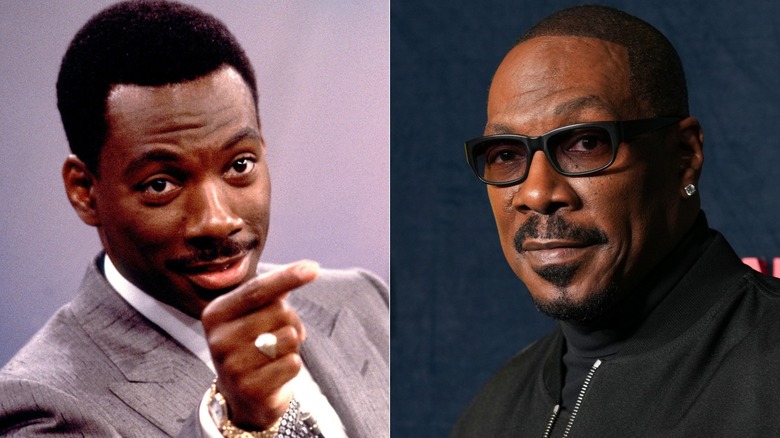
Perhaps no comic was as hot during the 1980s — or ever, really — as Eddie Murphy. In his four seasons on "Saturday Night Live," from 1980 to 1984, he became arguably the biggest breakout star in the long-running variety show's history. Meanwhile, his stand-up special "Delirious" continues to be rated among the greatest comedy hours ever produced. Murphy was able to parlay his success on television and as a comic into box office gold, too.
Murphy's debut film, "48 Hrs.," was a hit in 1982, paving the way for the arrival of the "Beverly Hills Cop" franchise two years later. The first two installments of that series grossed more than $600 million combined worldwide. Murphy also scored winners with 1986's "The Golden Child" and 1988's "Coming to America," which grossed nearly $290 million worldwide.
Looking back over his incredible career, though, Murphy is just happy to have kept his head on straight throughout the rollercoaster ride. "Just to be in this business and just to be going and going for all of these years — all around the world — it's a unique blessing. To have made it all the way through and with my sanity and spirit intact, that's what I'm most proud of," he said during a 2025 appearance on "Today" (via the New York Post).
Sylvester Stallone
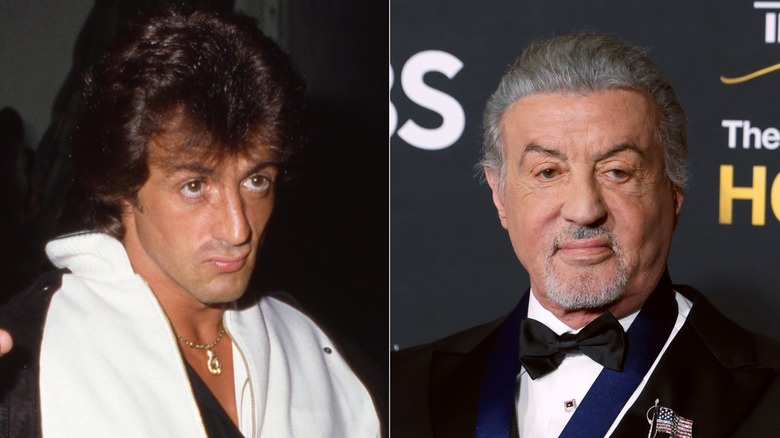
Sylvester Stallone literally bet it all on "Rocky" during the 1970s, making significant financial sacrifices to get the film made and to do so while keeping his own name on the script and at the top of the movie's call sheet. As recounted by Forbes, he reportedly turned down a $360,000 offer for the script — during a time when he was so poor he had to sell his dog to stay afloat — in an effort to preserve his role as Rocky Balboa in the film. "I knew in the back of my mind that if I sell this script and it does very, very well, I'm going to jump off a building if I'm not in it," he recalled later (via Forbes).
Stallone's all-in bet ultimately paid incredible dividends; by the 1980s, he was a big-time Hollywood star. And the decade would continue to prove fruitful for the actor as the "Rocky" series rolled on and his other projects proved to be major draws as well. Fruitfully, 1982's "Rocky III" and 1985's "Rocky IV" have grossed over $570 million combined worldwide. Stallone also hatched the "Rambo" franchise, the first three entries of which have grossed in excess of $600 million. Now in his 70s, while obviously more grizzled, Stallone still strikes an imposing, muscle-bound figure, and he's still acting, too.
Arnold Schwarzenegger
Arnold Schwarzenegger first rose to prominence as a bodybuilder, first winning a Mr. Universe competition at the age of 20 in 1967 and then winning multiple titles thereafter. Later, during the 1970s, he added some Mr. Olympia titles to his trophy case. That legendary run set him up for even more success in Hollywood during the 1980s and beyond.
Although the height of his success would come later, Schwarzenegger established himself as a bankable star throughout the '80s, beginning with his turn as the titular character in 1982's "Conan the Barbarian." That led to his iconic performance in James Cameron's "The Terminator" in 1984, which grossed over $78 million against a relatively meager production budget (again, in '80s money). The take for 1987's "Predator" was even bigger, nearing $100 million globally. However, his biggest box office win came a year later with "Twins," which hit over $200 million.
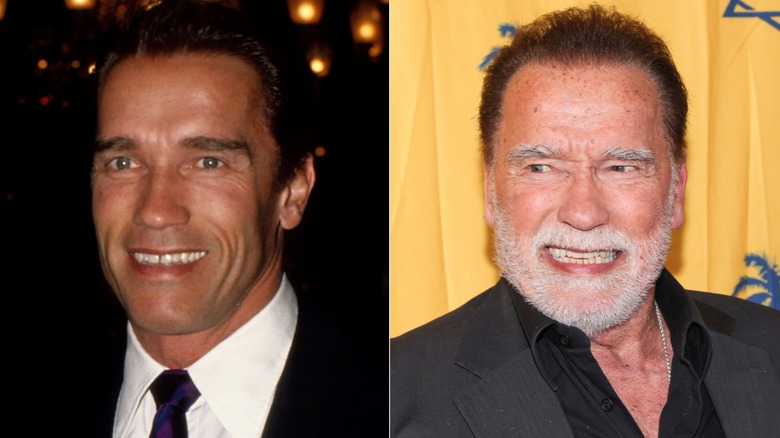
In the 2020s, Arnold Schwarzenegger is barely recognizable with gray hair and not quite the Herculean figure he once was (although his fitness at almost 80 remains impressive). That said, he continues to be involved in bodybuilding, mostly by helping his son, Joseph Baena, train for competition.
Dan Aykroyd
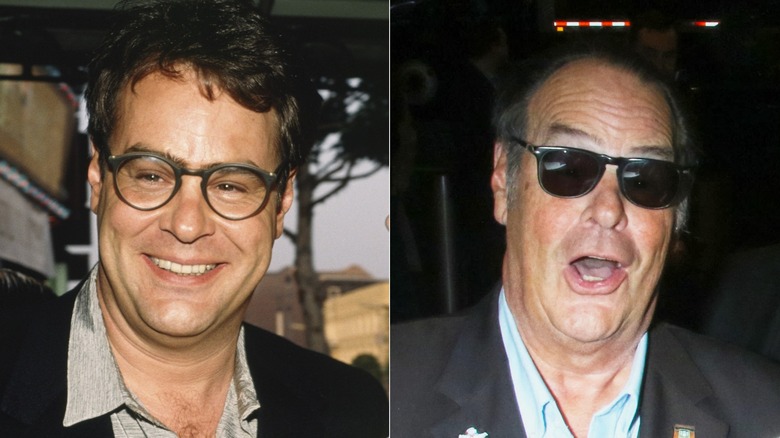
Although he may not be immediately obvious as a box-office draw during the decade of excess, Dan Aykroyd was one of the era's biggest box office winners due to his work conceptualizing and starring in both "Ghostbusters" and "Ghostbusters 2," launching a franchise that remains relevant today. Those films grossed $296 million and $215 million, respectively, and they weren't his only 1980s hits.
Aykroyd also starred in 1980's "The Blues Brothers," 1983's "Trading Places," 1985's "Spies Like Us," 1989's "Driving Miss Daisy," and a host of other films that were box-office winners during his heyday. Not bad for an actor who got his first taste of fame as the ultimate utility player on "Saturday Night Live." While he has slowed down in recent years — he even declined to leave the house for the 50th anniversary celebration of "SNL" — Aykroyd still serves as the creative steward for "Ghostbusters" and "Blues Brothers."
As of 2026, he's serving as executive producer for Netflix's upcoming "Ghostbusters" animated series despite fully embracing his life as a family man and parent to adult children. "I want to make sure that my children are happy — I want to accomplish their happiness," he told People in 2024. "I don't know how you do that, but I really live for them now."
Bill Murray
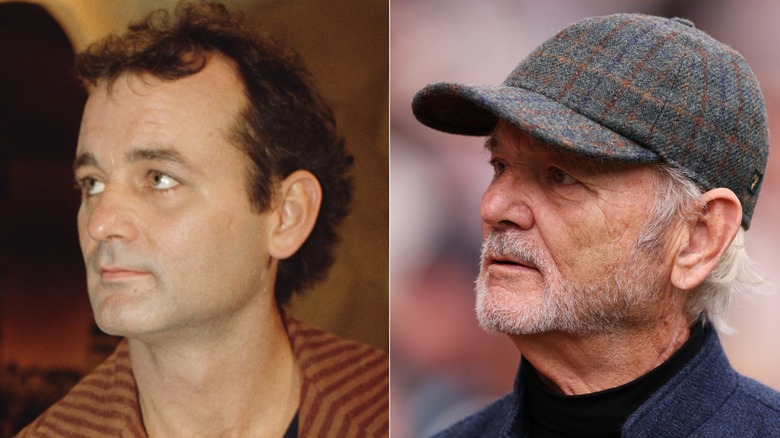
Like Dan Aykroyd, Bill Murray rates among the top box-office draws of the '80s thanks to his starring role in both of the decade's "Ghostbusters" films. However, that franchise is hardly the only thing this "Saturday Night Live" alum had going on at the time. From 1980's "Caddyshack" and 1982's "Tootsie" (both of which saw him in supporting roles) to 1988's "Scrooged," Murray was in multiple other successful comedies, and he has continued to work into the 2020s.
As he has transitioned into his status as one of Hollywood's elder statesmen, Bill Murray — who has been in a strange feud with Richard Dreyfuss for years — has become a cult figure off camera, making headlines with his eccentric behavior. Even in his 70s, that sense of mischief and unpredictability that made him a comedy legend continues to manifest itself in surprising ways. Murray has famously shown up unannounced at parties and other private events over the years, but, according to him, nothing about his behavior is calculated. "There's no plan there," he said on "Today" in 2018. "It feels kind of nice, you know, people like you or whatever. But there's no plan ... It's fun to drop in like that, but you don't want to, like, change the event."
Steve Guttenberg
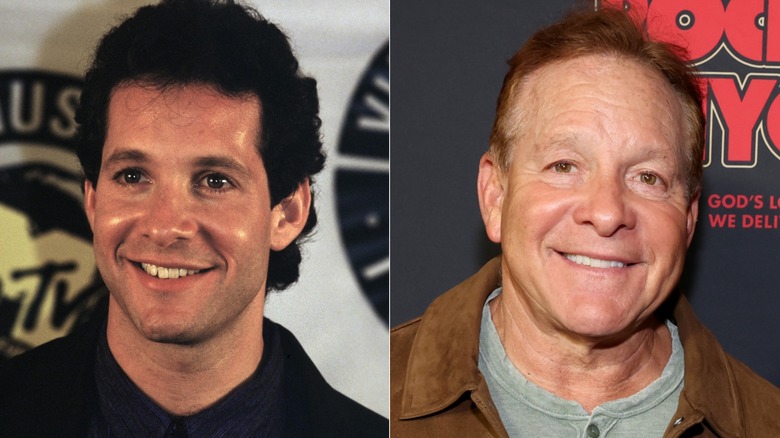
Steve Guttenberg's name likely isn't front of mind — or even in mind — for younger moviegoers, and people who are aware of him may not think of him as a big-time money-making star. Even in his heyday, his average-Joe looks and nice-guy personality sowed doubts about his bankability. Make no mistake, though; Guttenberg starred in some of the biggest comedies of the 1980s.
In 1984, he starred as Carey Mahoney in "Police Academy," which grossed over $81 million domestically and spawned a long-running franchise. Guttenberg also appeared in comedy hits like 1985's "Cocoon" (which grossed $85 million) and 1986's "Short Circuit." However, his biggest box-office wins came in 1987 and 1990, respectively, with "Three Men and a Baby" and its sequel, "Three Men and a Little Lady." The first film grossed an eye-popping $167 million worldwide.
Fast-forward to the 2020s, and he's back to looking like Mr. Congeniality (albeit a slightly older version of the archetype). That's not to say, though, that he didn't buy into his own hype when the hits were rolling in. "My God, I drank the Kool-Aid several times and went out and bought a Ferrari and had my times where I thought I was a big deal," he told Page Six in 2024. Ultimately, though, he still seems to be the nice guy, as evidenced by his dramatic rescue of an elderly couple from their home during the Palisades fire in 2025.
Chevy Chase
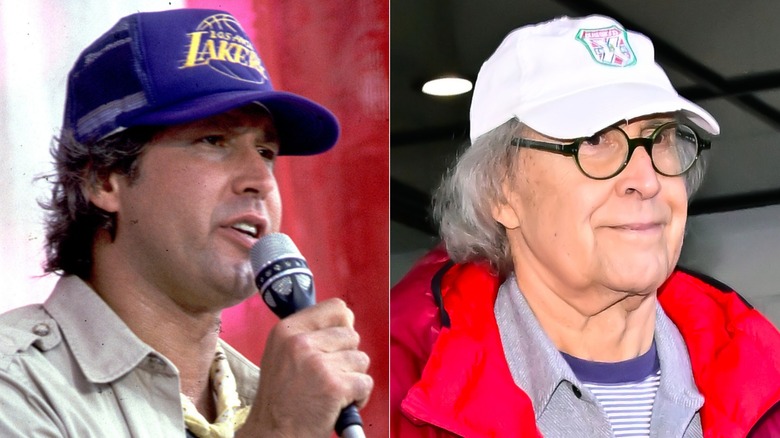
In the 2020s, some might say that Chevy Chase has leaned into a grumpy elder-comic image, and he's got the reputation to match. His clashes with "Community" creator and showrunner Dan Harmon and his awkward relationship with the rest of the show's cast during the early 2010s have become the stuff of legend. For his part, Donald Glover, who played Troy on the NBC/Yahoo Screen series, claimed that Chevy Chase made racist comments on the set of "Community."
Wind the clock back three or four decades, though, and while the stories of Chase being difficult to work with are still there, the actor was much more than the crabby supporting player on a cult television show. He was a bona-fide A-lister whose pictures brought crowds to theaters nationwide. After becoming the breakout star of the first season of "Saturday Night Live" during the mid-1970s, Chase embarked on a movie career that exploded during the early '80s. In addition to starring in the aforementioned "Caddyshack" and 1985's "Fletch," he appeared in several other highly profitable comedies.
His portrayal of Clark Griswold in the "Vacation" franchise rates among the best comedy performances of all time. And the first three entries in the series, released in 1983, 1985, and 1989, respectively, grossed over $185 million combined domestically.
Michael Douglas
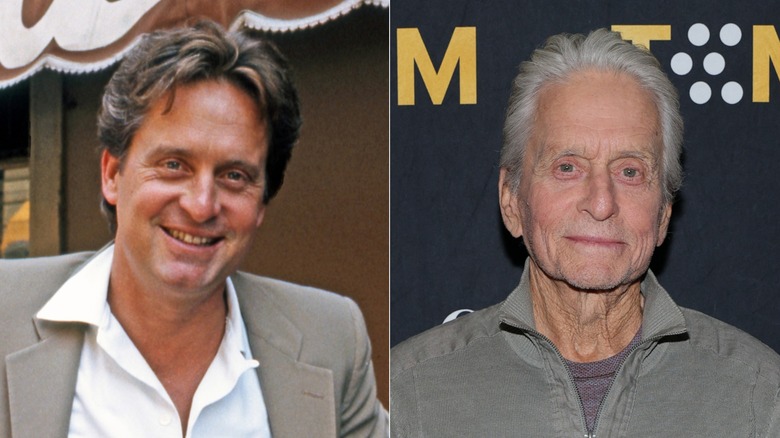
Michael Douglas had an incredible run of films during the 1980s, beginning with 1984's "Romancing the Stone" and its 1985 sequel, "Jewel of the Nile." Those movies, which saw him star alongside another big earner in Kathleen Turner, grossed a combined $211 million. Despite the box office receipts those films pulled, Douglas didn't feel as though he was even a legitimate actor until a few years later, when he appeared in two other '80s classics in the same year.
"Where I actually felt like I had something to offer? That would have to be the year of 'Fatal Attraction' and 'Wall Street' ... around 1986, 1987," Douglas told Rolling Stone in 2019. "Up until then, I still dealt with nerves in front of a camera. I felt I was competent; I did 104 hours of a TV show ['The Streets of San Francisco']! But I couldn't tell you that I was really enjoying the process or that people were benefiting from what I was doing." For the record, those films grossed $320 million and just under $44 million, respectively. Now, Douglas is in his 80s and seems to be doing just fine; he's also still working but being more selective with his roles.
Jack Nicholson
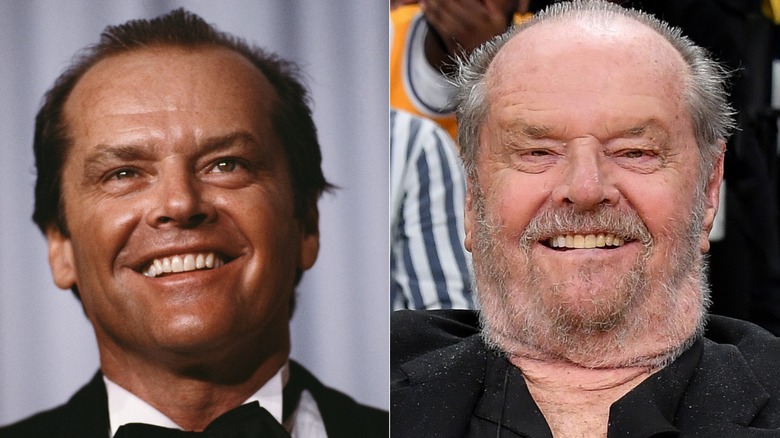
Now in the winter of his life, Jack Nicholson has become one of the most elusive figures in Hollywood. And on the rare chance that the actor does show up, as was the case when his daughter shared a snap of him in celebration of his 89th birthday, he looks relaxed and noticeably older. None of that changes the fact that he was one of Hollywood's ultimate stars during the 1970s, '80s, and beyond.
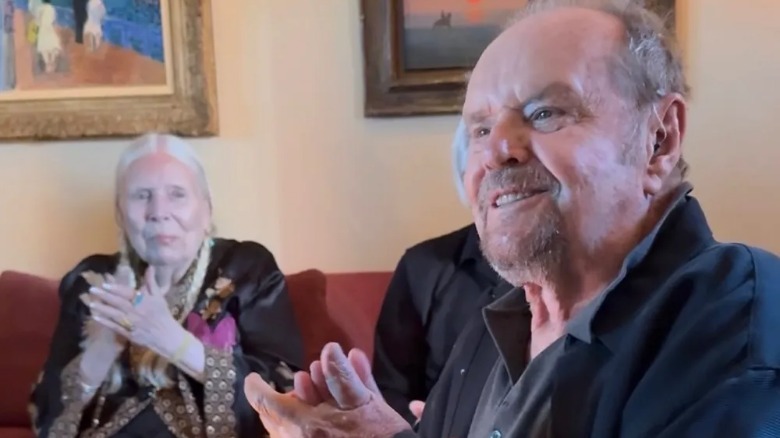 lnicholson/Instagram
Nicholson began the '80s by playing the iconic role of Jack Torrance in 1980's "The Shining." However, it was films like 1983's "Terms of Endearment" and 1987's "The Witches of Eastwick" that succeeded in attracting moviegoers. Nothing, though, would match the performance of 1989's Tim Burton-directed "Batman" film (on which Nicholson earned top billing over Michael Keaton). That movie grossed a whopping $411 million worldwide and established a new template for marketing and merchandising a franchise film.
Said Nicholson of his approach to playing the Joker, in a behind-the-scenes featurette (via The Hollywood Reporter): "My early experience in working for an audience full of children: the more you scare them, the more they like it ... The worse you are, the better, because that was my response to the Joker. This is a hateful occurrence, this man, if you looked at it literally. Every kid loves this guy, I believe."
Kim Basinger
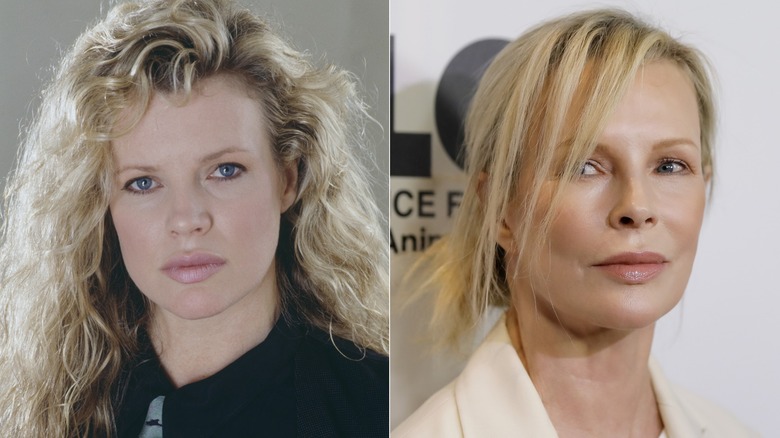
Like many of her peers, Kim Basinger is slowing down in the 2020s, enjoying life with her family. And while she keeps a low profile, she doesn't appear to let her age slow her down. In a Mother's Day 2026 post on Instagram by her daughter with Alec Baldwin, Ireland Baldwin, a 72-year-old Basinger could be seen jumping on a trampoline with her granddaughter, Holland, in a video clip.
She exhibited a similar energy during her '80s heyday, when she outpaced many of her contemporaries at the box office. Her breakout movie, 1983's unofficial "James Bond" film, "Never Say Never Again," was a true money-maker, grossing $160 million. Meanwhile, 1987's "Blind Date" logged a solid number for a comedy, grossing $39 million domestically (which is over $100 million when adjusted for inflation). However, her biggest movie was, of course, 1989's "Batman."
Said Basinger of her look and overall approach to the Vicki Vale role, which she herself conceptualized after joining the production mid-stream (via The Hollywood Reporter): "I wanted her to be tough in the newsroom, but I wanted her to be feminine like Cinderella."