

The Royal Security Divide: Who Gets Bodyguards (And Who Was Cut Off)
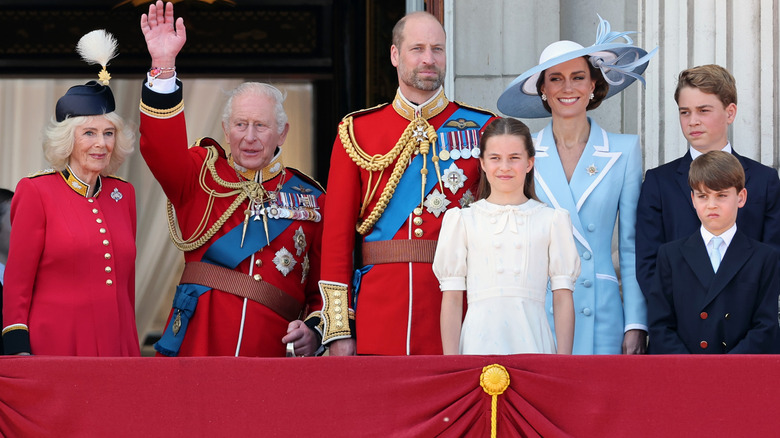
Royal security has long been a hot topic among both supporters and detractors of the British monarchy. While some folks are simply curious about what royal security looks like and how much it costs, critics have used the expenditure as an argument for why the monarchy should be abolished. The subject has also often made headlines in recent years thanks to Prince Harry and Meghan Markle's security demands and their ongoing litigation to try to get more government-funded protection.
While many details are kept secret to ensure the family's safety, there's still plenty we know about royal security. For starters, not all royals automatically have bodyguards provided to them simply because of their fancy title. In 2011, for example, Princesses Beatrice and Eugenie were cut off from government-funded bodyguards and forced to find private protection, which is believed to be costing them £500,000 (or $667,000) a year. Indeed, there are strict rules in place when it comes to who gets protection, who doesn't, and what it actually entails. Here's the truth about the royal security divide.
A special law enforcement unit looks after the royals' safety
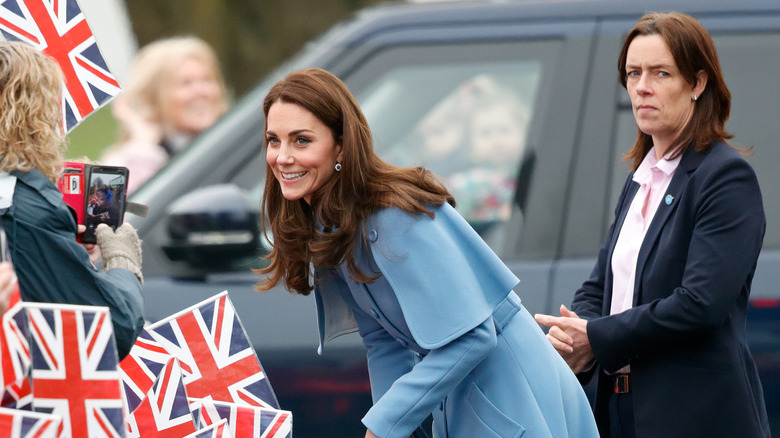
If you've watched the royals attend a public event, you've likely noticed the plainclothes security team keeping a watchful eye over them — and the crowd. Made up of both men and women from the Metropolitan Police, they're the ones wearing sharp suits and walking behind the royals at a respectful distance so as not to interfere with their public interactions. That said, these personal protection officers (PPOs) are armed and ready to act in the blink of an eye.
The PPOs are part of the Royalty and Specialist Protection (RaSP) Command, which was created in 2015. This specialty unit rolls up into the Specialist Operations (SO) Business Group, which is part of the Metropolitan Police force. The RaSP's job is to protect the royals at public events and at their homes in London, Windsor, and Scotland. They provide around-the-clock protection and are highly trained in shooting, driving, and security planning. What's more, there is a second branch in the RaSP, the Special Escort Group (SEG), which offers mobile protection, mainly as police escorts on motorcycles.
Given that they're around 24/7, RaSP members have built strong relationships with those they serve. Back in 2021, when Metropolitan Police Commander Helen Millichap decided that PPOs should be rotated rather than appointed for life, there was outcry from the royal family. "There's actually a partnership between royals and the police," former Chief Superintendent Dai Davies explained to the Daily Mail. "Building up these relationships takes trust and time, and that can't be lightly dismissed."
What about the famed King's Guard?
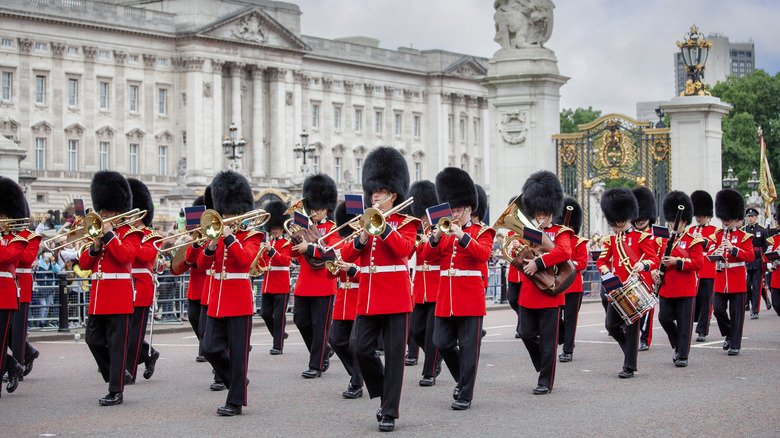
The soldiers standing outside Buckingham Palace and Windsor Castle have become synonymous with the royal family. Their red coats and bearskin hats are instantly recognizable, and millions of people flock to watch them take part in the famed Changing of the Guard each year. However, they aren't mere ceremonial figures placed outside the monarch's homes for tourists to fawn over.
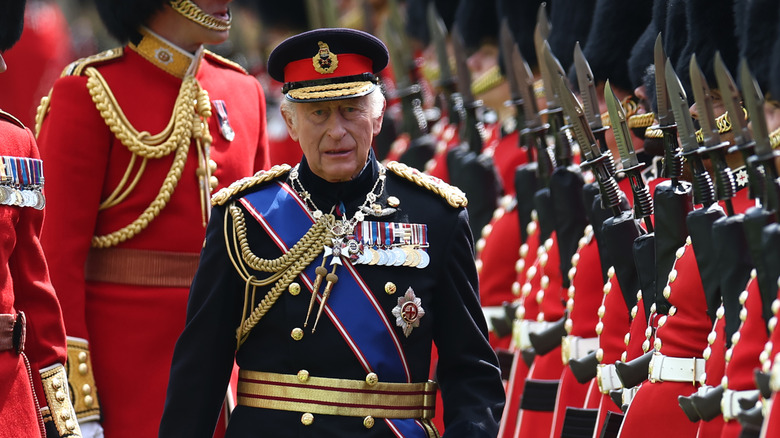
While it's the job of the Metropolitan Police's Royalty and Specialist Protection (RaSP) Command to stay close to the royal family and provide 24/7 protection, these famed guards also have an important role to play. Known as The King's Guard, they are all fully trained infantry soldiers on active duty whose job it is to guard the monarch and the royal palaces. What's more, they also take part in most major royal ceremonies, from the annual Trooping the Colour parade to coronations and funerals.
Members of The King's Guard belong to one of five Foot Guards Regiments of the Household Division, and their position dates all the way back to 1660. Initially, the positions were reserved for British Army members, but the unit has become increasingly inclusive over time. As of 2026, soldiers from other Commonwealth nations, such as Canada and Australia, are also welcome to join, as are members of the Royal Air Force and Royal Navy.
An independent body decides which royals get security
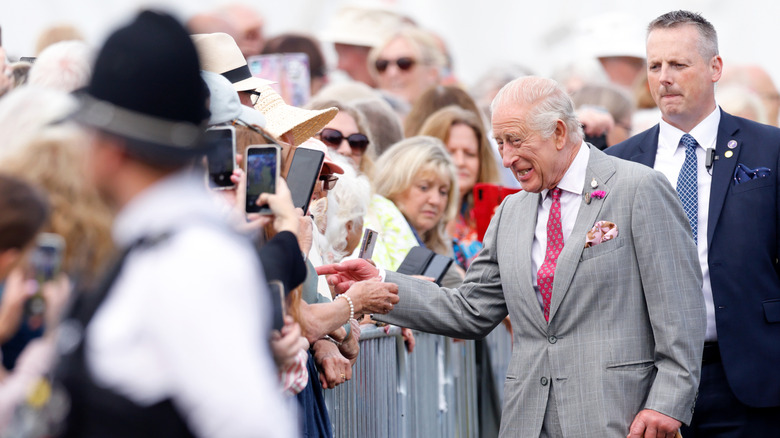
Although the British monarch is head of state, England's monarch doesn't actually get to decide which members of their family get security, nor what type of protection they'll receive. Instead, that decision is left up to an independent body called the Executive Committee for the Protection of Royalty and Public Figures (RAVEC). This specialty committee is made up of members from various organizations, namely the Home Office, Metropolitan Police, and Royal Household, and is helmed by an independent chair.
The process starts when the Risk Management Board, composed of senior police and security service officers, runs a risk assessment for each royal on a case-by-case basis. It then files this report to RAVEC, which, in turn, uses said recommendations to make the final decision on who gets tax-funded security and who doesn't. What's more, it appears the committee's decisions are not easily swayed by outside arguments. This is a lesson Prince Harry learned the hard way, as he's spent years battling RAVEC in court. The committee revoked Harry's security privileges when he stepped away from royal life in 2020, and Harry and Meghan's call for personal security has been raising eyebrows since. RAVEC has refused to reinstate them, despite the prince's arguments. When the couple eventually moved back to the U.K. in 2026, RAVEC agreed to run a new risk assessment and reconsider the family's protection, but as The Guardian reported, that was no guarantee that they would reverse course.
Not all working royals are awarded 24/7 security
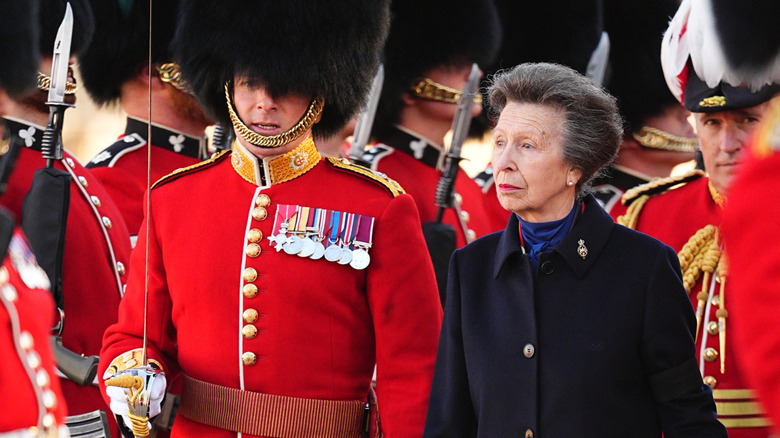
In keeping with King Charles' vision to slim down the monarchy and cut costs, only the most senior members of the royal family enjoy 24/7 security protection. Other than himself, Queen Camilla, Prince William, and Kate Middleton are the sole members to be guarded at all times, while other working royals have to contend with more limited security. While Charles' siblings, Princess Anne and Prince Edward, regularly perform royal duties, they do not have a personal protection officer assigned to them permanently.
Instead, they are only guarded when they are actually at an official event or carrying out business on behalf of the Crown. That means that, even though Princess Anne is the hardest-working royal, she only ever sees guards from the Royalty and Specialist Protection (RaSP) Command when she's at work. This same privilege is also extended to Prince Edward's wife, the king's sister-in-law, Sophie, the Duchess of Edinburgh.
Ahead of each official engagement, a threat assessment is carried out, and the appropriate type and amount of security is provided. Once Anne, Edward, or Sophie are finished and return home, they are considered to be off-duty, and RAVEC's involvement ends until the next official function.
Royal security protection can easily be revoked
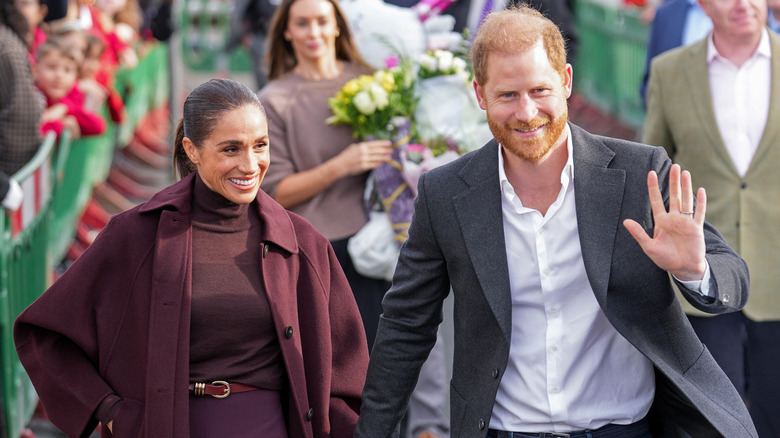
Once the Executive Committee for the Protection of Royalty and Public Figures (RAVEC) does approve security for a particular working royal, that doesn't mean it is a lifelong privilege they'll be entitled to. As several members of the royal family have discovered, as soon as their roles changed, so did their level of protection. When Prince Harry and Meghan Markle decided to stop being working royals and move to America in 2020, they lost access to their full-time state-funded personal protection officers.
RAVEC decided that, should the couple return to the U.K., their security needs would be assessed and decided upon on a case-by-case basis, which caused Harry to take legal action. However, he lost his lawsuit in the High Court in 2024, and his appeal was also denied in 2025. Following his move back across the pond in 2026, Harry was still fighting RAVEC for full-time security. After all, King Charles threw cold water on Harry and Meghan with an icy clarification on their royal status, underscoring the fact that they were now just private citizens.
Despite his displeasure, Harry fared better than his uncle, Prince Andrew, who lost his armed security team from the Royalty and Specialist Protection (RaSP) Command in 2022, alongside his royal title. Following the shakeup, Charles initially agreed to fund a private 10-person security detail for his brother, but when their contract came to an end in 2024, Charles simply didn't renew it.
The royals don't foot their own security bill
The media and public alike have long tried to figure out how much royal security actually costs. However, it seems we may never know the truth, as a 2024 court ruling determined that making the figure public could put the family at risk. That's because, as the judges concluded, a price breakdown could give potential bad actors a better understanding of the royals' security protocols. Still, this hasn't stopped folks from speculating, with some claiming security costs a whopping £150 million (or nearly $200 million) a year. Then there are the special events which require added expenditures, such as the £6.35 million (about $8.5 million) spent to protect Prince William and Kate's 2011 wedding.
When it comes to who actually pays the bill, that's less of a secret. The royal family does have personal income (mostly from investments), plus it's awarded money via something called the Sovereign Grant. The government funds the grant, which is calculated based on profits from the Crown Estate, a collection of land and properties held by the monarch. For the 2025-2026 fiscal year, for example, the Sovereign Grant was set at £132.1 million (about $175 million), and it was used to pay for everything from the king's travel to building maintenance. What it does not cover, however, is the cost of security. Instead, when it comes to the royals' personal protection officers and the security needed for public events, whether it be a wedding or jubilee celebration, those bills are footed by the government and, by extension, the country's taxpayers.
Why is protection needed in the first place?
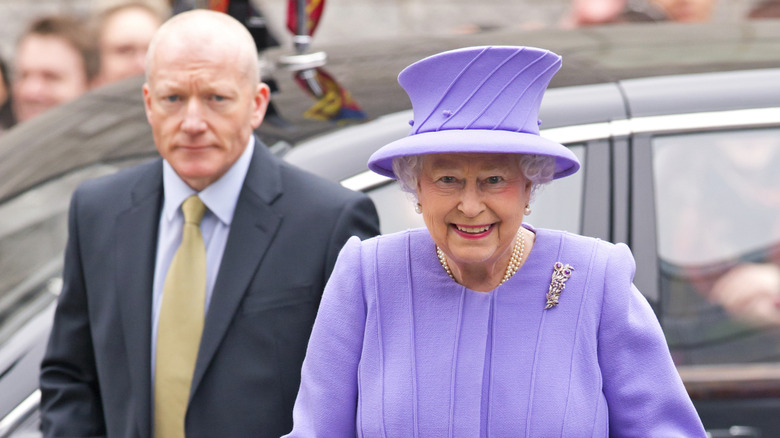
Critics may wonder why the royals require such stringent safety protocols, but history shows that the family is indeed at risk. For example, Queen Elizabeth was the target of an assassination attempt not once, but twice. In 1970, the monarch was on a state visit to Australia with the Duke of Edinburgh when their train hit a wooden log on the tracks. According to reports, it had been placed there on purpose in an effort to derail the train, but thankfully, the locomotive was traveling too slowly to cause an accident. Then, in 1981, the Queen was shot at during a state visit to New Zealand.
Other members of the family have also been targets of various attacks. In 1974, Princess Anne survived an attempted kidnapping while traveling in her limo. While both her driver and protection officer were shot, she reportedly refused to get out of the car, telling the would-be captor, per Tatler, "Not bloody likely." Anne's brother, then-Prince Charles, suffered his own scare in Australia in 1994. During a public appearance, a spectator fired a gun at him twice, then tried to tackle him, but Charles was quickly protected by his security team.
While these incidents resulted in no serious harm, it is believed that a lack of adequate security played a role in the car crash that killed Princess Diana and Dodi Al Fayed. Security professional Kieran Wingfield alleged, per CBC, that the couple had turned down the additional planning and eight-person security team he believed they needed to travel safely.
What it's really like to protect the royals
Over the years, several former personal protection officers have opened up about their time protecting the royals. Metropolitan Police Inspector David Lombardi once led the 60-person security force that traveled with the royals, although he spent most of his time at Balmoral Castle in Scotland. Following his retirement, he shared his fondest memories with the Daily Express, including dancing with Queen Elizabeth and cracking jokes with Prince Charles. "The royals are really quite normal, very nice and down to earth," he enthused. However, his role wasn't all fancy parties and good times. Rather, he spent much of his days running what he called a "dynamic risk assessment" for every public engagement and building detailed security plans around it.
Former royal protection officer Simon Morgan seconded that notion, telling Business Insider that the role is all about planning. "An overseas tour doesn't happen overnight," he said. "There are many, many months of planning." Noting that threats are very real and constantly present, Morgan added, "Bodyguarding is a thought process ... it's not about fighting, driving, shooting, or looking good in sunglasses." What's more, being surrounded by the royals' lavish lifestyle can make the job even harder, as temptation is ever-present. "That's the principal's life, not yours, and if you don't understand that, you will be compromised," Morgan explained.