

Once-Popular '60s Stars Who Were Involved In Lawsuits

As with their real and/or rumored romantic relationships and off-screen behavior, celebrities' public feuds and legal dealings have been a consistent source of headline fodder for fans and newshounds alike. In the 2020s, that phenomenon is exemplified by the he-said-she-said court battle between actor Blake Lively and actor-director Justin Baldoni, stemming from their time working together on the latter's 2024 romantic drama, "It Ends with Us." Before that, there was the Johnny Depp-Amber Heard trial, and Hulk Hogan's $140 million takedown of Gawker.
However, A-list stars resorting to litigation — or being on the receiving end of it — for any number of reasons is hardly a 21st-century invention. It's been going on for as long as celebrities and civil courts have been around. During the 1960s, as media was expanding, rock 'n roll was exploding, the hippie movement was influencing pop culture, and the Golden Age of Hollywood was waning, myriad high-profile entertainers found themselves embroiled in lawsuits ranging from the deeply personal to the financially cutthroat.
Here are several once-popular '60s stars who were involved in an array of lawsuits before, during, or after their heyday in the decade of free love and John F. Kennedy's Camelot.
Paul McCartney sued to dissolve the Beatles' partnership
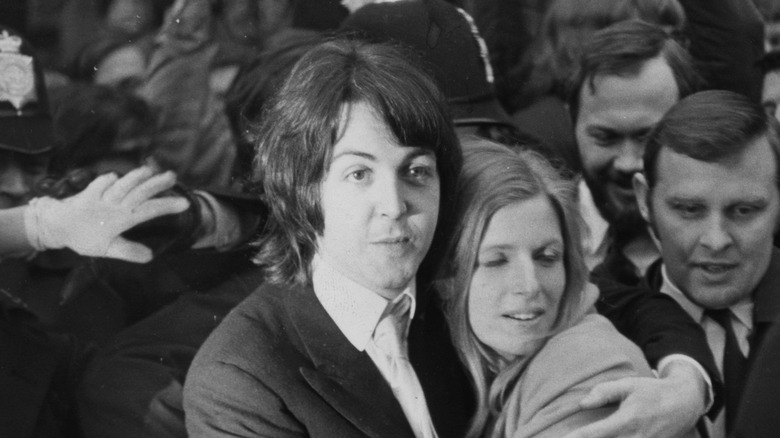
By the end of the 1960s, The Beatles had long dominated the pop charts. Behind the scenes, however, they had run their course as a band. So, while their 1970 breakup was a shock for fans around the world, the split had been a long time coming. Even as John Lennon, Paul McCartney, George Harrison, and Ringo Starr were drifting in different directions. While opinions vary on who was responsible for the split, it was a lawsuit initiated by McCartney that sealed the group's fate.
McCartney sued his bandmates in the High Court of Justice in London in December 1970 for the legal dissolution of their contractual partnership. The suit was motivated by the "Yesterday" singer's dissatisfaction with the band's manager, Allen Klein, whom McCartney believed was mismanaging the band's finances and company, Apple Corps. So, he took action in an effort to protect his and the rest of the band's music and finances.
"Because I had to do that, I think I was thought to be the guy who broke The Beatles up and the b*****d who sued his mates," McCartney told GQ in 2020. "And, believe me, I bought into that. That's the weirdest thing. It was so prevalent that for years I almost blamed myself." In the end, McCartney's bandmates also soured on Klein, eventually parting ways with him (leading to additional litigation), and the partnership was dissolved.
George Harrison was sued for copyright over 'My Sweet Lord'
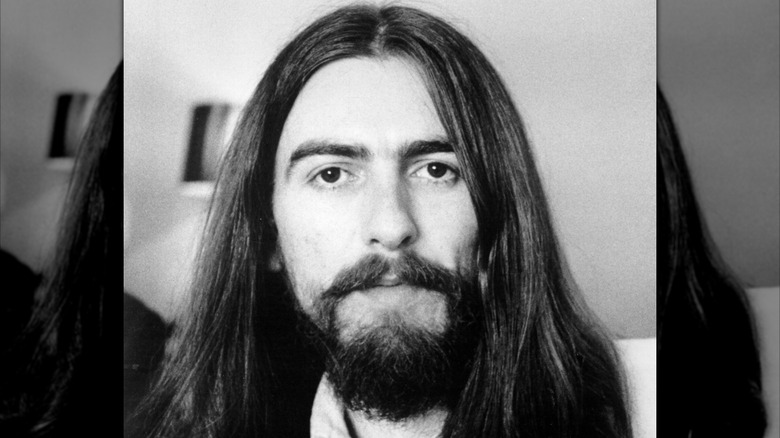
While all four members of The Beatles went on to experience success as solo artists, George Harrison's 1970 album "All Things Must Pass" was a massive commercial and critical hit. The release held down the No. 1 spot on the Billboard 200 for seven weeks, spending 41 weeks on the chart altogether. The No. 1 single "My Sweet Lord" played a significant role in making the album a hit, but it also landed him in court.
Harrison was sued for copyright infringement in February 1971 by Bright Tunes Music Corporation, which alleged that Harrison had committed plagiarism by borrowing the melody and other elements from The Chiffons' 1963 hit "He's So Fine" in crafting "My Sweet Lord." While there were also multiple distinct differences between the two songs, most notably Harrison's iconic slide guitar motif, the court ultimately determined that Harrison had committed unintentional plagiarism, per EBSCO, leading to additional legal wrangling over song ownership.
The case ultimately inspired Harrison's writing of the 1976 track "This Song," which includes lyrics like, "This song has nothing tricky about it. This song ain't black or white and, as far as I know, don't infringe on anyone's copyright."
Fox sought $50 million from Elizabeth Taylor & Richard Burton
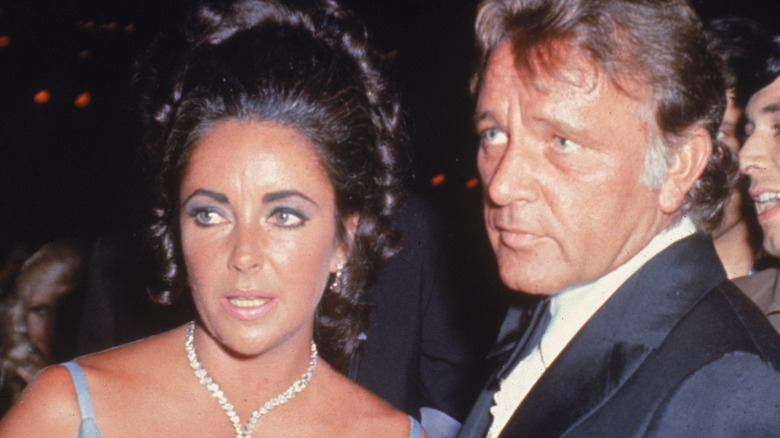
Throughout their lives in the limelight, Golden Age Hollywood icons Elizabeth Taylor and Richard Burton were involved in more than their share of controversy. However, their love affair amid the production of the 1963 Joseph L. Mankiewicz-directed "Cleopatra" became one of the biggest scandals of the 1960s.
At the time, Taylor was married to singer and actor Eddie Fisher, while Burton was married to actor Sybil Williams. So, when rumblings of an extramarital relationship began to proliferate, it was headline-making news on a worldwide scale. Although Taylor and Burton were eventually wed, 20th Century Fox later sued the power couple for damages amounting to a jaw-dropping $50 million (in 1960s currency), alleging that their adulterous behavior had damaged the film's commercial value and that they had breached their contracts, as reported by The New York Times.
Meanwhile, Taylor also filed her own suit against the studio, claiming she had not been paid her backend dues, as noted by Far Out Magazine. The issues between Fox and the film's stars were ultimately settled out of court in 1966.
Muhammad Ali sued the government after his draft evasion conviction
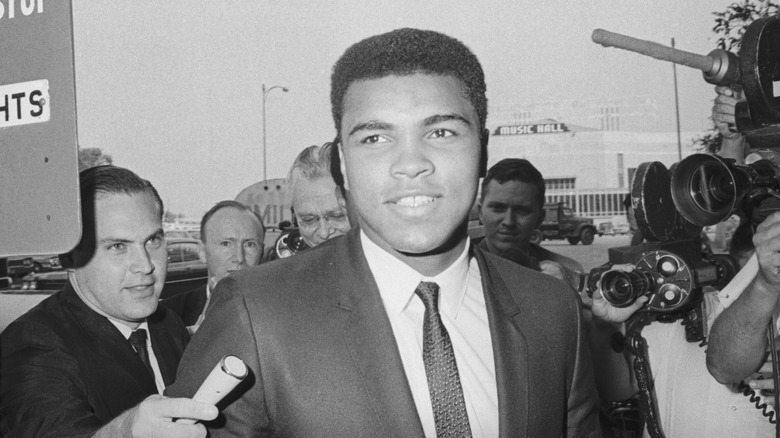
Muhammad Ali's exploits as a heavyweight boxer place him firmly in the sport's GOAT debate, but as a cultural icon, he's in even more rarefied air. He took a strong stance against the Vietnam War, refusing to fight in the conflict, citing his religious beliefs and matters of racial inequality. "Why should they ask me to put on a uniform and go 10,000 miles from home and drop bombs and bullets on Brown people in Vietnam while so-called Negro people in Louisville are treated like dogs?" Ali is quoted as saying at the time (via The Zinn Education Project).
Ali was ultimately tried and convicted of draft evasion in federal court in 1967, per the Federal Judicial Center, but the story didn't end there. The charismatic pugilist successfully appealed his conviction, and, in 1984, sued the United States government and the World Boxing Association, or WBA, for damages he allegedly suffered after he was denied conscientious objector status (Ali was stripped of his heavyweight title amid his refusal to serve and subsequent bout with Uncle Sam). The sports icon sought a whopping $50 million for his trouble.
Alas, a U.S. district judge dismissed the suit four years later, as reported by The Los Angeles Times, ruling that the statute of limitations had expired against the federal government and the WBA.
Carol Burnett successfully sued the National Enquirer for libel

Carol Burnett's stunning transformation and legendary comedy career have spanned several decades. However, she broke out during the 1960s — a decade that saw her win her first Primetime Emmys for her efforts as a regular player on CBS' "The Garry Moore Show" and her CBS special with Julie Andrews, "Julie and Carol at Carnegie Hall" (in 1962 and '63, respectively). Her iconic variety/sketch series, "The Carol Burnett Show," also debuted on the same network in 1967.
Given those and her myriad other accomplishments, Burnett reached a status in Hollywood that left her open to the same kind of questionable tabloid coverage many big stars face. In 1976, The National Enquirer published a false — or, at the least, exaggerated — story that prompted Burnett to sue the outlet for libel. "In a Washington restaurant, a boisterous Carol Burnett had a loud argument with another diner, Henry Kissinger. Then she traipsed around the place offering everyone a bite of her dessert," the Enquirer reported, as recounted in court documents (via Justia). "But Carol really raised eyebrows when she accidentally knocked a glass of wine over one diner and started giggling instead of apologizing. The guy wasn't amused and 'accidentally' spilled a glass of water over Carol's dress."
A Los Angeles jury ultimately ruled in Burnett's favor, and the Enquirer was ordered to pay her $1.6 million in damages. That was later reduced via the appeals process to $200,000, but the two parties ultimately reached an out-of-court settlement, per The New York Times.
Raquel Welch sued MGM after being replaced by a younger star
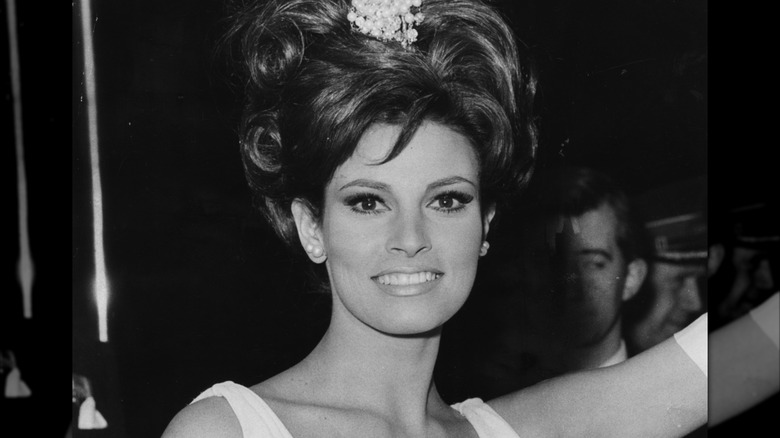
Out with the old, in with the new is a concept that has long reigned supreme in Hollywood and the entertainment world at large. Raquel Welch — who became a movie star on the back of performances like 1966's "One Million Years B.C." and "Fantastic Voyage," and 1969's "100 Rifles," to name a few — experienced this firsthand later in the career when she was fired from the 1982 John Steinbeck adaptation "Cannery Row" and replaced by a young Debra Winger, a move that prompted her to sue MGM.
As reported by The Los Angeles Times, MGM claimed that Welch had insisted on doing her own hair and makeup, refused to use her trailer on the lot or attend morning rehearsals, and rebuffed an order from then-studio chief David Begelman to show up for makeup at the studio. Welch, however, offered a different assessment of the situation. "What they did was use me to get financing for the movie, then they dumped me for Debra, which they'd been planning all along," Welch recounted to The Hollywood Reporter in 2015. "The really Machiavellian part of this is that Debra and I were represented by the same agency."
In the end, Welch — who now has four ex-husbands — won a $10.8 million judgment against MGM, as it was deemed that the studio had breached its contract with her.
Sonny Bono's estate & widow ran afoul of Cher over royalties
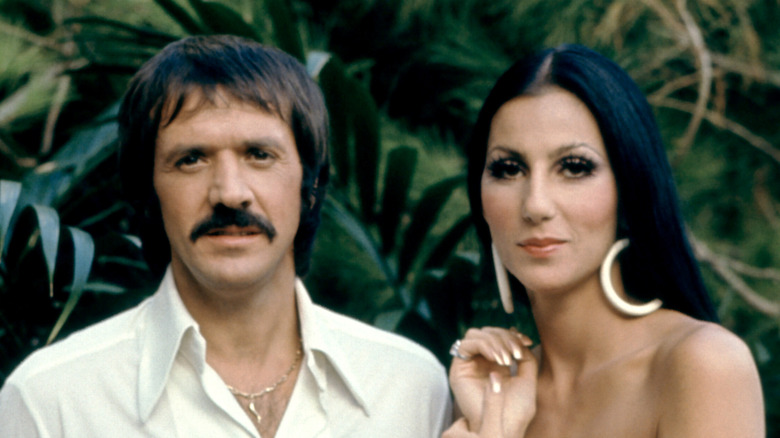
Songwriting credit, publishing, and the dissemination of royalties have always provided fertile ground for disputes involving pop singers and other musicians. And, sometimes, those disputes can become so complex and hotly contested that they actually live beyond the people at the heart of them. Such has been the case for Cher and her late ex-husband and former creative partner, Sonny Bono.
As part of a settlement that followed the end of their marriage, it was agreed that the pair would split the future proceeds from their Sonny & Cher era and hit songs like 1965's "I Got You Babe" 50/50. That agreement held true for years, until the 2010s when Mary Bono, who was married to Sonny from 1986 until his 1998 death, attempted to exercise termination rights under the U.S. Copyright Act on behalf of her late husband's heirs to reclaim full publishing rights for those songs. Cher sued her ex's estate and Mary in 2021 for her royalty share, as stipulated in her divorce agreement with Sonny.
As reported by Rolling Stone, a U.S. district judge issued a final ruling in November 2025 that the contract law covering their divorce agreement superseded the Copyright Act's termination powers, after previously ruling that Cher was owed more than $400,000 in unpaid royalties.
Mike Love filed multiple lawsuits against Brian Wilson
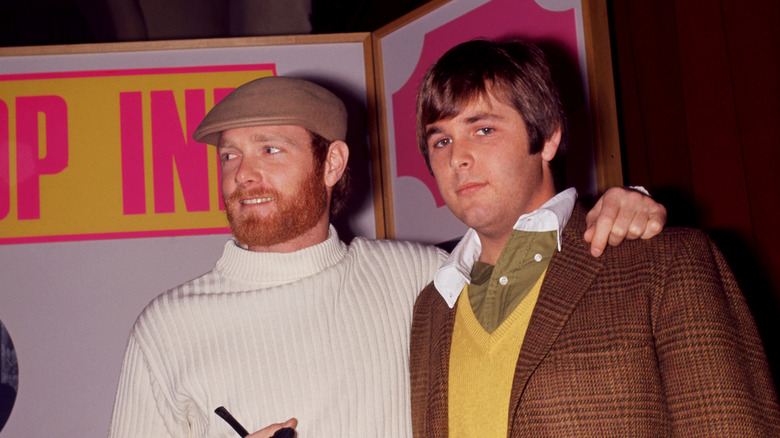
As with many other iconic bands of the era — or any era, really — the animus among members of The Beach Boys has been as great as the musical magic they made together during the 1960s and beyond. Arguably the band's most important members, co-founders and cousins Mike Love and Brian Wilson, have been on opposite sides of multiple lawsuits over the years.
Following the release of his 1991 memoir, "Wouldn't It Be Nice: My Own Story," Wilson and the book's publisher, HarperCollins, were sued by Love for defamation and libel (members of Wilson's immediate family also claimed they were defamed in the autobiography). HarperCollins ultimately settled with Love out of court for $1.5 million. Around that same time, Love also sued Wilson and publishers for songwriting credits on dozens of Beach Boys songs after Wilson received a $10 million settlement related to the sale of the band's "Sea of Tunes" song catalogue, per The Los Angeles Times. Love was ultimately awarded authorship and both past and future royalties for 35 songs.
Finally, as reported by Billboard, Love filed suit against Wilson yet again in 2005, this time for promoting the 2004 album "Smile" in a way that "shamelessly misappropriated Mike Love's songs, likeness and the Beach Boys trademark" by releasing 2.6 million copies of a promotional compilation CD. However, that suit was ultimately dismissed by a U.S. district judge, per Rolling Stone.
The Move were sued for libel by the British Prime Minister
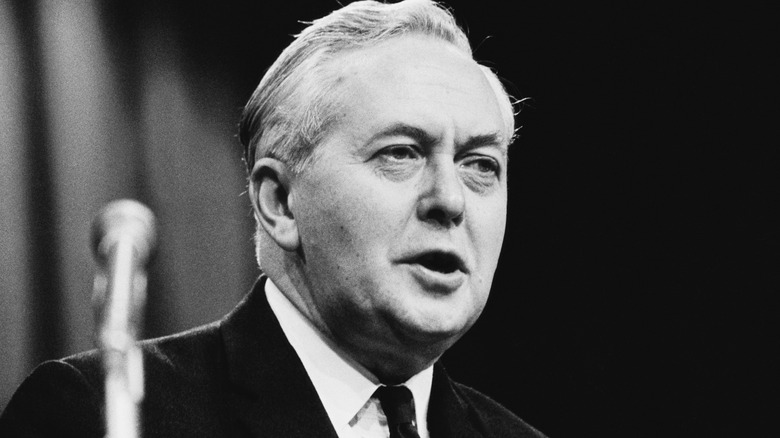
It's not uncommon for celebrities to run afoul of political figures for any number of reasons, from using their platforms to sound off on controversial topics to engaging in behavior officials disagree with. In the case of the British rock band The Move, though, it was the most powerful man in the United Kingdom that placed them in his crosshairs.
As recounted by the BBC, in 1967, then-Prime Minister Harold Wilson sued the band for libel after it published a postcard with an artistic depiction of Wilson in the nude. The promotional effort, which supported the release of The Move's song "Flowers in the Rain," had been the brainchild of their manager, Tony Secunda. Per History, Secunda was known for over-the-top efforts to garner publicity for the band, but this particular effort may have been a case of flying too close to the sun. The artist responsible for the rendering, the advertising agency employed, and even the printer all joined the rockers as defendants in the lawsuit.
In the end, the matter was settled with multiple apologies and The Move's promise to donate all of the royalties from the single to charities of the Prime Minister's choice.
John Fogerty was accused of plagiarizing his own song
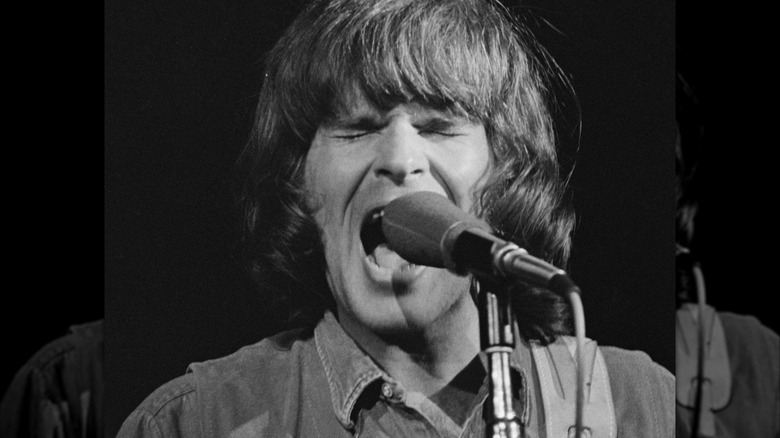
While there were questions about whether George Harrison might have heard The Chiffons' "He's So Fine," committed its melody to his subconscious, and unknowingly plagiarized the song when he came up with "My Sweet Lord," there was little doubt that John Fogerty was fully aware of Creedence Clearwater Revival's 1970 song "Run Through The Jungle" when he recorded his 1985 song "The Old Man Down the Road."
Of course, that's because Fogerty was the lead singer and songwriter for Creedence Clearwater Revival. So, it would stand to reason that the songs might touch on similar themes or employ similar musical motifs or instrumentation. Alas, that didn't stop Fantasy Records — the label which owned the CCR classic — from suing Fogerty for copyright infringement. Ultimately, a jury found no such occured, as chronicled by Louder. Fast-forward a few decades, and Fogerty continues to be flummoxed by the situation.
"There's only this song and this song in the whole universe of songs and these two songs happen to be kind of similar. Therefore, obviously, it's as night follows the day — this song must have come from that song," Fogerty said during a 2010s-era Q&A at the Grammy Museum (via John Fogerty/YouTube). "But that's stupid because there are 8 million songs that kind of sound like those two songs."
James Garner took on Warner Bros and Universal
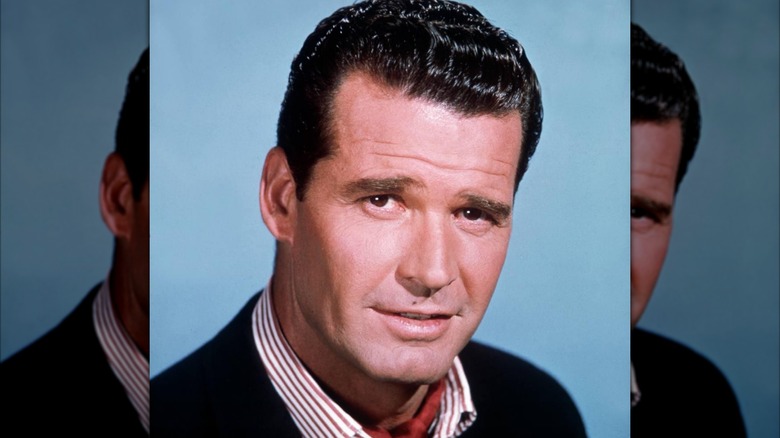
James Garner gave a number of memorable performances throughout his legendary career, having starred in classic films like 1963's "The Great Escape," 1964's "The Americanization of Emily," and 1966's "Grand Prix." Then, as he became one of Hollywood's elder statesmen, he continued to have success with projects including 1982's "Victor/Victoria" and 2004's "The Notebook." However, his breakout came via the ABC series "Maverick."
It was Garner's work on that show that sat at the center of his legal battle with Warner Bros. After making the Western a hit and becoming a star in the process, the momentum was halted amid a contract dispute and the 1960 Writers Strike. "Warner Bros. suspended him because of a writers strike as 'Maverick' filmed," litigator Neville Johnson explained in a 2014 article for The Hollywood Reporter. "Garner fought back, declaring his contract void. He won at trial, and the decision was confirmed on appeal and remains good precedent today." The actor subsequently left the show.
Years later, he sued Universal (which, in turn, filed suit against him) for fraud, deceit and breach of contract for failing to pay him his full share for reruns and foreign sales of the NBC series "The Rockford Files." As reported by The Los Angeles Times, the two sides settled out of court after Garner had sought $16.5 million.