

Willie Nelson: The Full Transformation Of The Country Music Icon
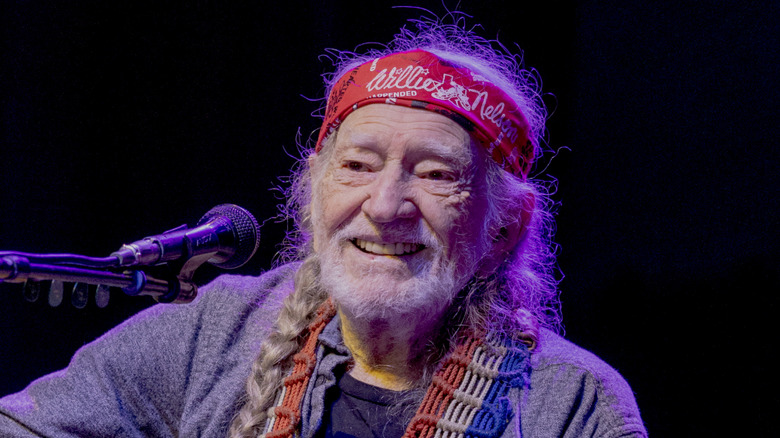
In terms of enduring success and sustained pop culture relevance over the course of their lifetime, perhaps no musician has enjoyed the status achieved by country music icon Willie Nelson. Now well into his 90s — and 65 years removed from recording his first top-10-charting single as a solo performer — Nelson's name continues to resonate with fans and casual observers spanning multiple generations and other demographics. However, it's not just his "Outlaw Country" brand of music that has allowed his career to flourish for so long.
Nelson's aptitude as a performer has also crossed over into the realm of Hollywood. Beyond that, his rags-to-riches journey, good-old-boy charm, and incredible longevity have elevated him to the plane of mythic figures like Elvis Presley, Frank Sinatra, and Michael Jackson.
From his humble beginnings in Central Texas to the Rock & Roll Hall of Fame and beyond, Nelson has undergone a stunning transformation across his decades-long run in the limelight. Here are some of the triumphs, troubles, and reinventions that define the legendary singer-songwriter.
Nelson was raised by his grandparents in small-town Central Texas
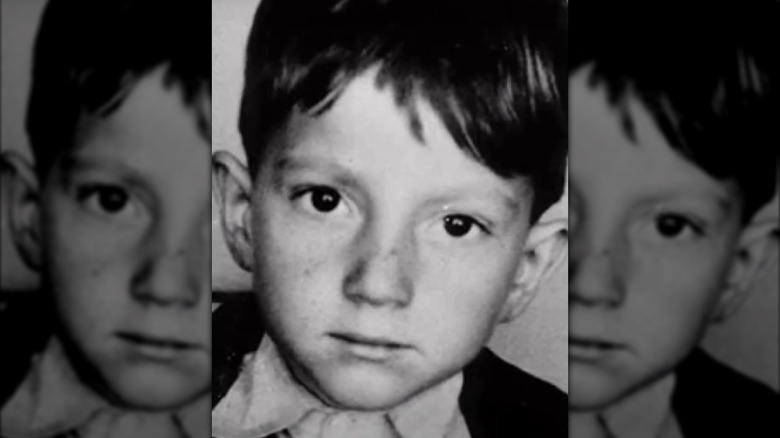
Willie Nelson was born April 29, 1933, in the small town of Abbott, near Waco in Central Texas. However, his parents — Ira and Myrle Nelson — ultimately left Willie and his older sister, Bobbie Nelson, in the care of their paternal grandparents. It was there that the siblings first developed their love of music, as their grandparents — William "Alfred" and Nancy Nelson — were both musically inclined.
It was Willie's grandfather who gave him his first guitar, but ultimately never saw him achieve stardom; Alfred died of pneumonia when Willie was just six years old. "I hadn't even had time to grieve for the loss of a mother and daddy, much less my grandfather. Our separation from Mother and Daddy seemed worse than a death because they were still out there in the world," he wrote in his 1988 autobiography (via Rolling Stone).
Willie and Bobbie would remain with their grandmother, ultimately attending high school in Abbott. Later, Willie enlisted in the Air Force during the Korean War. Following a medical discharge in 1951, Nelson returned to Texas and eventually attended Baylor University in Waco, but music was calling out to him. "I wanted to go to Baylor and get a law degree," he told the Baylor Line in 2001 (via Baylor.edu). "I went there long enough to realize that I really wanted to play music more than I wanted to be a lawyer."
He worked as a radio DJ while beginning his career as a musician
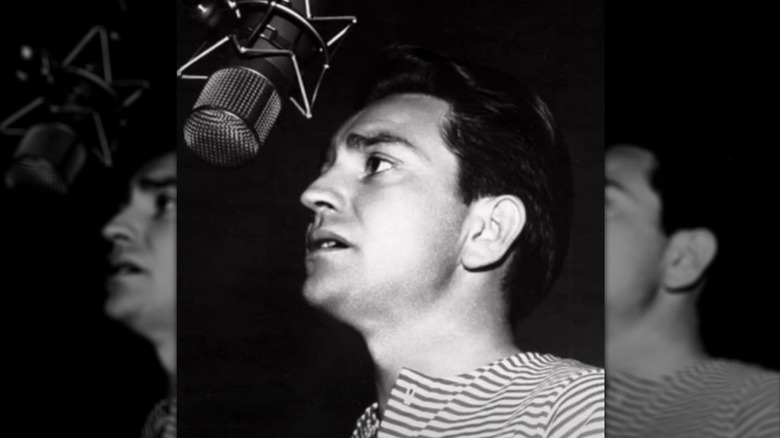
While Willie Nelson's status as a country music and pop culture icon was cemented before many readers have been alive, his was anything but an overnight success story. In fact, Nelson got by working a series of odd jobs before making it big. After serving in the Air Force and briefly attending college, he did everything from selling Bibles and vacuum cleaners to trimming trees, pumping gas, and doing dishes. Eventually, though, he got himself into the music scene as a radio disc jockey.
After moving with his family to Pleasanton, Texas, Nelson began spinning records close to home at the radio station KBOP in the early 1950s. The job would provide his first exposure to the recording equipment he would use to produce his first demo tapes. However, Nelson would ultimately fall into the nomadic life of a radio DJ while trying to launch his music career on the side. He later found himself at KVAN in Vancouver, Washington; it was around this time, in 1956 to 1957, that he recorded his first-ever single, "No Place for Me."
"I was promoting my shows on the radio," he told Rolling Stone in 2014 of his beginnings in radio and music. "'I'll be playing Gray's Bar tonight in Fort Worth — y'all come over!' It helped both areas, you know?"
Nelson found success as a songwriter-performer and joined the Grand Ole Opry
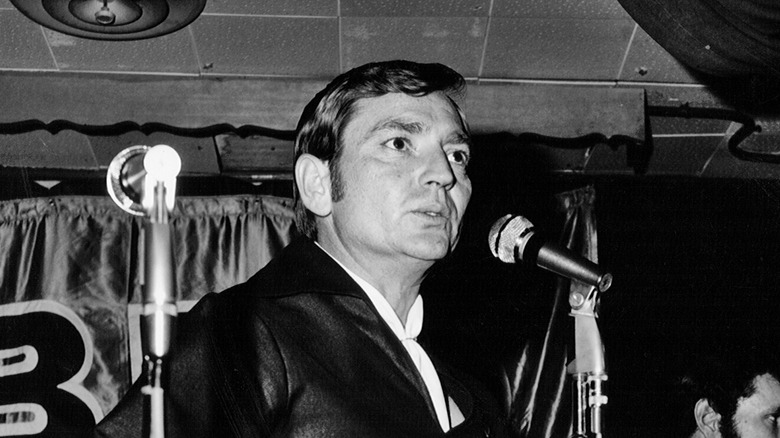
Willie Nelson's persistence eventually saw him find footing as a musician, but he didn't achieve fame overnight. Struggling to make headway as a performer and finding himself in a financial quandary, he resorted to selling his songs to other artists. During the late 1950s, for example, Nelson sold the song "Family Bible" to Paul Buskirk for $50. The song later became a hit for Claude Gray, opening the door for Nelson's big move to Nashville.
It was there, in 1960, that he met singer-songwriter Hank Cochran (who would later be credited with discovering the Abbott, Texas native). Cochran convinced the publishing company he worked for, Pamper Music, to contract Nelson, and the partnership proved fruitful for both sides. Faron Young's rendition of the Nelson-penned song "Hello Walls" became a No. 1 country hit in 1961. That same year, Patsy Cline had a crossover smash hit with his song, "Crazy." All the while, he continued to perform, scoring his first hits with 1962's "Willingly" and "Touch Me."
Nelson's profile on the country music scene received a serious level-up, though, a few years later when he joined the Grand Ole Opry in 1964. He went on to perform regularly on the Opry stage, rubbing elbows with some of country music's biggest stars in the process. "He was stylish," Loretta Lynn once said of Nelson's vibe at the time (via Rolling Stone). "He was working in suits. His hair was cut every little bit, he had brass eyes, and his hair was the same color. He was really handsome!"
Nelson left Nashville in 1972 and later ignited the outlaw country movement
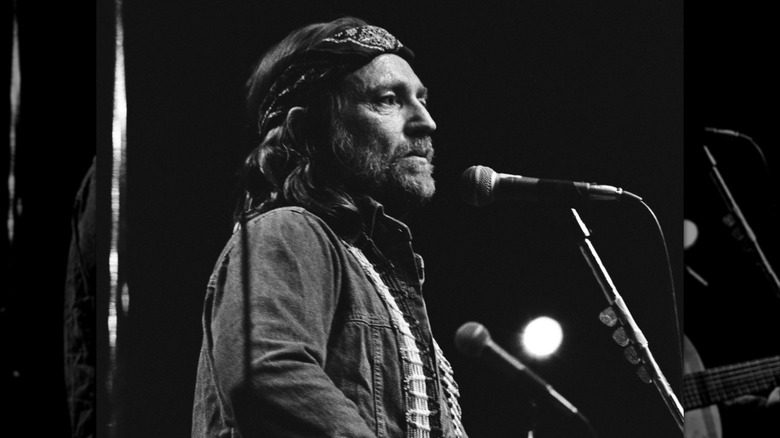
As time wore on, Willie Nelson grew weary of his situation in Nashville, and he was traveling often back to the Lone Star state to perform. So, he moved back to Texas full-time in 1972. "I knew I could play in Austin and San Antonio a lot because I was already doing that," Nelson said at the Billboard Country Music Summit in 2014. "I liked Nashville and playing the Grand Ole Opry, but most weekends, I would be in El Paso on a Friday night and find it very hard to get back to town to make the required number of performances to maintain my membership at the Opry."
The move proved to be an important one for Nelson, who was building a new, more diverse audience in his old digs. In 1973, Nelson launched what would come to be known as his annual "Fourth of July Picnic," with a lineup that featured the likes of Waylon Jennings and Kris Kristofferson. Around that time, the brand of music created by those and similar performers came to be known as "outlaw country." The term was codified in 1976 when Nelson and Jennings appeared with Tompall Glaser and Jessi Colter to release the platinum-selling compilation album "Wanted! The Outlaws."
"I loved the title outlaw though I don't think any of us were," Nelson said at the Billboard Summit. "It sounded good and I thought it was a great marketing move. Then somebody wrote 'Ladies Love Outlaws' and there you were." Nelson would also drop the breakthrough hit "Blue Eyes Crying in the Rain" during this time.
He later found crossover success in Hollywood
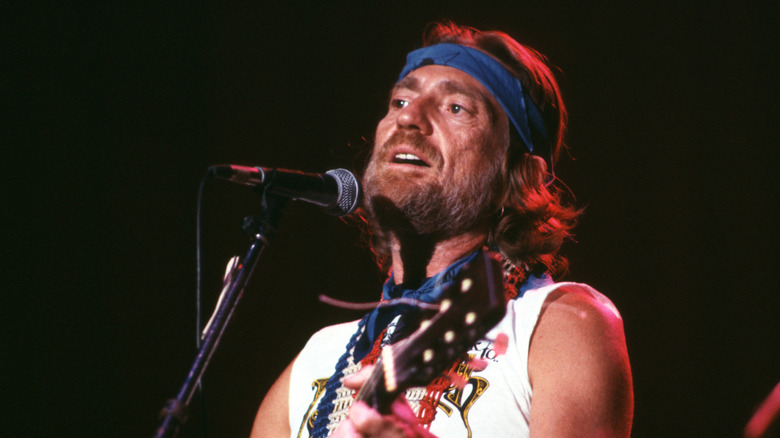
With his career ascending to new heights amid the rise of the outlaw country subgenre, Willie Nelson's reach in the entertainment industry began to extend outside his musical domain and into the world of major motion pictures. In 1979, he was cast by legendary director Sydney Pollack to appear alongside the likes of Robert Redford and Jane Fonda in "The Electric Horseman."
As Nelson tells it, a chance encounter with Redford on a plane eventually resulted in him getting a part in the film as the Hollywood icon's on-screen sidekick. The role reportedly didn't require too much heavy lifting on Nelson's part. "The reading was easy. The part was easy. I played myself," Nelson said of the experience in a 2015 memoir titled "It's a Long Story: My Life" (via Parade). "In fact, in every movie to follow, I played myself. Or as that great sidekick cowboy Slim Pickens would soon say, 'No one plays Willie Nelson better than Willie Nelson.'"
"The Electric Horseman" was the first of many film appearances for Nelson, who also created music for some of those films' soundtracks.
Nelson's Honeysuckle Rose role led to the creation of his signature song
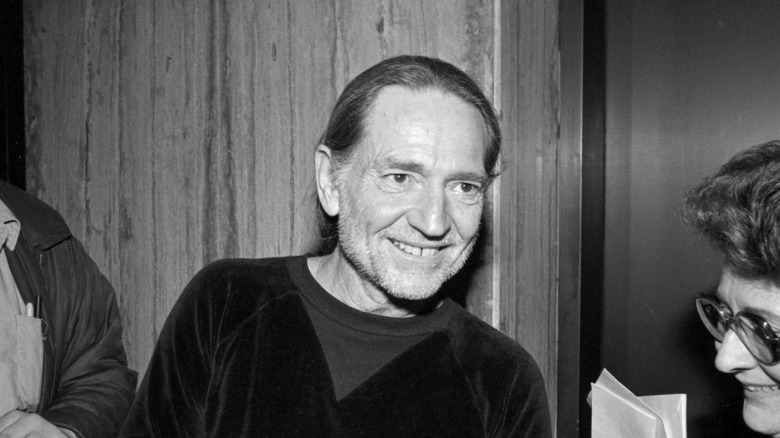
Willie Nelson's second film project to hit theaters — 1980's "Honeysuckle Rose" — was arguably just as impactful as his first. This time, it was Nelson's name that topped the call sheet in the starring role of Buck Bonham, a veteran country singer who finds himself embroiled in a love triangle with his wife (played by Dyan Cannon) and the daughter of his guitarist and best friend (Amy Irving). The film was directed by Jerry Schatzberg and executive produced by Nelson's "Electric Horseman" boss, Sydney Pollack.
"Honeysuckle Rose" impressed critics, with The Chicago Sun-Times' Roger Ebert giving it a three-star review. However, the biggest thing to come out of the movie was the creation of what has gone down as Nelson's signature song, "On the Road Again." "They were looking for songs for the movie and they asked me if I had any idea. I said, 'What do you want the song to say?' and Sydney said, 'Can it be something about being on the road?' It just started to click," Nelson told Uncut of the song in 2015.
"On the Road Again" brought Nelson an Oscar nomination for best original song. The track also spent 20 weeks on the Billboard Hot 100 chart, peaking at No. 20. His chart success would continue over the ensuing years; his 1982 rendition of "Always on My Mind" and 1984 duet with Julio Iglesias, "To All the Girls I've Loved Before," both reached the top five. Later, he formed the supergroup the Highwaymen with Waylon Jennings, Kris Kristofferson, and country legend Johnny Cash.
He cofounded Farm Aid with Neil Young and John Mellencamp
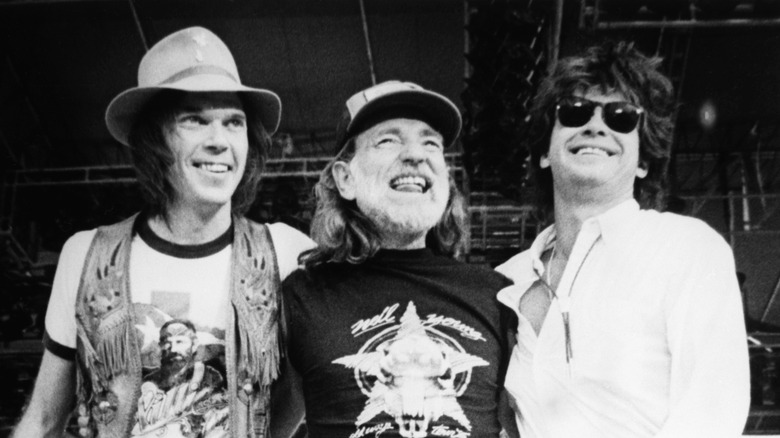
The time period spanning late 1984 to late 1985 saw a litany of superstar recording artists come together for a handful of philanthropic efforts. First there was Band Aid and the single "Do They Know It's Christmas?" to benefit those affected by famine in Ethiopia. The Band Aid initiative was followed by the international Live Aid concerts in 1985. Additionally, some of the greatest American artists of the '80s — including Willie Nelson — joined forces for the recording of the iconic song "We Are the World."
Several months later, Nelson organized his own benefit concert to provide financial support for struggling family farmers and domestic agriculture at large with Farm Aid. Nelson teamed up with fellow singer-songwriters Neil Young and John Mellencamp to put on the show, which was held at Champaign, Illinois' Memorial Stadium and featured sets from Billy Joel, Bob Dylan, Tom Petty, and others.
"The fate of the small farmer was a topic I couldn't ignore," he wrote in his 2015 memoir (via History). "More I read, more motivated I became to help publicize their plight." Farm Aid has become an annual tradition emanating from famed venues nationwide. Its 40th edition was held in Minneapolis in 2025.
He met Annie D'Angelo on Stagecoach and married her in 1991
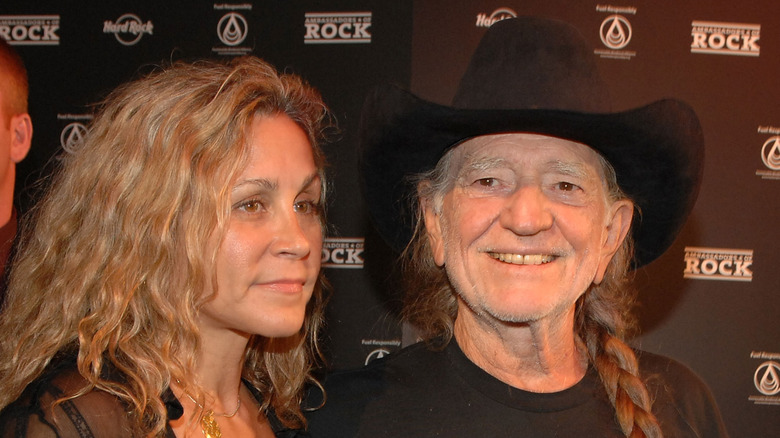
While Willie Nelson has experienced incredible highs and lows from a career standpoint over the years, his love life has been at least equally eventful. From 1952 to 1962, he was married to his high school sweetheart Martha Matthews. He spent the remainder of the '60s with his "Willingly" duet partner and second wife, Shirley Collie, before the two divorced in 1971. He went on to spend the better part of two decades with Connie Koepke.
In the end, Nelson didn't find his forever partner until he was a much older gentleman. While working on the 1986 Ted Post-directed adaptation of "Stagecoach," he met Annie D'Angelo, who was working as a makeup artist on the TV movie. She eventually became his fourth wife when the two married in 1991, and they remain together to this very day.
"Well, you know, Annie is my best friend. She does everything that I need to have done. She makes sure I do it or she does it for me. Yeah, for 40 years we've been together," he told The Guardian in 2026.
The IRS hit Nelson with a multi-million-dollar tax bill
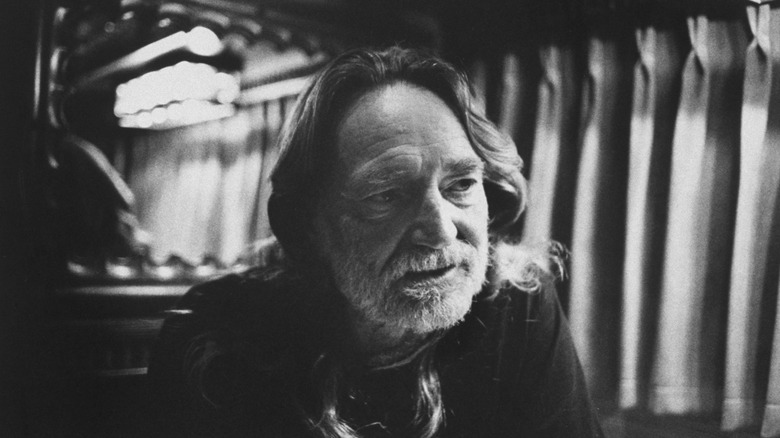
A lot of people would revert to panic mode if they found themselves at odds with the federal government. No stranger to being in trouble, Nelson responded by making an album about the situation. In 1990, Nelson ran afoul of the Internal Revenue Service, and it wasn't a simple case of being audited, either. The agency claimed that Nelson owed millions in back taxes and penalties and set about seizing his assets to recoup the funds.
Simply put, the people Nelson believed to be handling that aspect of his finances reportedly weren't making the required payments. Moreover, his money was being invested in a tax shelter that was later deemed to be illegal. As a result, the IRS raided his home and even put it up for sale. In the end, a settlement was negotiated reducing Nelson's tax bill, and he also released the album "The IRS Tapes: Who'll Buy My Memories?" to help pay down his balance.
Despite the tax trouble, Nelson was decidedly Zen about the situation. "By the time everybody else heard about it, I was already on to other things," Nelson told Rolling Stone in 1995. "Mentally, it was a breeze. They didn't bother me, they didn't come out and confiscate anything other than that first day, and they didn't show up at every gig and demand money. I appreciated that. And we teamed up and put out a record."
Nelson has long been an outspoken advocate for marijuana legalization
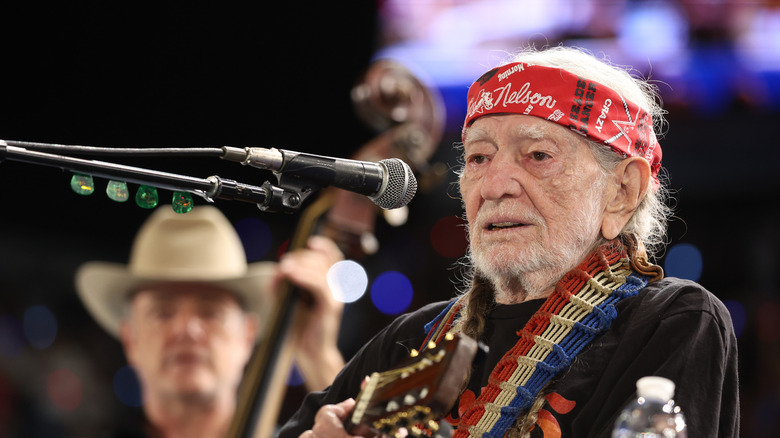
Alongside his guitar "Trigger," legendary tunes, and signature braids and headbands, Willie Nelson's defining attribute may just be his status as an icon of pot culture. For decades, Nelson has stood alongside the likes of Snoop Dogg and Woody Harrelson as a celebrity cannabis user and noted advocate for its medicinal use. His health issues and multiple marijuana-related arrests notwithstanding, Nelson continues to be open about his use of the substance, making him a key figure in the continuing movement for legalization.
As Nelson sees it, the recent moves by certain U.S. states to regulate the use and sale of marijuana may yield economic benefits. "There's a lot of money in selling marijuana. If you can do it legally, that's good. Why should all the criminals make the money? This is what people are thinking," Nelson told CelebStoner in 2014. "If it's happening, if it's going to be legal, let's tax it and regulate it, like we do with everything else and make some money off this."
Nelson made waves in 2019 when he revealed that he no longer smokes. In recent years, he clarified that he still indulges in "a few edibles" (via Forbes). The singer-songwriter also has his own line of CBD products — Willie's Remedy.
Nelson has continued to tour & make music into his 90s
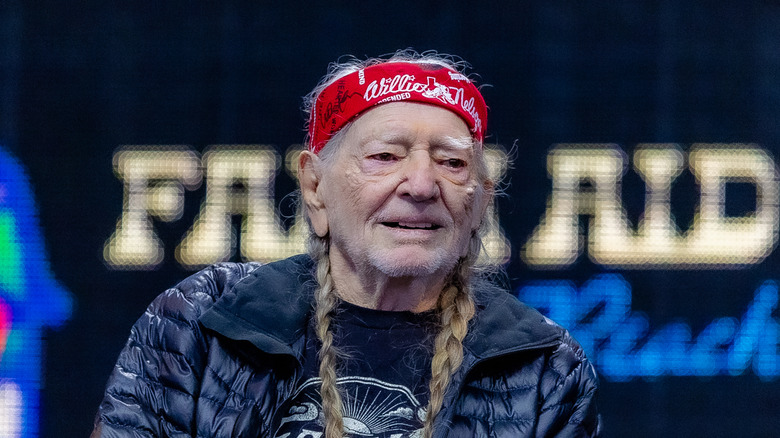
In recent decades, Willie Nelson has experienced more than his share of health problems. Some of the conditions he has navigated include carpal tunnel syndrome, emphysema, and a difficult bout with COVID-19. Despite those issues and his advancing years, the "Always on My Mind" singer has managed a level of longevity as a performer that few could hope to aspire to.
The 93-year-old has released nearly a dozen studio albums in the 2020s alone, his most recent being the 2026 release "Dream Chaser." He's still managing to achieve milestones as a singer-songwriter, too. For "Dream Chaser," he co-wrote a song with fellow musical icon and friend Bob Dylan for the first time since 1993 — the track "I Can't Read Your Mind." He's not content to perform in the studio and release new music, either. He's still involved in Farm Aid, and he continues to tour regularly, too, having embarked on the latest edition of the Outlaw Music Festival Tour in July 2026.
"You have to do something every day to pay for the day," Nelson told Parade in 2023. "You need to run, walk, swim, sing; whatever it is that's important to you, you have to do it and then see how long you can keep doing it." It's difficult to argue with his results.